The story behind Hotel Grande Bretagne’s summer menu, where gastronomy meets handmade lace, ceramics, and Greek tradition
Once found atop television sets, sideboards and coffee tables, the semedaki-the delicate handmade lace doily-was for decades one of the most recognisable objects in the Greek home. Patiently crocheted by hand, it was passed down from one generation to the next, from mothers to daughters and from grandmothers to grandchildren, carrying memories, family stories and a form of craftsmanship that was rarely documented, yet quietly preserved through time.
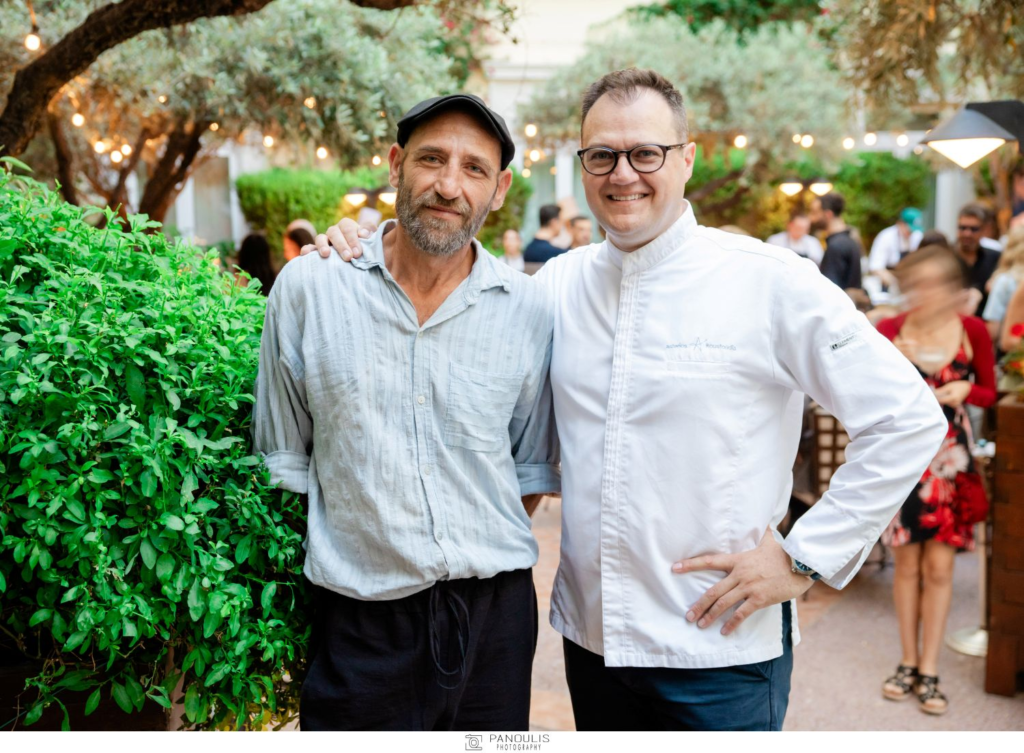
Today, at a moment when handmade craftsmanship is searching for new ways to engage with the present, the semedaki returns in an unexpected context. This summer, it has found its place at the table of the historic Hotel Grande Bretagne. Through a collaboration between Executive Chef Asterios Koustoudis, ceramic artist Maria Oikonomidou, the Cultural Association of Women of Spata “The Friends of Knowledge”, and the iconic hotel, a traditional lace pattern has been transformed into a handcrafted ceramic plate, bringing a symbol of Greek domestic heritage to the tables of one of Athens’ most celebrated hotels.
The idea: When memory becomes the starting point of gastronomy
For Executive Chef Asterios Koustoudis, the summer menu began with a memory.
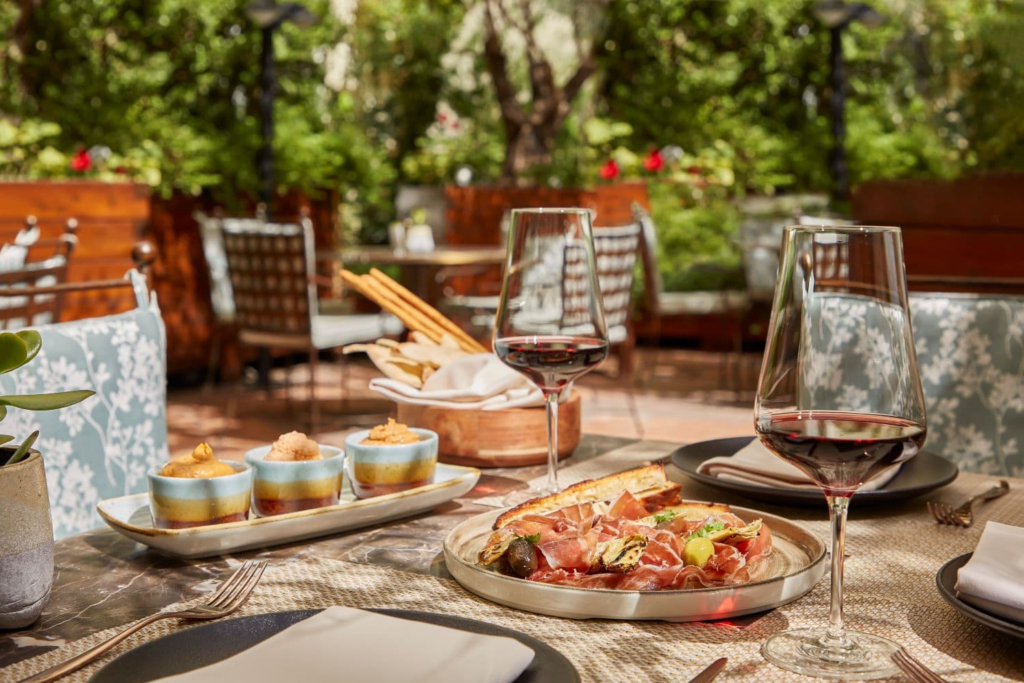
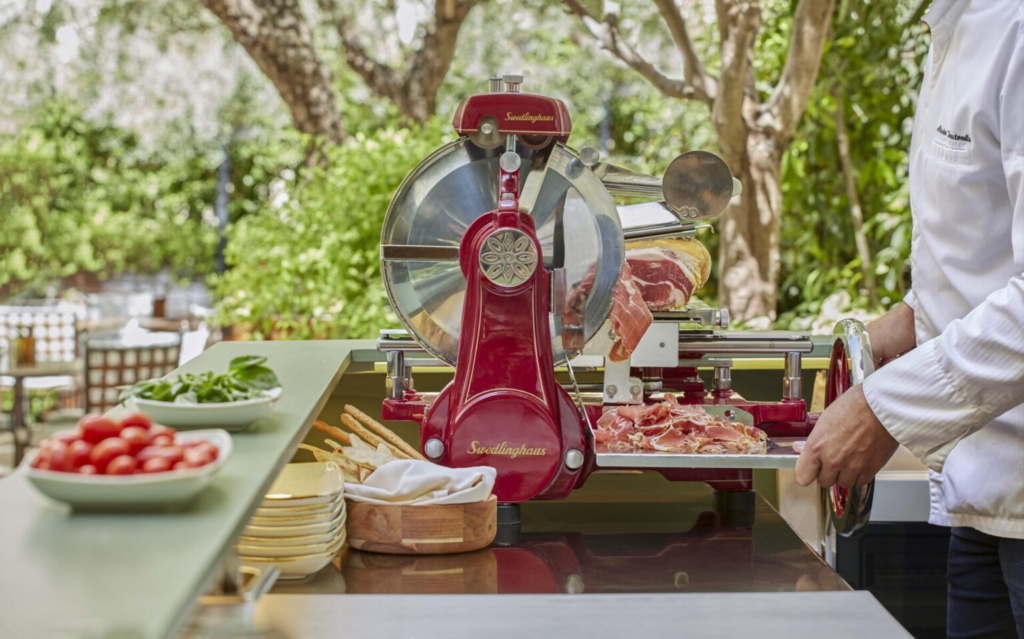
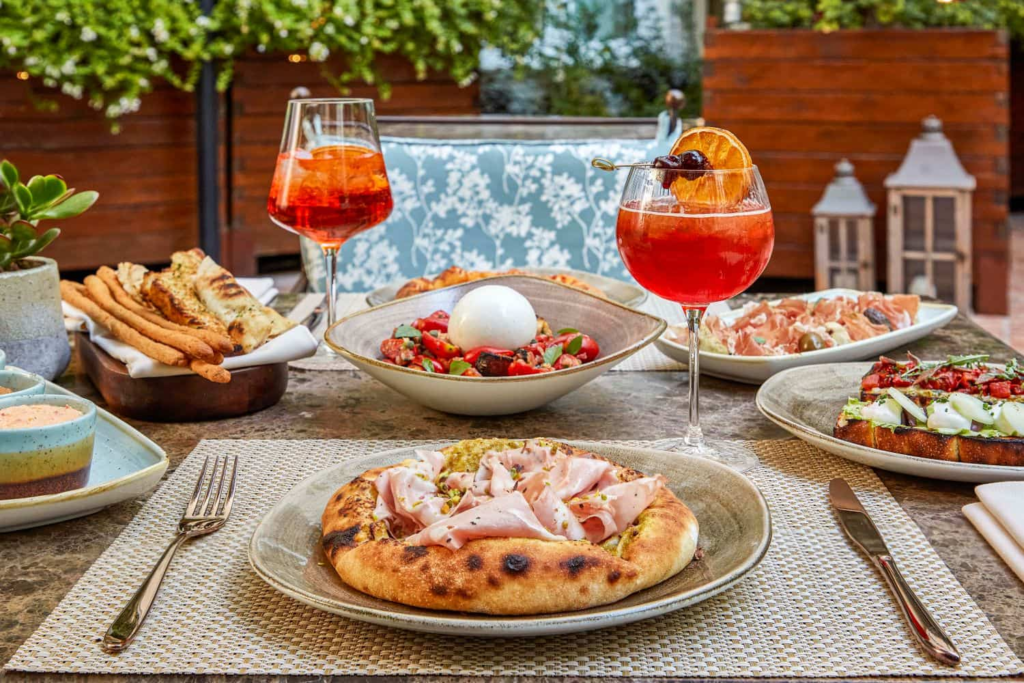
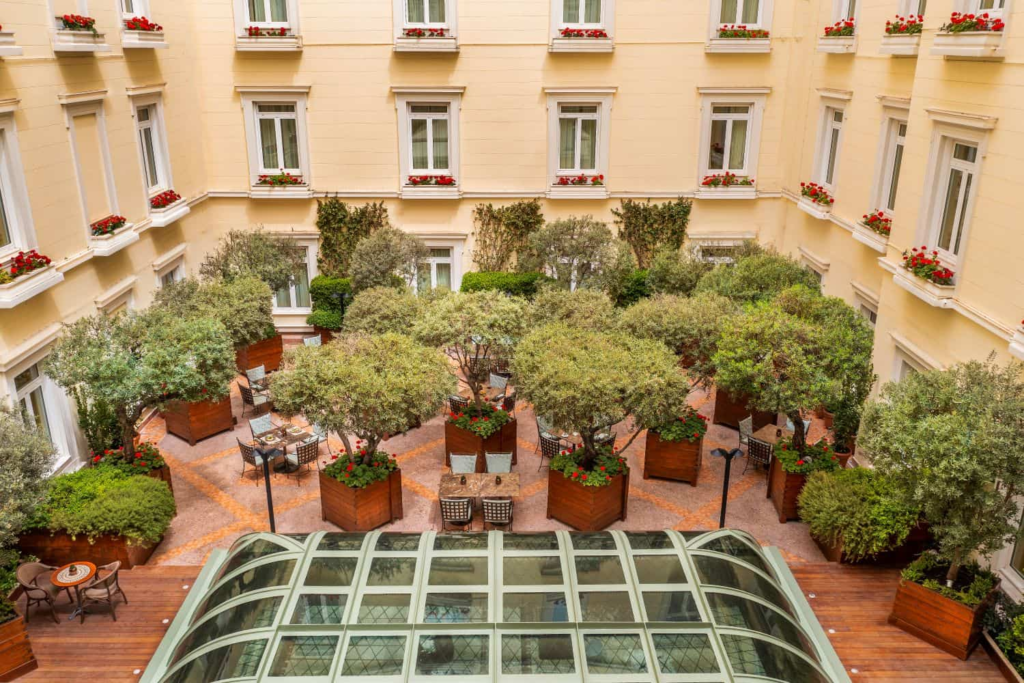
His seasonal proposal for the Atrium of Alexander’s Lounge, located on the first floor of Hotel Grande Bretagne, is titled “Il Giardino Segreto” and revolves around one humble ingredient: the tomato. For Koustoudis, it embodies the flavours, aromas and imagery of everyday Greece. It is far more than a raw ingredient – it is a personal memory, his own image of the country.
“The image of Greece in my mind could be an empty table with a checked tablecloth beside the sea. It could be a goat standing on a rock. But for me, it is also a tomato.”
With these words, he describes how such a simple ingredient can evoke the entire landscape of a country.
The menu embraces simplicity by design. Working with producer Nikos Tsompanoglou, whose fields lie on the slopes of Mount Patera, the hotel cultivates heirloom tomato varieties and cherry tomatoes exclusively for this project. Each variety has been selected for its distinct flavour profile-some sweeter, others more acidic, some dense and fleshy, others exceptionally juicy-and every course highlights a different variety.
The result is a tasting menu devoted entirely to the tomato. Guests encounter it in successive forms: as carpaccio, in a refreshing salad, in handmade pasta served with the chef’s signature tomato sauce, slow-cooked using only extra virgin olive oil and sea salt flakes,and through small rituals of hospitality, such as opening jars of the sauce at the table in front of guests. Every detail is designed to showcase the individuality of each variety.
“I don’t want to impress people with complicated techniques. I want the ingredient itself to impress them.”
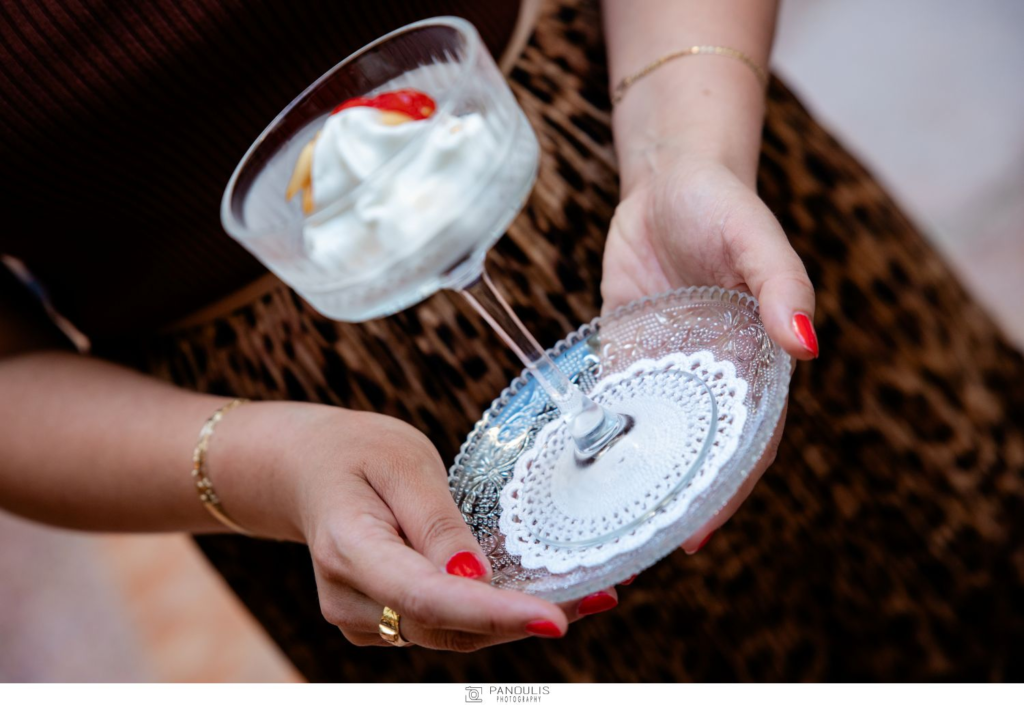
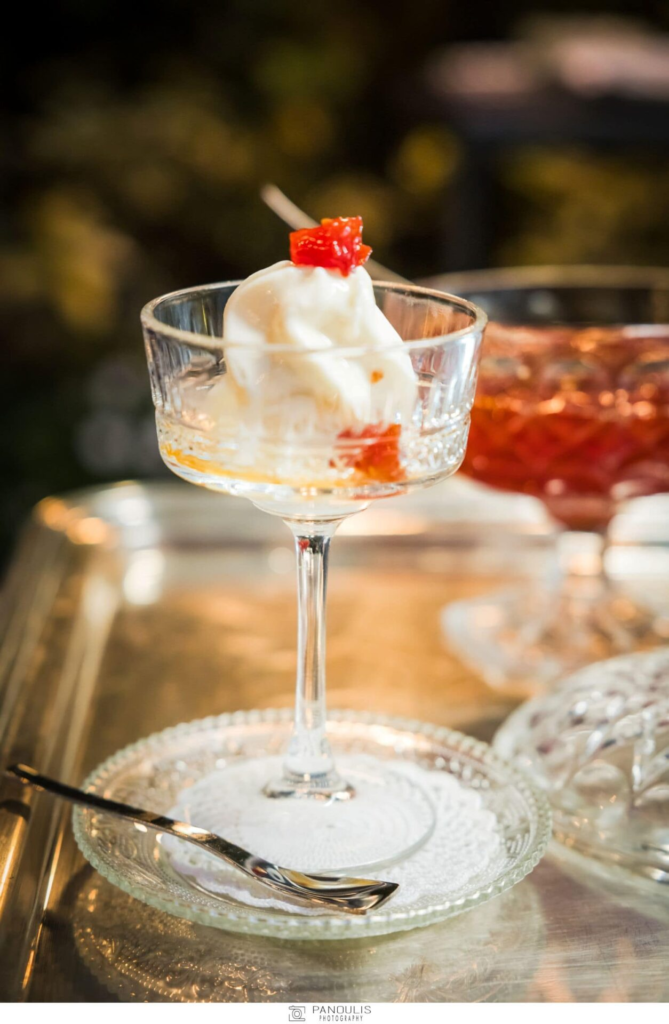
The narrative reaches its climax with dessert. A scoop of fiore di latte ice cream is paired with spoon sweet made from cherry tomatoes. The choice is deeply personal. It recalls childhood memories of the chef’s grandmother’s home in northern Greece, where traditional spoon sweets were served on small crystal dishes beside a courtyard scented with rose geranium.
The dessert had found its final form. Yet something was still missing: an object capable of connecting flavour with memory.
“How should I serve it?” Koustoudis remembers asking himself.
The answer came almost immediately.
The semedaki.
The handmade lace doily that once appeared in almost every Greek household.
Knowledge passed from generation to generation
The chef turned to the Cultural Association of Women of Spata, “The Friends of Knowledge”, an organisation that has spent decades documenting and preserving local history, folklore and traditional techniques. Its members are not professional lacemakers. They are women who learned crochet from their mothers and grandmothers and continue to safeguard this knowledge as part of Greece’s cultural memory.
“We’re not an association that makes lace,” explains Vasiliki Diangelaki. “These are techniques each of us learned at home. Our mission is simply to preserve what still survives.”
The women searched through family dowries for old lace patterns, gathered those who still mastered the crochet technique, and created the handmade lace pieces used in the dessert presentation. One of these became the pattern later transferred onto the ceramic plate.
For them, the collaboration was deeply moving.
“We were touched by the way they had conceived the project,” recalls the association’s president. “We realised they weren’t using the lace doily simply as decoration, but as a way of bringing tradition into the present.”
Their concern extends beyond preserving the objects themselves. More importantly, they strive to safeguard the knowledge embedded within them.
“There are fewer and fewer hands able to recreate these techniques.”
With this in mind, the association has published an album documenting traditional embroidery from family dowries in the Spata region, recording an art form that was traditionally transmitted orally and now risks disappearing.
“Just as we would never throw away our grandmother’s traditional costume, we shouldn’t allow these handmade works to disappear either.”
From thread to clay
The handmade lace was never intended to remain only on the dining table.
Koustoudis wanted it to have a second life: an object that would encapsulate the philosophy of the entire project while becoming a keepsake of the experience.
This led to a second creative collaboration with ceramic artist Maria Oikonomidou. When the chef visited her studio carrying one of the handmade lace doilies, he was searching for a way to reinterpret it in a new form while preserving its memory.
The first idea was to create a ceramic coaster.
Oikonomidou proposed something else.
“A plate.”
In this way, the lace itself became part of the gastronomic experience. Its delicate pattern was impressed into clay and transformed into a white ceramic plate that preserves the trace of the handmade textile without literally reproducing it.
“It wasn’t simply a plate. There was an idea behind it.”
For Oikonomidou, the collaboration was meaningful not only because of the object itself but because of the shared values connecting everyone involved—the chef, the women of the association and herself.
“Cooking, ceramics and crochet all rely on patience, craftsmanship and love for what you do.”
In this way, a small domestic object acquired a second life as a living imprint of a tradition that continues to evolve.
When hospitality becomes culture
Such a project, however, would not have been possible without the trust of the hotel itself.
For Asterios Koustoudis, sustainability extends far beyond the sourcing of ingredients. It begins with the land and the people who cultivate it, but also embraces the communities that preserve local knowledge, traditional skills and cultural practices.
“If sustainability concerns producers, then it also concerns local communities. And if it concerns local communities, then it must also concern folk art and tradition.”
This way of thinking led directly to the collaboration with the Women’s Cultural Association of Spata.
For the chef, the handmade lace was never a nostalgic decorative reference. It was an authentic expression of Greek cultural identity.
“These small details symbolise something much greater. They connect contemporary gastronomy with tradition, with memories of the people we love and the family table, while also celebrating the creativity of the people of this country.”
An idea like this, however, also requires an institution willing to support it.
Behind the project stands Hotel Grande Bretagne’s decision to embrace a different approach to gastronomy. As Koustoudis explains, the hotel’s trust made it possible to bring together around the same table a producer, a cultural association, a ceramic artist and a community dedicated to preserving traditional craftsmanship.
“You need an organisation that believes gastronomy is not only about food, but also about the people, the stories and the culture that accompany it.”
Ultimately, this may be the project’s greatest achievement.
It brings together people who, each in their own way, serve the same purpose: a producer preserving heirloom seeds; a ceramic artist transforming lace into clay; a cultural association documenting traditional techniques before they disappear; and a chef who searches for his own memories through flavour.
The result is far more than a distinctive summer menu.
It is a reminder that tradition remains alive when it finds new ways to express itself when its knowledge continues to pass from generation to generation and keeps inspiring contemporary creativity.
Info
Location: ATRIUM of Alexander’s Lounge, Hotel Grande Bretagne Opening Hours: 11:00 am – 2:00 am “Il Giardino Segreto” Tasting Menu: 5:30 pm – 11:30 pm

 PEPI NIKOLOPOULOU