 KATERINA PARRI
By Sofia Triantou
Chestnuts contain high levels of potassium and vitamins C, B1, and B2, in amounts comparable to fresh fruit
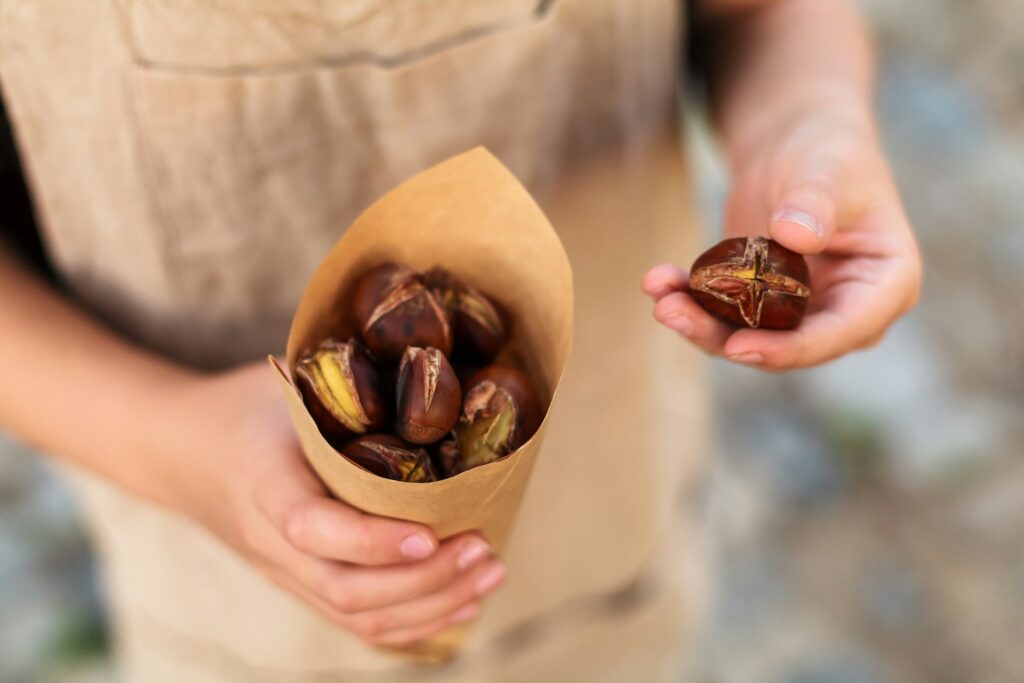
In our memories, there are images and aromas that warm our emotions like the wonderful sight of roasted chestnuts as we stroll through the streets shopping for Christmas gifts. Roasted chestnuts and salepi along winter pedestrian streets; corn and popcorn outside summer cinemas.
Chestnuts, I would say, are full of grace, whether roasted or raw, with a wonderful flavor. They are said to be among the first foods consumed by humans, dating back to prehistoric times. Chestnuts appear in the fossil record more than 85 million years ago in North America, Europe, and Asia.
The European, or Spanish, chestnut actually originates from Asia Minor. It is believed that the ancient Greeks were the first to introduce and cultivate chestnuts in the Mediterranean region around 3,000 years ago. Later, the Romans were responsible for expanding their cultivation into northwestern and central Europe, and it is thought that the Latin name Castanea derives from the city of Castanea in the Roman Empire, where the tree was particularly common.
In 1904, a bark fungus was accidentally introduced from China to New York City, killing nearly the entire population of American chestnut trees from Maine to Georgia. This chestnut blight was the greatest ecological disaster in American history, though it has largely been forgotten today. More than 30 million acres of chestnut forest were destroyed over 40 years. The impact on mountain communities that relied on chestnuts for food, as well as on trade, was devastating.
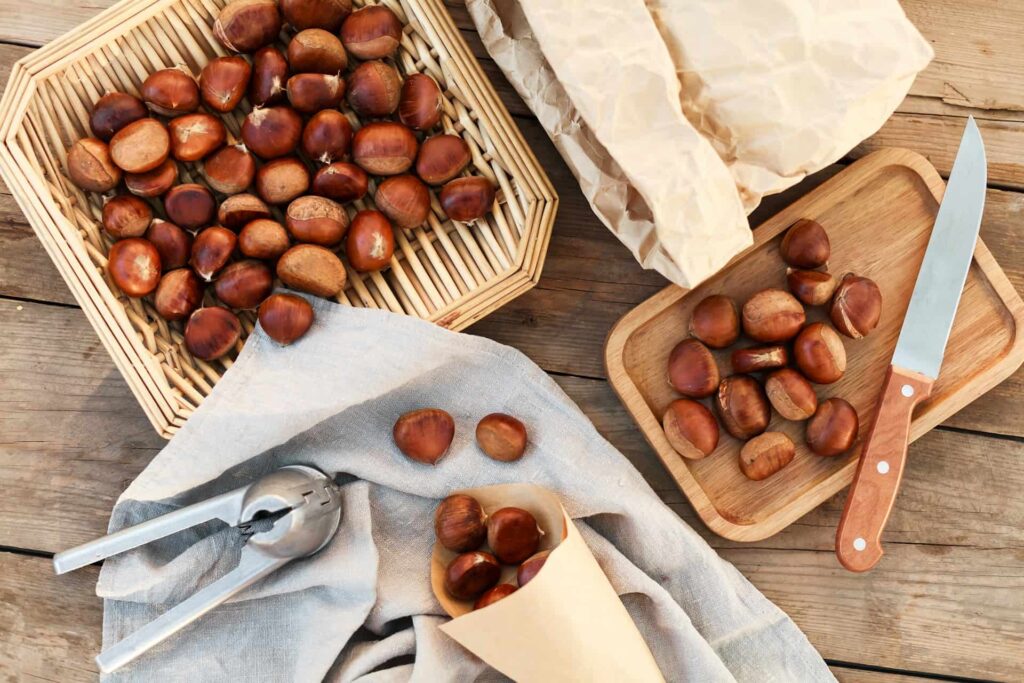
There are four main species of chestnuts: the Japanese chestnut (Castanea crenata), the Chinese chestnut (Castanea mollissima), the American chestnut (Castanea dentata), and the European chestnut (Castanea sativa).
Nutritionally, chestnuts are similar to brown rice, but with double the protein content. They also contain high levels of potassium and vitamins C, B1, and B2, in amounts comparable to fresh fruits.
Cooking methods vary widely. Chestnuts can be boiled with their shells on; another common method is roasting them with their shells in the oven or over hot embers. However, the shell must be scored or the chestnuts cut in half with a knife to prevent them from exploding while roasting.
A tree with many virtues: the fruits, flowers, and leaves are all valuable for our wellbeing. Medicinally, chestnut leaves are rich in tannins and contain high levels of vitamin K. Teas made from the leaves are used to treat respiratory ailments. Tea prepared from chestnut flowers was traditionally used to treat sinusitis.
Today, milk made from ground chestnuts is increasingly used as an alternative for those with lactose intolerance. Chestnut honey is said to boost libido and soothe the stomach. Enjoy chestnuts in your yogurt with a few drops of chestnut honey, try wonderful chestnut soups with almond cream, and buy some chestnuts from the warm street braziers keeping their delightful aromas alive in the streets.