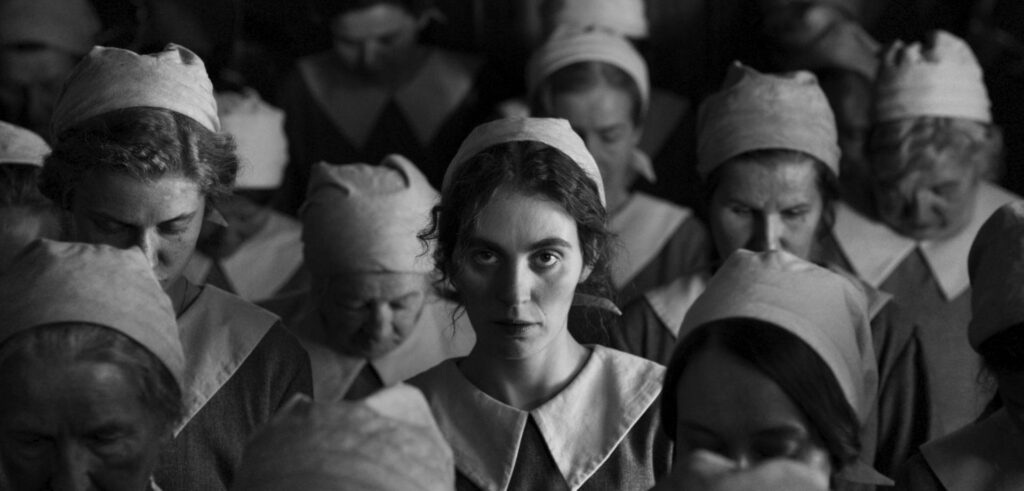
 KATERINA PARRI
This year is an anniversary year for the Athens Epidaurus Festival as it completes 70 years of activity
The artistic programme for the Athens Epidaurus Festival 2025 has been announced, presented by artistic director Katerina Evangelatou. This year is an anniversary year for the Athens Epidaurus Festival as it completes 70 years of activity. World premieres, international co-productions and a special evening of symphonic music with Theodoros Kourentzis are included in this year’s programme, while it was also announced that the Stavros Niarchos Foundation will be the main sponsor of the anniversary programme at Epidaurus.
This year’s Epidaurus will open with Sophocles’ Antigone by Ulrich Rasche, a three-day co-production with the National Theatre. Among the foreign names on the programme is that of the Lebanese-Canadian writer, director and actor Ouazdi Muawad, artistic director of the Théâtre National de la Colline in recent years and best known in Greece as the screenwriter of the Oscar-nominated foreign-language film Through the Flames. It has been announced that Juliette Binoche will star in this new work by Ouazdi Muawad.


Maria Protopappa, Yannis Houvardas, Michael Marmarinos with the Greek National Theatre and Dimitris Tarlou are the Greek directors whose performances will be presented at the Ancient Theatre of Epidaurus, while there will also be a repeat performance of Theodore Terzopoulos‘ Oresteia.
Below is the note from the Artistic Director, Katerina Evaggelatou, for the Athens Epidaurus Festival 2025, as well as the full detailed programme of the Ancient Theatre of Epidaurus and the Small Theatre of Ancient Epidaurus:
This summer, the Athens Epidaurus Festival will reach its seventieth year of operation. Seventy years of unwavering artistic activity and fruitful dialogue with both the local and international scene. To honour this milestone, we have compiled a series of special and large-scale works, which we are proud to include in our programme.
Today, we are delighted to unveil the programme of Epidaurus, featuring a total of eight events. In detail, we will have the chance to enjoy four Festival productions and co-productions, performances with the signature of our two national theatres, and two independent productions. Please note that seven out of these eight works will have their world premiere at the Ancient Theatre of Epidaurus.
Audiences will have the opportunity to experience leading directors in worldwide premieres of monumental works from the canon of Ancient Drama; international co-productions and new works inspired by Ancient Drama, written by distinguished contemporary playwrights within the framework of the Contemporary Ancients Cycle; and finally, a special evening of classical music, presented as an exception at Epidaurus.
At this point, I wish to emphasise once again how vital it is to present works at the Ancient Theatre of Epidaurus that were specifically conceived and produced for its unique space. This year, urged by our anniversary celebration, we complement our programming with four special productions—three theatrical performances and a concert—which will premiere at Epidaurus. Please let me again note that three of these performances will conclude their journey here, as they will not proceed to the touring phase.
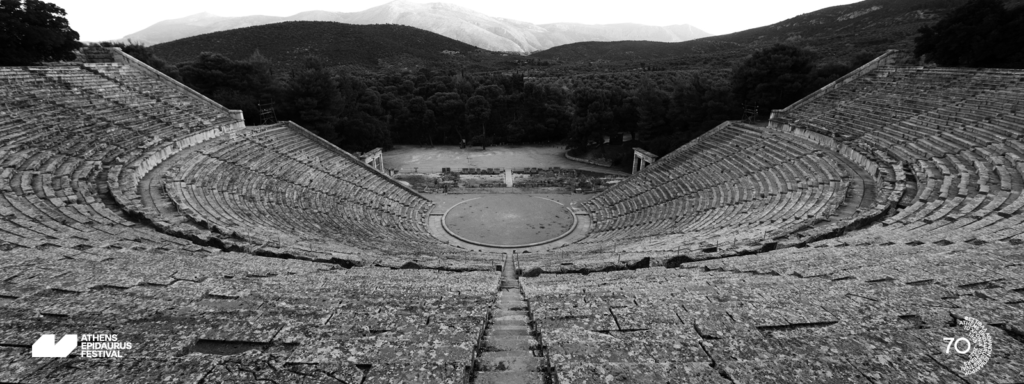
Such singular works are indeed particularly complex in nature, both in terms of their demanding artistic conception and the logistical challenges they entail. On our part, we can confidently say that we would not be in the position to present them to you today without the support of our steadfast companion in our artistic quest, the Greek Ministry of Culture, as well as the extremely generous contribution of a grand donor.
It is therefore our pleasure to announce our collaboration with the Stavros Niarchos Foundation, the Grand Donor of the Epidaurus Anniversary Programme. Thanks to its invaluable and courteous contribution, we are able to realise remarkable productions and co-productions this year, showcasing at Epidaurus prominent Greek and international artists from the fields of theatre and classical music—two art forms that the Festival has ardently maintained at the forefront of our country’s cultural landscape during its seventy years of operation.
We would like to extend our warmest gratitude for this grand donation, which marks and inaugurates a new collaboration between the Festival and the Stavros Niarchos Foundation on the occasion of the grand celebration of Culture we have envisioned for the summer of our Anniversary Year, 2025.
Seventy years of the Athens Epidaurus Festival. Seventy years of Culture, with humanity at the core of our mission—nurturing a dialogue between Art and Society, approaching cultural production as a locus of encounter, a bridge that connects people and communities. The Festival remains attuned to the pressing issues of our times, reaching the audience not only through the contemporary themes and sensibility of its performances but also through notable initiatives that we are pleased to highlight on the occasion of this anniversary.
Today, as we present the programme for the Ancient Theatre of Epidaurus for summer 2025, along with the Little Theatre of Epidaurus for July—the August programme, entirely dedicated to music, will be announced soon, along with the Festival’s programme in Athens—I would like to outline the key pillars that define the Epidaurus Festival, which also crystallise our objectives in recent years.
Epidaurus means Festival. And Epidaurus means Ancient Drama. A cornerstone of our programming and a constant protagonist remains Ancient Drama and its evolution through the years.
The Festival has established initiatives to foster research into Ancient Drama and the evolution of its tradition. A Festival with seventy years of history must always have its gaze turned to the future, even if this means that sometimes it has to take risks by diving into the unknown—yet with its compass firmly fixed to present-day human needs.
Our enduring mission then is to create a bridge that connects the legacy of Ancient Drama with today’s performing arts and dramaturgical quests, rather than investing our efforts to reconstruct or portray—almost in a museological manner—how these works/performances were allegedly performed in the past. As a result of this, it is our firm aspiration to give birth to works and performances that are relevant to contemporary audiences while at the same time deepening the viewers’ perspective on art and the world at large.
To this end, we have undertaken focused efforts and implemented strategic actions to strengthen contemporary dramaturgy, always in dialogue with the ancient texts—texts that still resonate today and challenge us to reflect on them boldly and with fresh insight.
One of the signature initiatives in this direction is the Contemporary Ancients Cycle, which commissions new theatrical works that refer to the timeless source of Ancient Drama, from their initial creation to their staging and publication. Currently in its fifth year, this Cycle was specifically conceived for Epidaurus—both for the Ancient Theatre of Epidaurus and the Little Theatre of Epidaurus—where it has framed the presentation of thirteen new works from 2021 to 2024—works that not only have been published but have also forged a new theatrical lineage for the Festival. Among the distinguished playwrights and creators who have responded to our call in recent years and graced the Cycle with new works are Maja Zace and Tiago Rodrigues (at the Ancient Theatre of Epidaurus), Christos Chomenidis, Vangelis Hatziyannidis, Amanda Michalopoulou, Vivian Stergiou, and Giannis Mavritsakis, among others.
The Contemporary Ancients Cycle is significantly enriched, welcoming more works across various genres.
In addition to Wajdi Mouawad’s play at the Ancient Theatre of Epidaurus, this year’s July at the Little Theatre of Epidaurus is purely dedicated to the programme and objectives of the Cycle. Beginning with the educational programme Parodos, it culminates in five works inspired by Ancient Drama—not strictly theatrical but also music-theatre and film projects. As a shared feeling among the team, I am particularly pleased to say that this year, the cycle enters a new phase, embracing a more fluid and free artistic expression, blending genres and languages, while always remaining rooted in Ancient Drama and its contemporary legacy.
In addition to the creation of new works inspired by myth and Ancient Drama, our foremost intention remains the systematic invitation of renowned international directors—representatives of innovative artistic languages and European theatre traditions—to collaborate with talented casts and artistic contributors from Greece. Currently in its third consecutive year—following Frank Castorf’s Medea in 2023 and Timofey Kulyabin’s Iphigenia in Aulis in 2024—this initiative provides creative stimuli for our artistic community while opening new avenues of communication with the international artistic scene.
The third pillar in our mission to bridge Ancient Drama with contemporary artistic creation is our educational programmes. These are Little Trackers, the theatre education programme that takes place at Epidaurus; Parodos, an interdisciplinary research programme that explores new dramaturgical approaches on Ancient Drama, held at the Little Theatre of Epidaurus; and Open Plan, now in its fourth year, which proposes creative educational activities inspired by Ancient Drama, extending the Festival’s reach throughout the winter months. For one more year, the Open Plan platform went hand in hand with Fashion, Ceramics, and Dance, inviting us additionally to wander in the magical universe of Paper and discover the special crafts and techniques that hide within it. This year, we turned to Dionysus and Apollo for inspiration—these archetypal figures that embody this dynamic interplay of contrasts. Animated by this brilliant and mighty divine duet that we encounter in countless mythological episodes and Ancient Drama, the Open Plan workshops offered us once again this year exciting gems of creative expression and imagination.
The detailed programme of the Athens Epidaurus Festival for 2025—featuring over 90 international and local productions in theatre, dance, and music, alongside film screenings, discussions, visual art installations, and video art across all venues—will be announced shortly.
We are delighted to announce that the full programme of the Athens Epidaurus Festival 2025—featuring over ninety international and Greek productions in theatre, dance, and music, alongside film screenings, discussions, art installations, and video art across all venues—will be soon announced!
Katerina Evangelatos | Artistic Director | Athens Epidaurus Festival

Artistic programme 2025 at the Ancient Theatre of Epidaurus
From June 27th until August 23rd 2025
June 27, 28 & 29
ATHENS EPIDAURUS FESTIVAL – NATIONAL THEATRE – ULRICH RASCHE
Antigone by Sophocles
In recent years, Epidaurus has carved a distinct artistic identity through a series of world premieres, achieved either through co-productions with leading international institutions (Schaubühne, Schauspielhaus Bochum, and Residenztheater), by hosting acclaimed international theatre companies (such as the Comédie-Française under Tiago Rodrigues) or by commissioning eminent European directors to stage classic works of Ancient Drama, such as Frank Castorf’s Medea in 2023 and Timofey Kulyabin’s Iphigenia in Aulis in 2024, both of which featured Greek actors.
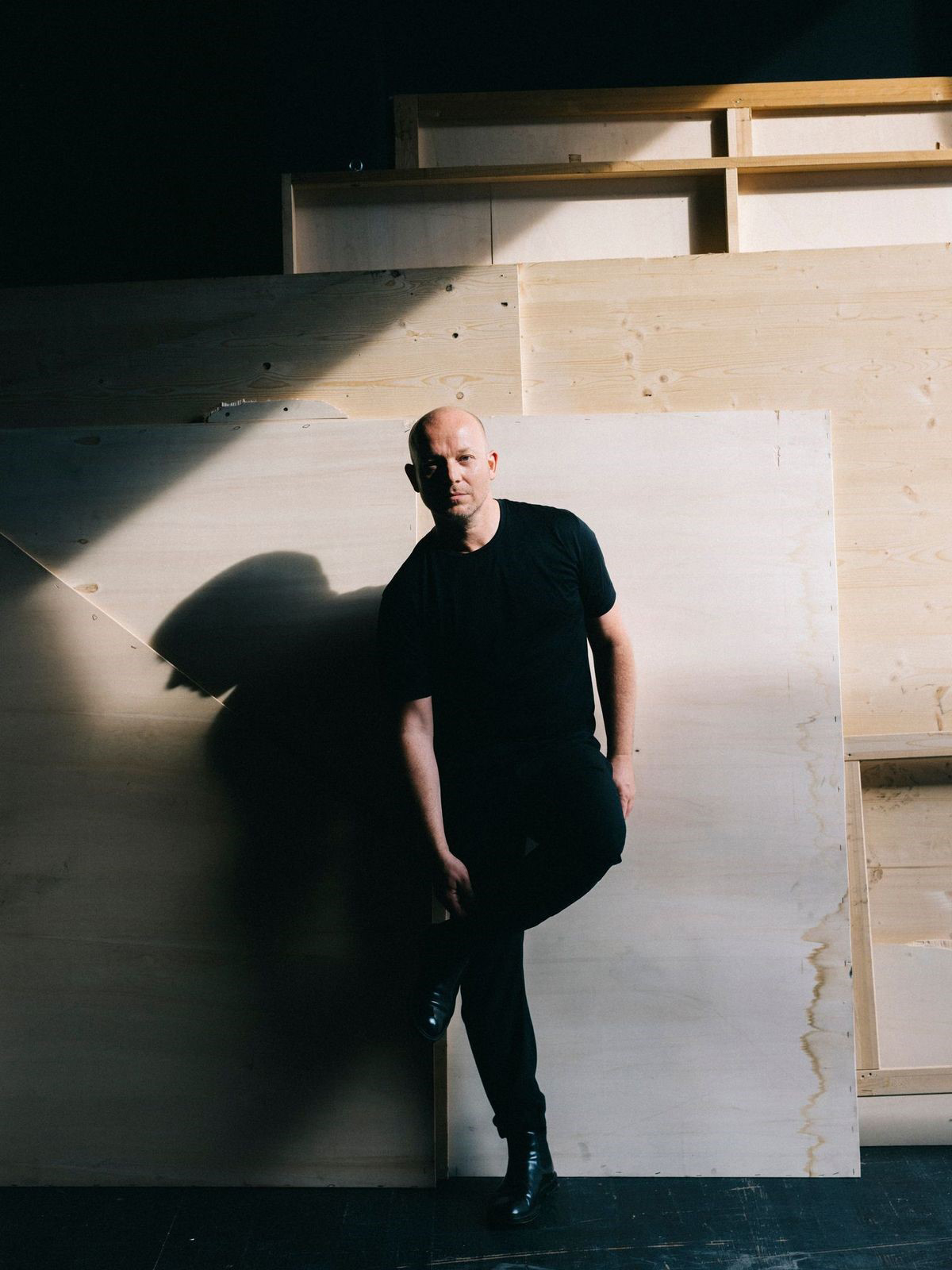
This year, Ulrich Rasche—whom we first met in 2022 with his striking approach of Agamemnon by Aeschylus in a co-production with Munich’s Residenztheater—returns to the Ancient Theatre of Epidaurus to helm direction for Sophocles’ Antigone, together with a stellar cast of Greek actors. A co-production of the Athens Epidaurus Festival and the National Theatre of Greece, the performance will be presented in Epidaurus for three nights only.
For those who witnessed Agamemnon, the ecstatic energy of the performers as they moved ceaselessly atop a vast motorised revolving stage remains indelible. Taking his radical stage language one step further, Rasche now relies on the unrivalled translation of N. Panagiotopoulos to bring to life the timeless heroine of Antigone.
The performance will inaugurate the Festival’s programme on the final weekend of June and is poised to leave the most profound artistic imprint on the anniversary year of 2025.
Direction – Set design Ulrich Rasche • Dramaturgy Antigone Akgün • Translation Nikos A. Panagiotopoulos • Music Alfred Brooks • Costume design Angelos Mentis • Lighting design Eleftheria Deko • Chorus training and guidance Yannik Stöbener • Assistant director David Moser • Set design assistant Lukas Kötz • Assistant to the director Thomais Triantafyllidou • Assistant to the set designer Evangelos Agatsas • Cast Giorgos Gallos Creon, Dimitris Kapouranis Haemon, Kora Karvouni Antigone, Filareti Komninou Tiresias, Kitty Paitazoglou Ismene, Thanos Tokakis Guard • Chorus Vassilis Boutsikos, Stratis Chatzistamatiou, Dimitris Kapouranis, Thanasis Raftopoulos, Gal Rompissa, Giannis Tsoumarakis, Giorgos Ziakas and three additional actors
Lead Donor of Epidaurus Anniversary Programme: Stavros Niarchos Foundation (SNF)
The SNF sponsorship supports the participation of the Athens Epidaurus Festival in this co-production.
July 4 & 5
POREIA THEATRE – DIMITRI TARLOW
Electra by Sophocles
What does it mean “to restore justice”? Can one live in the aftermath of violence? Is violence inevitable? Will revenge provide closure to the cycle of bloodshed? Is redemption ever truly possible? And, ultimately, what is the meaning of resistance when all seems lost?

Poreia Theatre returns to Epidaurus, this time with its Artistic Director, Dimitris Tarlow, making his directorial debut at the Argolic theatre with Sophocles’ Electra.
In a world plagued by totalitarianism and social injustice and an era where violence and revenge are often portrayed as “necessary evil,” Sophocles’ Electra takes on an eerie relevance. Far from being merely a tale of vengeance, this tragedy becomes a mirror that reflects humanity’s moral dilemmas and, foremost, the eternal conflict between justice and ethics.
Electra, a member of the accursed family of Atreides and a woman entangled in this cycle of blood and horror, is more than a tragic figure—she is someone who personifies the dilemma between the pursuit of justice and the moral imperative to forego violence. She is not just a tragic pawn of fate but a creation of her own volition, one wholeheartedly invested in the cause of justice. One then may wonder, is she a victim of her obsession with revenge or a voice of resistance against the brutality of power? And why, when the palace is freed from its tyrants, does she not step inside? Is it because she merely chooses to refrain from the House she despises so much or because she rejects the very system that she fought so vehemently against? Is she still a captive of the extreme emotions that defined her, such as the grief for her father’s loss, the hatred towards her mother, and the longing for her lost brother? One thing is certain: her passion does not quiet down, not even after the much-sought catharsis is accomplished.
In Electra, the poet does not cater to answers. Gods are away. Oracles coincide with human decisions by chance. Conscience falls by the wayside. The Furies are yet to appear. Still, the burden for all survivors is unbearable. It is this cost of choice, this relentless human need for catharsis at any price, that Sophocles’ Electra urges us to contemplate. After all, Sophocles will not grace us with a sequel, as he will not complete a trilogy, and his work shall stop here. For every single one of the doubts and questions he once posed will find their resolution within these 1,510 verses of astounding symmetry and economy.
Translation Giorgos Chimonas • Direction Dimitri Tarlow • Set & Costume design Paris Mexis • Music composition Fotis Siotas • Lighting design Alekos Anastasiou • Choreography Markella Manoliadi • Dramaturgy collaborator Eri Kyrgia • Assistant to the director Dimitra Koutsokosta, Aristi Tselou • Assistant set & costume designer TBΑ • Assistant choreographer Maro Stavrinou • Assistants to the lighting designer Charis Dallas, Nafsika Christodoulakou • Cast Giannis Anastasakis Pedagogue, Grigoria Metheniti Chrysothemis, Loukia Michalopoulou Electra, Nikolas Papagiannis Aegisthus, Ioanna Pappa Clytemnestra, Anastasis Roilos Orestes, Periklis Siountas Pylades • Chorus Margarita Alexiadi, Asimina Anastasopoulou, Ioanna Demertzidou, Ioanna Lekka, Eleni Sisti, Lydia Stefou, Anna Symeonidou, Chara Tzoka, Eleni Vlachou • On-stage musicians Fotis Siotas, Tasos Misirlis
July 11 & 12
National Theatre of Northern Greece – Cyprus Theatre Organisation – Michail Marmarinos
ζ – η – θ The stranger
A return to the sources: a visit to three Odyssey rhapsodies
In the afterglow of two performances that were destined to linger in memory, NEKYIA—presented with the Japanese theatre troupe NOH in 2015—and Sophocles’ Trackers in 2021, Michail Marmarinos revisits the Ancient Theatre of Epidaurus with yet another riveting dramaturgical proposal. Ηere, he orchestrates a return to the sources through a journey to three rhapsodies of the Homeric epic, confirming once more that the endless mystery of oral Storytelling (the cavernous mystery of Theatre itself) can still thrillingly propel us “to where history still happens”.
“Alcinous, majesty, shining among your island people,
what a fine thing it is to listen to such a bard
as we have here—the man sings like a god.
The crown of life, I’d say. There’s nothing better
than when deep joy holds sway throughout the realm
and banqueters up and down the palace sit in ranks,
enthralled to hear the bard, and before them all, the tables
heaped with bread and meats, and drawing wine from a mixing bowl
the steward makes his rounds and keeps the winecups flowing.
This, to my mind, is the best that life can offer.
(Rhapsody ι’ 2-11, translated by Robert Fagles)
* The additional excerpts of Iliad used in the performance’s dramaturgy are translated by D.N. Maronitis, Agra Publications, 2012.
Translation Dimitris Maronitis • Direction Michail Marmarinos • Dramaturgy Eleni Moleski, Michail Marmarinos • Set design Yorgos Sapountzis • Costume design Eleftheria Arapoglou • Music Andys Skordis • Choreography Gloria Dorliguzzo • Lighting design Eleftheria Deko • Mask maker Martha Foka • First assistant to the director Eleni Moleski • Second assistant to the director Alexia Paramytha
July 19
Utopia—Teodor Currentzis
Regula Mühlemann – Eve-Maud Hubeaux
Gustav Mahler: Symphony No. 4 and Songs on the Death of Children (Kindertotenlieder)
Each concert announcement by Teodor Currentzis stirs high expectations and waves of anticipation as the charismatic conductor’s performances guarantee profound artistic experiences for the audiences of music lovers worldwide. All the more so when Currentzis’ profuse musical personality engages with the grandeur of the Mahlerian oeuvre—music that challenges the listener’s intellectual and emotional cosmos through its existential excursions and metaphysical agonies.

In a unique concert at the Ancient Theatre of Epidaurus, the multi-awarded Greek conductor will lead Utopia, the independent orchestra he founded in 2022, in Mahler’s Symphony No. 4, the Austrian composer’s most celebrated work. Remarkable Swiss soprano Regula Mühlemann, one of the finest talents of her generation, will perform the fourth movement’s song.
The second part of the evening will feature mezzo-soprano Eve-Maud Hubeaux performing the heart-wrenching song cycle Songs on the Death of Children (Kindertotenlieder), which Mahler composed between 1901 and 1904 in the form of an orchestral lieder based on five poems by Friedrich Rückert.
Lead Donor of Epidaurus Anniversary Programme: Stavros Niarchos Foundation (SNF)
July 25 & 26
Athens Epidaurus Festival – Lykofos – Yannis Houvardas
Oedipus Tyrannus at Colonus
Celebrating fifty years of unwavering theatrical presence, Yannis Houvardas translates, adapts, and directs Sophocles’ Oedipus Rex and Oedipus at Colonus into a unified work on stage.
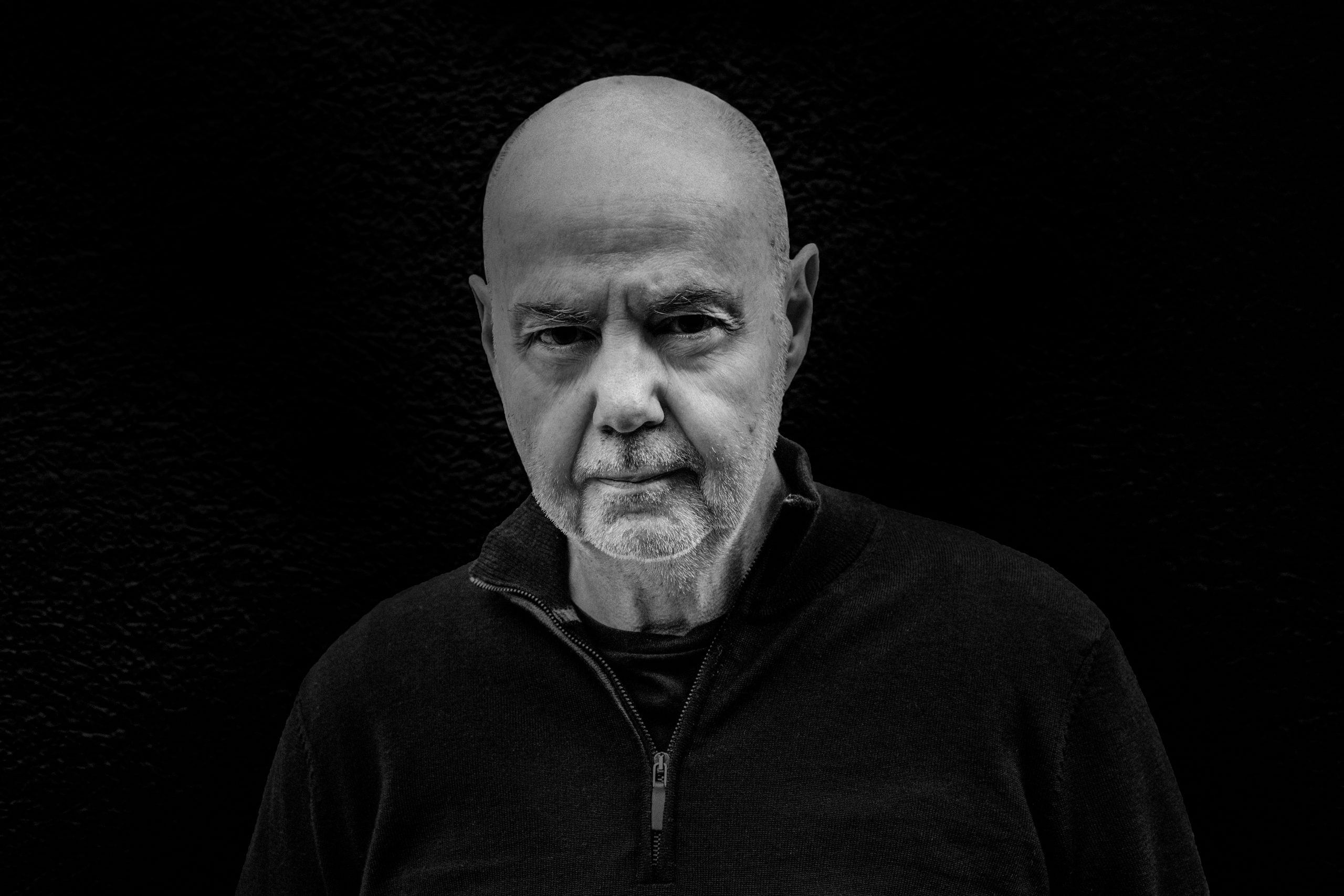
Under the guidance of the seasoned Greek director, an ensemble of distinguished actors and contributors will recount, with the accompaniment of live music, the shattering story of Oedipus, starting from the end and moving backwards to the birth of his tragic fate.
Now blind and in the twilight of his years, Oedipus, together with his close relatives, arrives at ancient Colonus—a place of mystery scattered with sacred burial monuments. There, through divine intervention, they will access the sacred secrets and finally learn the reasons they have undergone such tormented lives. In the course of this transition, the characters, alongside Oedipus, relive the devastating events of “Rex” and witness the hero’s final elevation and ascension to the heavens, as they once again pass through the stages of approaching the divine spirit detailed in Oedipus at Colonus.
Houvardas’ vision is to present these two works—profoundly different in conception and tone while written decades apart—as a single and seamless narrative. His approach honours the essence of Sophocles, the greatest of the tragic poets, while ensuring that each play remains distinctly recognisable within the performance.
Translation – Adaptation – Direction Yannis Houvardas • Set design Eva Manidaki • Costume design Ioanna Tsami • Music Angelos Triantafyllou • Movement Ermira Goro • Lighting design Nikos Vlasopoulos • First assistant director Despina Lardi • Assistants to the director Iliana Kaladami, Nafsika Kirki • Cast Konstantinos Bibis, Orestis Chalkias, Nikos Chatzopoulos, Stefania Goulioti, Karyofyllia Karabeti, Nikos Karathanos, Penelope Tsilika • Chorus Giannis Kotsifas, Ektoras Lygizos (leaders), Polyxeni Papakonstantinou, Theovi Styllou, Angelos Triantafyllou
Lead Donor of Epidaurus Anniversary Programme: Stavros Niarchos Foundation (SNF)
August 1 & 2 / WORLD PREMIERE – CO-PRODUCTION
Athens Epidaurus Festival – Théâtre national de la Colline – Wajdi Mouawad
Europa’s pledge
Lebanese-Canadian author, director, and actor Wajdi Mouawad—Artistic Director of Théâtre National de la Colline in recent years—became known to the Greek audience primarily for his screenplay in the Oscar-nominated foreign-language film Incendies (directed by Dennis Villeneuve in 2010) based on his titular theatrical play.
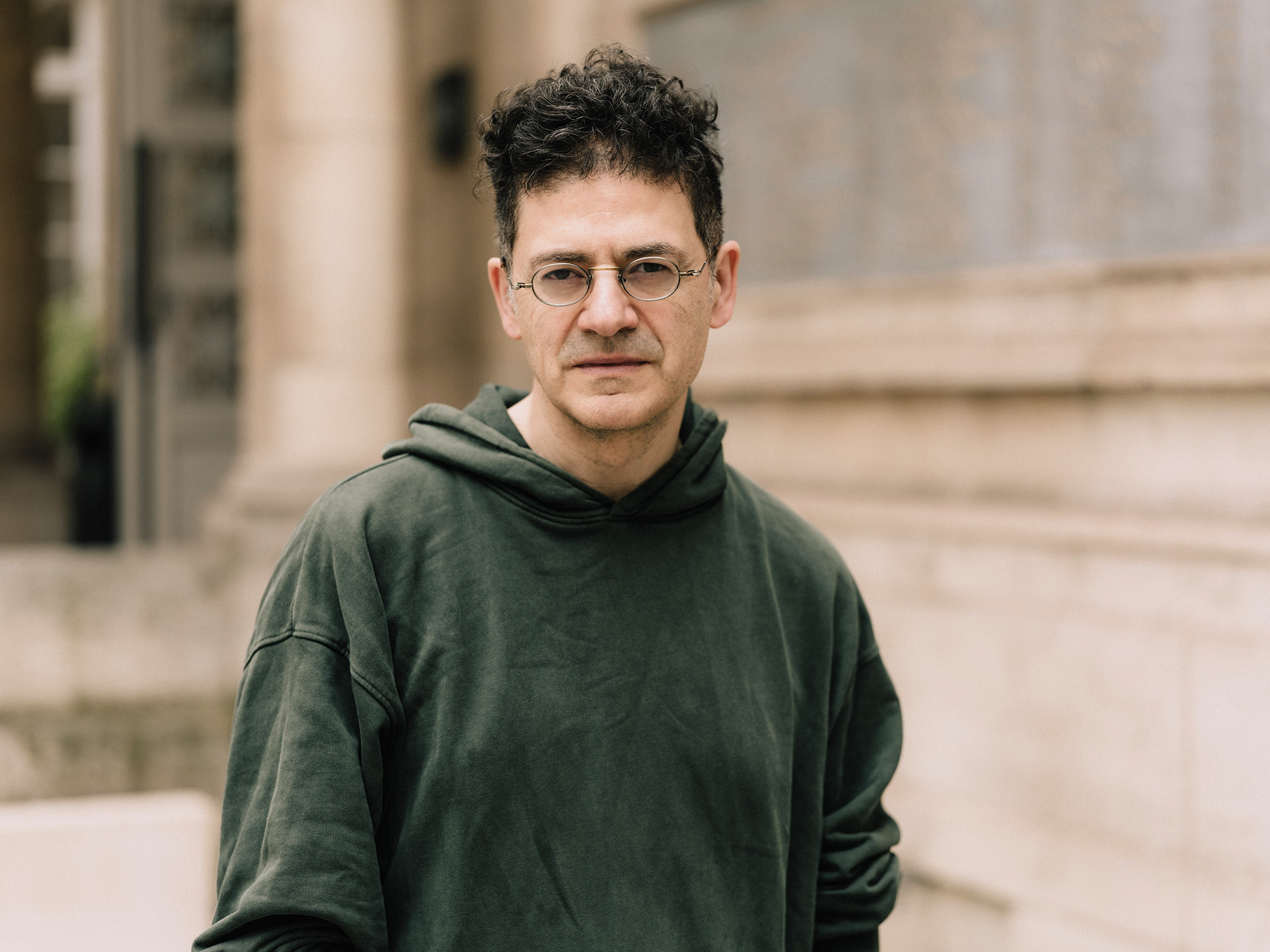
This ominous travelogue of Lebanon, which unfolds through a traumatic family story amid a country caught up in the maelstrom of civil war, claims a profound affinity with ancient tragedy, Mouawad’s principal source of inspiration: the schism at the heart of family, the struggle between genders, uprooting, the dire reality bequeathed from the previous generation to the next, and the search for catharsis are themes that resurface in his plays, many of which are directly informed by Ancient Drama heroes/heroines.
Politically charged and in direct dialogue with contemporary history, Mouawad’s theatrical work touches upon Myth in the same breath, seeking to illuminate the archetypal dimensions of the human condition regardless of place and time. At the same time, it delves into the search for identity beyond racial, religious, and familial boundaries, while his bold lyrical language lends the characters a distinctly contemporary sensibility, as we witnessed in his most recent play, Birds of a kind, presented last year at the National Theatre.
Mouawad first appeared at the Odeon of Herodes Atticus in 2011 with the international co-production Des Femmes, a modular adaptation of Sophocles’ Antigone, Electra, and Women of Trachis that featured a French-Canadian troupe./h3>
Among the most compelling dramaturgs currently worldwide, he revisits the Festival this year—this time as a newcomer to Epidaurus—with a new work inspired by Ancient Drama heroines. Commissioned as part of the Contemporary Ancients cycle, the performance will be presented on the first weekend of August by a multinational cast in a multilingual performance—an international co-production destined to become a summer highlight.
Text–Direction Wajdi Mouawad
Lead Donor of Epidaurus Anniversary Programme: Stavros Niarchos Foundation (SNF)
August 8 & 9
Maria Protopappa
Andromache By Euripides
We are transported far from the great city-states, deep into the Greek countryside: to Thessaly, Phthiotis, and, finally, Thetideion. To the house of Neoptolemus, Achilles’ son.
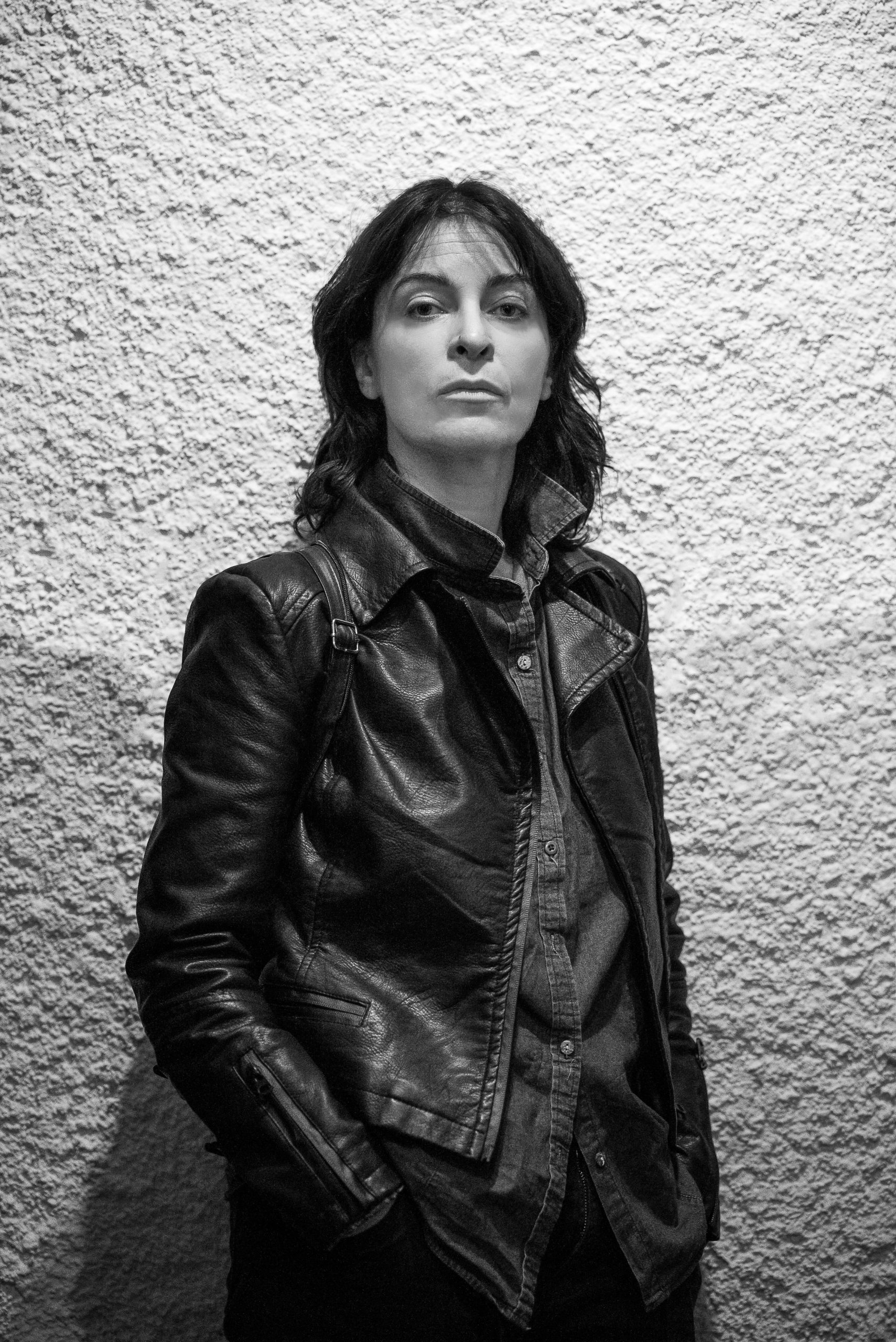
The fierce, ruthless, and irreverent hero of the Iliad, the one who cemented the victory of Greeks at Troy, now proves incapable of fulfilling his roles as a father, husband, and leader. He flees in search of a cure at Apollo’s oracle in Delphi.
His war-fuelled frenzy has tainted his marital bed, his house, and his city. Before the eyes of the woman he irreparably wronged, he will receive the retribution known as “the punishment of Neoptolemus.”
The country, the province, now decimated, is represented by a grotesque Chorus of women, abandoned, fearful, resigned, and bewildered.
In an inversion of the heroic Iliad, Euripides in Andromache lays bare the arrogance of the Greeks and the illusion of their cultural superiority. The pre-war promises for a united and mighty nation are dispelled amid a landscape ripe with decay, ageing, fear, and envy.
The burden of responsibility falls not only on the architects of destruction but also on those who placed their beliefs in them and played a part in the collapse of values through their complacency. It is the next generation that must pay the price.
Translation G. V. Tsokopoulos • Direction – Adaptation – Dramaturgy Maria Protopappa • Dramaturgy collaborator Elena Triantafyllopoulou • Artistic collaborator Eleni Spetsioti • Set & costume design Eva Nathena • Music composition Lolek • Lighting design Sakis Birbilis • Movement Alexandros Vardaxoglou • Vocal coaching Anna Pangalou • Assistant to the director Evi Nakou • Cast Giannis Dalianis, Giorgos Fasoulas, Dimitris Georgiadis, Stella Gika, Tasos Lekkas, Dimitris Mamios, Dimitris Piatas, Maria Protopappa, Argyris Xafis, and five additional actors • Executive producer Kart Productions • Production Tehnihoros
August 22 & 23
National Theatre – Theodoros Terzopoulos
Oresteia By Aeschylus
Aeschylus’ iconic trilogy, Oresteia, directed by Theodoros Terzopoulos—in the first collaboration of the internationally celebrated director and teacher with the National Theatre—stands as one of the most remarkable instances in the recent history of Greek theatre.

Following its triumphant tour at select locations, this landmark performance returns to the Ancient Theatre of Epidaurus on August 22 & 23, drawing the curtain for this year’s Epidaurus cycle.
In the hands of Theodoros Terzopoulos, Oresteia becomes a performance of profound intellectual and philosophical depth that manages by virtue of its astonishing energy to broaden the boundaries of art and, ultimately, recount the history of humanity itself.
Both political gesture and multidimensional spiritual experience, the play was enthusiastically embraced by the thousands of spectators who witnessed it, as well as by the national and international media.
Following its premiere at the Ancient Theatre of Epidaurus in 2024, its touring across Greece and Cyprus, and its presentation at Vicenza, Italy, where it inaugurated the 77th Ciclo di Spettacoli Classici at the historical Teatro Olimpico, this unique performance returns to the place where it commenced its fascinating journey to offer all of us the opportunity to relive it one more time.
Translation Helene Varopoulou • Direction – Dramaturgy Theodoros Terzopoulos • Associate director Savvas Stroumpos • Set, costume, and lighting design Theodoros Terzopoulos • Original music composition Panagiotis Velianitis • Dramaturgy consultant Maria Sikitano • Performance dramaturg Irene Moundraki • Assistant to the director Theodora Patiti • Set design associate Socrates Papadopoulos • Costume design collaborator Panagiota Kokkorou • Lighting design collaborator Konstantinos Bethanis • Artistic collaborator Maria Vogiatzí • Video Nikos Pastras • Photographs Johanna Weber • Cast Babis Alefantis Pylades, Evelyn Assouad Cassandra, Anna Marka Bonissel Prophetess, Nikos Dasis Apollo, Tasos Dimas Watchman / Leader of the Chorus / Athenian Citizen, Sofia Hill Clytemnestra / Ghost of Clytemnestra, Ellie Ingliz Nurse, David Malteze Aegisthus, Dinos Papageorgiou Herald, Aglaia Pappa Athena, Myrto Rozaki Electra, Savvas Stroumpos Agamemnon, Alexandros Tountas Servant, Konstantinos Zografos Orestes • Chorus Babis Alefantis, Katerina Amplianiti, Evelyn Assouad, Aspasia Batatoli, Anna Marka Bonissel, Nikos Dasis, Katerina Dimati, Natalia Georgosopoulou, Katerina Hill, Ellie Ingliz, Vasilina Katerini, Thanos Magklaras, Elpiniki Marapidi, Lygeri Mitropoulou, Rosy Monaki, Stavros Papadopoulos, Dinos Papageorgiou, Vangelis Papagiannopoulos, Michalis Psalidas, Myrto Rozaki, Yannis Sanidas, Pyrros Theofanopoulos, Alexandros Tountas, Christoforos Vogiatzis
June 27 – August 23
Antigone. Law and Disobedience
Temporary exhibition
On the occasion of the world premiere of Ulrich Rasche’s Antigone (a co-production of the Athens Epidaurus Festival and National Theatre), the exhibition space of the Ancient Theatre of Epidaurus hosts a new temporary exhibition titled Antigone. Law and Disobedience.
Open to the public in parallel to the performances at the Argolic theatre, the exhibition traces the transformations of one of ancient drama’s most iconic works—a play that has profoundly shaped Western modern consciousness—during its multiple iterations over the seventy-year history of the Epidaurus Festival.
Precious documents from the Athens Epidaurus Festival and many more cultural organisations and theatre companies in Greece and abroad (photographs, costumes, set models, music scores, and audiovisual material) evoke key instances of the Epidaurus history in the memory of the visitor. Further, the exhibition approaches the palimpsest of theatrical performance through a historical lens, inviting visitors to contemplate Antigone’s enduring themes, such as the notion of law and disobedience as both personal and political choices, the tragic internal contradictions of justice, the conflict between customary and political law as well as between family and state, and the agonising private dilemmas in times of civil distress.
Concept – Supervision Katerina Evangelatos • Academic advisor Panagiotis Michalopoulos • Research – Documentation Konstantina Nikolopoulou • Research & documentation collaborator Eva Georgosopoulou • Art curator Thaleia Melissa
As part of the International Network of Ancient Drama
June 27 – August 23
Little Trackers
Children’s Creative Workshop in Epidaurus
Little Trackers, the successful theatre education programme that familiarises children with the wonderful and mysterious world of ancient myths, is back again this year! While parents and grown-ups attend the performances at the Ancient Theatre of Epidaurus, children have the unique opportunity to creatively engage with the content of the performances unfolding nearby on a whole other level! A team of experienced theatre educators and facilitators of music/movement and aesthetic education are participating in the programme.
Fridays and Saturdays
during the performances at the Ancient Theatre of Epidaurus
For children 5-10 years old
As part of the International Network of Ancient Drama
Artistic programme 2025 at the Little Theater of Ancient Epidaurus

STUDIO RESIDENCY
June 15 – 28
Parodos
Parodos, the interdisciplinary research programme (studio residency) launched in 2021, seeks to grant artists from a diverse artistic spectrum the opportunity to advance under ideal conditions their research on the dramaturgy of Ancient Drama in situ. The research process has a practical character and is developed in two stages: the first (research) takes place in Athens and the second (application) at the Little Theatre of Ancient Epidaurus. This year, director Dimitris Karantzas has been tasked with the general coordination and supervision of the programme.
As part of the International Network of Ancient Drama
July 4 & 5
Olia Lazaridou
Thēbae Desertae
By Kiriakos Charitos
Inspired by Sophocles’ Antigone
Now Thebes has the floor
These ruins you see
Are my scared walls
High temples and halls
Memory is nothing but language. In the long-forsaken countryside, a voice searches for a girl once called Antigone. The city awakens and begins to remember, shifting in and out of dreaming. Its pieces flicker with life and linger on fleetingly, only to turn to dust again.
Awarded writer and screenwriter Kiriakos Charitos (State Award for Children’s Literature 2023) forges a folk fable inspired by the myth of Antigone, directed by Olia Lazaridou. Eschewing the linearity of a work that the audience knows by heart, Thēbae Desertae manages to move both forward and backward, possessing the form of a murmur and the shape of a song.
Oscillating between verse and prose, the narration remains in close rapport with the music performed live on stage. Actors and musicians assemble a dreamlike band that at times speaks, sings, or chants, transporting us to a land strewn with fragments of memory, like other burial offerings. The performance is conceptually linked with the inaugurating Festival production at Epidaurus (Sophocles’ Antigone, directed by Ulrich Rasche).
Direction Olia Lazaridou • Music composition Jan Van Angelopoulos • Set & costume design Angelos Mendis • Lighting design Eliza Alexandropoulou • Movement Nikoleta Xenariou • Vocal coaching Giannis Psalidakos • Assistant to the director Ariadni Konstantakopoulou • Sound engineering Nikos Kollias • Cast Alexandra Kazazou, Olia Lazaridou, Giannis Psallidakos, Vasilis Tryfoultsanis Executive producer Apparat Athen / Nikolas Hanakoulas
July 11 & 12
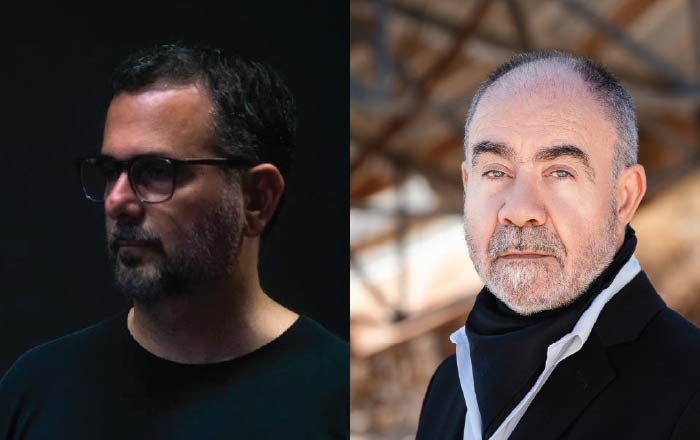
Christos Stergioglou – Alexandros Drakos Ktistakis
Cries
What music lies inside “the thought of the refugee, the thought of the prisoner, the thought of the man reduced to merchandise,” as the poet Giorgos Seferis wrote in The Last Stop, the wailing of Hecuba, soon to become a slave after the fall of Troy in Euripides’ The Trojan Women, or the woes of people who have experienced slavery throughout their lives?
Questions like these served as a guiding light in an intricate research process that sought to lead ancient and modern poetry, as well as music, to new, uncharted territory. In the process, a unified musical work was born, one that addresses timeless and universal human concerns.
Centred around the notions of slavery, uprooting, and immigration throughout time, Cries is a performance that attends to the intersection and organic bond between poetry, Ancient Drama, melos (melody), and music.
Fragments of ancient tragedies, verses from demotic, modern Greek, and world poetry, as well as original texts, are fused into an original music score that bears the signature of Alexandros Drakos Ktistakis. The work is performed by the Alex Drakos Quartet, engaging in a vivid musical dialogue on stage with charismatic performers such as Christos Stergioglou—director of the performance, among others—and baritone opera singer Georgios Iatrou.
Direction Christos Stergioglou • Dramaturgy Taxiarchis Deligiannis, Vasilis Tsiouvaras • Music composition Alexandros Drakos Ktistakis • Performers Christos Stergioglou performance, vocals, Giorgos Iatrou vocals • On-stage musicians Alexandros Drakos Ktistakis drums, Giorgos Georgiadis bass, Yiannis Papadopoulos piano, Dimitris Tsakas saxophone • Dramaturgy consultant Eleni Spetsioti • Movement supervision Zoe Chatziantoniou • Set & costume design Ioanna Tsami • Lighting design Eliza Alexandropoulou • Sound engineering Nikos Kollias • Assistants to the director Taxiarchis Deligiannis, Vasilis Tsiouvaras • Executive producer Apparat Athen / Nikolas Chanakoulas
Duration 65′
July 18
Hellenic Film Academy – Athens Epidaurus Festival
Electra 7
A film inspired by Sophocles’ Electra
Another unexpected partnership on the occasion of the Athens Epidaurus Festival’s seventy-year celebration takes centre stage!
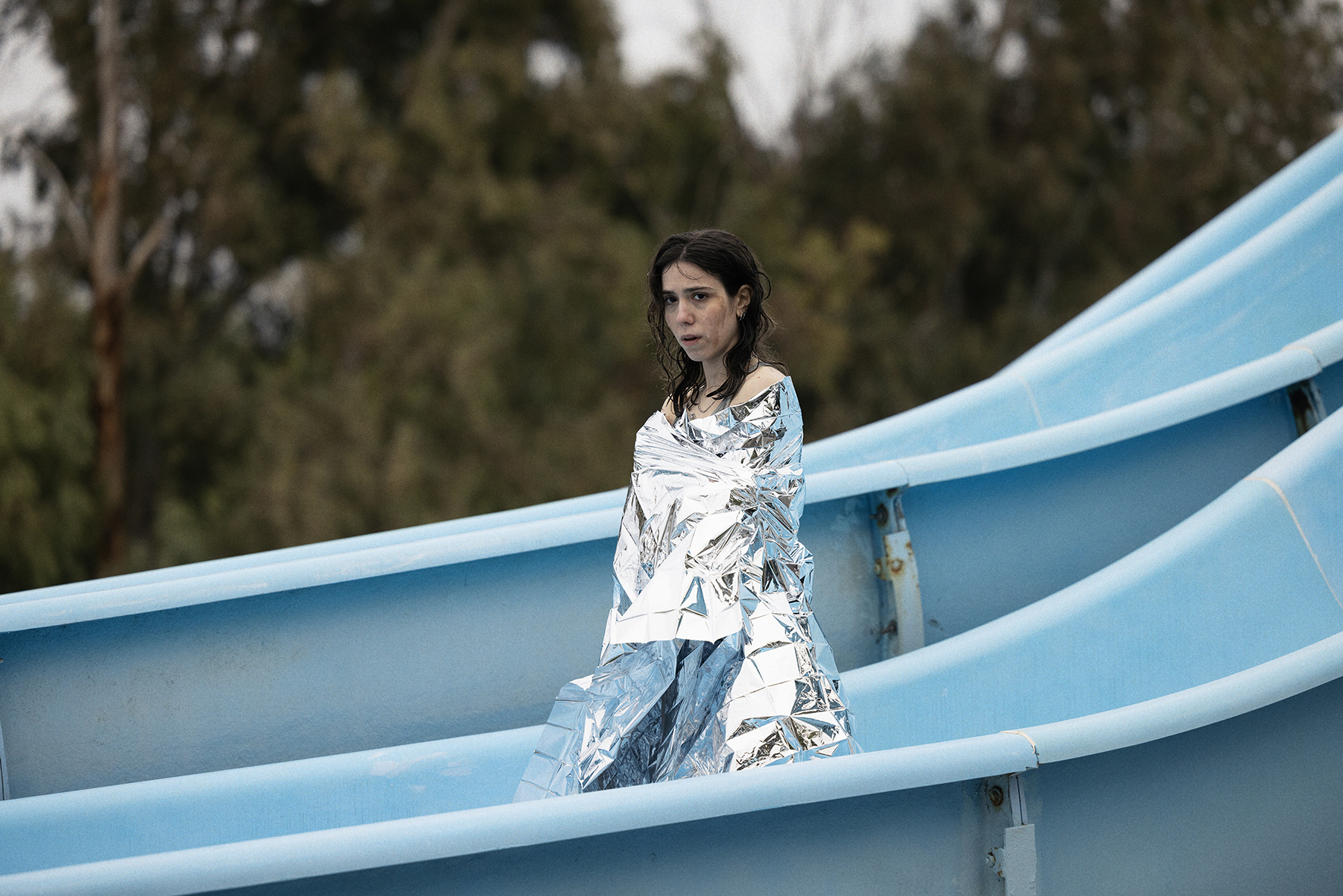
This time, the Festival joins forces with the Hellenic Film Academy to produce a film proposed by the Hellenic Film Academy, drawing its inspiration from Sophocles’ Electra. Part of the fruitful Contemporary Ancients cycle that now spreads its wings to the realm of cinema, the film, scripted by Panayotis Christopoulos, will consist of seven chapters, each one directed by a different filmmaker.
Seven distinguished film auteurs, both women and men, with a track history in Greek and international film festivals, were selected to represent the wide spectrum of contemporary Greek filmmaking and contribute to this imaginative filmic relay through their unique perspectives. These are in alphabetical order: Sofia Exarchou, Christina Ioakeimidi, Babis Makridis, Argyris Papadimitropoulos, Elina Psykou, Alexander Voulgaris, and Neritan Zinxhiria. Executive producer duties are helmed by producer Mina Dreki on behalf of Marni Films. All filmmakers will collaborate with different directors of photography and editors, while they will share a common team of contributors and actors.
Screenwriter’s note
Structured around a hypothetical matricide in present-day Greece, the film draws motifs and its thematic thread from Sophocles’ Electra to propose a narrative in seven parts—each offering a distinct perspective on the crime. Contrary to Sophocles tragedy, here the myth’s main figures speak a little or retreat in absolute silence. Their voices will instead be substituted by the Media, the Authorities, society at large, and their digital traces, with the quest for truth and its reconstruction ultimately proving unattainable. – Panayotis Christopoulos
Direction Sofia Exarchou, Christina Ioakeimidi, Babis Makridis, Argyris Papadimitropoulos, Elina Psykou, Alexander Voulgaris, Neritan Zinxhiria • Screenplay Panayotis Christopoulos • Cinematography Christos Karamanis, Nikos Karanikolas, Dimitris Lambridis, Simos Sarketzis, Manu Tilinski • Casting director Sofia Dimopoulou • Costume design Marli Aliferi, Elisavet Zacharaki • Set design Stavros Liokalos • Makeup Ioanna Lygizou • Sound engineer Stefanos Efthymiou • Cast Angeliki Papathemeli Clytemnestra, Kostas Koronaios Agamemnon, Avgoustis Koumoulos Aegisthus, Maria Filini CJEU Officer, Elsa Lekakou Electra, Stefanos Kaltzidis Orestes, Katerina Zisoudi Chrysothemis, Nikos Hanakoulas Guard, Maria Kallimani Woman, Filippos Salatas Baby Chrysothemis, Thanos Alexiou Member of Parliament, Laertis Malkotsis Pedagogue, Danae Deligeorgi Child Psychologist, Evgenia Samara TV Host, Giorgos Kouvaras Reporter, Ioanna Rampaouni Police Officer Electra, Serafeim Radis Police Officer Orestes, Vasilis Dimitroulias Forensic Expert • Executive producer Mina Dreki | Marni Films
The film is a production of the Athens Epidaurus Festival, in collaboration with the Hellenic Film Academy, and is being realised with the generous sponsorship of DEI.
DEI, the largest energy company in Southeastern Europe, supports everyone and everything that paves the way for a future brimming with culture. It fosters cultural production and highlights all forms of creative expression as a vehicle for social awareness and change.
July 25 & 26
On the right side of the streambed
by Giannis Palavos
Inspired by Sophocles’ Oedipus at Colonus
War session
By Aris Alexandris
Inspired by Aristophanes’ Lysistrata
Once again, Contemporary Ancients cycle introduces us to two female monologues inspired by Ancient Drama while acquainting us with their creators, Greek authors Giannis Palavos and Aris Alexandris. Commissioned by the Festival, they both turn to the well of ancient myths for guidance and succeed in unearthing their contemporary dimensions through a pair of imaginative and thought-provoking plays.
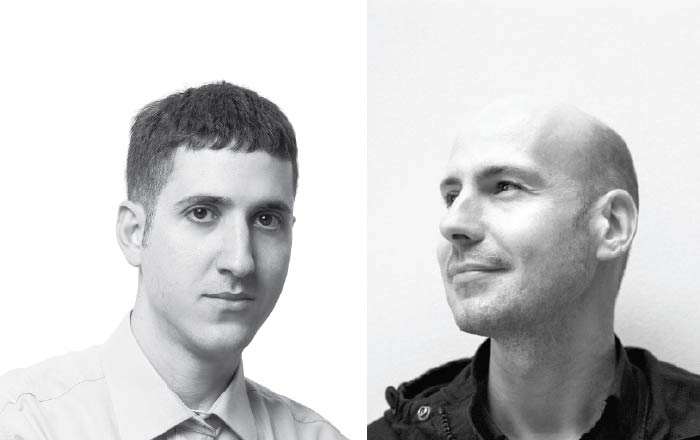
Author of the short-story collections The Joke (State Prize for Short Story 2013) and The Child, Giannis Palavos relies on Oedipus at Colonus to cast a new light on the archetypal father-daughter relationship. Through the monologue of a woman who traces the life of her father—a wandering folklore musician in the Greek countryside—the play paints the portrait of a man persecuted and outcast, much like his mythical counterpart, with his daughter as his sole refuge. Having just released his second book, Tria epi Psychis (2024), Aris Alexandris (winner of the State Prize for a Promising Author 2023 for his novel How Ignatius Karathodoris lost everything), on his part, revisits Lysistrata to offer a hilarious monologue on the decline of sex in the digital age, reframing it as an unprecedented and peculiar war—one fought on the battlefield of the human body.
On the right side of the streambed
In Giannis Palavos’ On the right side of the streambed, a work loosely woven around Sophocles’ Oedipus at Colonus, the story of two figures, a father and a daughter, unfolds. The father—a folklore musician who, on the strength of his art, untangles the riddles of others yet remains blind to his own—is wandering ousted and helpless, with his daughter as his only anchor. A year after his death, she holds an informal memorial in his honour, recounting the pieces of his personality while also casting a bitter yet tender look upon their relationship.
War session
Can abstinence from sex bring war to a halt? Aris Alexandris’ Lysistrata is a frustrated psychologist who is fed up with listening to her patients whining about the shortcomings behind their relationships and choices. Convinced that we are in the midst of a peculiar war—with the human body as its battlefield—she sets up an online group therapy session to share with the participants her most critical advice: complete sexual abstinence. In an era of sexual overexposure, what place does it truly occupy in the lives of people? A hilarious monologue in which determination collides with doubt and traditional notions of love strike a conversation with the thorny realities of the digital age.