 elc team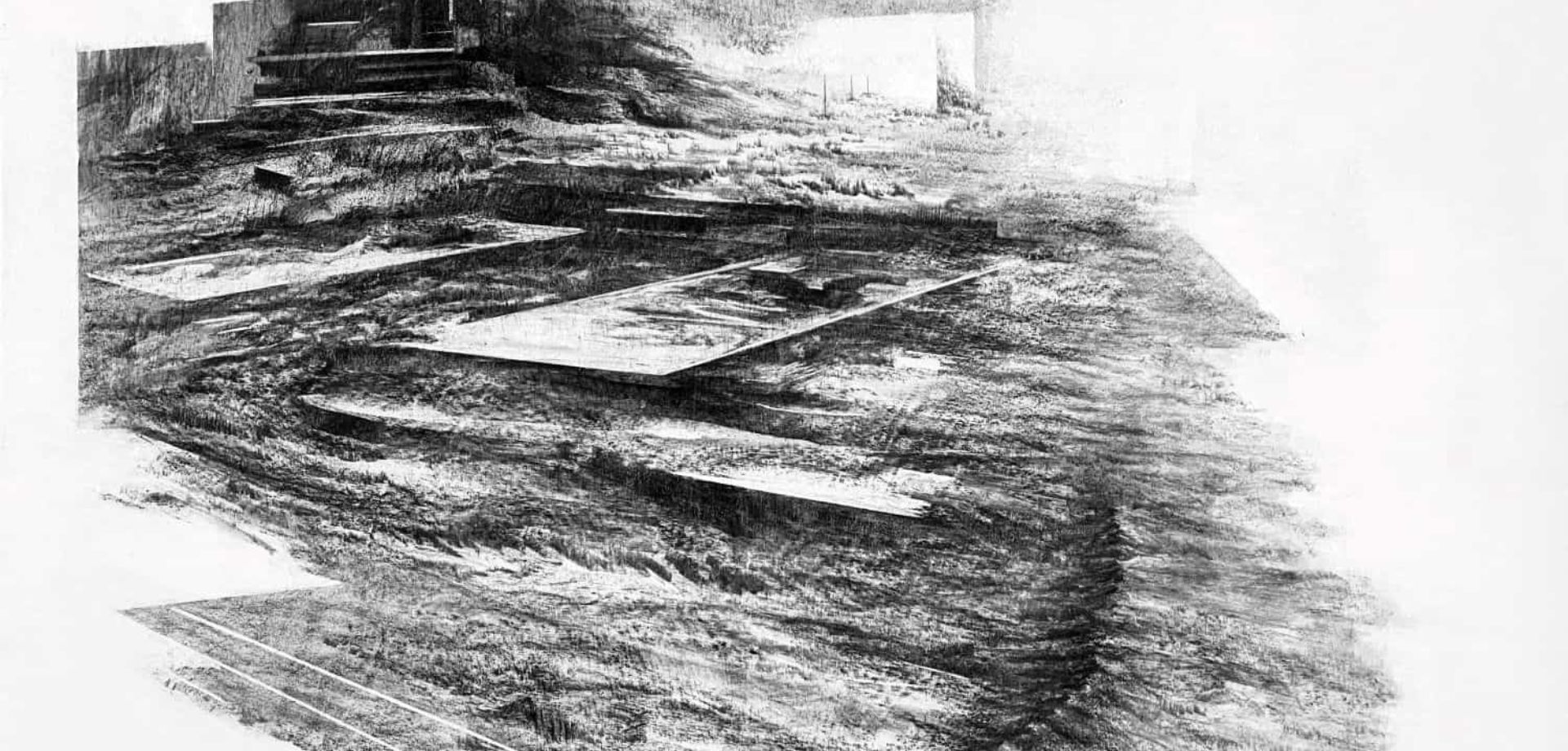
Exploring the relationship between the inanimate, the lifeless and the animate, the exhibition returns to the traditional compositions of still life and landscape painting, re-reading the materiality they represent and their symbolic dimension
All the Wrong Places explores the relationship between interior and exterior space, challenging traditional spatial logics. Paintings, sculptures and installations lead the viewer on an exploration of landscapes that combine intimacy with paradox. The artists explore proximity and distance, loss and integration of the self in space, and the processes of control to which they are often subjected.
The exhibition approaches withdrawal through the notion of space as an ongoing problem to be managed and negotiated. It concludes with ‘misplaced’ dwellings as open invitations to new discoveries. The artists reflect on the notion of geographical positioning in relation to time, digital acceleration, the monumental functions of space and the conditions of its social and environmental destruction. They focus on “representations” of landscapes and forms in an age that seems to have removed us from time and place, in an unstable environment that seems increasingly uninhabitable.
Exploring the relationship between the inanimate, the lifeless and the animate, the exhibition returns to the traditional compositions of still life and landscape painting, re-reading the materiality they represent and their symbolic dimension. The decay, futility and beauty of the everyday become tools of awakening as the artists revisit art history and the social realm. By transcending the obvious in representation, the complexity of relationships between subject, object and space is revealed. Boundaries are blurred and new possibilities of inhabitation are created, focusing on the precarious, the marginal, the misunderstood or the abandoned. The viewer is connected to a world in decay, where the past interacts and feeds into the future, creating new ecologies. Dismantled landscapes are reconstructed and reimagined.
The forces of entropy and transformation are at the heart of the exhibition. Still lifes capture the limits of decay, while here the works approach vulnerable transitions and the forced appropriation of disaster, insisting on the possibilities that lie between the cracks. Visitors are invited to reflect on adaptive strategies that confront uncertainty but continue to resist, seeking connections and relational spaces. In All the Wrong Places, ‘wrong’ is redefined not as an end, but as a starting point for new narratives and possibilities for coexistence.
The artists and their work
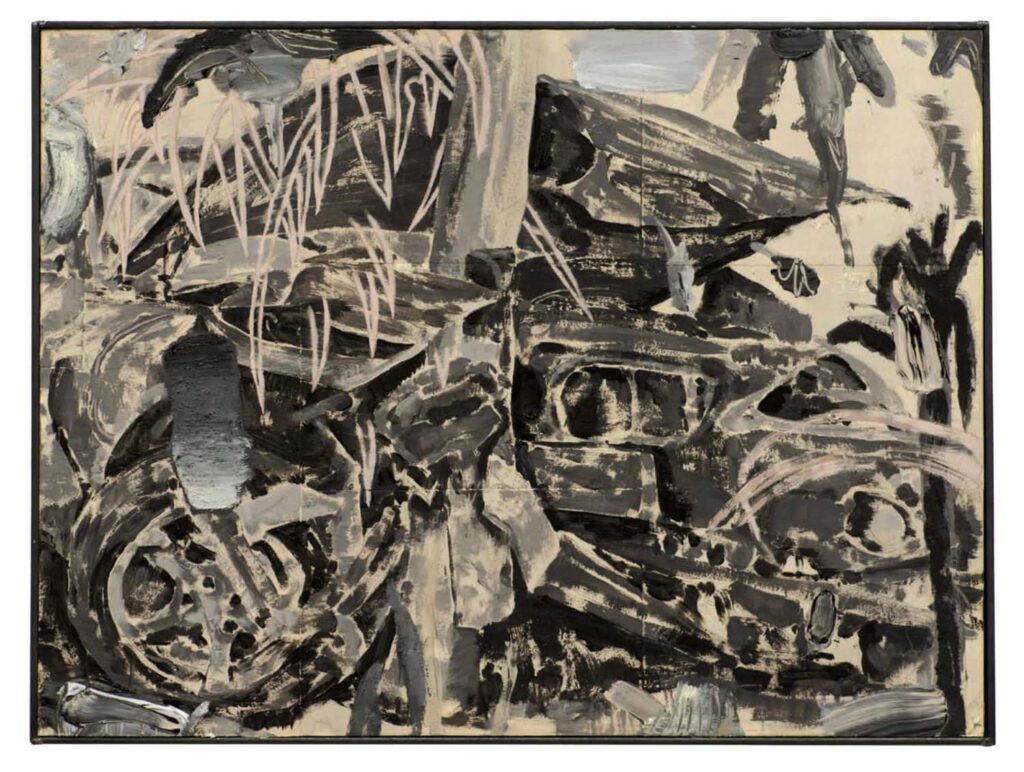
The work of Vassilis Vassilakakis (Angista Serron, 1968) explores the fragile interaction between space, self and materiality, offering a contemplative approach to the unacknowledged and the unexpected. His paintings focus on pause and introspection. Vasilakakis explores how proximity and distance shape our perception of place and presence. His works are not static images, but dynamic encounters in which the tension between permanence and impermanence creates space for inner exploration. The artist embraces simplicity and a necessary sense of balance. His paintings offer moments of quiet resistance and opportunities to rediscover complexity in the seemingly mundane.
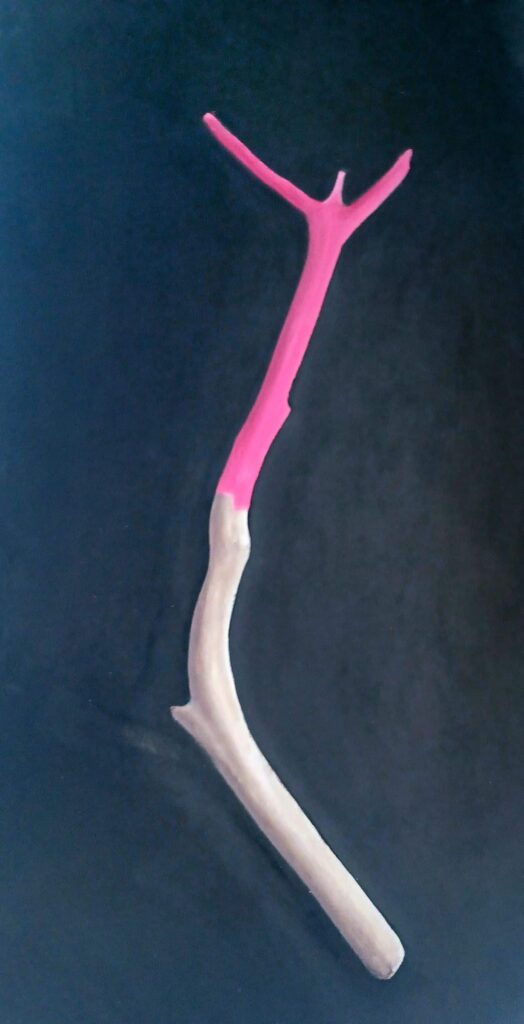
The work of Vassilis Galanis (Athens, 1994) explores the intersections of history, technology and cultural memory, creating spaces where the past collides with the present and collapse gives way to reinvention. Through an interdisciplinary approach that integrates sculpture, installation and digital media, Galanis analyses the forces that shape modernity, speed, ambition and the fragility of progress. Through an interdisciplinary approach that integrates sculpture, installation and digital media, Galanis analyses the forces that shape modernity, the speed, ambition and fragility of progress. At the heart of Galanis’ work is an exploration of destruction and creation. Whether drawing on Paul Virilio’s theories of technology and destruction or reimagining classical forms within iconic landscapes, he examines the precarious balance between ambition and failure.
Fiona Elli Spathopoulou’s (Athens, 1989) work interrogates the complex relationship between technological media and madness, exploring how technological and cultural contexts affect the way we perceive and experience reality. Their practice is concerned with the psychological ruptures that occur in a world dominated by hyper-connectivity and mediated representations. Together, Galanis and Spathopoulou construct multi-layered visual dialogues. Their work challenges conventional notions of time, space and cultural continuity, reflecting the instability of our time while proposing new ways of inhabiting its fragments. With references to classical antiquity and contemporary digital culture, their practice reframes familiar narratives. Ancient figures interact with avatars of modern media, unravelling the tensions between tradition and the algorithms of a hyper-accelerated world.
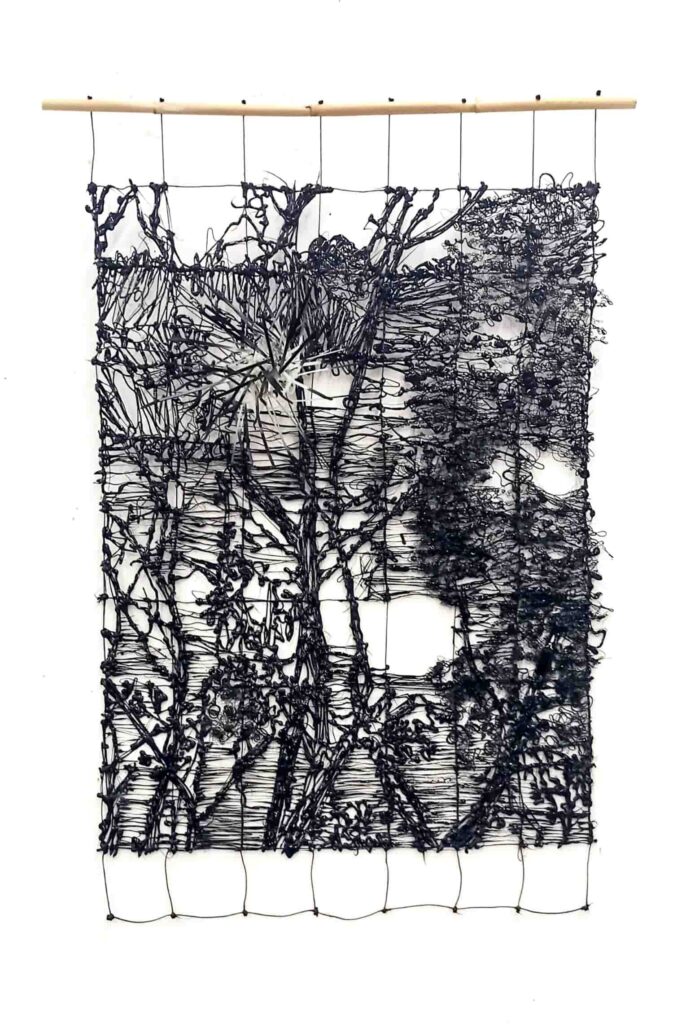
Georgia Damopoulou (Athens, 1969) envisions a reality in which the boundaries between nature and synthetic materials are blurred to create hybrid environments that challenge our understanding of the natural world. Her work explores the human need to represent nature in an increasingly alienated world, proposing a ‘meta-nature’ in which plastic emerges as an enigmatic Eden, at once enchanting and suffocating. Using resins, cable ties and industrial materials, Damopoulou constructs landscapes that raise questions about survival under new, precarious conditions of coexistence. Her environments combine the tactile and materially familiar with a sense of the uncanny. Central to her work is the idea of the ‘vegetative symbiote’ and the parasitic creature that assimilates and mimics its hosts, inspired by John Carpenter’s 1982 film The Thing. This form serves as a metaphor for the tension between fusion and transformation, organic and artificial.
Marco Eusepi (Anzio, 1991) approaches painting with a refreshing attitude, with works on canvas and paper that balance between the complete and the fragmentary. The process of depicting natural elements seems like a reversal of the still life tradition, while the realm of nature and life itself becomes a context for introspection and investigation. The depicted elements actively engage in a dialogue with the surface of the painting and the gestures of mediation. The soft tones, layering and deconstructed forms could be said to re-read and destabilise the rules of still life. They draw our attention to the intentions of the act of painting, at the moment when the terminology of art history becomes literal. With their intimacy, the works create a sense of the timeless while responding to the present. Eusepi invites us to re-examine our relationship with nature, the ‘artificial’ and the act of representation itself.
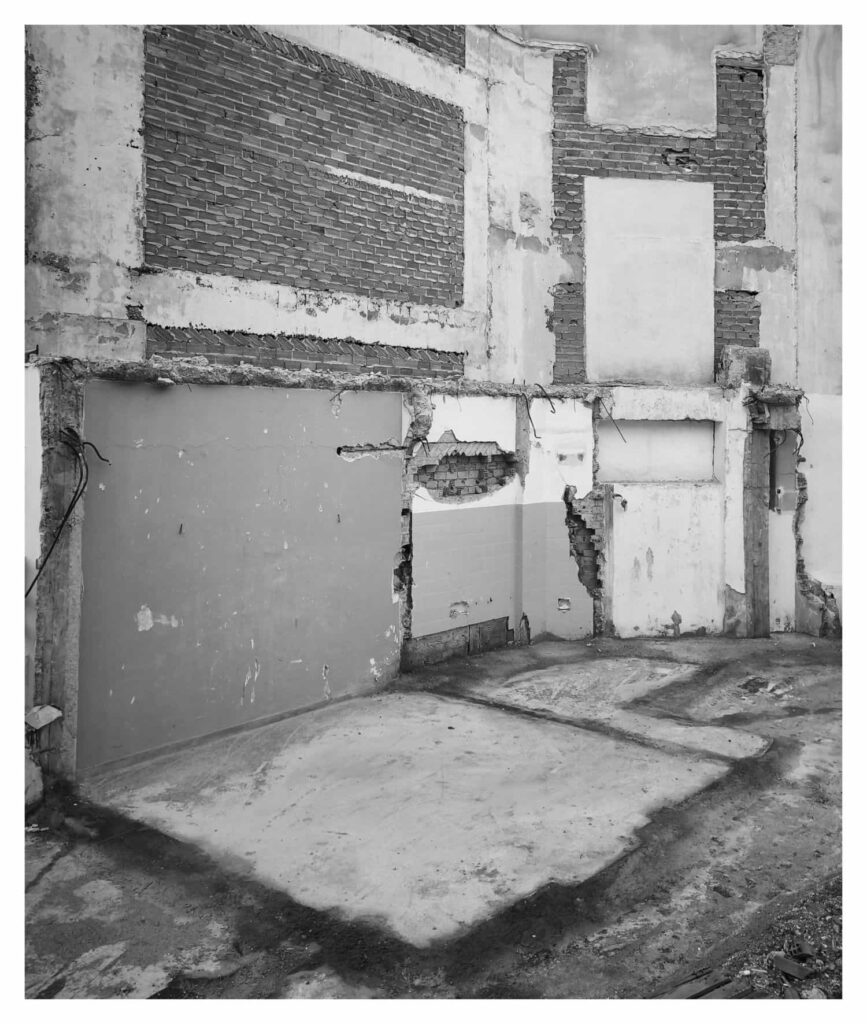
Athanasios Kanakis (Athens, 1983) works at the intersections of materiality, memory and space, creating compositions that combine photography, sculpture and printmaking. Focusing on traces, both natural and improvised, that embody presence and absence, he opens a dialogue on the transformation of images into objects. She transfers photographs onto plaster or concrete blocks to create sculptural objects that resemble found objects, questioning the boundaries between natural decay and intentional intervention. This process allows the image to take on material substance and offers a layered, tactile experience. Kanakis’ compositions reveal the notion of inhabitation not as a static state, but as an ongoing negotiation with space and time. The artist invites us to reconsider the relationship between image and object, representation and reality. His works exist as forms suspended between creation and erosion, reflecting on the nature of the traces we leave behind and the formation of the landscapes we inhabit.
The work of Yannis Boutea (Kalamata, 1941) explores the relationship between material, space and time, inviting the viewer into a constantly changing experience. The artist integrates his practice into the environment of action, creating living, evolving relationships. At Batayanni Gallery, a chance encounter with a grasshopper on the window led to connections with earlier works in which the insect had appeared as a symbolic element. From Layers-Energy Images-XVI (2007) in the Athens Metro to An Unexpected Visitor Vented in My Window (2024), Buteas revisits and reframes recurring motifs. In his new work, the insect is enlarged and placed on a series of numbers held together by clamps. Numbers, letters and words are taken out of their original context and transformed into mental games. This composition creates multiple layers and levels of information, with light as a central mediator. The artificial light attracts both insects and the human gaze, blurring the boundaries between attraction and entrapment. The artist creates dynamic systems that take into account the relationship between light, form and sensory perception.
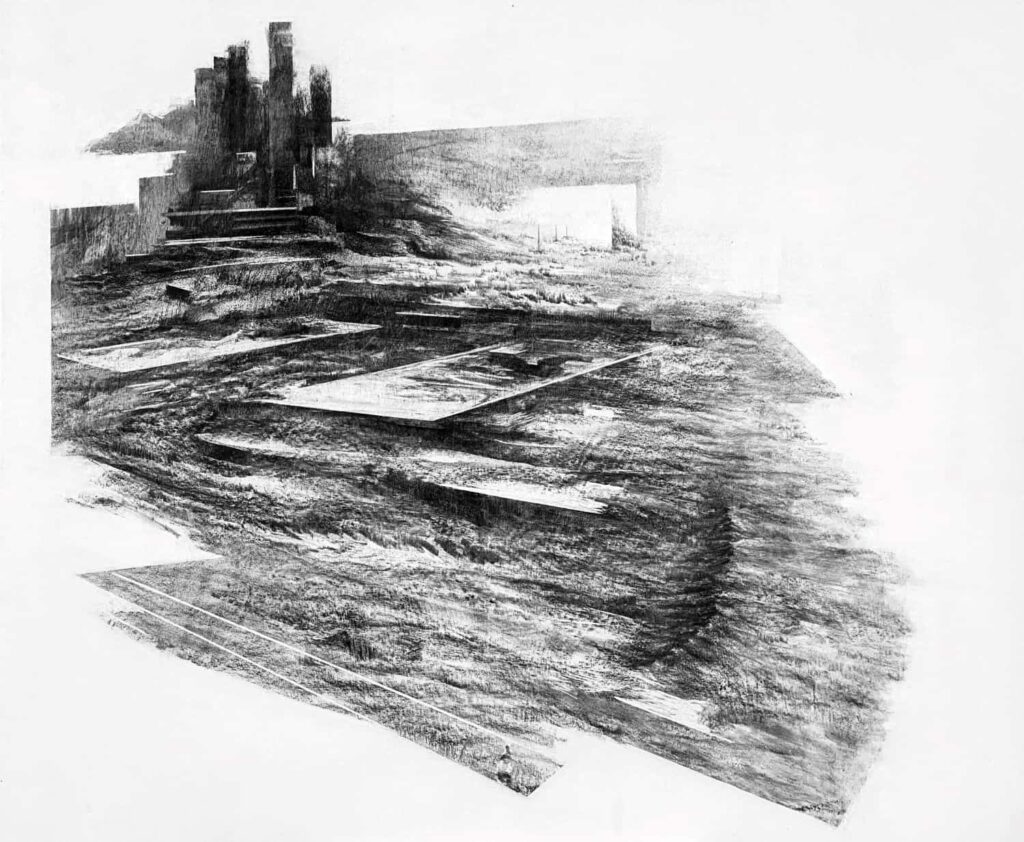
Kostas Pappas’s (Athens, 1974) charcoal drawings are in a state of tension between stability and fluidity. Pappas creates immersive compositions in which elements float, collide and ultimately coexist. These fragmented landscapes of territories and architectural structures invite exploration and question the viewer’s sense of time, place and perception. The artist creates a world that oscillates between dystopia and possibility. In the work, nature and human constructions are intertwined in unstable yet strangely symbiotic relationships. Pappas’s landscapes are liminal spaces – thresholds between destruction and recovery, reflecting the psychological disorientation of a contemporary existence marked by ecological anxiety and shifting notions of place. Yet within this sense of instability lies an invitation to reclaim and rethink these spaces.
The work of Roxane Revon (France, 1986) invites us into a world where the distinctions between the human and the natural are dissolved, revealing the intricate, often invisible networks that sustain our presence. In her Mycelium and Roots series, Revon works with living materials – mycelium, bacteria and plant roots – to create works that are alive, constantly evolving and connected to cycles of growth, decay and renewal. Composed of natural elements such as seeds, minerals and living roots, Revon’s installations reveal the hidden systems beneath our consciousness. By reorganising these materials, she reveals living patterns and structures that reflect the invisible processes that sustain ecosystems. Through this prism, art becomes a dynamic network in which human and non-human life forms are inextricably linked.

Curator: Panos Giannikopoulos | Art Historian
Xirómero/Dryland, Pavilion of Greece at the 60th International Art
Exhibition – La Biennale di Venezia
Info
“All the Wrong Places” | Batagianni Gallery
Opening: Saturday 25 January 2025, 12.00 -15.00
Exhibition duration: until 22 February 2025
Opening hours: Tuesday-Friday: 16:00-20:00 and Saturday: 11:00-15:00
Batagianni Gallery, Antinoros 17, 116 34 Athens, Greece
t: +30 210 7238047 / e: [email protected] /www.batagiannigallery.com