 PEPI NIKOLOPOULOU
We travel for romance, we travel for architecture, and we travel to get lost – Ray Bradbury.
Kastoria, nestled in northern Greece, is a charming city known for its stunning natural beauty and rich history. Located on the shores of Lake Orestiada, Kastoria offers breathtaking views, especially at sunset when the lake reflects the surrounding mountains. The city is renowned for its Byzantine heritage, with over 70 well-preserved Byzantine and post-Byzantine churches, as well as its traditional stone-built mansions. Historically, Kastoria was a hub for the fur trade, and remnants of this legacy can still be found in the local craftsmanship.
We embarked on this trip in the heart of winter, but it would also make for a fantastic autumn excursion. The vibrant colors of fall would enhance the beauty of the landscapes and provide a different atmosphere to explore the charming city and its surroundings.
Our trip last year may have been brief, but it was packed with experiences. Two full days were enough to immerse ourselves in the essence of the area.
Day 1 – Prehistoric Settlement of Dispilio, Vineyard, and Nymphaeum
We began with a journey back in time. The prehistoric settlement of Dispilio welcomed us for a guided tour, offering a glimpse into a world we can only imagine. Just 8 km from Kastoria, before reaching the town, we encountered an open-air eco-museum—an exact replica of the ancient pile-dwelling site accidentally discovered in 1932.
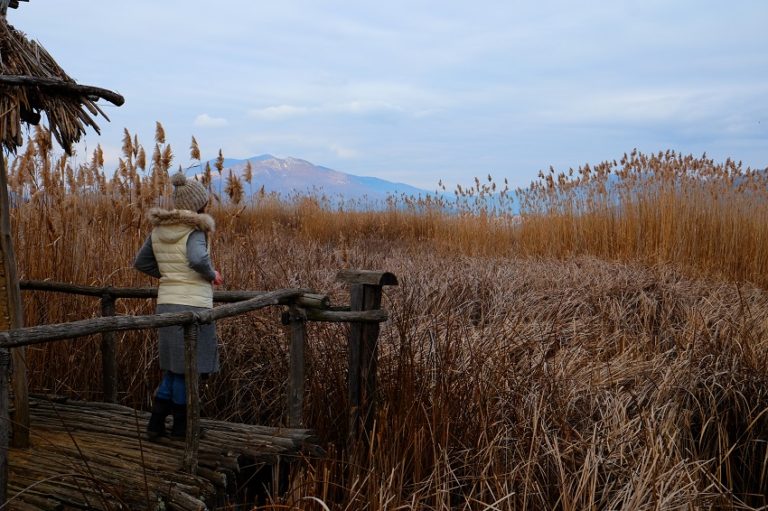


It is one of the oldest pile dwellings found in Europe, dating back to approximately 5,500 BC. The huts, constructed from tree trunks, ropes, lake mud, and straw, form the core of the settlement. Inside, replicas of everyday objects give insight into the lives of the people who once lived there. Among the exhibits are clay vessels such as cups, bowls, fruit jars, and cooking pots, alongside tools crafted from flint and bone. The original artifacts are housed in the museum in the nearby village of Dispilio.


A Visit to Stergiou Winery
On our first evening, as we settled into the hotel, a friendly suggestion came from one of the girls in the lounge—she encouraged me to try the white wine White Stone, a dry, organic option. Initially hesitant, I gave it a chance, and the taste more than rewarded me. Later that night at dinner (at the group’s rustic restaurant, which I highly recommend), we specifically requested it again, deepening our personal and unique connection with this wine. Despite being dry, it boasts rich, complex aromas.
The next morning, curious about the origins of White Stone, we sought out more information about Stergios Estate, made contact, and arranged a visit. The vineyard, spanning 60 acres in Metamorfosi, Kastoria, sits at an altitude of 680 meters, where the lake breeze plays a vital role in shaping the vineyard’s unique microclimate.
Our tour, led by the kind and warm Mr. Stergios, accompanied by his quiet yet knowledgeable daughter Aphrodite, was a memorable experience. It wasn’t just the beauty of the space, but the genuine love and care that permeates this estate. Their wines, which have earned numerous international awards, reflect this dedication.
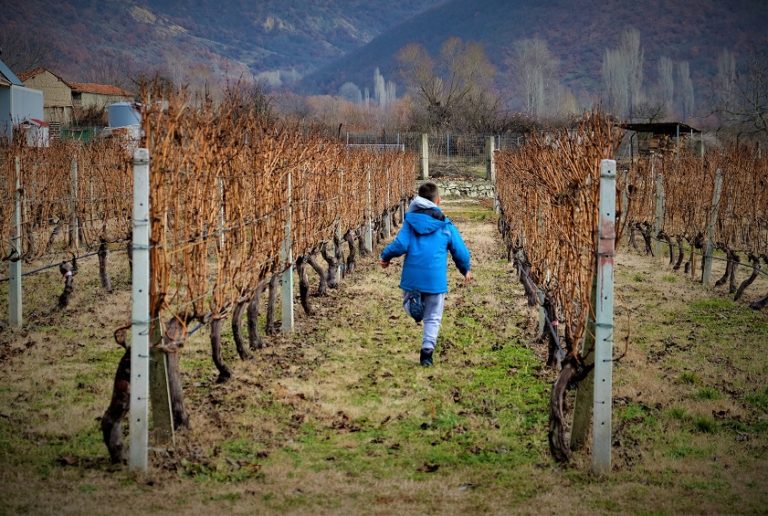


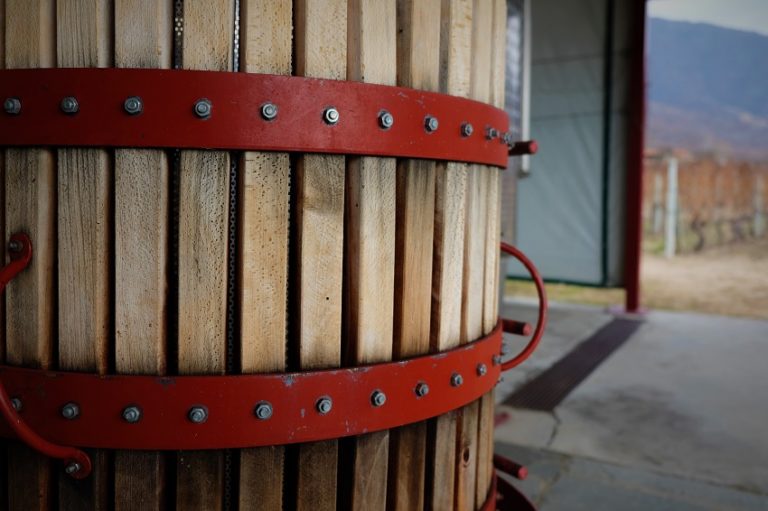
As their website proudly states: “In the exquisite soils of the Macedonian countryside, at the foot of Mount Vitsio, on the southern slope opposite Lake Kastoria, at an altitude of 680 meters, lies the Stergios family vineyard—a model of organic viticulture, adhering to international trends in respecting both people and the environment.”
We tasted all of their labels, including the more adventurous varieties and their Tsipouro, and left with two crates each—his white and rosé wines were truly exceptional. Our favorite, though, was the Metamorphoses label, the one Mr. Stergios proudly showcases abroad. After a fulfilling visit, we said our goodbyes, taking with us not just the bottles, but the warmth and memories of this special place.
Nymphaeon and Dining at “Ksino Nero” (Sour Water)
About 35 km from Kastoria, along a scenic winding road, lies Nymphaeon. Nestled at an altitude of 1,350 meters, this village, formerly known as Nivesta or Neveska, has been a preserved traditional settlement since 1978. UNESCO even recognizes it as one of the 10 most beautiful villages in Europe.
Having never visited before, the sight that greeted me was nothing short of magical, like something from a fairy tale.
We walked along the central cobbled street to the main square, enjoying the first snow amidst laughter and chasing, and arrived at the Nikios School, a landmark of the village, which is now a conference centre of the Aristotle University of Thessaloniki, where, on the initiative of Yannis Boutaris, the “Arcturus“, a unique environmental centre for the protection of wildlife and the natural environment, was established and runs in the building of the Nikios School.

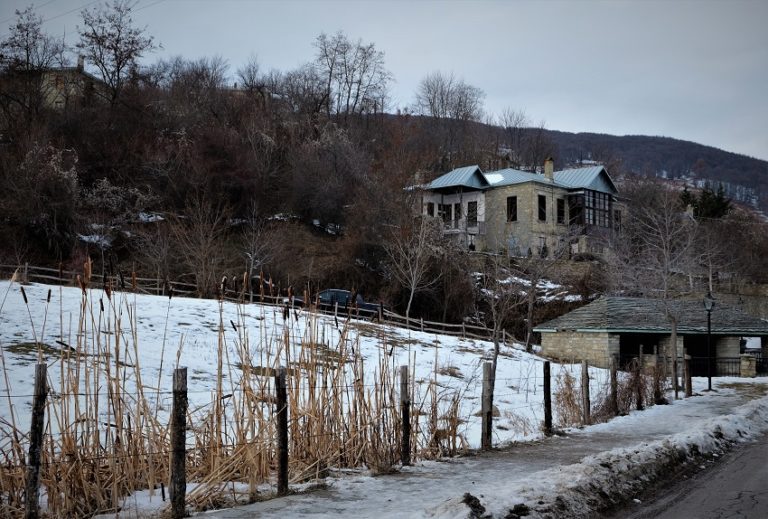
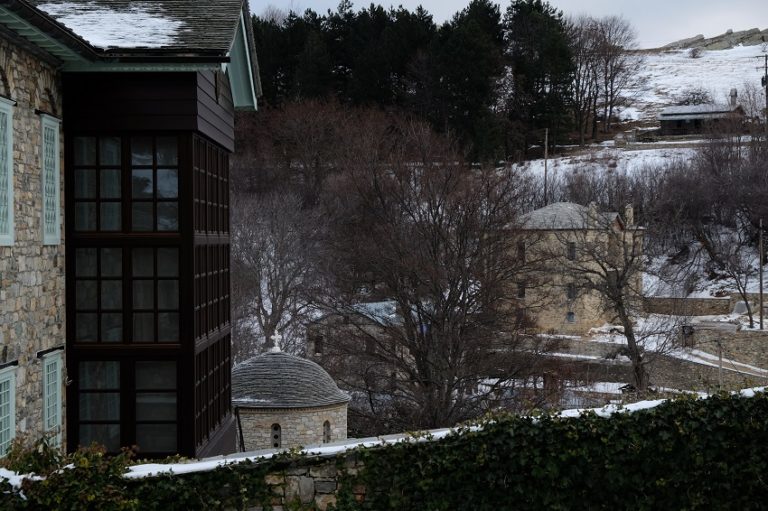
This centre runs a brown bear sanctuary in a fenced area of 50 acres of forest that mimics their natural environment. Unfortunately, the low temperatures that day and the possibility of not seeing any bears prevented us from going down to the bear park.
We warmed up with a hot chocolate and indulged in a slice of lemon cake each at Enterne Café before continuing our journey.
A few kilometers back on the main road, past Lehovo, we arrived at the village of Xino Nero. While known for its sparkling water, we discovered a hidden gem—the restaurant Kontosoro. Here, we savored local Macedonian cuisine, presented with care and refinement. I had the most delicious pumpkin risotto I’ve ever tasted. If a road trip through the region is in your plans, make sure to stop by for an unforgettable meal.
Day 2 – Ride to Prespes and lunch at St Gerasimos
Always starting from Kastoria, we began our trek to the Prespes, a route of about 45km from the town of Kastoria. With our compass pointing to the northwest, we approached neighbouring Albania, as the road signs often reminded us.
On the north-western border of Greece, the beauty of the Little and Great Prespa stretches majestically. Megali Prespa, the largest lake in the Balkans, is situated at an altitude of 853 m, has a maximum depth of 50 m and covers an area of 288 sq km. The area is known as a trinational area, as 22% belongs to Greece, 60% to Skopje and 18% to Albania. Little Prespa has an area of 44 km2 and a very small part of it belongs to Albania.
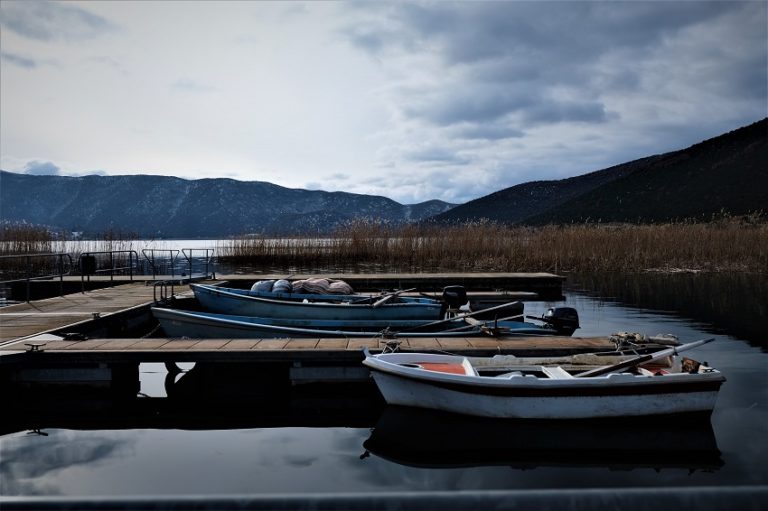
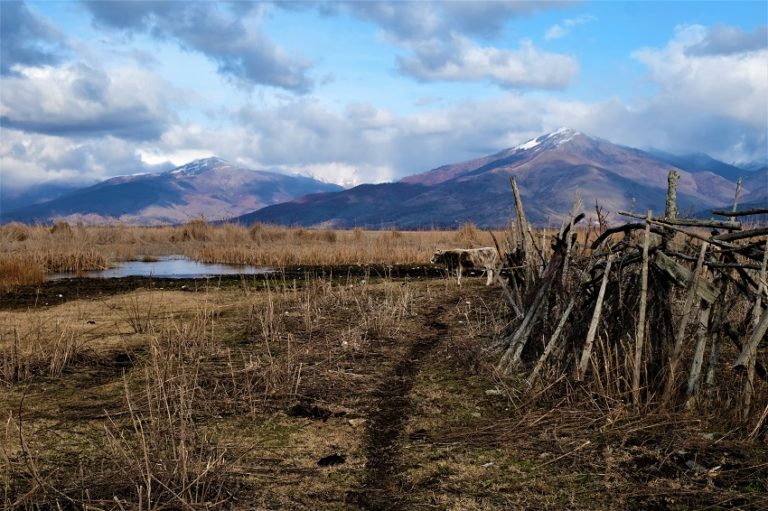
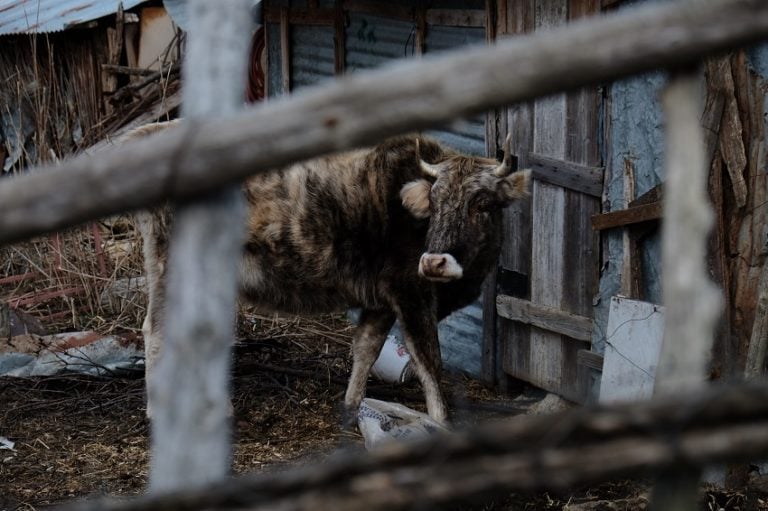
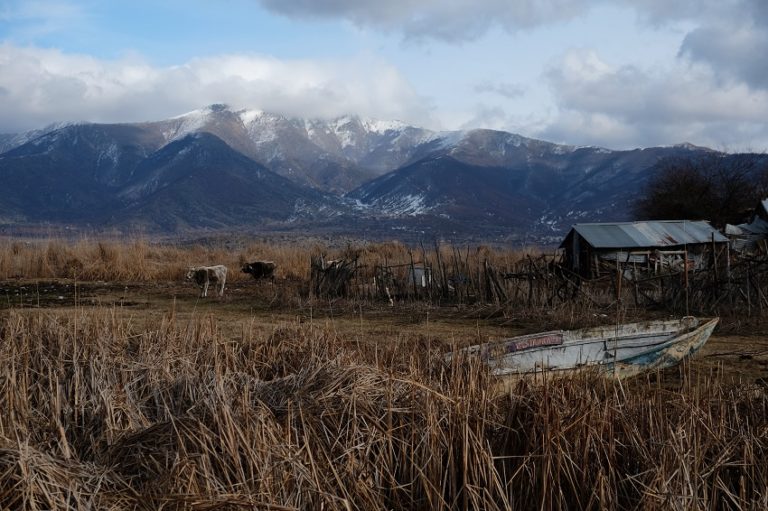
When we got there, we came across the area of Korestia with the village of Melas, where there is a museum dedicated to the memory of Pavlos Melas, and the village of Gavros, which looks like something out of a film. Gavros is one of the abandoned villages of Kastoria, as most of its inhabitants emigrated after the end of the civil war, mainly to Australia and Canada. Those who stayed founded the opposite village, called Korestia. If we had a bit more time, I would love to walk there and get lost in time for a while. The village is featured in the film “A soul so deep” by Pantelis Voulgaris.
Arrival at Agios Achilleio, which is of course the most “worldly” and touristic part of the area, with the legendary and most photographed 650 metre footbridge that has fans everywhere. With the thermometer at zero degrees and the wind in our faces, we crossed the bridge and breathed in nature. The richness of the landscape, of nature, is unique. I won’t mention the churches and ruins, because the landscape is unique even without buildings.
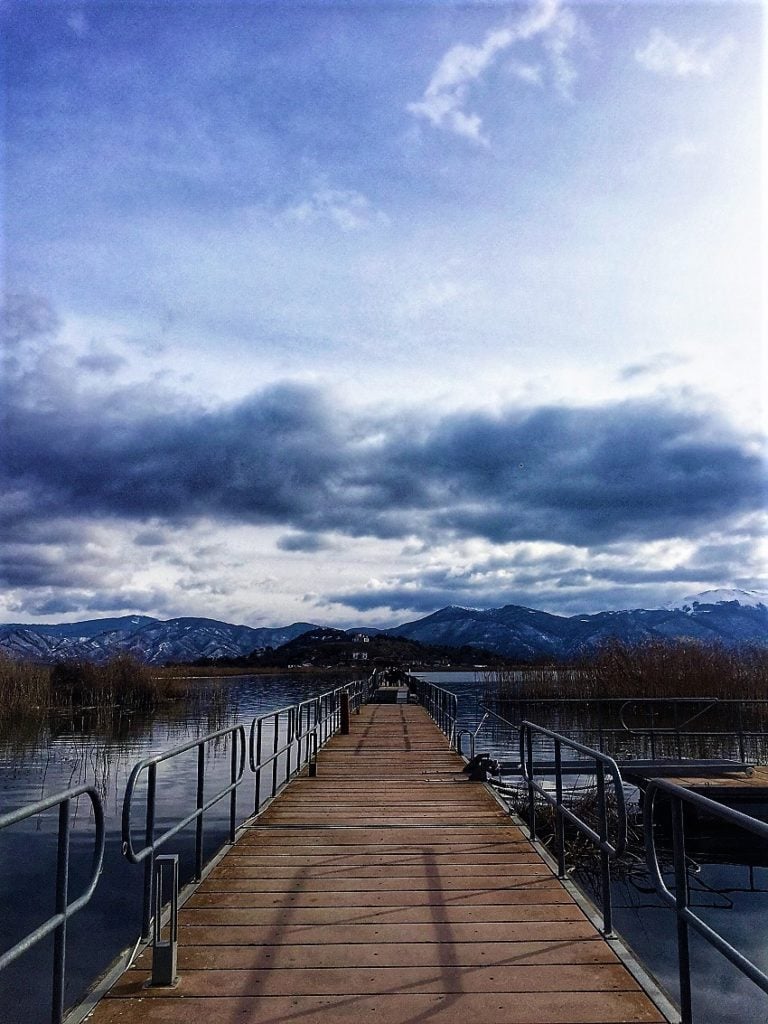


And after our beans and giants, we headed to Agios Germanos for lunch next to Tzaki in the taverna of the same name. Agios Germanos is the capital of Prespa – a small village built between small rivers and named after the 10th century church of the same name, which stands in the centre of the square.
Day 3 – Ride in Kastoria to the Dragon’s Cave and Doltcho
A walk around the city of Kastoria is a must for any visitor. The city, surrounded by Lake Orestiada, offers picturesque strolls along its tranquil waterfront, where swans and ducks glide effortlessly over the water. Meandering through the old town, you’ll discover narrow cobblestone streets lined with traditional mansions that showcase Kastoria’s rich history. Byzantine churches are scattered throughout, offering a glimpse into the city’s past, while the Promenade of Kastoria is perfect for enjoying the serene atmosphere.
Don’t miss the Dolcho and Apozari neighborhoods, where the charm of the city’s architectural heritage is fully preserved. A walk around Kastoria not only reveals its scenic beauty but also immerses you in its deep cultural and historical roots. Kastoria is a city that keeps its charms hidden, not easily revealing them at first glance. The chaotic mix of buildings, poorly designed houses, and cars parked seemingly everywhere may create a sense of disarray, making it hard to appreciate at first. But once you turn your gaze toward the lake, a sense of calm washes over you. The city has been blessed with an extraordinary natural beauty, a gift that transforms the landscape and softens its imperfections. It’s this serene connection to nature that gives Kastoria its true allure.

Included in the Natura 2000 network, the lake is a Monument of Natural Beauty and is considered one of the most beautiful in the Balkans. The narrow road along the shore, between beech and plane trees, looks almost eerie next to the calm waters teeming with beautiful birds. We made the trip by car to the cave of the dragon and the church of Mavriotissa. Promise to return in the spring to enjoy the bike ride. You can also take a trip back in time to the Dolcho area.
Walking around Dolcho
Once again, the oldest district of the city is also the most picturesque. It is here that you will find the restored mansions of the once proud and independent city – some neoclassical, others faithful to Macedonian architecture – remarkable museums and cobbled streets that invite you to get to know them and get lost in them. There are mansions and folk houses of the so-called Balkan architecture of the 17th and 19th centuries, but also neoclassical mansions of the early 20th century, the mansions of Bassaras, Natzis, Vergoulas and Skoutaris, and the mansion of Piches, which houses the Museum of the Macedonian Struggle and the Folklore Museum.
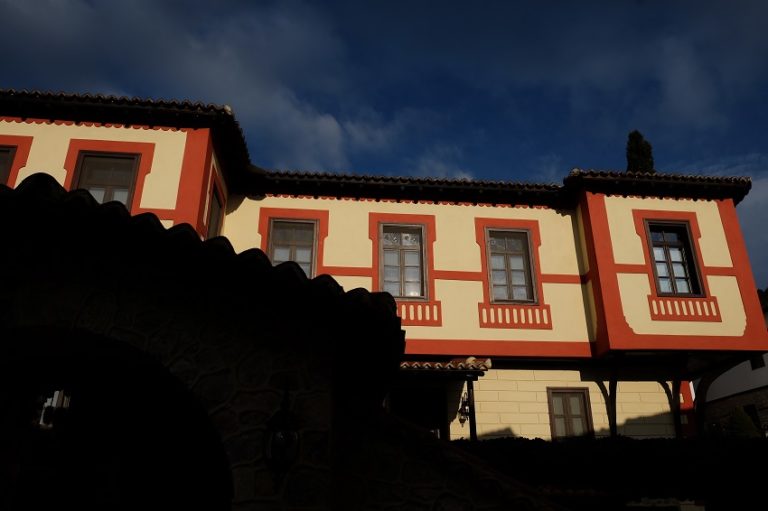

Europa Nostra and the European Investment Bank Institute fortunately anticipated and protected this unique site when they declared the Old Town of Kastoria (Doltcho on the southern beach, the most characteristic and best preserved part of the town, and Apozari on the northern beach) one of the most endangered monuments in Europe.
Cave of the Dragon
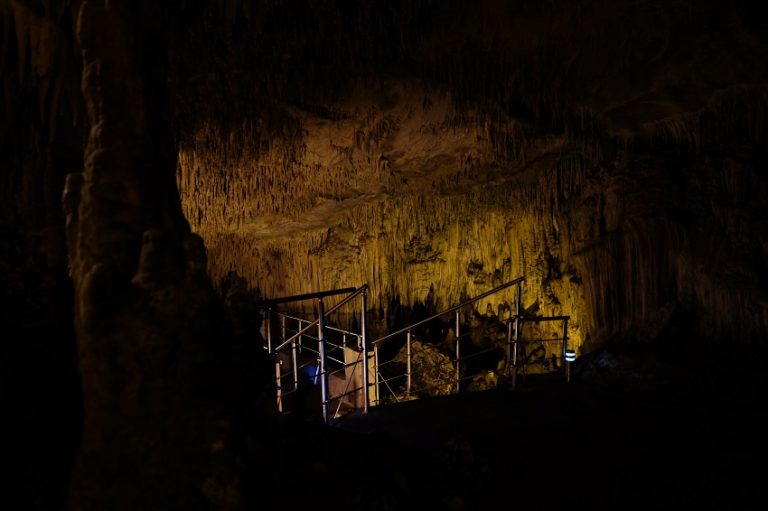
Located on the shores of the lake, the cave is said to have been a gold mine guarded by a dragon.
The entrance to the cave was discovered in 1954 and the cave was mapped in 1968. The maximum depth from the entrance is 18 metres and inside there are 10 chambers of different dimensions, 7 underground pools and 5 tunnels. During the works carried out in the cave, the bones of a cave bear dating back 10,000 years were discovered.
The Monastery of Panagia Mavriotissa
A little further down we visited the Monastery of Panagia Mavriotissa, built in 1802. Its beauty, apart from its location, lies in the elaborate frescoes in the church and on the outside, depicting Byzantine emperors. We lit candles, admired them and Valia, imitating other visitors, wrote the names of her loved ones on a piece of paper for the benefit of their health.