 KATERINA PARRI
By Heleni Koutsilaiou
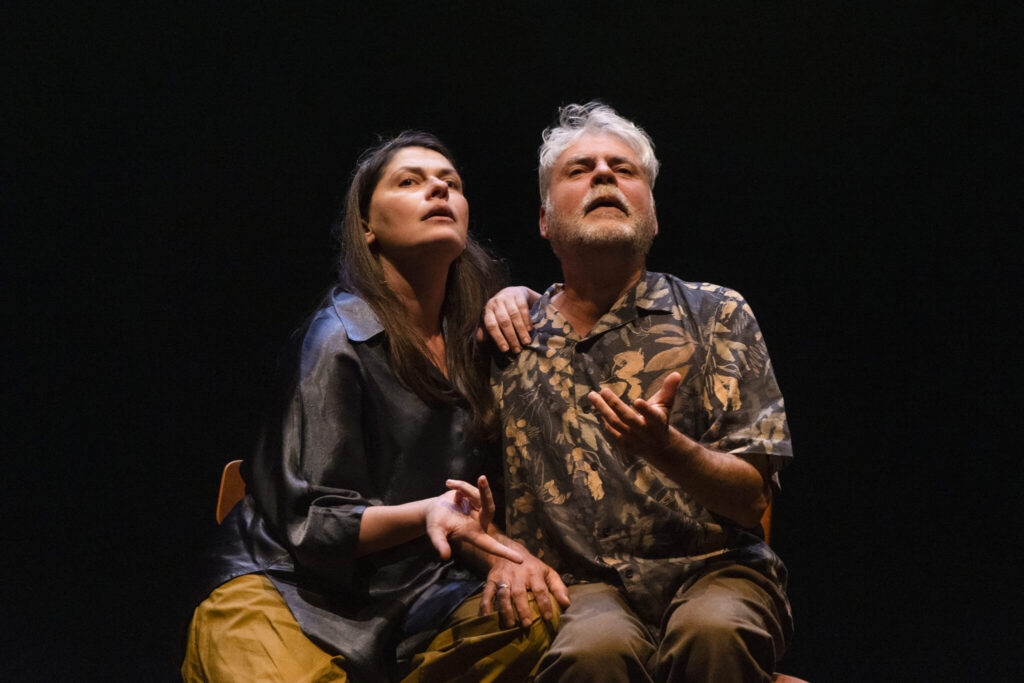
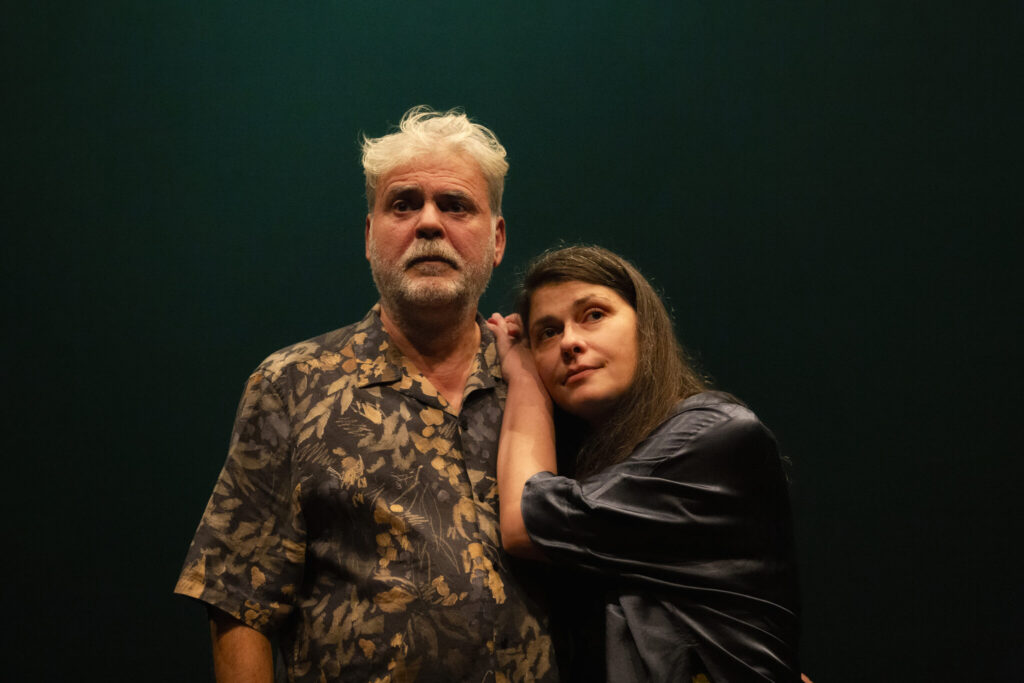
Thiago Rodriguez, a charismatic and insightful director (writer and actor), politically militant, institutionally honest, artistic leader who balances admirably between his artistic vision and his fiercely politicized voice of assertion, the first non-French Cal, will be hosted for the third time by the Onassis Cultural Center, making him a valuable and integral part of our theatrical reality. He will harmonize this year’s program, which “speaks of love as the necessary force to fight, dream and evolve as human beings,” with his play “The Lovers’ Chorus,” a story with autobiographical elements that tells the story of a couple’s liminal moment between life and death. And for the first time he will collaborate with Greek artists, especially with Argyro Chiotis and the main actors: Nikos Karathanos and Marissa Triantafyllidou.
In the meeting he gave us in the friendly rooms of the Roof, he created an atmosphere of sweet intimacy and warmth, while every question put to him was answered with direct insight and sincere tenderness. He spoke about love, theater, art, politics, the measured time of human life, his work and his first collaboration with Greek actors.
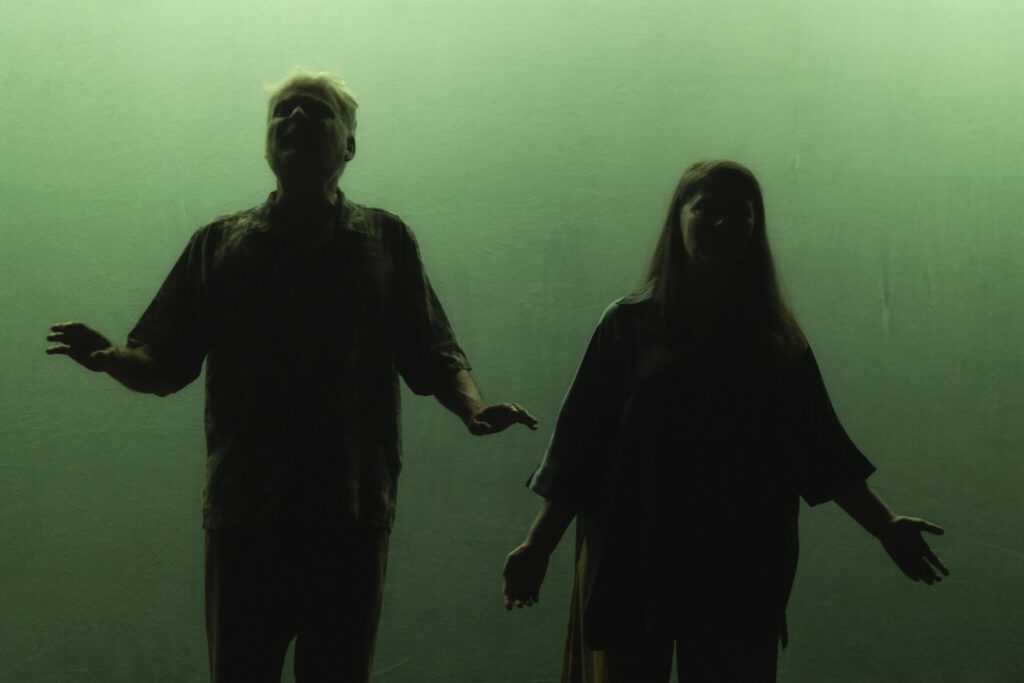
Lovers’ Chorus
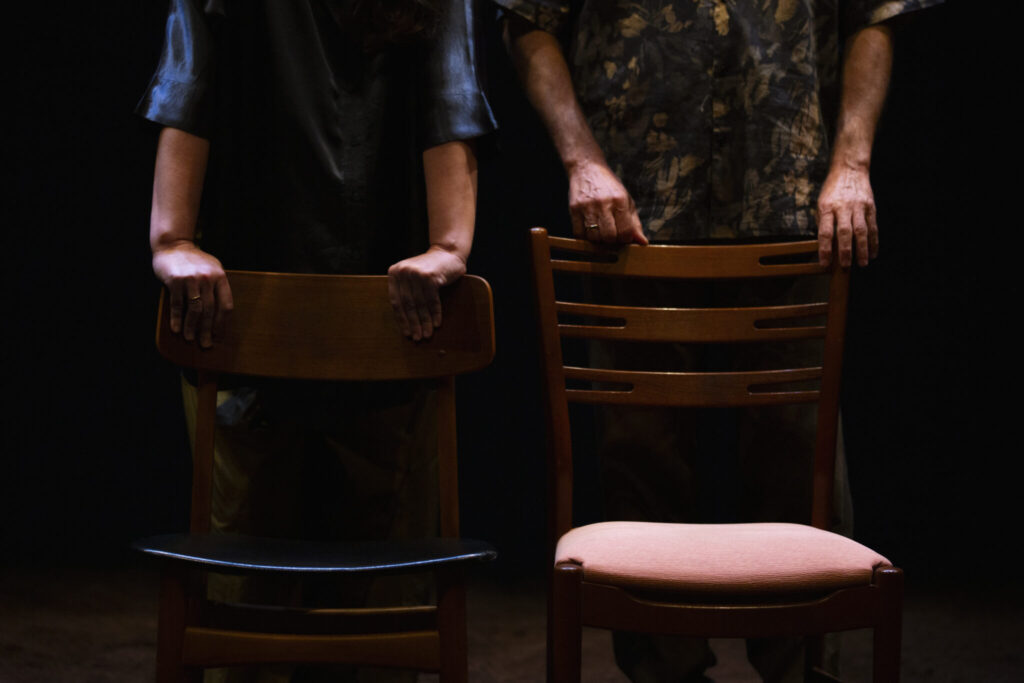
Two actors, a couple, a man and a woman, talking at the same time about their lives, describe a hospital experience because one of them is in danger of dying and finally survives. It’s about all the things you want to change in your life after experiencing such a powerful moment where time escapes you. You learn to manage time better after a borderline moment. That is what the play is about. And his first writing was done when they were ready to live the rest of their lives.
The return to his first play
I keep asking myself that question. Every rehearsal.
“Why did I come back to this text?”
I thought, of the plays I’ve done, I should go back to my first text, which is a play about the passage of time and how you deal with the passage of time in your life and how love and time are connected in our lives. I thought it was an interesting play to work on to talk about time and my relationship to the theater.
This is a play that I wrote in 2006. And in 2020, maybe because we were all dealing with the pandemic, I thought I wanted to go back to this text and these people and see what happened to them from where I left them. To see what happened to me as a playwright, because this was my first play about theater. So, I decided to write the rest of their lives. And to see what happened to working with this young writer that I was at the time.
I think I understood why it happened, I was taken over by the thought of what was happening… how we can deal with time differently in the way we do theater, knowing that theater is ephemeral. It’s also exciting to get in touch with the question, “What is this thing about acting?”
We always ask ourselves, in all work, sometimes we have to ask ourselves again, “Why did I start doing this?”, “Do I still love it deeply? “Do I need it? In art, I feel like we have to need it in some way.

First Collaboration with Greek Artists – A New Cultural Rehearsal Condition
I love the idea of my work traveling to different countries and cities and interacting with different cultures.
I find it difficult to draw general conclusions from one country to another. Working with Nikos (Karathanos) and Marissa (Triantafyllidou) and of course with Argyro (Chiotis); who is a wonderful artist and has been extremely generous with our collaboration, her help in making this work has been invaluable. I’m learning a lot about acting, I’m learning a lot about theater by working with these artists on this text about time, love, complicity, change – because it’s a play about changing your life or making changes in your life – and the hope that it’s for good. I don’t know if it would be like that with all Greek actors, but it was like that with Nikos and Marissa, who are wonderful artists but also wonderful people who read the world with a rich perspective that brings a lot to this show.
The text is the starting point for me, but the text is not complete if the actors don’t write the essence of the text. I write the words, but the essence of my words is written by the actors. And I try to create as much space as possible for these two wonderful people to create their own essence.
On the other hand, it’s a play where language plays an important role and you have to present it to an audience that speaks the language. I think that the Greek and Portuguese languages offer the possibility of being very hard and sweet in the same sentence. It has to do with the music. The music of the Greek language, I think, is closer to the original way of writing because I wrote it in Portuguese and now I have it translated by Maria (Papadima)-it’s a very beautiful translation and I understand more and more how good a translator she is. So having that translation and working word by word with the team to understand what it says. I feel like there’s a greater connection with the Portuguese language, but maybe also culturally. In Athens, I really feel like I’m not that far from home, even if I don’t understand the language, I understand the people.
How do you understand the term performance with “political vision”?
It’s one thing to answer that as an artist and another as a festival director. So as a festival director, I will say that the political dimension or impact of an artistic work has no relevance unless the artist wants it. What I mean is that I will unconditionally defend the effort, the freedom of an artist who is political … and the freedom of an artist who doesn’t want to get involved in politics. I don’t think a work of art has to have a political function in order to exist. It just exists. Theater is part of the human adventure. Theater exists. Period. It doesn’t need a role. I mean, if society wants to benefit from theater, yes, in a democracy we can organize and create a public service that allows for the benefits, the many potential benefits of theater, such as educational benefits, entertainment benefits, informational benefits that enrich the most diverse and large audiences. But that is the responsibility of society or the state. The theater itself simply exists, it must exist, and it must be supported to exist, because the theater is the legacy for the future.
There are no monuments or landmarks of our culture, of our time, if today we are not able to fight for creation and innovation. So culture cannot only be heritage, because heritage has to be discovered, so the heritage of the future is the ability of the collective society and the state and the representatives, therefore the politicians, the government, to take the risk and to invest in creation. Without saying that creation is useful for this. There has to be creation. And then, of course, we have to create the tools so that it can perhaps be useful to society. But I will always defend that an artist who says he doesn’t want to get involved in politics has exactly the same right to work as an artist who wants to get involved in politics all the time.
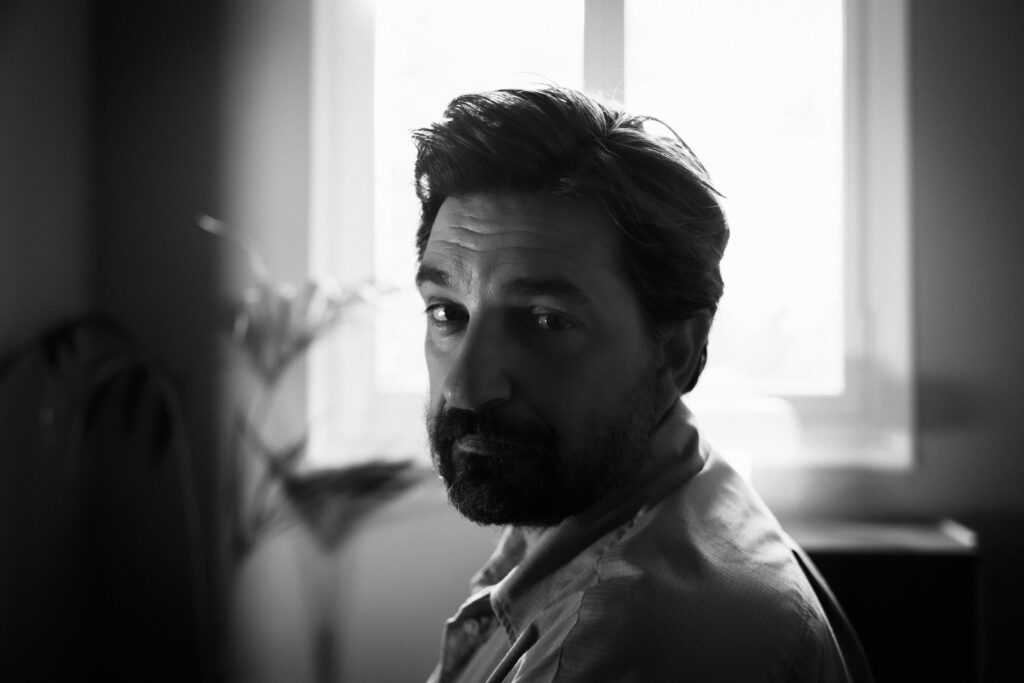
This is the director of the festival. As an artist I have to deal with politics now, so even if I’m telling a love story… I’m talking about the election in this story, I’m talking about how we use time, I’m talking about how work can be a tool for control or for freedom. I talk about things that I think are political, maybe not in a very clear political way, but politics, the citizen that I am, is never outside the rehearsal room. It’s always inside. But that’s my perspective and what I want to do and how I want to participate in the theater world.
I believe that if art is good art, I have to defend it. So, I find it hard to generalize and I find it hard to separate love and politics. Sometimes we do that. “This is a very political piece,” “This, this is a piece about intimacy,” as if they’re not exactly the same thing. They can be exactly the same. For example, I think “Katarina” is a play about family and about love and about betrayal and about tradition and about memory and about fascism. But I don’t think it’s just a play about fascism. So, the play may be about love, but it also has a political dimension. Maybe less visible.
“Hecuba, not Hecuba” is also a work about love. I don’t find it that political. Of course, we say institutions and justice and all that. Yes. But all these things are here because there is a mother who loves and is angry and has this superpower of an angry mother. An angry mother says, “Watch out!” That’s a superpower. These are the people who can lift a car with one finger to defend their child. Everything else, the political position of “Hecuba, not Hecuba” comes later. I want to deal with this power, that’s for me… it’s not for me to say what the theme of a show I did is, but it’s for me to say why I started doing this show. I started to do this work because I honor this power.
Love. Limited to human boundaries? Is it a political act?
I would say that love goes after death and stays alive, I don’t know what the limit is because it is after death. But it is certainly after death. Love doesn’t stop when you die. Love could also be an important political act. It is the ability not to erase oneself, but to add the point of view of the other or of others. Yes, love often means being able to feel the world through another’s sensibility. I believe in that definition of love.
The Artistic Career – From Actress in Portugal to Artistic Director of the Avignon Festival
I don’t see my journey in the theater as a career. Every year I have the conversation where I say “I’m going to quit theater and open a restaurant”. I don’t think that theater is the only thing in my life. But it is one of the most important things in my life and one of my greatest passions. I accepted the artistic direction of the National Theater of Portugal when I was 36-37 years old because I was always criticizing the National Theater of my country and suddenly, I was invited and I thought I should accept. Because when you criticize the way things are done and suddenly you have the possibility, the power to make them more interesting, more important, you have to accept. The choice was either to deny myself the freedom to constantly say bad things about power and about the system and about who decides, or for once to take the risk and the responsibility and the power to decide things and to run the National Theater. So, I accepted it. Of course, I learned a lot. I developed new skills and I got to do a job that I had never done before, but I don’t feel more important. I feel more recognizable.
To be chosen to direct the Avignon Festival is a great honor, it’s a great responsibility, but I see it as an exciting adventure, as I did with the National Theater in Lisbon, which was a great adventure, and I hope to do a job that benefits the public, society, and the artists. But I also did it because I could work as an artist at the same time, which is important to me. I never expected to have a job where I couldn’t be an artist at the same time. But even when I wasn’t running an institution, I spent more time looking for money to do my shows. An independent artist spends time looking for the resources to work. So when I went to the National Theater or to Avignon, of course most of the time I’m not creating shows, but I’m not looking for money for my shows, I’m sharing money that already exists for other people’s shows. So, I never complain about time or how hard it is to run a festival, to do your job.
Every day I remind myself that I am in the very fortunate minority of people who do what they love for a living. The vast majority of people have to work at jobs they hate to pay the bills. Sometimes they have little time to do what they love. People who love their jobs are a very, very small minority in the world, and we have to remember that. I never complain about it. I love my job. As Noel Coward said, “Work is more fun than play”.

A celebration of resistance that became a celebration of democracy
Regarding the Avignon Night and the position that the festival took, it was first of all a response to what we believed in when we organized the Avignon Festival, it was our duty, the historical duty of a festival that was created in 1947, just after the Second World War, with the support of many people who were part of the resistance against the Nazi occupation, a festival that has values and was created on the basis of these values, a democratic, popular, progressive festival. Today, of course, we have to understand these values by adding other ideas, such as anti-racist, feminist, ecological, festivals with other ideas, but of course we have to remain faithful to the values and historical obligations of the festival by asking us to take our place in society. In this case, the position was and will always be the priority to make the festival, because we believe that for example today in 2024, in a society that is so polarized, so divided, and I believe that when we talk about division in society, especially political division, I believe that we are not just talking about France or Portugal or Greece, we are talking about a global phenomenon, not just European.
And this division creates simple disagreements that are much easier to manipulate. And that’s where I think the populist far right comes in, in the manipulation, in the use of information or fake news as we want to call it in a global way.
And of course, with the Avignon Festival, we are proposing to society a diversity of perspectives on the world, through the arts, through the performing arts, and this diversity is complex, and the complexity of diversity is the richness of democracy. It is the possibility of understanding the world through the eyes of others. The possibility of questioning our own certainty through the way others make their art and see the world. For us, the priority will always be to make the festival, but knowing that we are between two rounds of elections for the National Assembly in France, and that never in the history of France, since the occupation and the Vichy government and the collaborating governments, has there been a real threat of a right-wing government. We thought about taking a political position in addition to the festival. The festival was an obligation and a historical responsibility, and that’s why we organized between artists and civil society, to deny the view that art is not connected to society and that culture is elitist and above the concerns of the majority of people.
We wanted to organize the presence of many people from civil society, people who work in education, people who work in justice, people who work in the economy, people who were there in groups or individually to express the need to defend in a democratic field. To respect everyone’s conditions, to allow different views in politics, but to know that to defend this possibility of diversity of views means to fight against the extreme right, and that’s what we tried to do that night in Avignon, that’s what we tried to do with our positions in the festival, and we were happy to see that instead of being a festival of resistance, it became a festival of celebrating democracy.
Younger Self – Dreams – Ambitions – Relationship with Time
I have a strange relationship with time, I don’t know if you do too. I think my personality was formed when I was 12 years old and I’m still the same person. Nothing has changed since I was 12. Except that I have a daughter, I’m married, I’ve moved to another country, I’ve had three houses, I’m learning to drive, I’m working. But I’m exactly the same person I was more or less when I was 12. I don’t think my personality has changed much since I was 12. So, my ambition, I prefer desire or need as words, the word ambition doesn’t express me. But my desire has always been to tell stories, I knew that when I was 12.
I loved to tell stories. I just want to tell stories and meet people who tell stories. I started acting in high school so I wouldn’t be lonely, because I was lonely between classes and a teacher said, “You’re coming on Saturday. He was looking for the lonely ones, the curious ones, and then he invited them to come to the theater on Saturday, and I found out that I was going to be with other people who were also lonely, and now we’re not alone anymore. If you were to tell me one reason why you do theater, it would be this: not to be alone.
Info
Lovers’ Chorus | Tiago Rodrigues |
Thursday – Saturday 21:00
Tickets 10 — 28 €
Duration: 50 minutes
Language: The performance is in Greek without English surtitles.