 KATERINA PARRI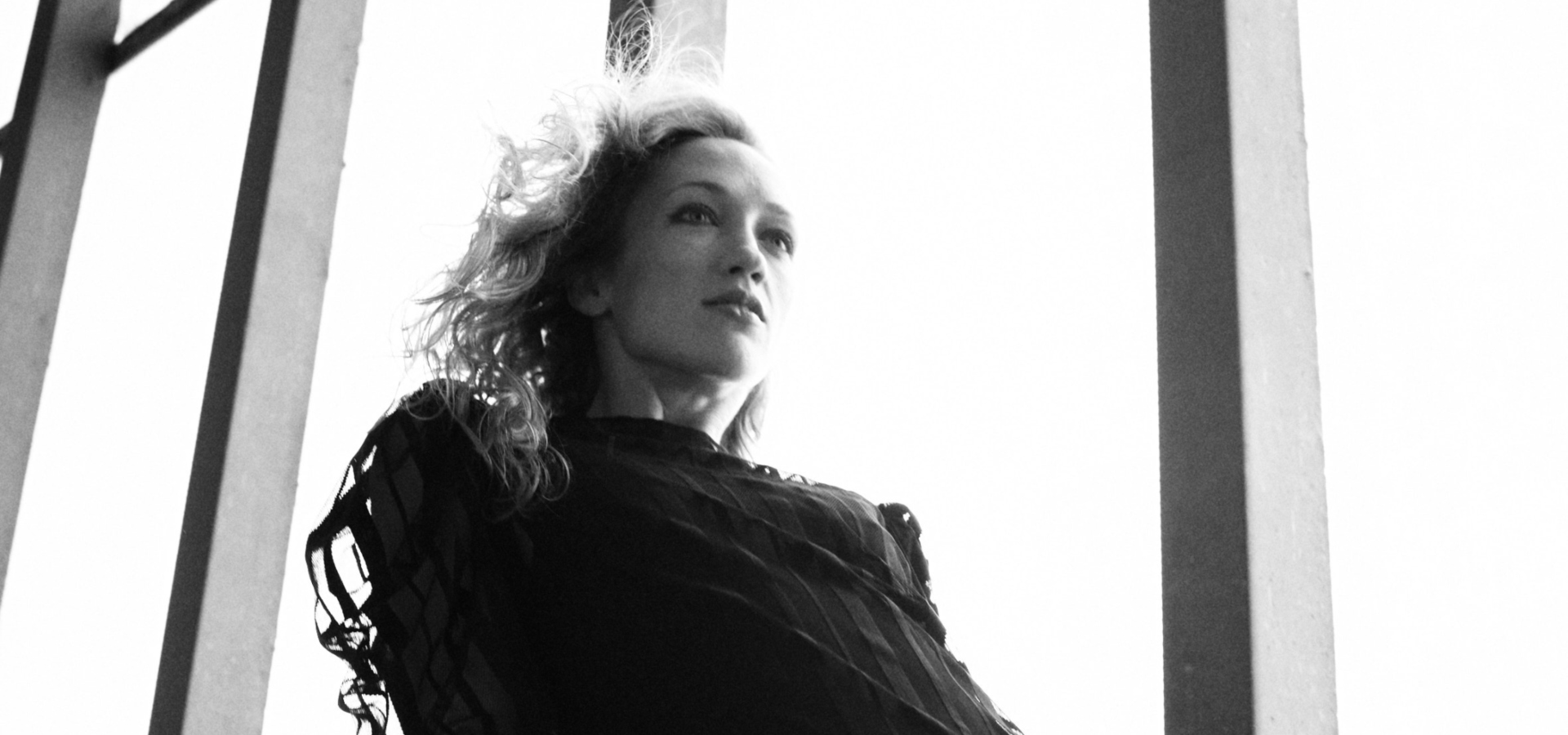
By Stelios Parris
“…Movement when you dance should not stem from ‘ah, this is the choreography I have to perform’, but rather be an expression of an emotion you experience as you tell your story. The emotion itself guides the movement.”
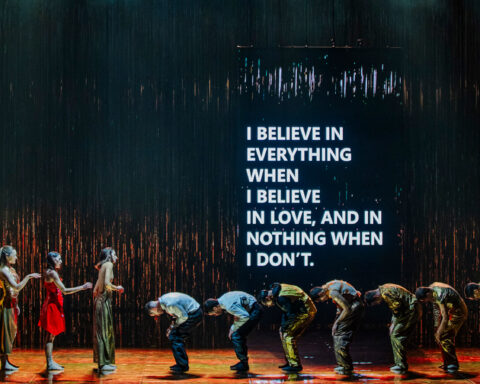
Swan Lake is not simply a ballet; it is the ultimate symbol of classicism, a story of love, betrayal and transformation that has haunted the stage since 1877, when it was first presented at the Bolshoi Theatre in Moscow and considered a failure. Its true triumph came some years later, in 1895, with the new choreography by Marius Petipa and Lev Ivanov. Konstantinos Rigos is not merely a choreographer; he is a transformer and creator of parallel artistic universes. In his new version (a revival of the 2018 production), the lake and the myth are transported into a dystopian environment of abandonment, with a trace of the Mad Max future that awaits us all. A place where nature is dry and defeated. Romanticism searches for slivers of light in front of a gas station, with the white and black swan no longer opposing forces but two sides of the same face.
British-Belarusian Ksenia Ovsyanik is an award-winning prima ballerina whom we have previously enjoyed in Greek National Opera productions such as Don Quixote (2024) and Giselle (2025). She has the experience and technique to transform herself and bring to life both Odette and Odile. I had the honor of receiving her answers despite her demanding schedule. I do not usually comment on the responses I receive, but I must say that hers were full of light and truth. Before enjoying Ksenia Ovsyanik with the Greek National Opera Ballet, you can read her thoughts here and get to know her a little better.
Let me begin with a personal question. Swan Lake is a milestone for every ballerina. What do you love most about this work? Is it Tchaikovsky’s melody, the challenge of embodying two souls in one body, or something else?
I adore the music of Swan Lake. I still remember myself as a child (even before I started school) listening to it on the record player. I think I know the music by heart, forwards and backwards. At English National Ballet we performed Swan Lake countless times, and I remember that whenever I danced in the corps de ballet – when I had to stand still at the side for a long time as a swan – I would think about how healing this music felt to me. It is beautiful, moving, and narrative. There is a reason this ballet has conquered time.
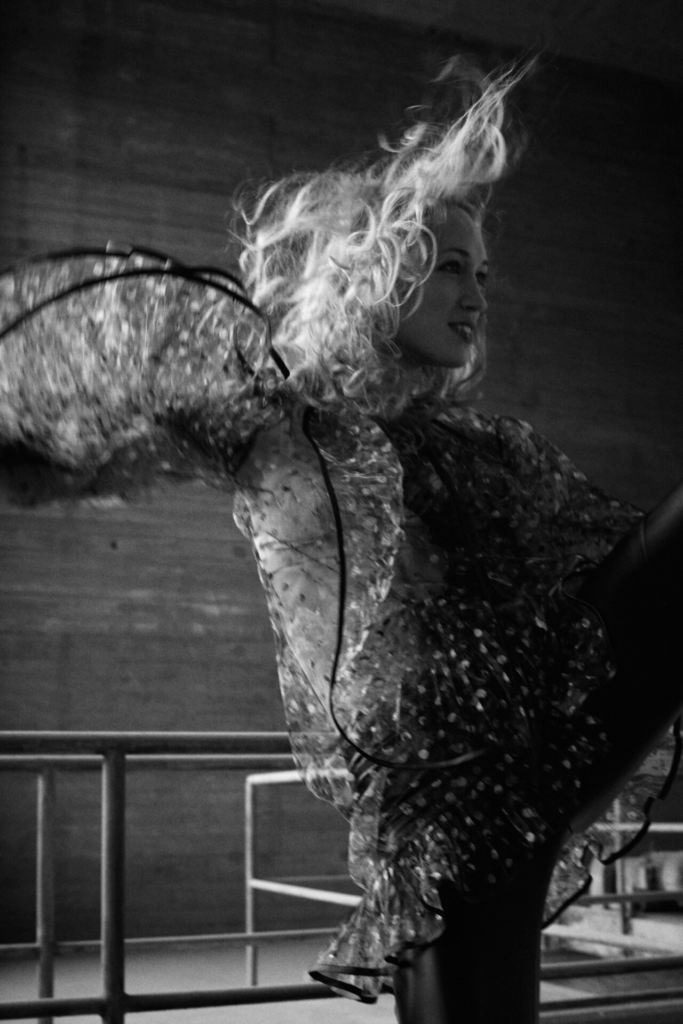
Konstantinos Rigos’s version is set in a place of abandonment. How does one find romantic lyricism in a world that has already been destroyed?
I believe it doesn’t matter what era you live in. Being romantic has to do with hope and with the search for true beauty. And beauty is not only found in happiness. It can also be found in sadness, in reality itself. It lies in the details. So in any world, you can pursue beauty and hope and discover their romantic side.
How does the movement of a swan change when the water is no longer pure but toxic or scarce?
The swan’s movement does not necessarily need to change in a specific way. But the environment and how you feel about it are reflected in the way you move overall. If it is toxic and weighs on you, you may begin to move more heavily. But if you feel fragments of hope, then the movement becomes lighter.
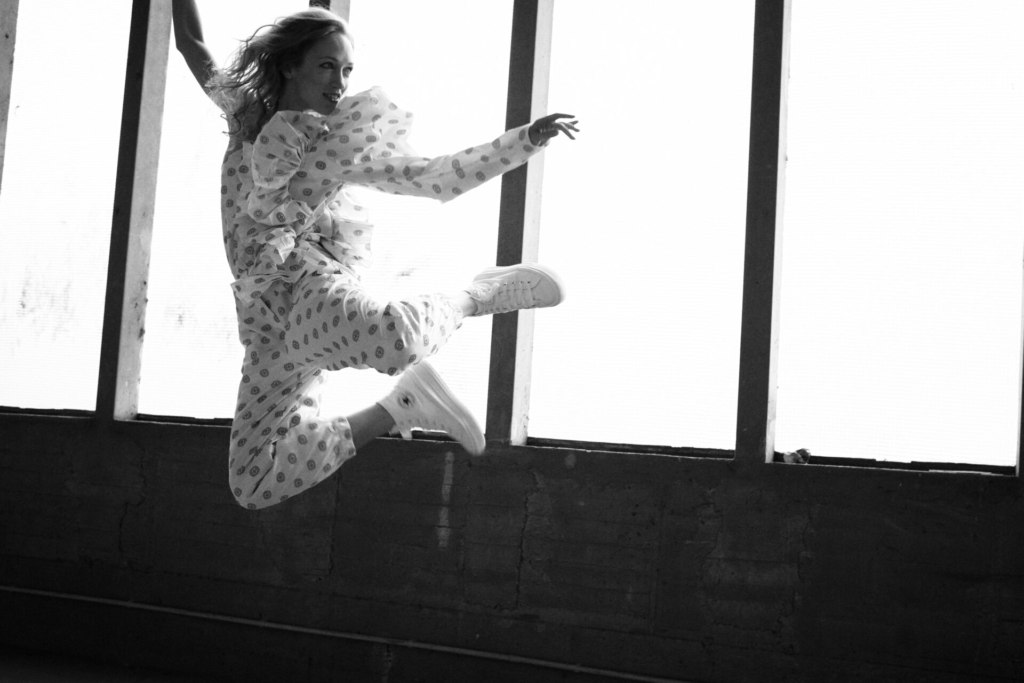
You have embodied legendary characters. Where do you place the duality of Odette/Odile in your personal pantheon of roles? Is it the ultimate peak, or is there another character that feels closer to you as Ksenia?
It is ironic, or quite funny, but the role of Odette in Swan Lake truly sits at the top of my pantheon because, as a child, I was told I would never dance it. It had mainly to do with my physicality – at the time I had a short neck, a muscular body, and I did not look like a swan. That comment stayed with me forever. Even when I grew up and my body lengthened, I never fully believed it. So for a long time I felt that I could not do Swan Lake. It was the most difficult role for me to conquer, in terms of believing that I could.
When was the first time in your life that you truly felt like a swan – exposed, fragile and under everyone’s gaze?
As a prima ballerina, you feel like that every day. You feel that you must justify your position, why you are given so many opportunities, why you are paid your salary, every time you enter even a daily class or rehearsal.
Rigos suggests that Odette and Odile are not rivals but two sides of the same person. How did you approach this internal conflict without the traditional cliché of good versus evil?
It is very interesting to approach such a different production of Swan Lake. In the traditional version you play two distinct characters, whereas here you embody more metaphorical images – different sides of our inner world. It is fun to take something familiar and see it from a completely new perspective. For an actor and artist, that dive is the most interesting part of our work.
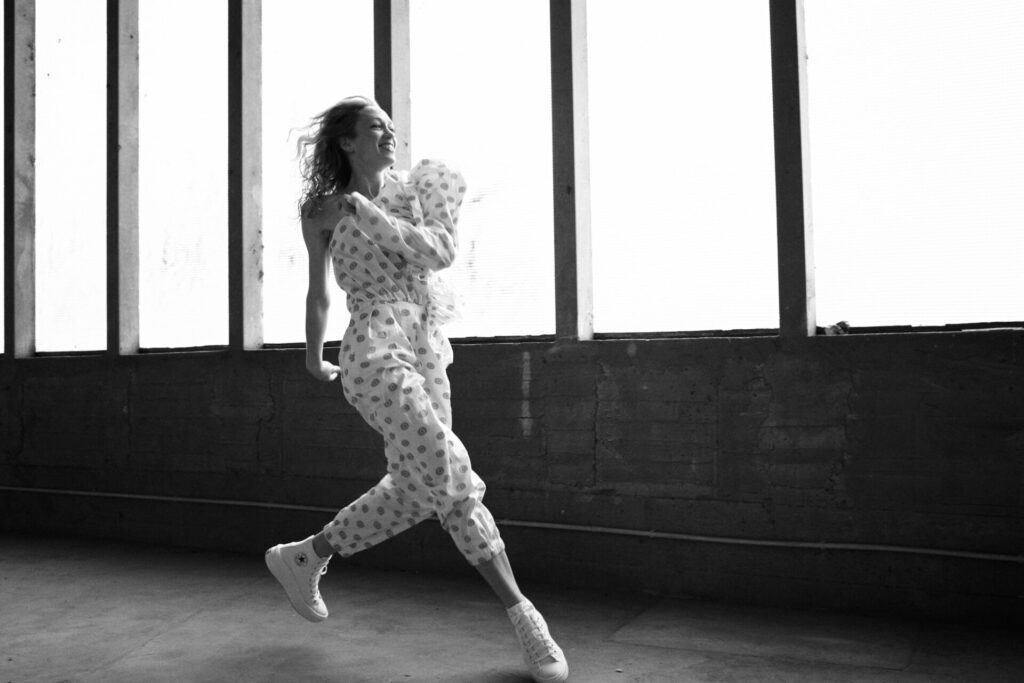
After more than a century of Swan Lake, how does one make the choreography feel as if it is happening for the first time?
I remember one of my teachers saying that every time you step on stage, you must make the audience feel as if you are improvising. That influenced me greatly, because movement when you dance should not come from the thought, “this is the choreography I must perform,” but rather from the expression of an emotion you experience as you tell your story. The emotion itself guides the movement. This allows the story to unfold anew each time. A story about love, self-discovery or the struggle between different sides of yourself is relevant in any moment in time, whether a hundred years ago or today.
The technical demands of this role almost exceed human limits. When you reach that point of exhaustion on stage, what is the “fuel” that keeps you moving and preserves the lyricism?
The belief that as human beings we have far greater limits than we imagine, and that even in my most exhausted state I am only scratching the surface. This makes me ignore the signal of fatigue and continue living the story I am performing.
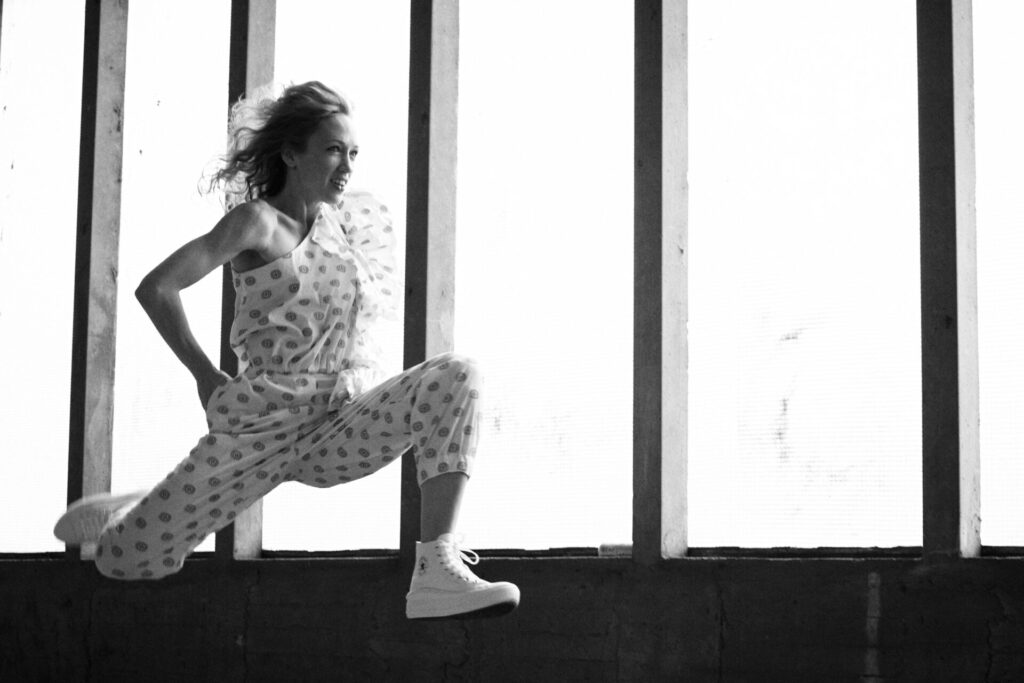
Is there a personal memory you always carry onto the stage that helps you reach the emotional truth of the ballet?
Most of the time I spend preparing a role focuses on how to honestly convey the emotional journey of the story. Inspiration may come from personal experiences, films, books or other stories. But finding an authentic emotional progression is essential for the audience to connect, and that is one of my most important responsibilities as a performer.
As a prima ballerina you are often expected to be the light/Odette. Which part of your personality did you draw upon to find the darkness/Odile in this version?
I look for the reasons behind the darkness and the pain hidden within it. Darkness always comes from experiences. If you can relate to the experience, you can also relate to the darkness.
Do you think the human desire for transcendence is more or less relevant in our digital, cynical era?
I believe the desire for transcendence will always exist. It does not matter what kind of world we live in or how much hope we have for humanity. The desire for beauty in our lives and for love will always be there. It may simply look different in every era.
You have danced Swan Lake in many “dialects” across Europe. What feels uniquely Greek or Mediterranean in the energy Rigos has infused into this production?
This production embodies a search for lyricism and beauty, trying to understand where historical beauty fits within today’s world. Greece is a unique place where this conversation happens almost daily. You encounter the most ancient history coexisting with contemporary life. Being surrounded by these idealized images of past art naturally raises the question: do they still hold the same value? Do they still represent the same ideals and hopes within today’s social environment? In a way, this production asks the same question: how can historical beauty live and breathe today? This dialogue between past and present feels very Greek.
At this stage of your career, does your body feel the weight of the lake differently than when you first started? How do you negotiate with your muscles when they begin to “protest”?
I am at a point where I have learned how to get the best out of my body. I have developed routines and tools, both physical and psychological, that help me face the challenges that come my way.
What is the most “non-ballerina” thing you love doing that you would never give up for your career?
Going on adventures. I love travelling, hiking, exploring unknown places and getting lost.
What is usually the first thought that passes through your mind when the curtain falls and the applause begins?
“OK… OK… I did it…”
When you are in Athens for such an intense production, where do you find your own “lake” of calm? Do you have a favorite Athenian ritual or a secret place that helps you recharge?
I enjoy the Stavros Niarchos Foundation Cultural Center and its surrounding area, the Park and the Library. The design is beautiful and thoughtful, and it always makes me feel peaceful. And Athens always has sunshine, which is already a huge advantage!
Finally, if you could whisper one sentence to the little Ksenia who first put on her pointe shoes in Belarus, what would it be?
“Keep going.”