 PEPI NIKOLOPOULOU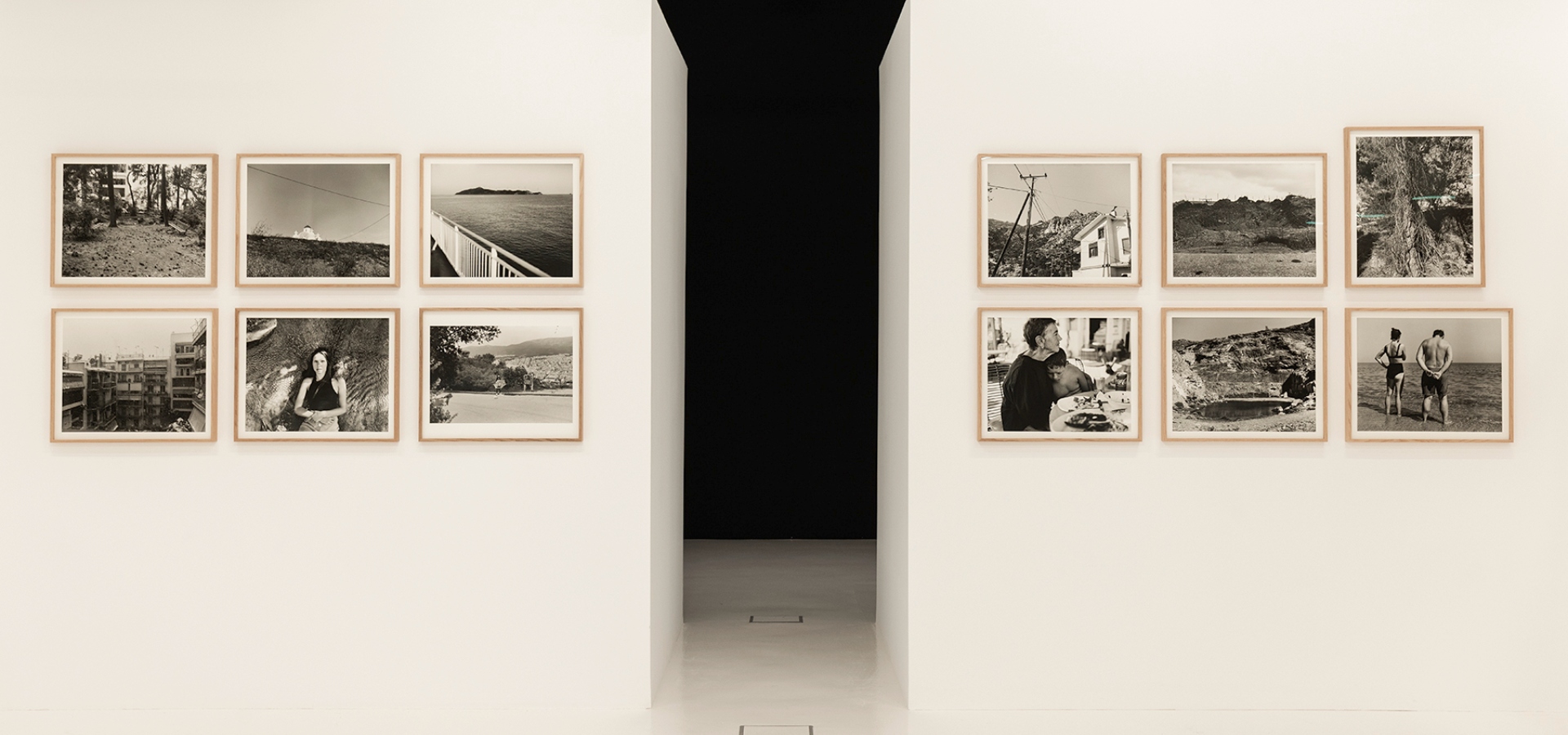
Inside the exhibition Photographs at Onassis Stegi, Yorgos Lanthimos presents 182 photographs from the past five years, revealing a more personal dimension of his visual language
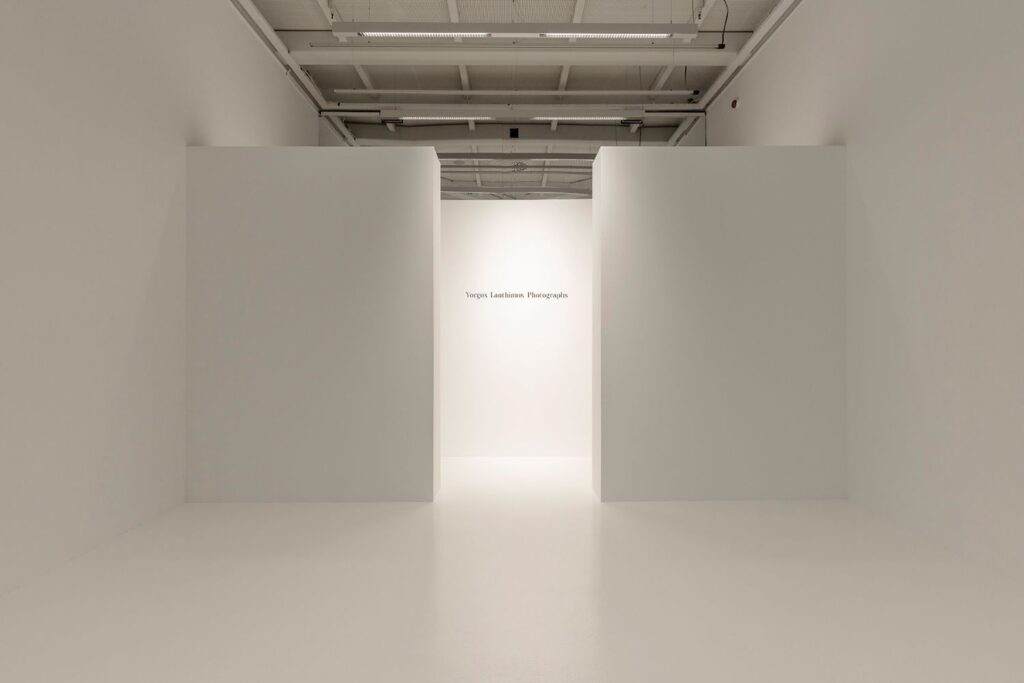
Inside a pristine white space, surrounded by large black-and-white prints, the photographic world of Yorgos Lanthimos gradually unfolds. We first came to know and admire him through his cinematic visions; here, however, he opens a window into another dimension of his gaze. A world that reveals itself as a sequence of images.
For Lanthimos, memory has functioned since childhood as a succession of images. His earliest recollections are visual stills, small clicks that freeze moments in time.

“I might have a terribly bad memory,” he says. “My earliest memories are not particularly remarkable. But the strange thing is that my memories usually appear simply as an image. I don’t know when that started happening, but every important thing in my life exists in my mind as a single image. Of course, at the time it wasn’t an image. It was a real moment.”
From cinematic worlds to photography
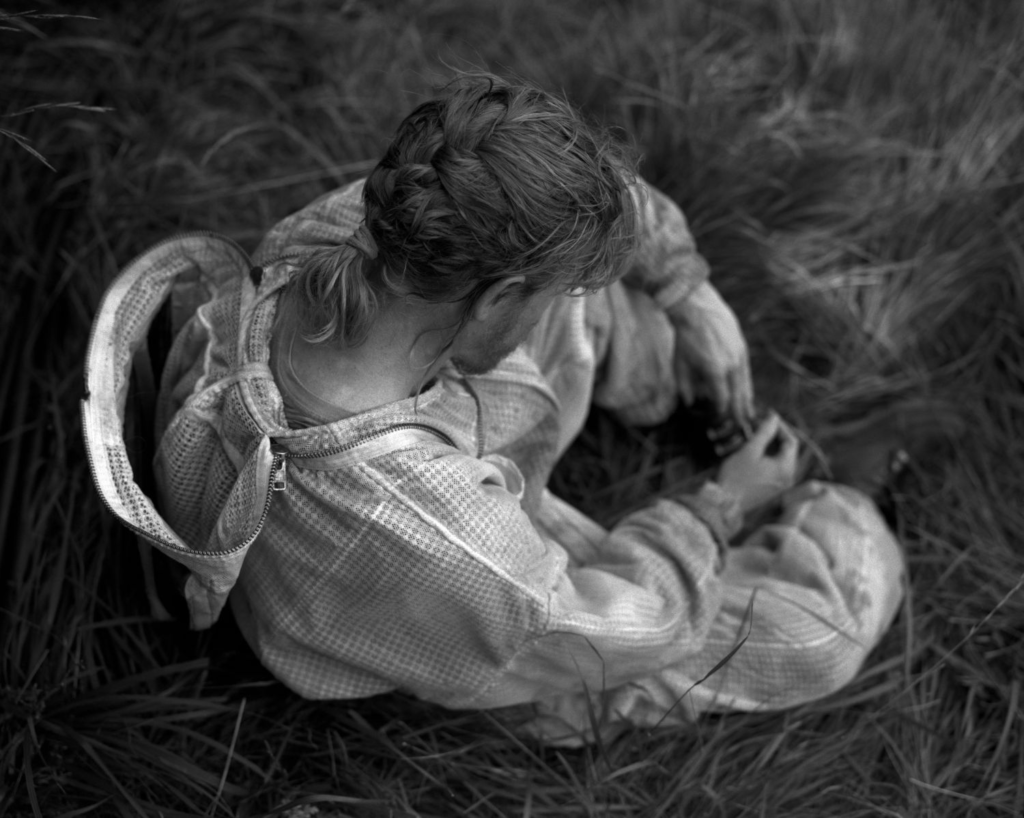
This instinctive relationship with the image seems to run through his photographic practice as well. In Lanthimos’ cinema, images often precede the story as it eventually unfolds.
The exhibition presented at Onassis Stegi brings together 182 photographs produced over the past five years, organised into four distinct bodies of work.
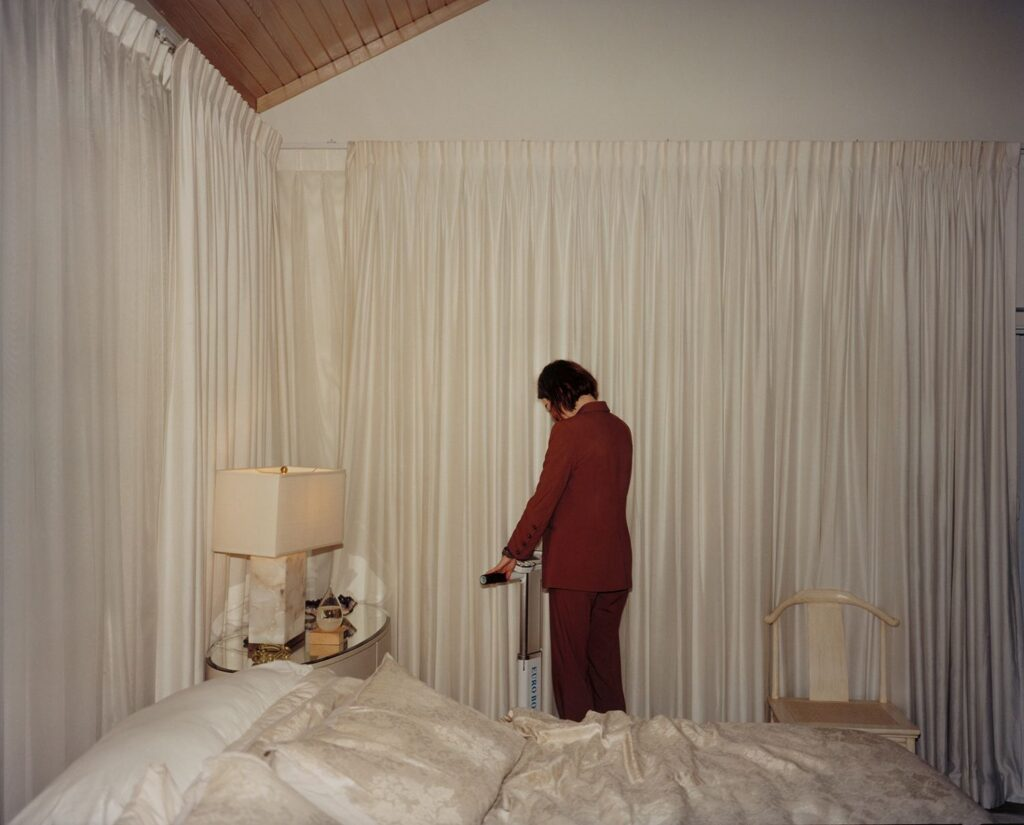
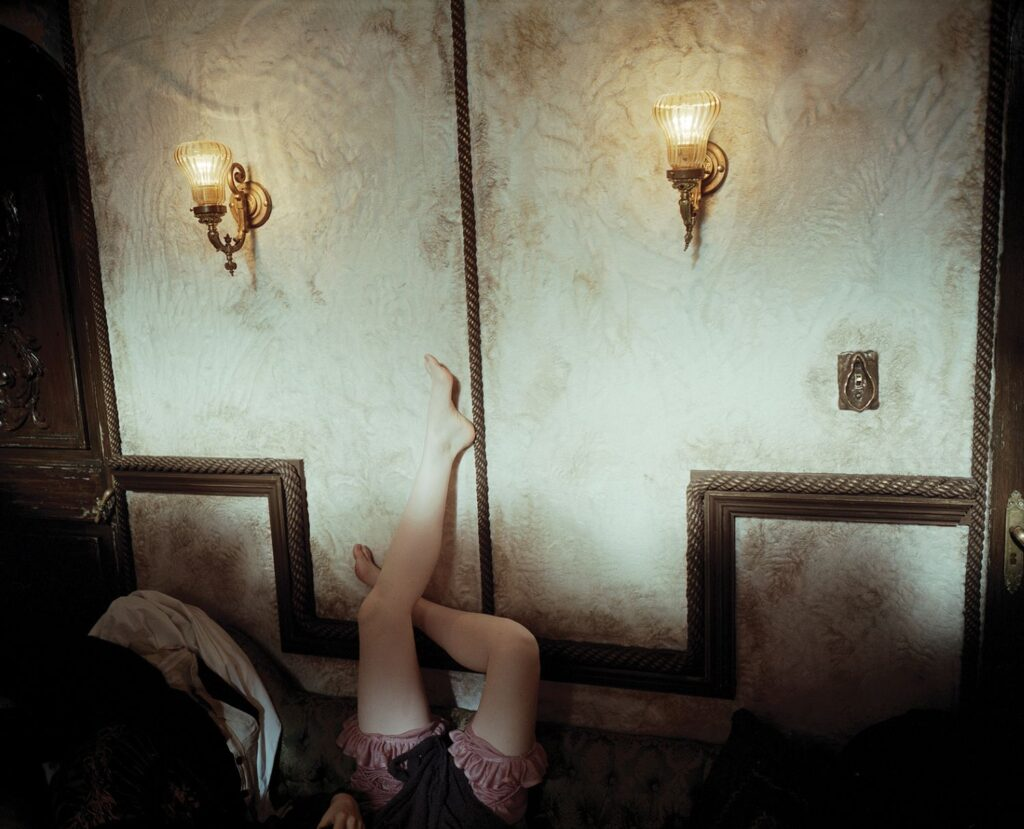
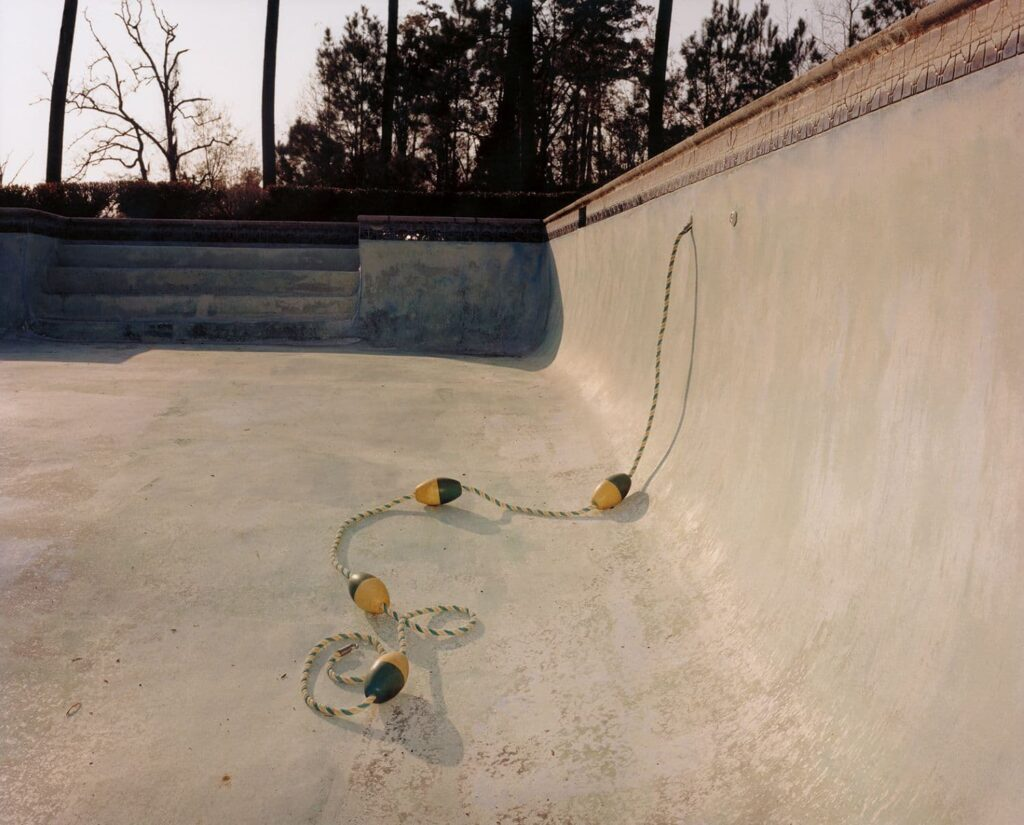
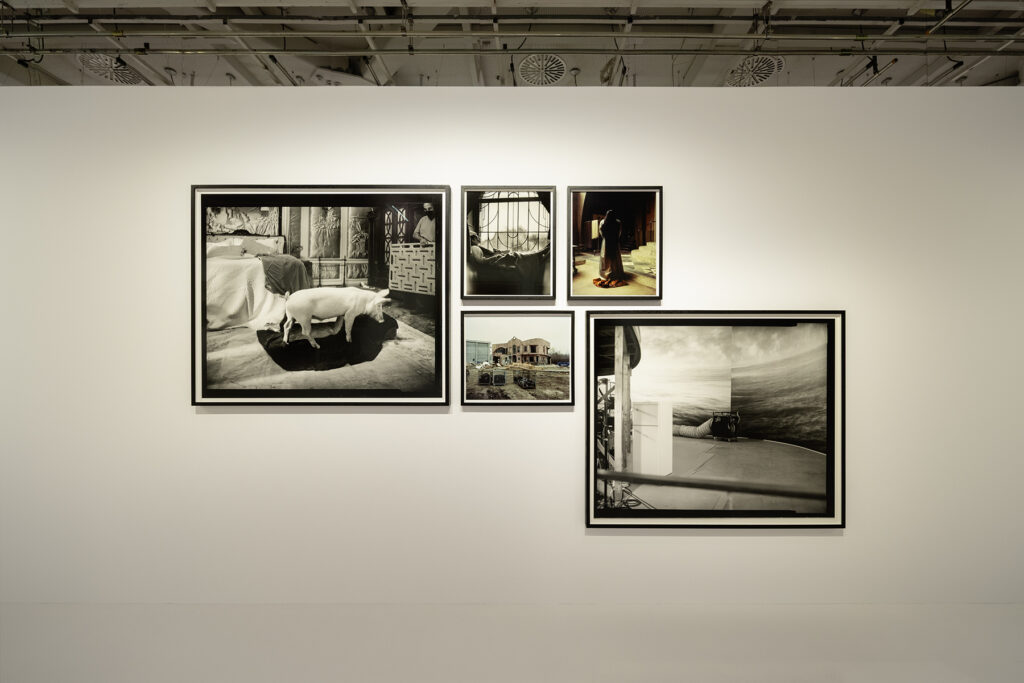
Three of these series emerged within the spaces of his films, captured during shoots in locations such as New Orleans and Atlanta, as well as on soundstages in Budapest where entire cities were constructed as cinematic sets. Many of these images appear in his recent photography books.
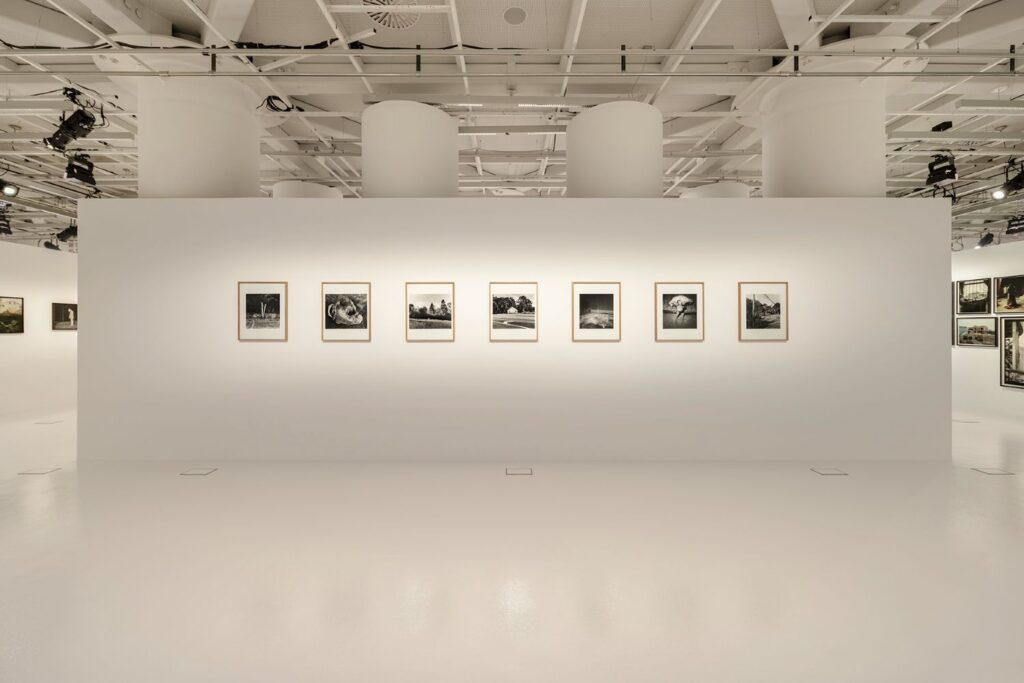
Dear God, the Parthenon Is Still Broken (2024) includes photographs taken during the filming of Poor Things. These are not behind-the-scenes images in the conventional sense, but photographs that create a parallel, almost surreal universe surrounding the film.
i shall sing these songs beautifully (2024) was produced alongside the filming of Kinds of Kindness, adopting an even more abstract approach and loosening its ties to the cinematic narrative.
The series is complemented by VISCIN (2026), which features previously unseen photographs taken during the production of Bugonia. The book is presented in a leporello (accordion-fold) format, allowing the images to unfold like a cinematic sequence.
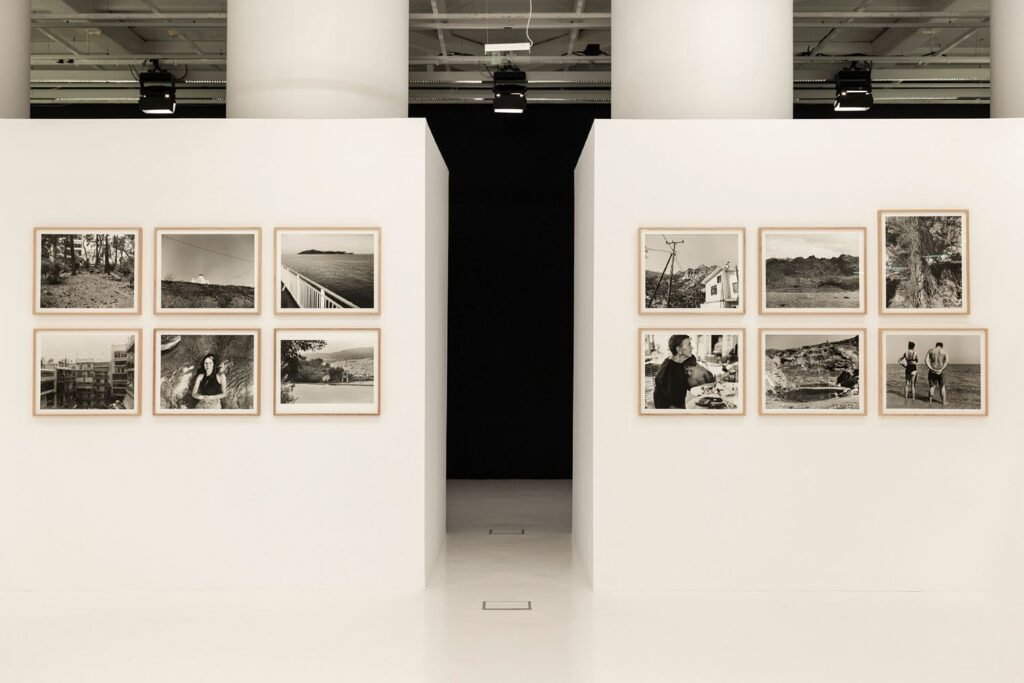
Moving through the exhibition feels almost instinctive. The installation is designed without captions or a predetermined route, allowing visitors to wander freely through the space and establish their own relationship with the images.
Within these three sections, the intelligence of Lanthimos’ gaze becomes particularly evident. The power of his images lies in their focus, composition and carefully calibrated colour palettes, which shape the atmosphere of each photograph. Cinematic sets are transformed into autonomous visual environments where tension arises from subtle, carefully structured details. It would be difficult to expect anything less inventive from a filmmaker who has already shaped such a singular visual language in cinema.
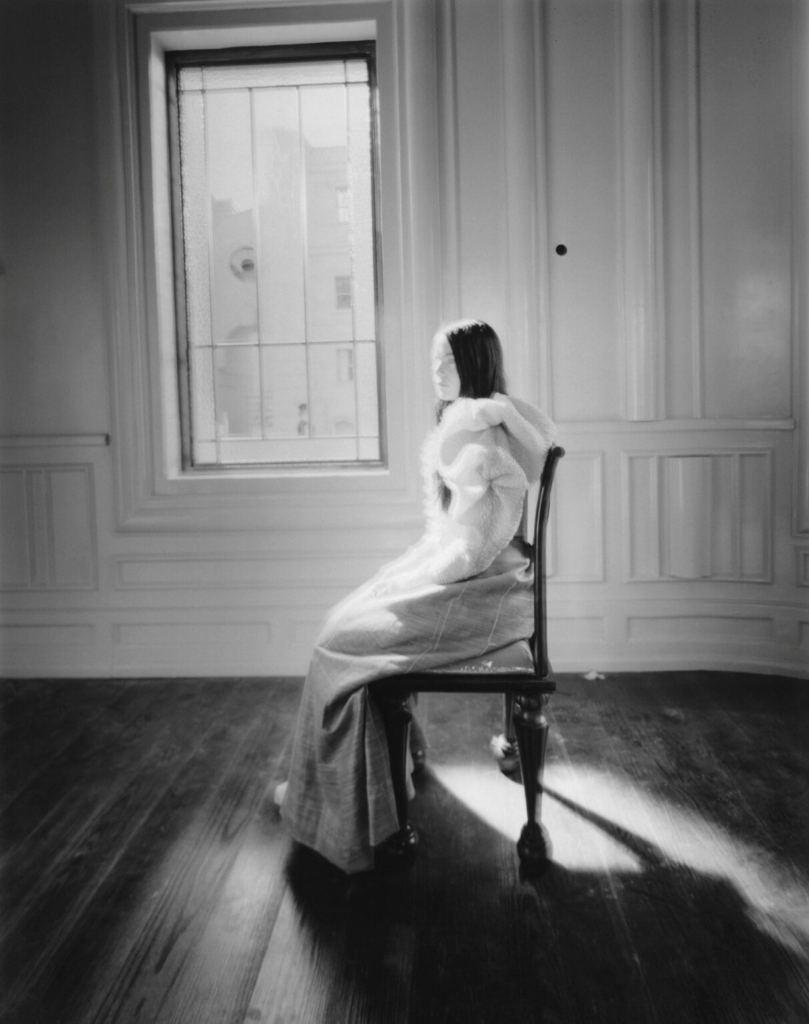
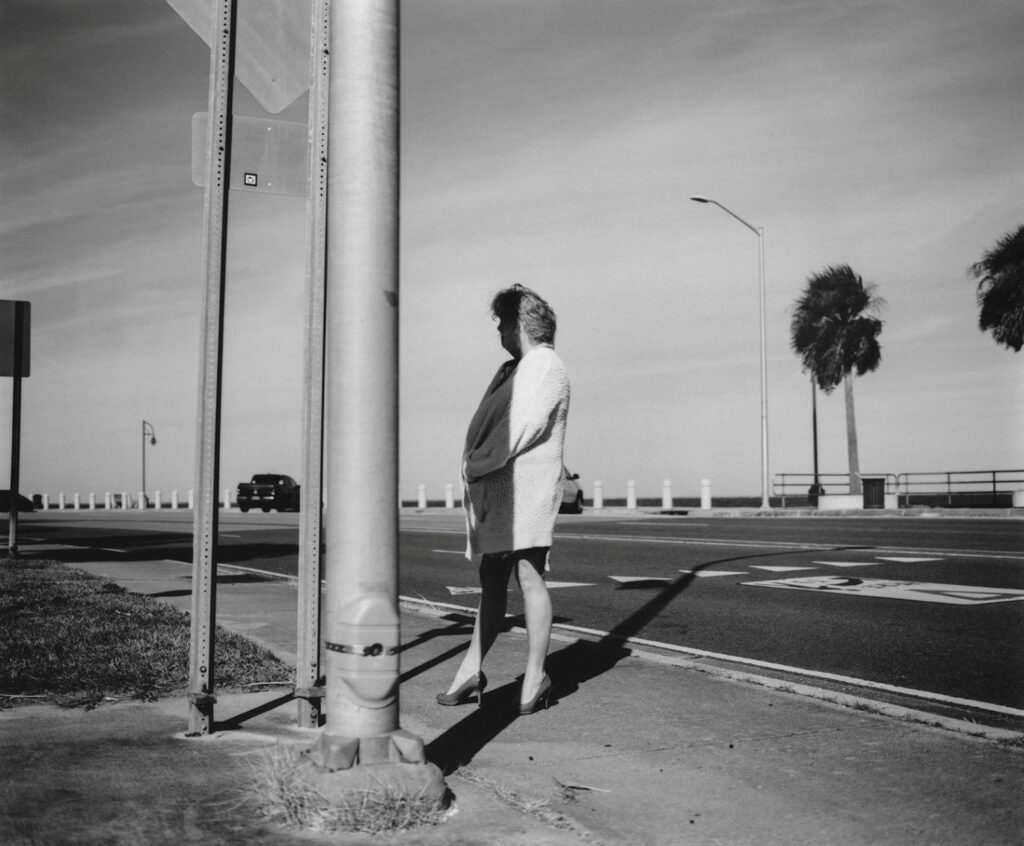
After walking along the white walls where the large prints unfold – including portraits of Emma Stone and Willem Dafoe – visitors are almost inevitably drawn toward a more interior space. A place that feels protected, like a small secret at the heart of the exhibition.
The most personal section
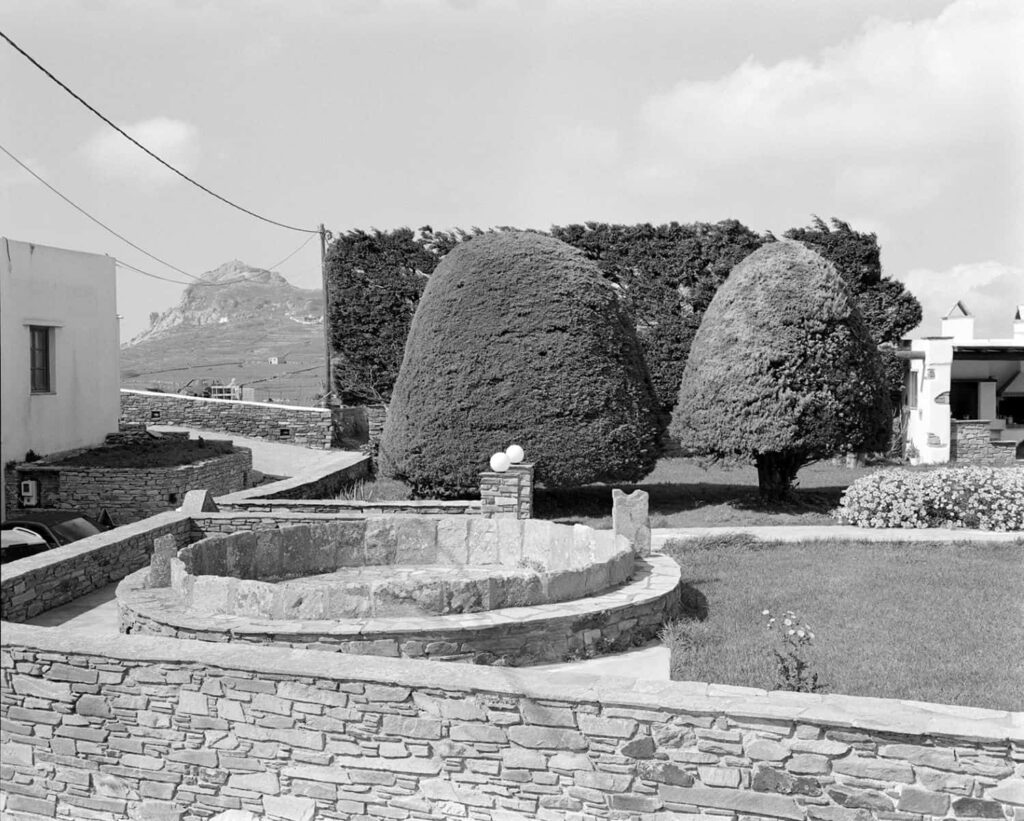
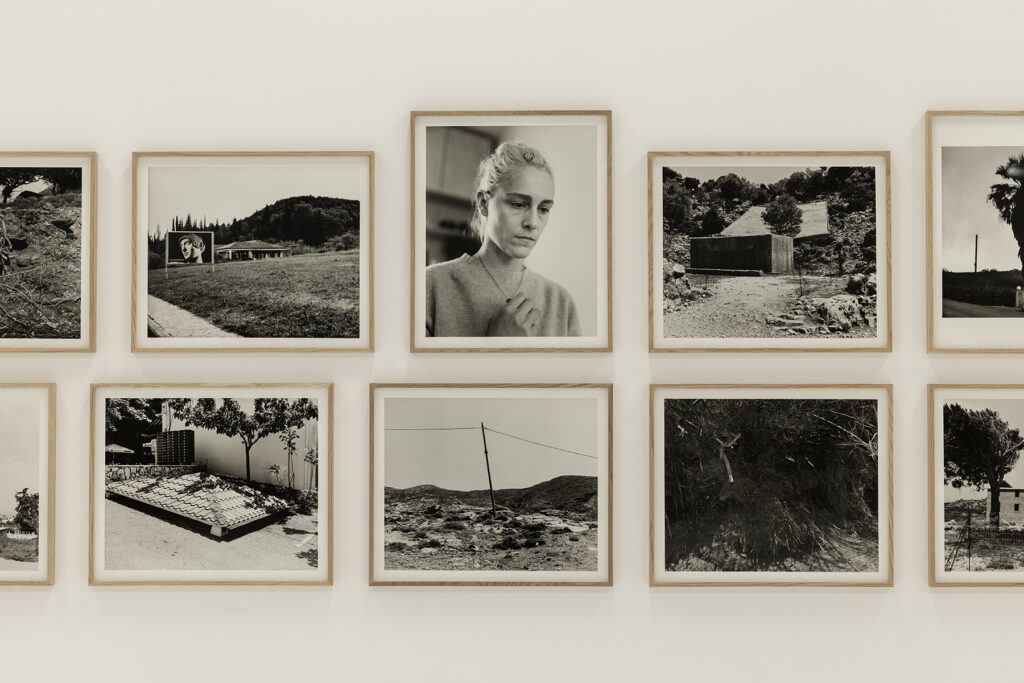
Here we encounter the fourth body of work, presented for the first time anywhere in the world. It brings together photographs from an ongoing personal series created in Greece.
These images emerged from solitary walks around Athens and travels to islands in the Aegean.
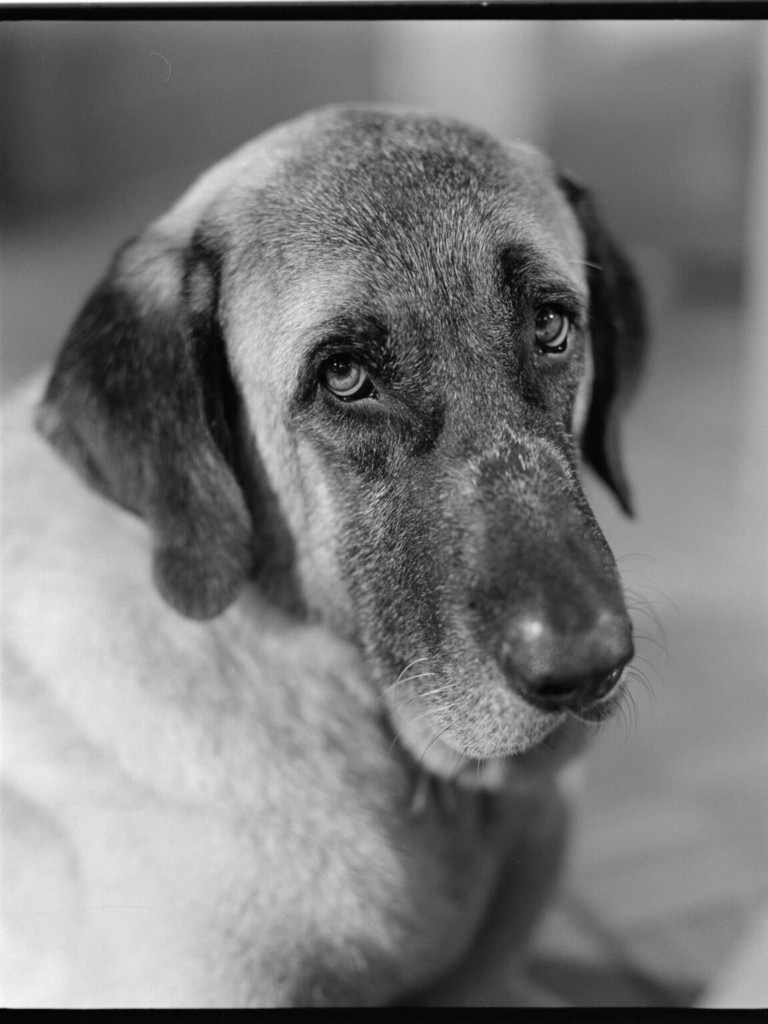
Lanthimos turns his gaze toward what appears ordinary: a washing machine abandoned beside rocks, a garage standing alone within a landscape, small details of everyday life. In these black-and-white compositions one senses a deep curiosity about the surrounding world. His eye often settles on things most of us pass by without noticing – a landscape, a face, an animal, or a fleeting moment.
For viewers in Greece, these photographs acquire yet another dimension. They are not seductive landscapes or distant places. They are images of pure familiarity, scenes that could easily belong to our own memory.
So familiar, in fact, that at first glance they might appear almost understated. Yet it is precisely this simplicity that reveals their strength: small moments of everyday life that, through Lanthimos’ gaze, invite us to pause and look again.
This inward turn toward Greece is also emphasised by the exhibition’s curator Michael Mack.
“Yorgos Lanthimos is a singular talent in the use of a camera lens to build narratives,” Mack explains. “The exhibition reveals his ability to provoke emotional and intellectual leaps of faith beyond the frame of a still photograph.”
He places particular importance on the series of black-and-white photographs made in Greece, away from the environment of film production. For Mack, these images signal an inward turn – a return to a familiar landscape that allows the artist to further develop his own photographic language.
The title of this body of work refers to the phrase “No Word for Blue”, an allusion to the ancient Greek language and the absence of a word describing the colour blue in Homeric epics.
The reference subtly comments on the way Lanthimos’ photographs resist the postcard image of Greece. His black-and-white images do not seek the picturesque or the touristic landscape, but rather a more abstract and contemplative view of place.
Photography, for Lanthimos, is not a secondary activity but another form of storytelling.
“Photography offers much more freedom than the linear narrative of cinema,” he explains.
Even during film shoots, his camera is often in hand, ready to capture moments beyond the cinematic frame.
For him, photography operates differently from directing. It is more immediate and freer, without the need for a structured narrative. As he has often noted, “in cinema you learn very quickly that a film is twenty-four photographs per second.” What initially began as a way to better understand the language of images gradually evolved into something more personal: a way of observing the world and preserving moments worth returning to.
Photography as object
For Lanthimos, photography is not only an image but also a physical object.
When asked about the importance of photo books today, he emphasised how the experience of an image changes when it becomes a print or a book.
Materiality plays a crucial role: the paper, the texture of the cover, even the smell of the print create a different level of experience.
“Even the smell of the book or the print is part of the experience,” he notes.
At the same time, the book allows something a single image cannot achieve: relationships between photographs. The selection and sequence of images can alter their meaning, create new tones or bring different themes to the surface.
Photography, he suggests, remains a medium open to transformation. The same images can appear in a book, an exhibition, or a new installation years later, each time creating a different experience.
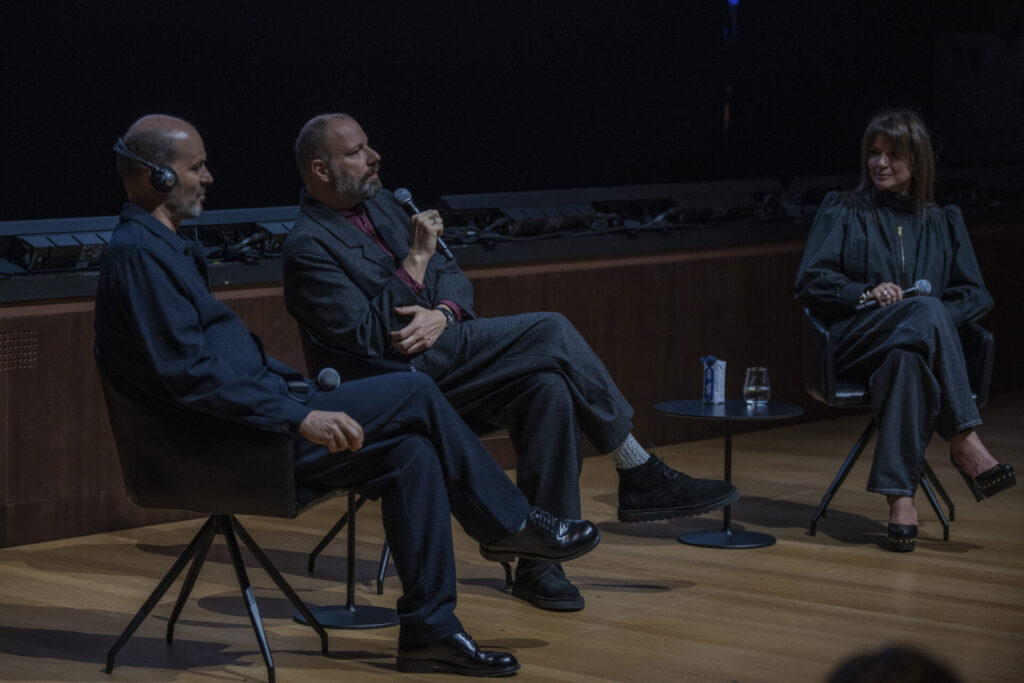
Throughout the discussion, Lanthimos remains calm and approachable, answering every question with ease. Toward the end of the conversation, however, the tone becomes more serious when someone asks whether he would photograph harsh realities such as war zones.
Lanthimos explains that his gaze requires a genuine relationship with what he photographs. The idea of documenting such scenes without a personal connection does not appeal to him.
He says he might consider it only if he found himself in such a place with some form of meaningful involvement; otherwise, he would feel like nothing more than an outside observer.
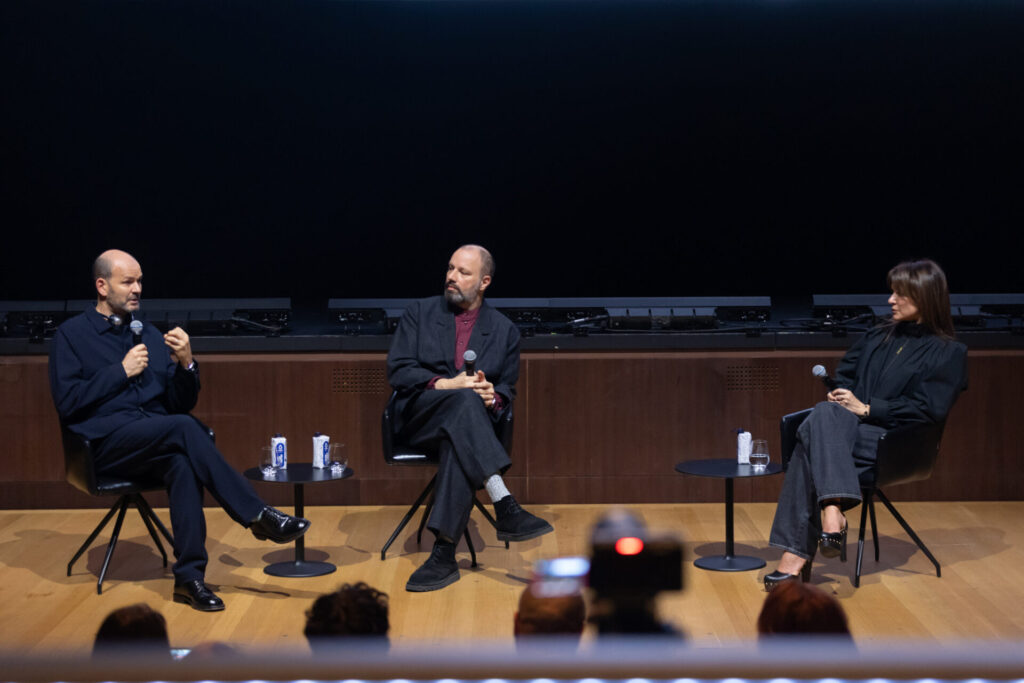
When asked whether he could endure being in such an environment with a camera in hand, his answer is simple and direct:
“I don’t think so. If that were the case, I would already be there.”
Info
Dates: 7 March – 17 May 2026
Location: Level -1, Onassis Stegi
Opening Hours
Thursday–Saturday: 18:00 – 23:30
Sunday: 13:00 – 20:00