 PEPI NIKOLOPOULOU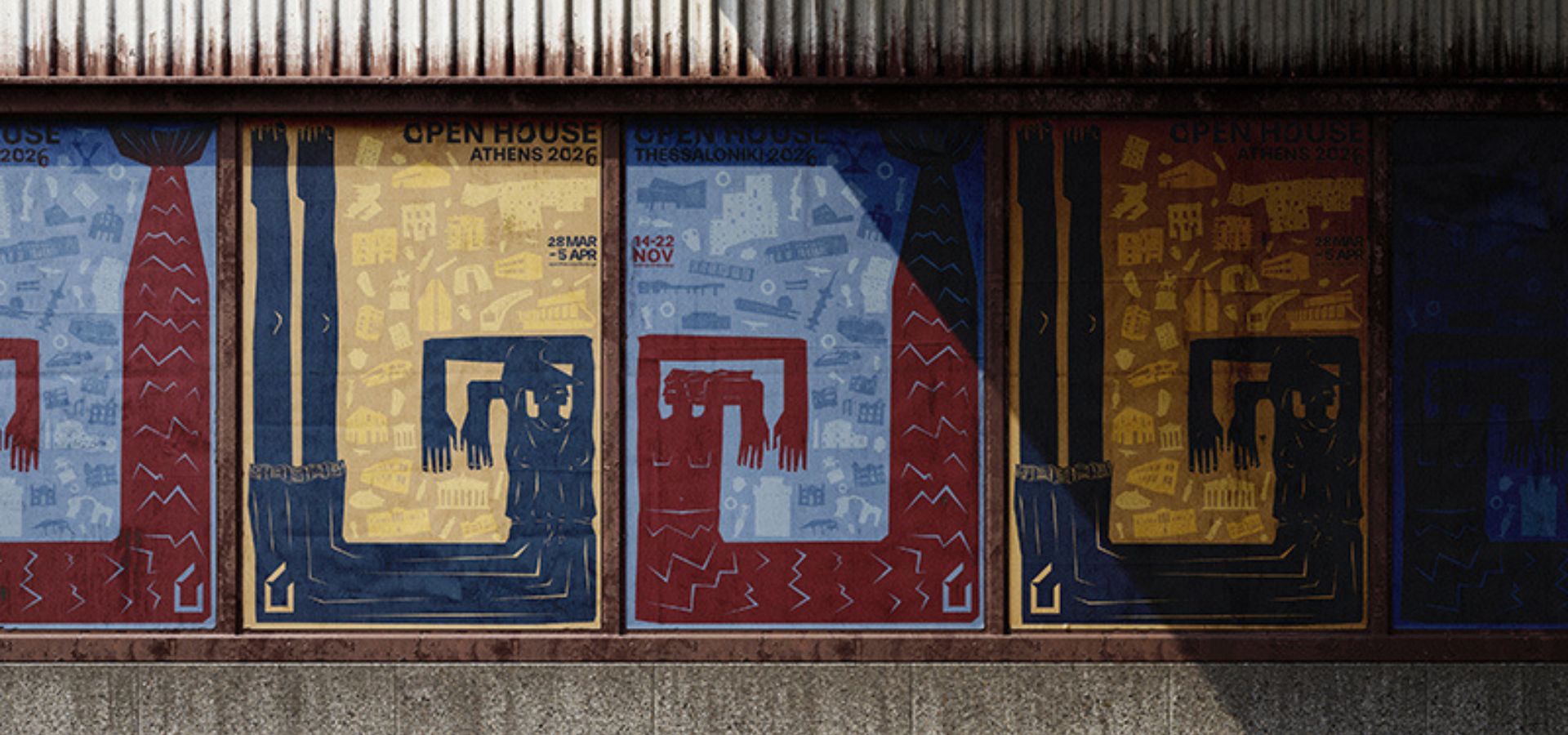
For one weekend each year, Athens opens its doors in a different way.
During Open House Athens, the city becomes an open museum of architecture, inviting the public to explore buildings that are usually closed or quietly passed by. From neoclassical residences and modernist icons to contemporary offices and unexpected urban spaces, the event reveals the layered identity of Athens through its built environment.
What makes Open House Athens so compelling is the perspective. You begin to notice details you might otherwise overlook: a staircase that tells the story of another era, a courtyard that holds traces of domestic life, a façade that reflects a city in transition.
Moving from one building to another feels almost like reading the city differently, mostly as a collection of lived spaces, each with its own rhythm, memory and intention.
The visual identity of Open House Athens & Thessaloniki 2026 emerges from the winning proposal of the “Design the Poster” competition, co-organized with Vakalo Art & Design College. Titled Symvasilevouses (Co-Reigning) by Marios Alexandros Poulimenos, the design unfolds as a visual diptych that brings Athens and Thessaloniki into dialogue through the mythical female figures that gave them their names: the goddess Athena and Thessalonike, sister of Alexander the Great.
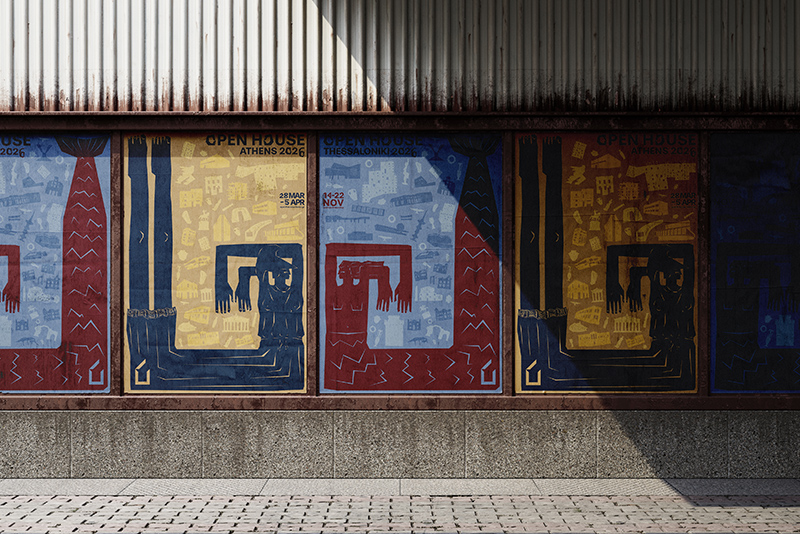
Each figure symbolically embraces her city while turning toward the other, capturing a sense of connection and shared presence. Around them, softly rendered landmarks and selected buildings from past Open House editions form intricate, almost pattern-like compositions that invite the viewer to look closer and discover familiar elements. The color palette reflects the atmosphere of each city during the event – warm yellow for Athens, deep blue for Thessaloniki – while a minimal typeface is subtly enriched with hand-drawn details, where certain letters transform into expressive gestures.
Beyond the main weekend of building visits, Open House Athens unfolds as a multi-day programme of parallel events across the city. Starting from March 28 and leading up to April 5, 2026, the programme expands the experience of architecture through different lenses.
Highlights include Made in Athens and Open Walks, offering curated routes and thematic explorations of the urban landscape, while Open School and Open Office provide access to educational institutions and working environments. The main event, Open Tours (April 4–5), remains at the heart of the festival, opening dozens of buildings to the public with free guided visits.
Additional initiatives such as Open Photo and Open Your Map invite the public to engage more actively with the city, transforming architecture into a shared, participatory experience.
Among the many routes and experiences of this year’s programme, two walks stand out as particularly compelling: the IFI Lighting Night Walk, which reveals the city through its nocturnal atmosphere, and the Kypseli walk along Fokionos Negri, offering a layered reading of Athens through its architectural history. Together, they capture two distinct yet complementary ways of experiencing the city through light and through time.
IFI Lighting Night Walk Light Across Urban Scales

One of the most atmospheric experiences of this year’s programme is the IFI Lighting Night Walk, an evening route through the city center that invites visitors to rediscover Athens through light.
Moving from Kolokotroni Square to Voukourestiou Street, the walk traces how lighting design can reshape the perception of urban space – from the open scale of public squares to the intimate interiors of shops and hotels. Along the way, landmarks such as Milos Hotel, Callista Crafts, Yiannis Sergakis and The Social Hotel become part of a carefully choreographed nocturnal narrative.
Here, light is not just functional, but interpretive: it reveals architectural rhythms, highlights textures, and connects fragments of the city into a cohesive nighttime experience. The result is a subtle yet powerful shift in how we see – and feel – Athens after dark.
The IFI Lighting Night Walk Light Across Urban Scales takes place on March 28 and 29, 2026, between 19:30 and 21:00, with departures every 30 minutes. The walk begins at Kolokotroni Square and concludes at The Social Hotel on 30 Voukourestiou Street, covering a distance of approximately 800 meters and lasting around 45 to 60 minutes. Part of the Open Walks 2026 programme, this new route unfolds across the areas of Omonia, Syntagma, Monastiraki and Psyrri. Participation is free and no booking is required.
Kypseli Through Fokionos Negri Street
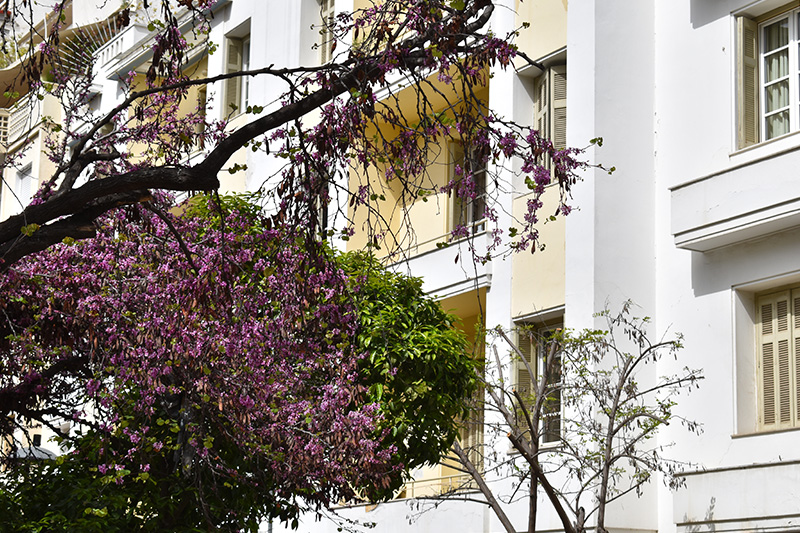
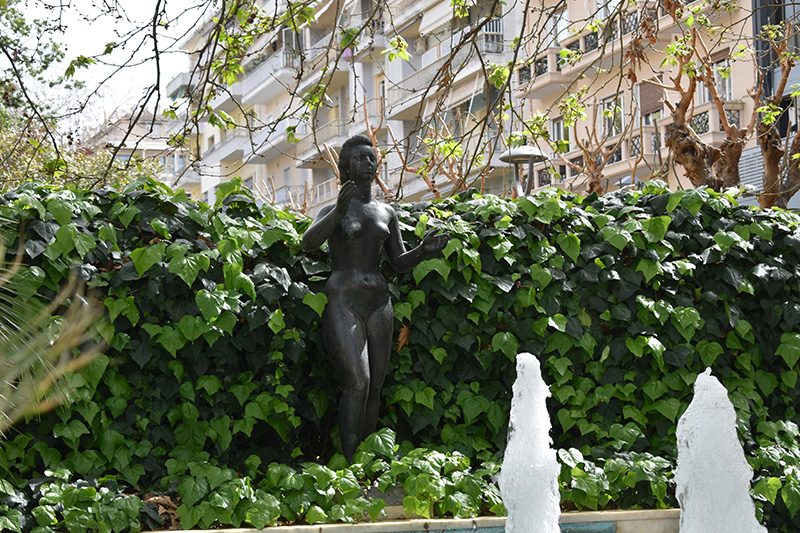
This Open Walk offers a journey through one of Athens’ most layered neighborhoods, tracing the transformation of Kypseli from a suburban enclave into a dense urban fabric shaped by modernity.
Along Fokionos Negri – the city’s iconic “green avenue” – the walk unfolds as a timeline of Athenian architecture. Early 20th-century mansions give way to interwar modernist apartment buildings, reflecting the shift toward multi-storey living and the rapid reconstruction that defined the city. Landmarks such as the Kypseli Market and notable residential buildings mark key moments in this evolution, while the linear park itself redefines the relationship between public space and everyday life.
Today, the pedestrian street holds together these different historical layers, offering a living archive of Athens through its architecture, textures and rhythms.
The walk takes place on March 28 and 29, 2026, from 11:00 to 15:00, with departures every 30 minutes. It starts at 84 Fokionos Negri Street at Kanari Square and ends at the intersection of Fokionos Negri and Drosopoulou Street. The route covers approximately 700 meters and lasts around 45 to 60 minutes.
Α few stops worth making
Here are a few stops worth making – from historic buildings and cultural landmarks to more intimate studio visits through the Made in Athens programme, where the city reveals itself through material, craft and process.
Cultural Center of the Church of Greece
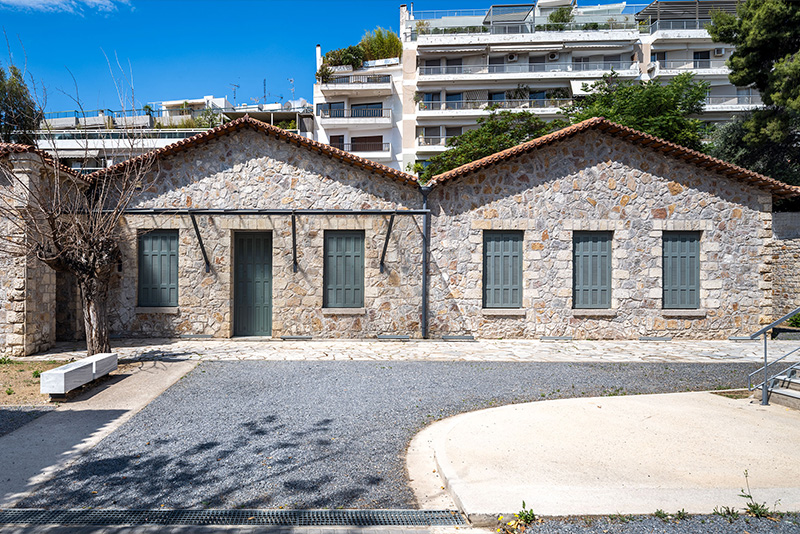
One of this year’s most compelling new entries is the Cultural Center of the Church of Greece, housed in a cluster of restored 19th-century buildings that once formed part of the 401 Military Hospital. Originally designed as barracks for the 1st Infantry Regiment, the stone structures bear the influence of French military architecture and carry a long history of institutional use.
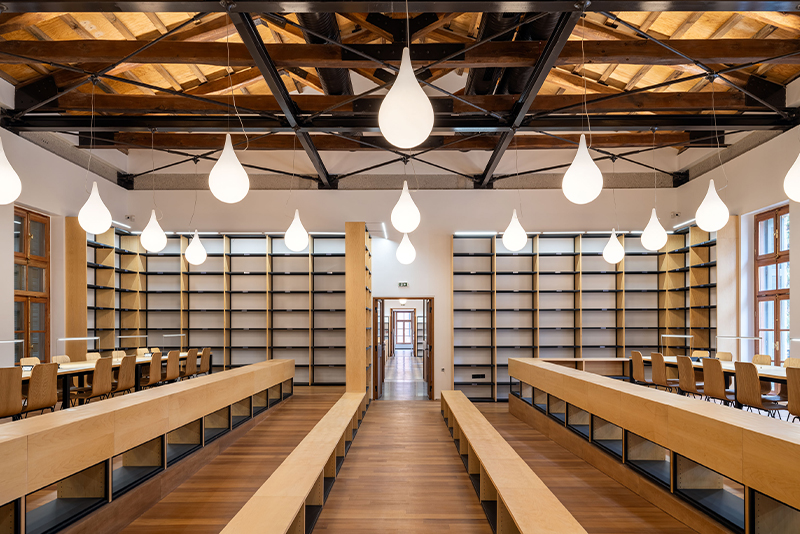
Their recent transformation into a cultural space reveals a sensitive approach to adaptive reuse. Completed in 2024, the project reimagines the complex as a contemporary hub for knowledge and public engagement, bringing together the Holy Synod’s historical archive, a library, and spaces for exhibitions and events. The result is a layered architectural experience, where traces of the past coexist with a new cultural function.
The Cultural Center of the Church of Greece will be open on April 4 from 12:00 to 18:00. On April 5, visiting hours continue, with last entry permitted 20 minutes before closing.
Alekos Fassianos Museum & Building

Housed in a building designed and reconfigured in the 1990s by architect Kyriakos Krokos in close collaboration with Alekos Fassianos, this space offers a rare insight into the artist’s world. Since early 2023, it operates as a museum dedicated to his work and universe.
What makes this visit particularly compelling is its intimacy. Beyond the exhibition and educational spaces, visitors are given access to the first and second floors of the building, including an apartment arranged with Fassianos’ personal belongings and furniture designed by the artist himself. The result is not just a museum, but a lived environment, a space where art, life and design become inseparable.
The Alekos Fassianos Museum & Building will be open on April 4 and 5, 2026, from 11:00 to 17:00, with last entry permitted 20 minutes before closing.
Mansion of the Duchess of Plaisance
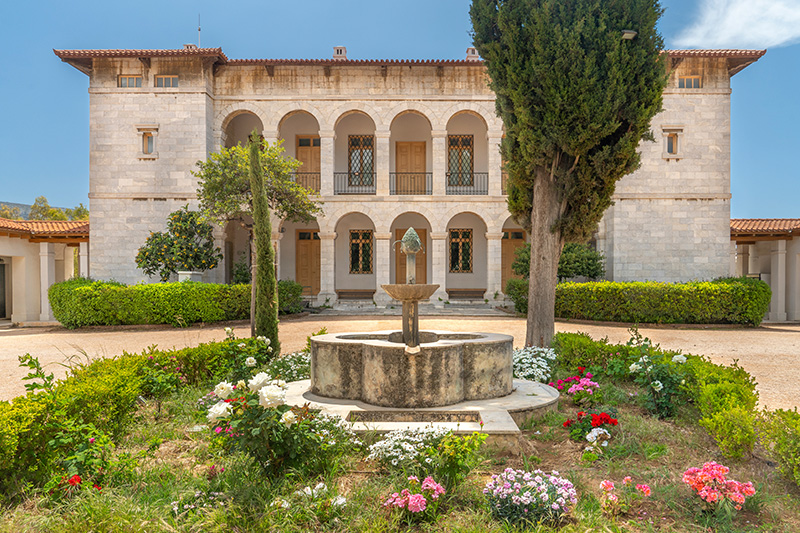
Also known as Villa Ilissia, this elegant 19th-century mansion stands as a rare example of a country villa within the fabric of the city. Designed by architect Stamatis Kleanthis and built between 1840 and 1848 for Sophie de Marbois-Lebrun, the Duchess of Plaisance, it reflects an early moment in the shaping of modern Athens.
Since 1930, the building has housed the Byzantine and Christian Museum, adding another historical layer to its identity. Walking through its spaces today, the transition from private residence to public institution becomes palpable, offering a quiet yet powerful reminder of how architecture carries the memory of different eras within a single structure.
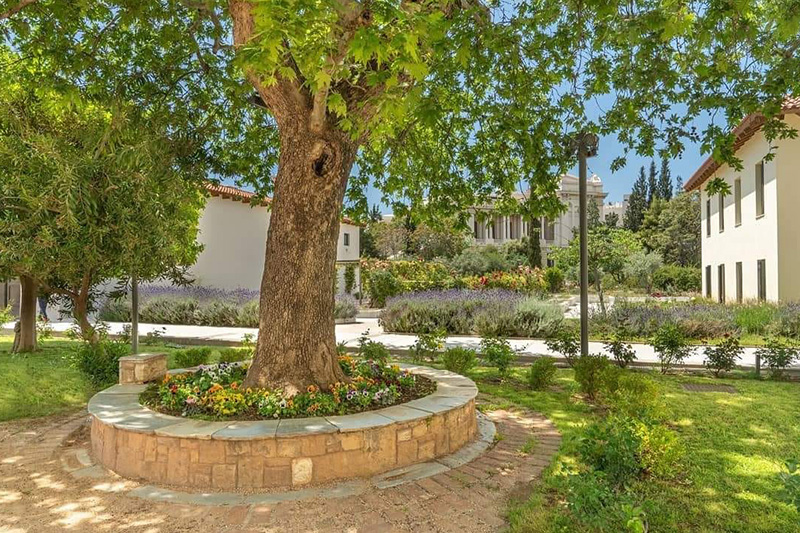
The Mansion of the Duchess of Plaisance will be open on April 4, 2026, from 10:00 to 15:00, with last entry permitted 20 minutes before closing.
Cavafy Archive

Housed in a preserved building dating back to 1910, the Cavafy Archive brings together architecture, literature and memory within a single, carefully reimagined space. The building, which bears elements of eclecticism and was expanded in 1989, now hosts the poet’s writings, personal belongings and library, alongside contemporary artworks commissioned by the Onassis Foundation.
Inaugurated in November 2023 and redesigned by Flux-office (Eva Manidaki and Thanassis Demiris), the archive unfolds as both an exhibition and an atmosphere. Moving through its rooms feels less like visiting an institution and more like entering a quiet, introspective world, one that reflects the inner landscape of Constantine P. Cavafy as much as the city that shaped him.
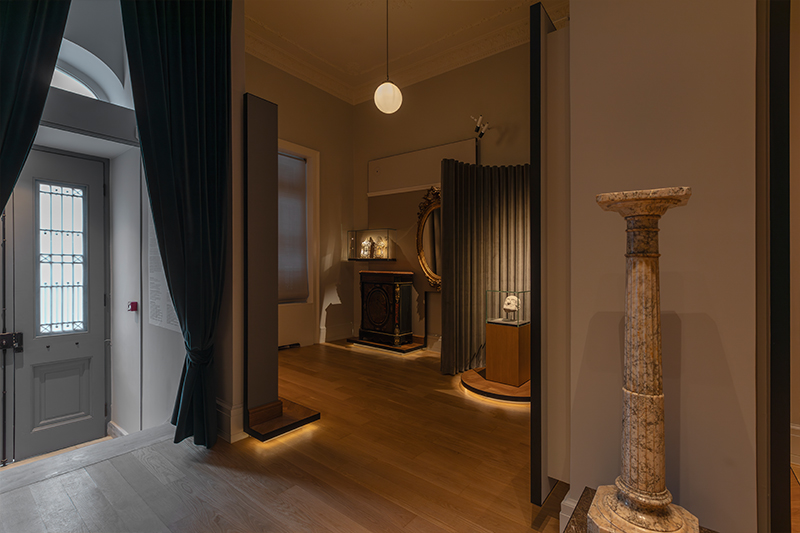
The Cavafy Archive will be open on April 4, 2026, from 11:00 to 18:00, with last entry permitted 20 minutes before closing.
Melas Mansion
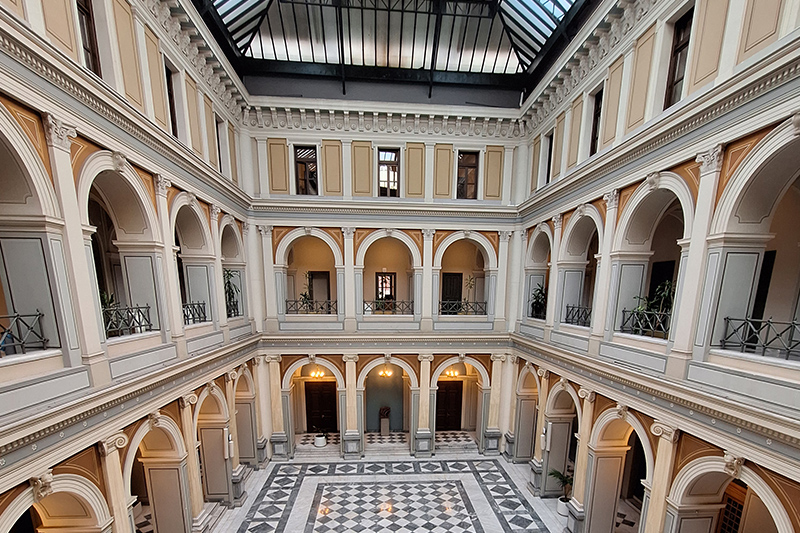
One of the most emblematic buildings of 19th-century Athens, the Melas Mansion was originally constructed in 1874 as the city’s main Post Office, designed by Ernst Ziller. At the time, it stood as the largest private building in Athens, reflecting the ambitions of a rapidly evolving capital.
Today, following its restoration, the building reveals a striking interior centered around a closed atrium framed by colonnade, a space that brings light and rhythm into the heart of the structure. The ground floor hosts events and lectures, while a dedicated wing presents works from the National Bank’s art collection, and the upper floors remain in use as office spaces. It is a building that continues to function, bridging its historic identity with contemporary civic life.
The Melas Mansion will be open on April 4 and 5, 2026, from 10:00 to 14:00, with last entry permitted 20 minutes before closing.
Together, these selections form a personal map of Athens: a city shaped by history, reimagined through design, and constantly rediscovered through the act of looking closer.
Made in Athens: Material, Craft and Experimentation
A different perspective on the city emerges through the Made in Athens programme, where architecture gives way to process, material and making. Here, studios open their doors not simply as spaces, but as environments of experimentation – places where marble, textile and raw matter are transformed through touch, time and technique.
Across these visits, the focus shifts from the scale of the city to the intimacy of the workshop, revealing a more tactile, hands-on understanding of design. It is an invitation to experience Athens not only through its buildings, but through the materials and practices that continue to shape its contemporary creative scene.
Valia Kap Studio

Also part of the Made in Athens programme, Valia Kap Studio explores the expressive potential of textile as both material and medium. Founded by Athens-based designer Valia Kapeletzi, the studio moves fluidly between art, fashion and spatial design.
Working with everyday materials, which she deconstructs and reimagines through experimental techniques, Kapeletzi creates compositions that are defined by light, transparency and texture. Her background in the fashion industry – including her work as a textile developer at Iris van Herpen – informs a practice where craftsmanship meets innovation.
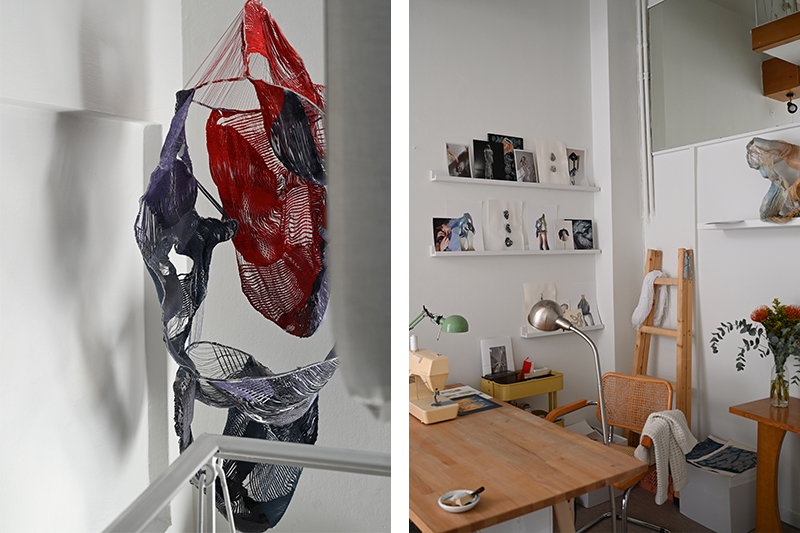
The result is a series of delicate yet complex works that blur the boundaries between textile art, interior design and sculpture, inviting a more tactile and immersive way of experiencing space.
The Valia Kap Studio will be open on March 29, 2026, from 13:00 to 19:00.
Address 17Α Kerasountos St, Ilissia
Theodore Psychoyos Studio
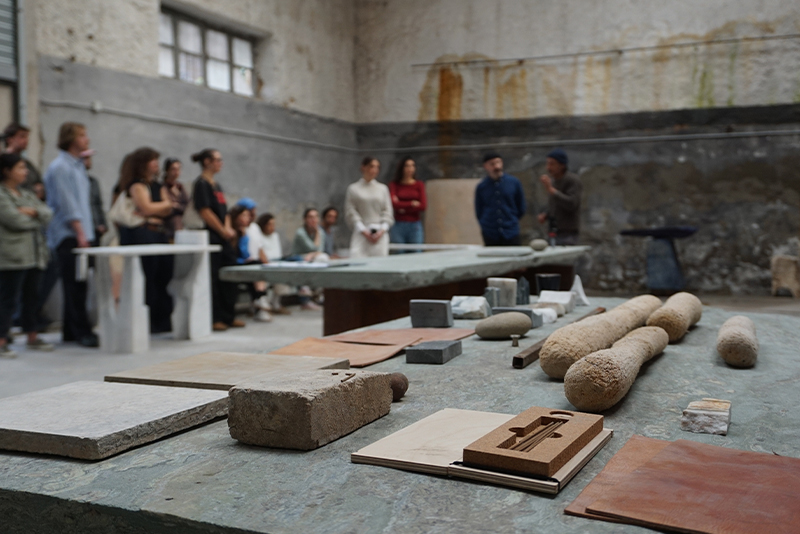
Part of the Made in Athens programme, Theodore Psychoyos Studio offers a different way of approaching architecture – through material, process and transformation. The studio’s work revolves around functional art created from reclaimed marble, exploring the life of the material beyond its conventional use.
Fragments sourced from quarries and factories – discarded offcuts, broken pieces, and “found stones” – are carefully reworked with minimal intervention, preserving the marks of both natural erosion and human handling. By bringing together raw and polished surfaces, the resulting pieces carry a quiet, elemental presence.

More than objects, these works subtly reshape the way we move through space, inviting a slower, more conscious relationship with our surroundings.
The Theodore Psychoyos Studio will be open on March 28 and 29, 2026, from 12:00 to 15:00.
Address 8 Ipeirou St., Pireaus
Neraw Studio
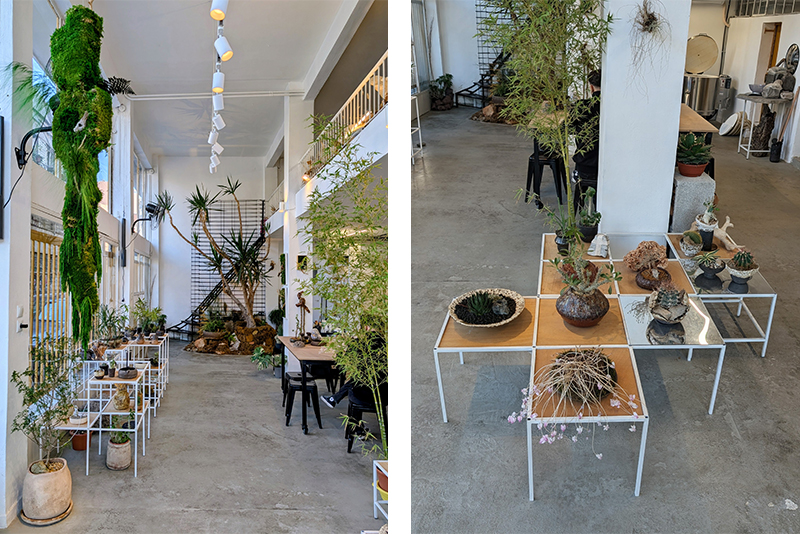
Also part of the Made in Athens programme, Neraw brings together ceramics and plant life in a practice that feels both grounded and quietly poetic. Founded by plant designer Konstantinos Bobogias and ceramic designer Giorgos Bollas, the studio explores the relationship between clay and nature through planted, sculptural objects.
Each piece is conceived as a small landscape, where handcrafted ceramic forms host living plants, creating a dialogue between growth and structure. Inspired by water and the raw qualities of the earth, Neraw’s work moves beyond traditional ceramic practice, embracing a more organic and evolving approach.
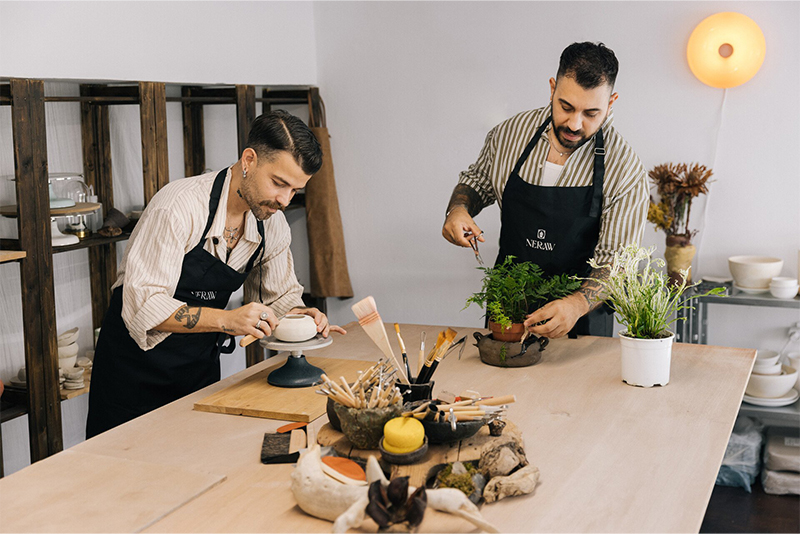
The studio itself functions as both a workspace and a place of learning, inviting visitors to engage with the process – from shaping clay to planting – and to experience design as something alive and continuously unfolding.
The Neraw Studio will be open on March 28 and 29, 2026, from 11:00 to 14:00.
Address: 18 Frearion St.
Κaterina Nakou Studio
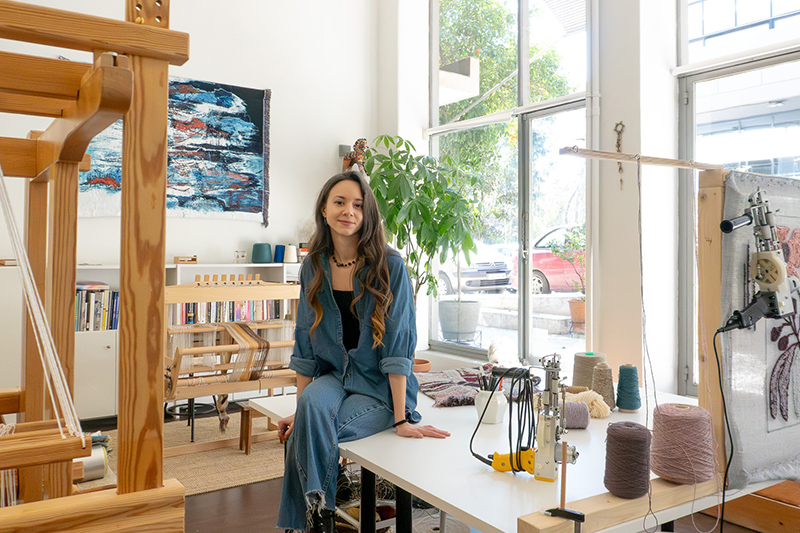
Part of the Made in Athens programme, Katerina Nakou’s studio explores the dialogue between traditional weaving and contemporary design. An internationally awarded textile artist, Nakou approaches the loom not as a static craft, but as a living, evolving practice.
Her work bridges analog and digital textile techniques, drawing from a deep knowledge developed across European institutions, while remaining rooted in the tactile, time-based nature of weaving. In her Athens-based studio, she creates textile artworks and handmade objects that reinterpret traditional methods through experimentation with materials and form.
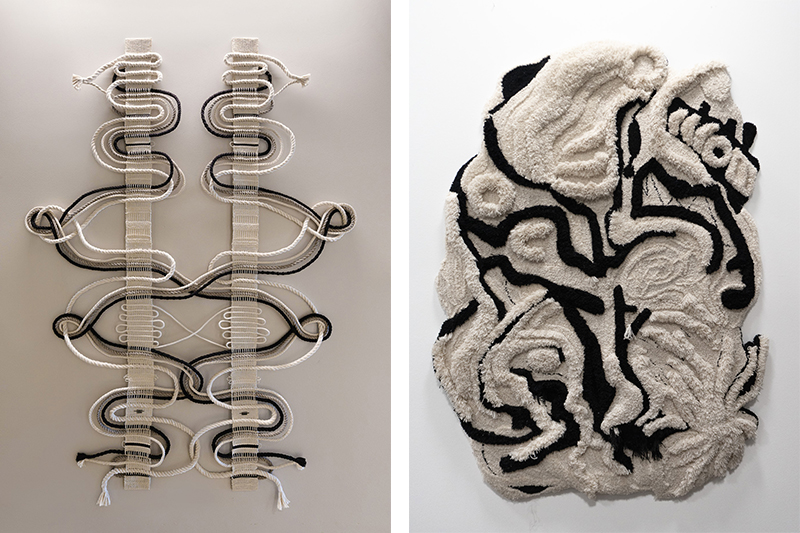
At the same time, her practice extends into education, with workshops and collaborations that position weaving as a dynamic and expressive medium – one that continues to unfold in new and unexpected ways.
The Katerina Nakou Studio will be open on March 28 and 29, 2026, from 14:00 to 18:00.
Address: 2 Krimaias St., Ellinorosson
Info
The 13th OPEN HOUSE Athens is scheduled for April 4–5, 2026, with parallel events starting on March 28.
MORE INFO