 PEPI NIKOLOPOULOU
Where stone remembers, and Maria Callas still whispers in the wind
It isn’t always music that makes you fall silent. Sometimes, it’s the place itself. A place that carries centuries of silence and grandeur, where a single glance or breath is enough to feel time pressing against you. That’s exactly what I felt during Bellini’s Norma, on Saturday night, July 12, at the Ancient Theatre of Messene.
A summer evening full of anticipation. The Athens Concert Hall returned to Ancient Messene to pay tribute to the most iconic voice Greece has ever given the world: Maria Callas. In her ancestral land, at Niochori of Ithomi, just a few kilometers from the archaeological site – the work she challenged herself with more than any other, Norma, was revived. In the fading light beyond the mountains. In the stone that holds the weight of centuries.
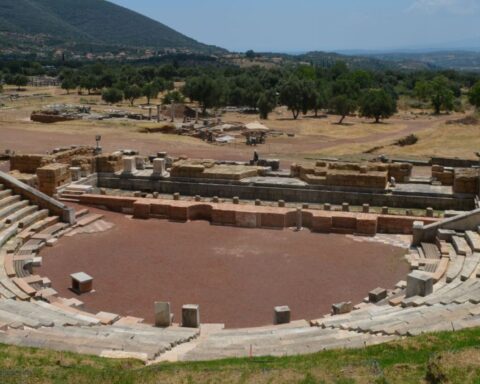
To reach the theatre, one must walk. And that is a blessing. It forces you to look around: the museum to the right, the modern cemetery with flowers and cypresses. And just below, the ancient theatre, one of the most striking structures you’ll encounter. An unforgettable image from that night: hundreds of people walking silently toward the theatre, as if attending a ritual.
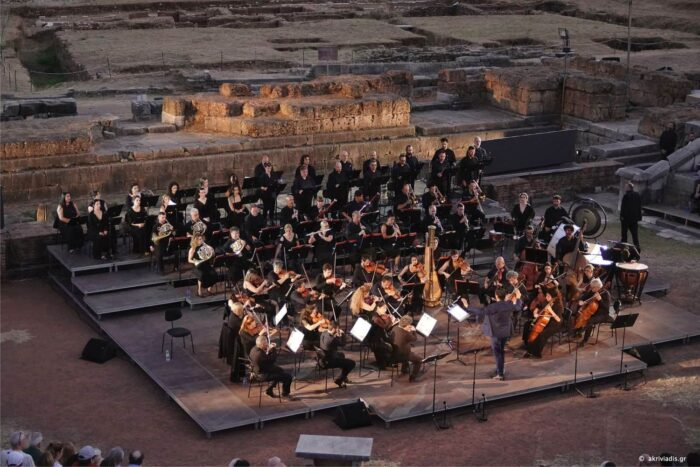
Descending toward the site, the resting place of Petros Themelis made his presence unmistakably felt. As if he himself were opening the door, saying: “Welcome.” A host to a reborn city. The theatre bears both the wounds and the ornaments of time. Once a wooden, movable stage, it was rebuilt in the mid-2nd century AD with a richly adorned proscenium, architectural niches, inscribed statue bases, stone thrones, and a grand orchestra. All of it a backdrop that surpasses any set design. You don’t merely watch a performance. You’re inside history.
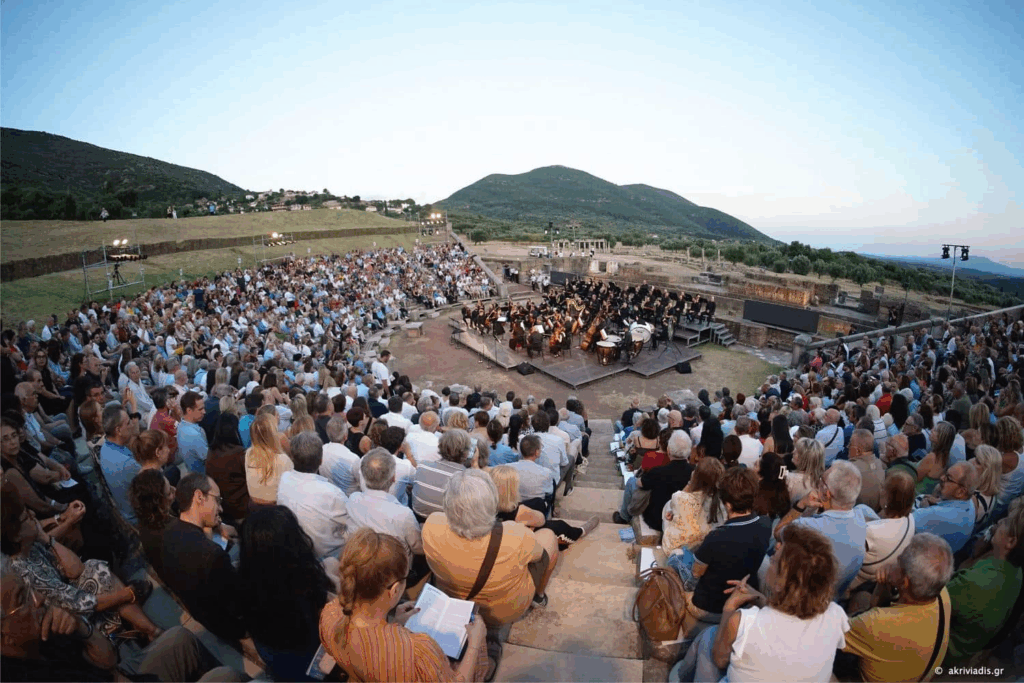
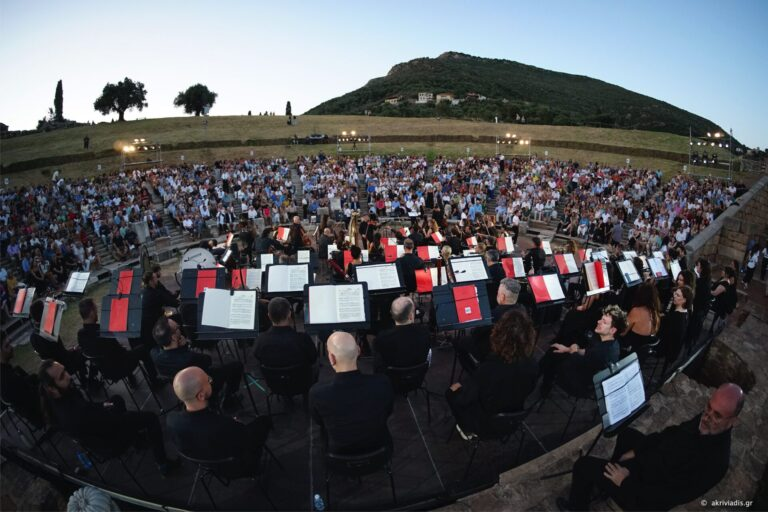
The audience, remarkably numerous, filled every seat. Young and old, locals and visitors. The atmosphere resembled a ceremony of return.
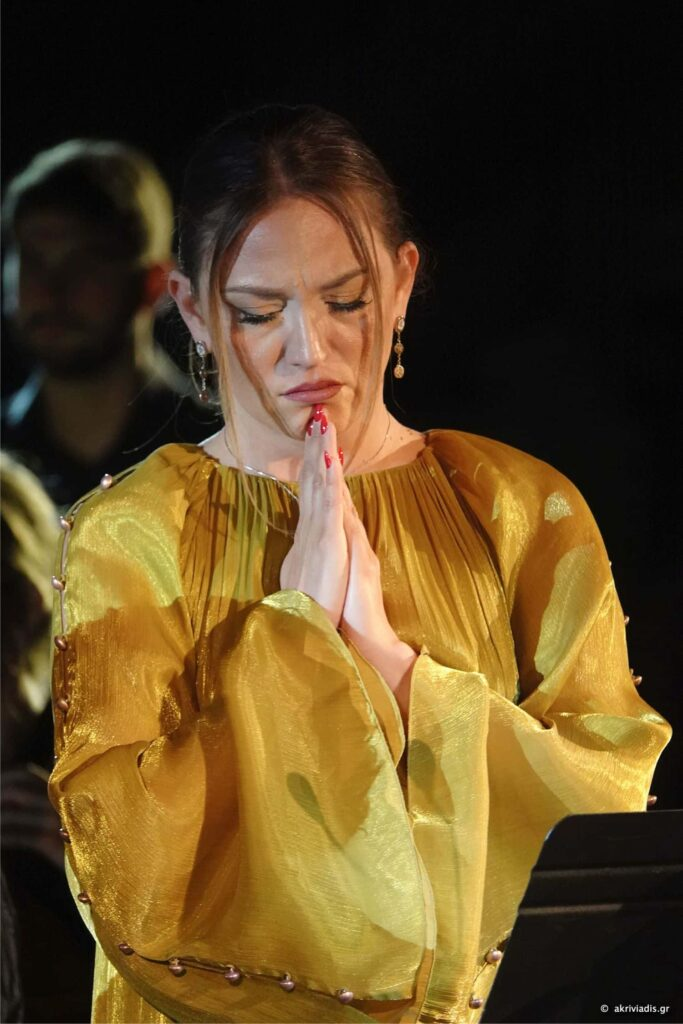
The concert performance, under the baton of Giorgos Petrou and with the participation of Camerata – The Friends of Music Orchestra and a distinguished cast of soloists, had all the makings of a high-level musical evening. But for me, it was mezzo-soprano Raffaella Lupinacci, one of the most prominent voices of the younger generation, who stood out in the role of Adalgisa.
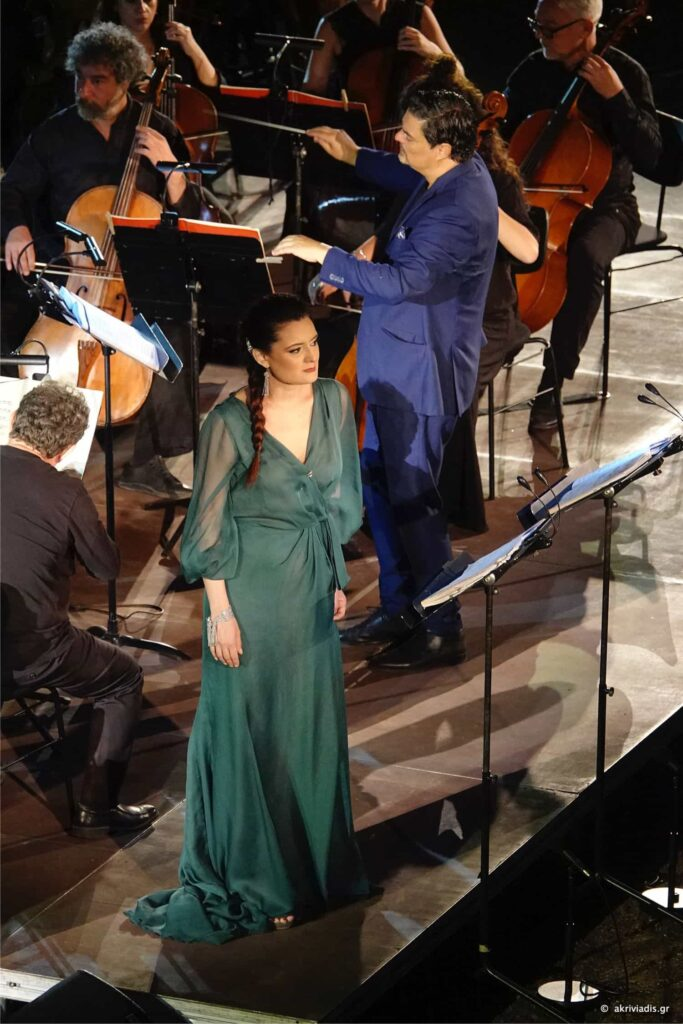

Adalgisa is the young priestess who, unknowingly, loves the same man as Norma. A complex role that demands strength and vulnerability, innocence and passion. Lupinacci delivered all of this in an almost unexpected way: with a voice sculpted yet gentle, a clear gaze, and a truthful stage presence. Her performance felt more focused, emotionally charged, and complete even more compelling than that of the highly publicized Karine Deshayes, whose warm timbre did not always manage to rise above the vast outdoor setting. Perhaps the very nature of the space revealed the limits of her performance.
Beside them, the renowned Greek bass Christoforos Stamboglis in the role of Oroveso – Norma’s father and the high priest of the Druids- left a commanding mark. With a deep, resonant voice and remarkable clarity, he embodied the role with restraint and inner strength. It was as if he had always belonged there, not performing, but rising naturally from the earth and stone of the theatre.
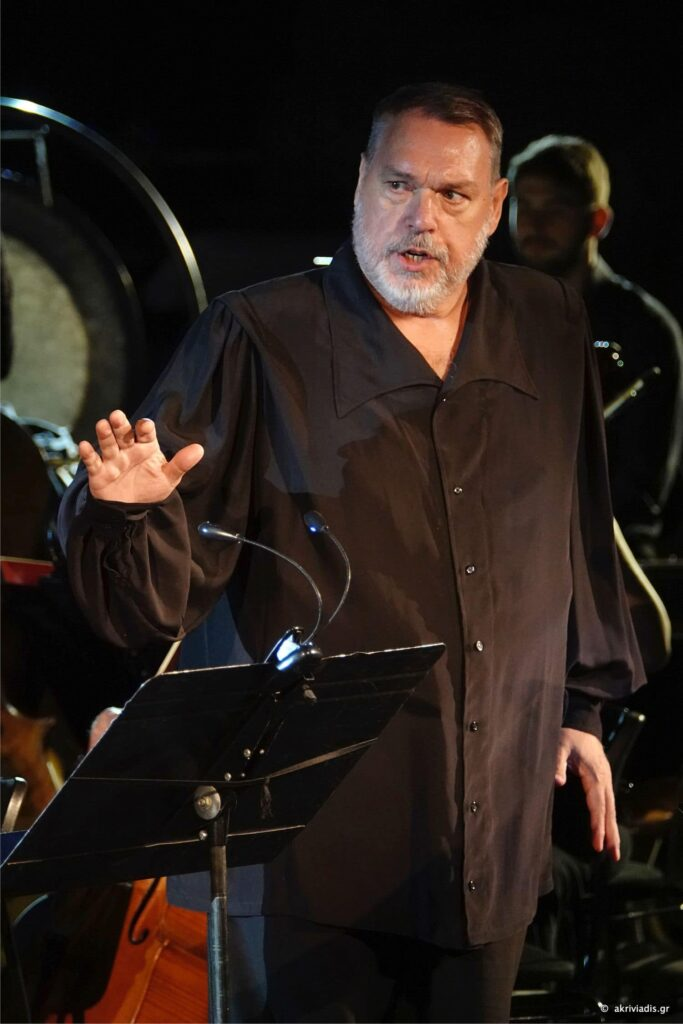

Tenor Moises Marin, as Pollione, brought elegance to the stage, but vocally seemed less convincing, especially in moments of tension and emotional conflict, which the role demands.
Supporting the leads, Diamanti Kritsotaki, in the smaller but essential role of Clotilde, Norma’s confidante, offered a brief yet dignified presence, with clear diction and a quiet strength that helped support the tone of the ensemble.
The same can be said for the renowned Casta Diva. It didn’t become a highlight, at least not in the traditional sense. This aria doesn’t demand vocal fireworks, but inner stillness, breath control, and spiritual focus. That night, under the vast open sky and the weight of summer humidity, it seemed to float rather than land flowing gently without striking the heart.
And as if the people weren’t enough, the theatre had other spectators or perhaps hosts. Just as the performance began, an unexpected chorus of frogs filled the night air. Their presence was so loud, especially in the first part, that for a few moments, the audience, startled at first, couldn’t help but burst into laughter. The immovable presence of nature didn’t give way even to Bellini. The conductor and the cast carried on undisturbed, with professionalism and poise, as though performing with them.
Perhaps that is the most enchanting aspect of an open-air concert in an ancient site: the inability to control the environment. Time, insects, animals, wind they are all there too. And so, the frogs became an accidental chorus to a modern Norma, stepping into the role of ancestral voices, reminding us that art doesn’t just belong on stage, but also in the world that listens to it.
In Casta Diva, Norma addresses the moon goddess. She pleads for peace for her people, restraint from hatred, and a delay to the uprising. She prays. A priestess in internal turmoil, choosing silence over revenge, reconciliation over fire.
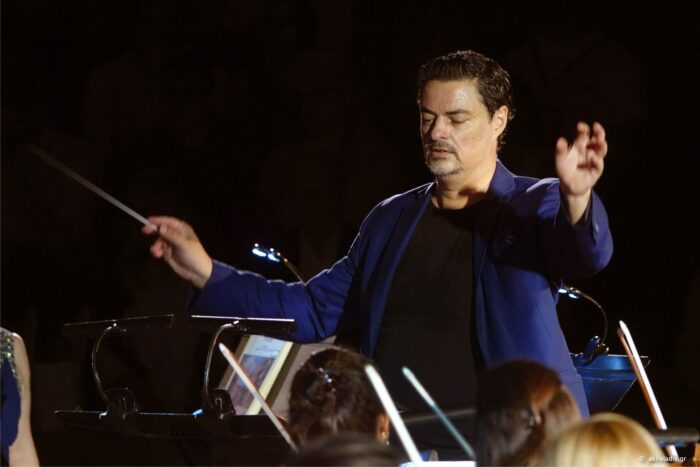
At the center of it all was Giorgos Petrou, conducting with precision, virtuosity, and visible passion. His gestures were exact and intentional, yet never mechanical. With a blend of experience and interpretive vitality, he maintained the delicate balance that such a night demanded, one of sensitivity and force.
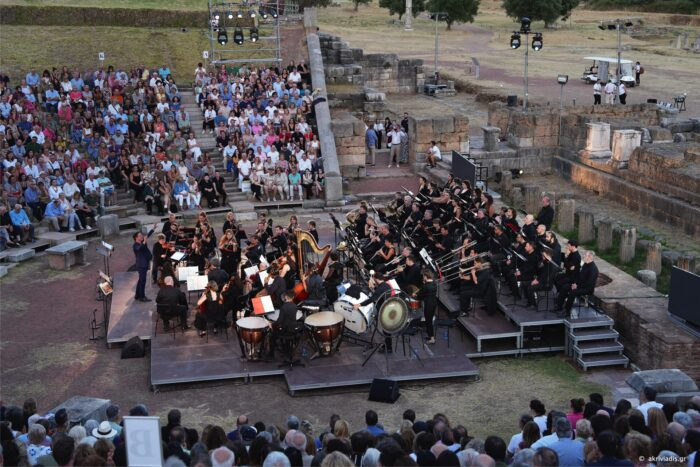
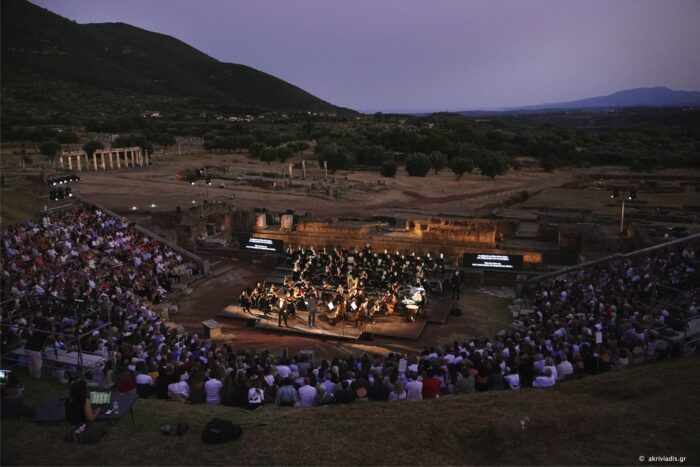
Ancient Messene, a lifelong project for many and a shared cultural legacy, continues to evolve into a space of significance. Not only archaeological, but also artistic. That night, under a star-filled sky, Norma was merely the pretext. The real experience was in surrendering to the silence between the notes, in looking up to the sky and sensing that what we call “the past” is still alive, breathing with us.
That night in Ancient Messene, under a darkening sky, Casta Diva may not have soared, but it came closer to its essence. Because what moves us isn’t always perfection but intention. And it wasn’t just Norma who was asking for peace. It was all of us, listening. A moment of stillness. A light within the shadow. A fleeting reconciliation of the world with nature, and with itself.
The concert performance of Norma in Ancient Messene was held as part of the Athens Concert Hall’s outreach initiatives, with the support of the George and Victoria Karelia Foundation and the John S. Fafalios Foundation.
Warm thanks are also extended to the Municipality of Messini, the Ephorate of Antiquities of Messenia for granting access to the ancient theatre, as well as to the DIAZOMA Association and the Society for Messenian Archaeological Studies for their lasting contribution to the preservation and promotion of this unique cultural site.