 PEPI NIKOLOPOULOU
Her exhibition CO-EXISTENCE Vol. II transforms Omonia’s noise and light into a tender dialogue between art, people, and place
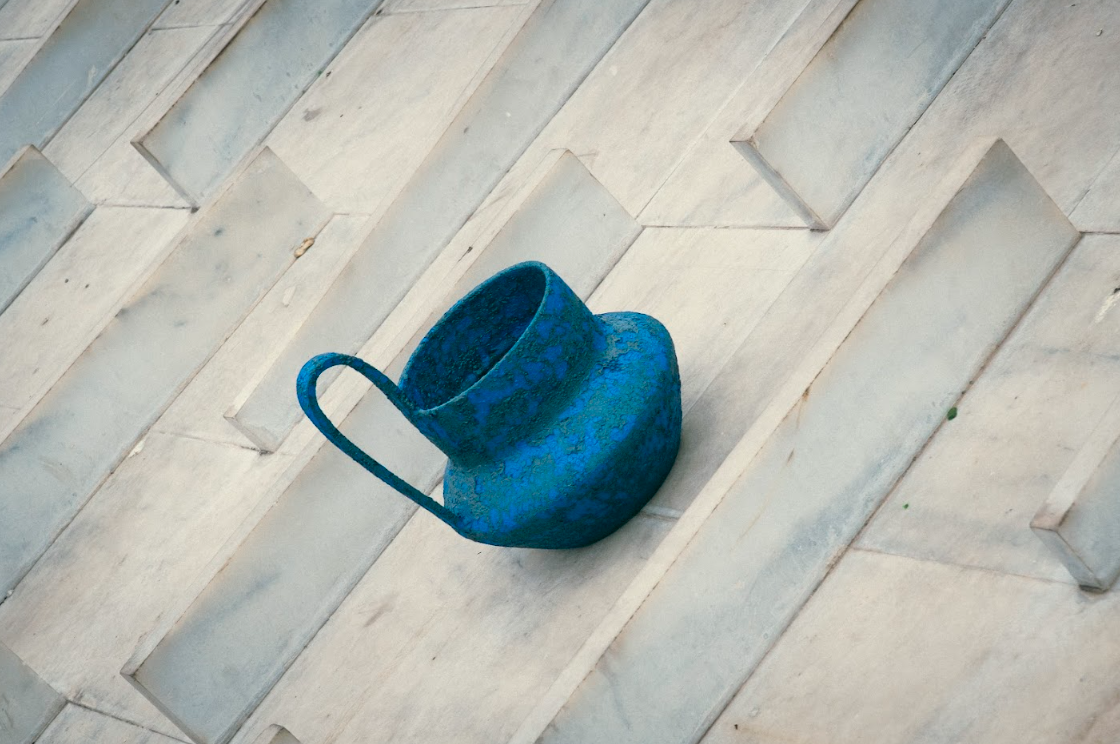
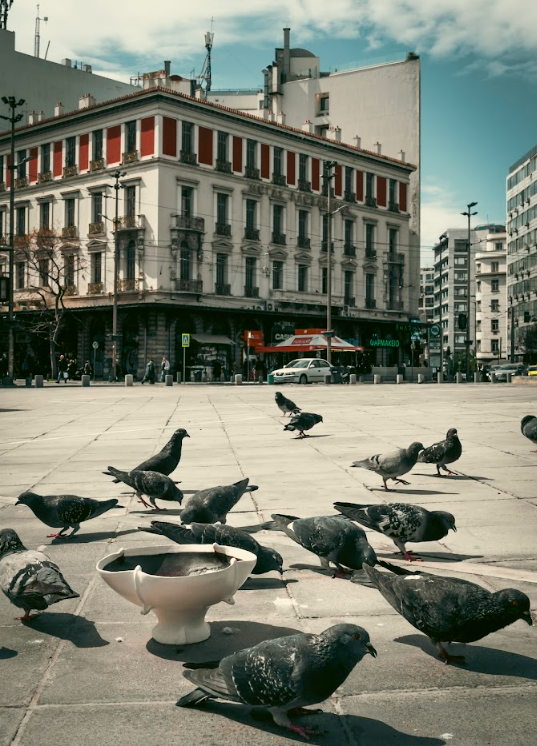
Sometimes, art emerges from the most unexpected encounters – a camera, a piece of clay, a busy city square. For photographer Evangelia Koumantsioti, what began as a simple collaboration with Tales in Tiles turned into a poetic act of observation: ceramics placed within the pulse of Omonia, one of Athens’ most layered and multicultural places.
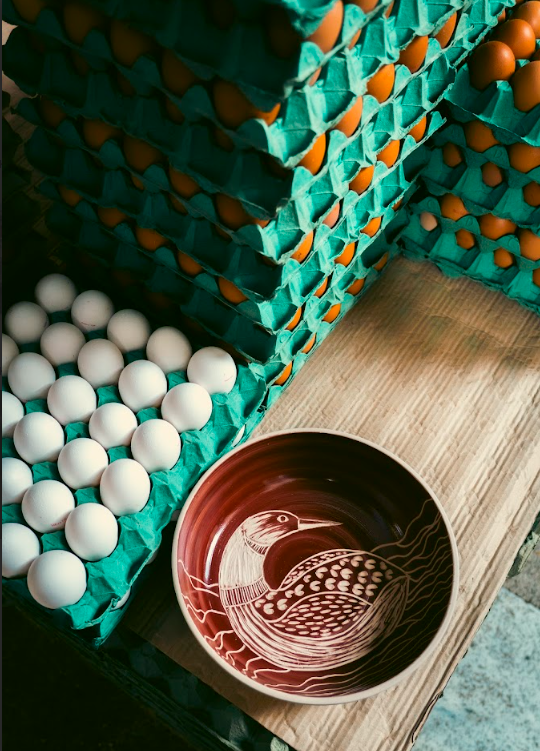
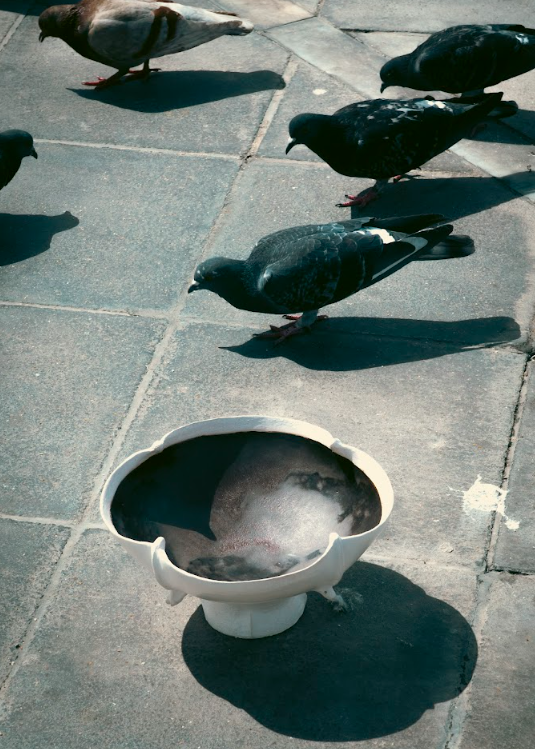
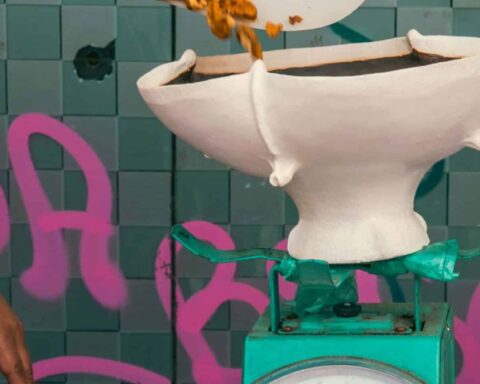
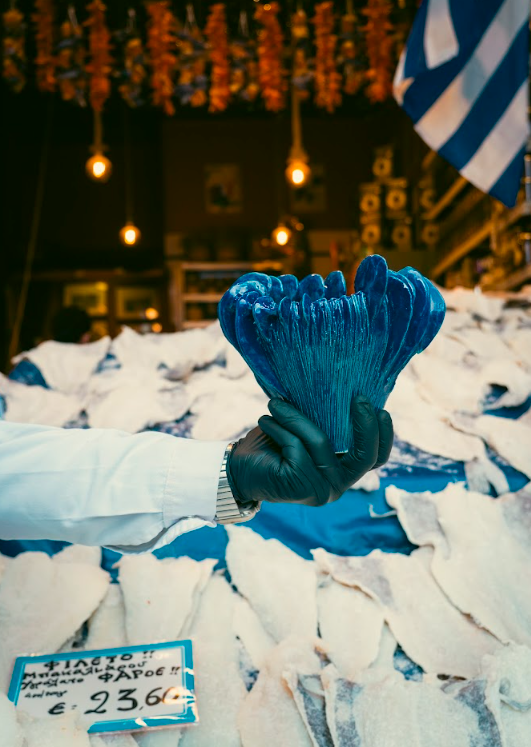
The result was CO-EXISTENCE, a photographic series that blurs the lines between documentation and artistic narrative. In Koumantsioti’s lens, ceramic objects travel through the city, resting in the hands of street vendors, passersby, and market sellers. Each image becomes a dialogue between stillness and movement, fragility and resilience, the handmade and the human.
Now presented as CO-EXISTENCE Vol. II, the project invites viewers to pause and reconsider how art, people, and urban space intertwine. A few days before the opening of her first solo exhibition, I met photographer Evangelia Koumantsioti to talk about the journey behind her work – a journey that began almost by chance, with a street photography project involving ceramics in Omonia Square. What started as a simple collaboration soon evolved into something more profound: an exploration of how art, people, and the city can coexist and reshape one another.
The first “CO-EXISTENCE” exhibition was born from a simple photo shoot inspired by ceramics. When and how did you realize that these images could stand on their own, as an independent artistic narrative?
It all began with a simple spark: Stavroula from Tales in Tiles, with whom I’ve collaborated for years, asked me to photograph some of her works. She was the one who suggested taking the ceramics out into the street – and that idea was enough to set everything in motion. As we went along, we both felt that the images started to transcend the role of mere product promotion; they were creating their own story, as if the objects themselves were taking a powerful place within the urban landscape. That’s how CO-EXISTENCE was born: from something everyday, an artistic story emerged – one we hadn’t foreseen, but embraced fully, choosing to share it with anyone open to hearing it.


What inspired you to place ceramic objects within the urban landscape? Was it an experiment or a conscious desire for the two worlds to “converse”?
It was both an experiment and a conscious desire. The experiment was to take ceramics out of their familiar context, and what inspired me most was the city’s energy itself. Ceramics are quiet, earthly objects – placing them amid noise and movement made me wonder whether they could find space there, whether they could create small islands of calm due to their nature, or even become focal points for passersby. My intention was to give them a new voice – through their interaction with the urban environment and the people who inhabit it.
Why did you choose Omonia? What does this place, with its multicultural and bustling identity, mean to you?
Omonia is a square laden with history and contradictions. Once the city’s vibrant heart, it has also seen times of decline – and now it’s transforming again. This cycle of decay and rebirth resonated deeply with the essence of ceramics, which are born from the earth, fired in flames, and then reshaped into new forms. Another reason Omonia felt ideal is because it might be the most multicultural spot in Athens. People from every corner of the world cross paths there. I wanted the ceramics to exist in that space, to engage in a dialogue with this multiplicity of voices.
From your encounters with passersby who “adopted” the ceramics in your photographs, is there a particular moment or gesture that moved you?
What moved me most was the warmth and openness of the people we met along the way. The willingness of passersby to take part was deeply touching. It was unexpected how street vendors, for example, invited us into their little microcosms, as if we were old acquaintances.
People embraced the ceramics with such genuine, spontaneous joy – smiles that I will never forget. The most moving moment, though, was with an elderly man at a kiosk. He took a ceramic piece in his hands and began playing with the camera like a child – almost dancing, flashing the peace sign. It was an image that said everything without words.
Do you believe that photography, especially when it brings artworks into the streets, can change the way we see the city and its people?
Photography can momentarily pause the city’s noise – make you see differently a sidewalk, a corner you once ignored. This shift in perception can transform how we understand both space and the people within it. When art escapes the museum or gallery and appears on the street, it changes our relationship with our surroundings. It reminds us that everyday life isn’t neutral or “simple” – it’s a living composition. The sounds, faces, and movements form a kind of art themselves, and we all participate in it.
You grew up in a mountain village in Halkidiki and later studied in Corfu. How did these places shape your photographic eye?
Each place gave me different experiences and narratives. Mountainous Halkidiki will always be my home, keeping me grounded and connected to nature and the rhythms of rural life. That constant contact with nature taught me how to pause and capture moments. Corfu, with its island light and Venetian architecture, offered me different imagery. It intertwined with my first adult years, my introduction to photography and video, and undoubtedly left its mark on my aesthetic sensibility.
You mention that your travels around the world feed your work. Is there an experience or image that you feel lies “behind” the photographs of CO-EXISTENCE?
The most defining trips for me were outside Europe – where cultural differences are so strong they shake you and force you to reexamine how you see everyday life. In New Orleans, I discovered the rhythm and music that fill public space; in New York, I experienced the pulse and relentless energy of a metropolis; in San Francisco, I was struck by the coexistence of diverse communities and ways of life. Meanwhile, in Beijing, I felt the tension between the traditional and the modern; in Mumbai, the density and vibrancy of street life became a living kaleidoscope of people and stories; and in Japan, I encountered an entirely different relationship to space and aesthetics discipline, simplicity, and respect for detail.
All these experiences, with their contrasting colors and rhythms, led me to seek in CO-EXISTENCE the same polyphony – how different worlds, people, and objects can come together to create a new dialogue.
You speak of images that transcend space and time. What does it mean to you to capture multiculturalism – is it a way of life, an artistic choice, or both?
I’m moved by how different people, cultures, and stories meet in the same place and create a new, shared landscape. This coexistence is, to me, the essence of our world today – and through photography, I want to highlight it not as something abstract but as a daily experience that concerns us all. So yes – it’s both an artistic choice and a way of seeing life.
“CO-EXISTENCE Vol. II” is your first solo exhibition. Where do you imagine this beginning will take you artistically? What’s your dream for the next project?
This project emerged through a series of coincidences and took shape spontaneously – as I believe art should. I don’t have a specific next project in mind, but I know that if the right sparks appear, I’ll follow the same path: giving space to what arises around me and letting inspiration lead the way. I prefer each new work to be a natural evolution – keeping the immediacy and spontaneity with which I began.
If you were to design an ideal walk through Athens that reflects your vision of the city, where would you take us?
An ideal walk in Athens would start somewhere in the city center and definitely pass through Plaka – with its colors, cobblestones, and the awe inspired by the Acropolis and the temple of Athena, still standing after so many centuries. I’d continue along Dionysiou Areopagitou, then through the Roman Agora and Monastiraki. From there, we’d head to Exarchia – to walk through one of the city’s rawest, most vibrant neighborhoods, rich in social and historical layers – and climb up to Strefi Hill, to let the city’s noise fade. Finally, I’d end on Mount Hymettus at sunset, to watch the city shift from light to darkness, as the night lights flicker on, giving Athens its nocturnal face.