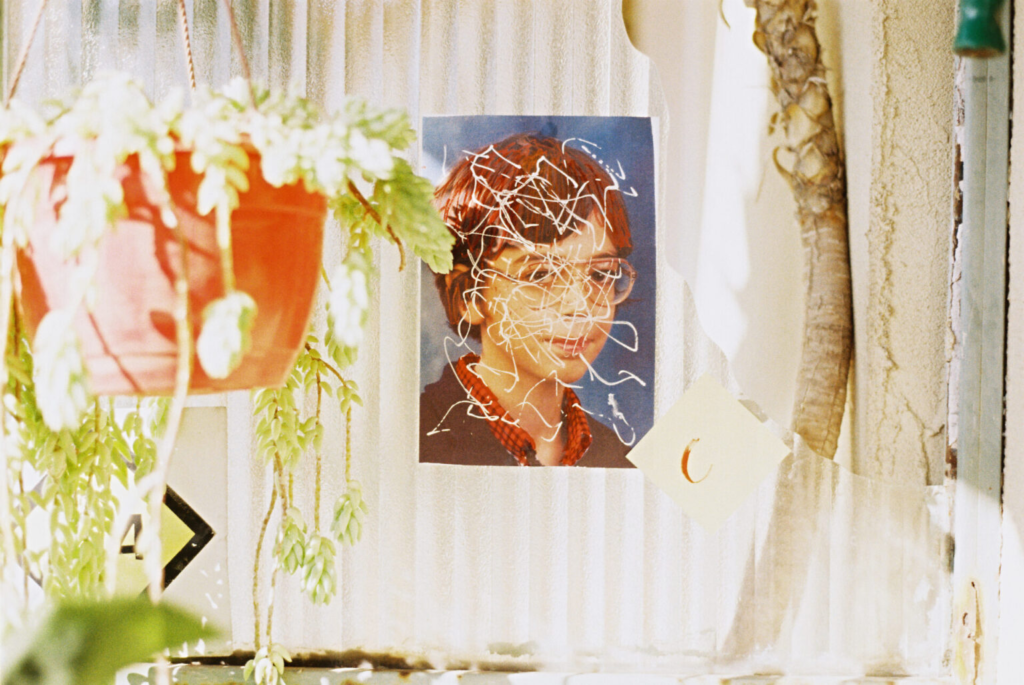
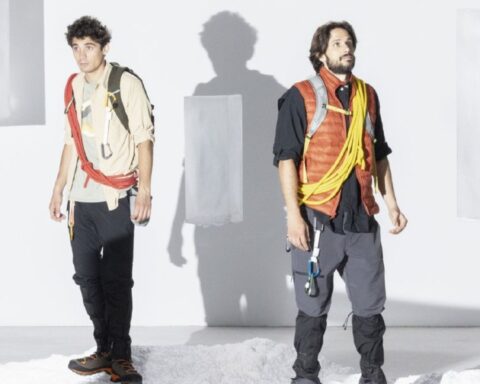
From June 5 to 7, the Onassis Stegi transforms into an immersive cinematic and musical landscape through “I Never Traveled to Australia,” a large-scale takeover imagined by The Boy. Part concert, part film retrospective, part installation and performance, the project unfolds across every corner of the building, constructing an Australia that exists not as a real geography, but as an inner myth.
For The Boy, Australia is not a destination but a state of mind: a dream born from fragments of cinema, desert imagery, ozploitation films, childhood fears, radio signals, and imaginary landscapes. Since 2013, this fictional continent has lived inside his artistic universe, “violent, free, and strangely familiar,” as he describes it.
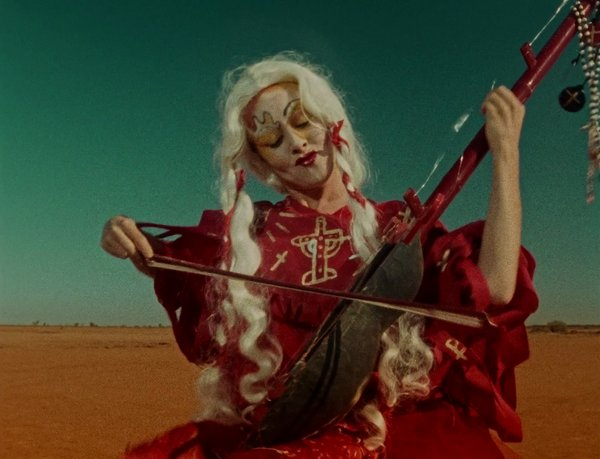
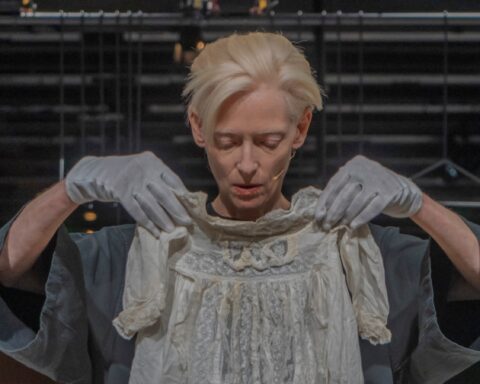
Visitors entering the Stegi encounter a building overtaken by this vision. Corridors, foyers, stages, and hidden spaces become part of a cinematic fever dream filled with burnt rubber smells, ghostly sounds, abandoned classrooms buried in sand, and references to Australian folklore and New Wave cinema. A recurring musical thread by Δεσποινίς Τρίχρωμη connects the entire experience, while actress Flomaria Papadaki guides audiences through the different layers of the project.
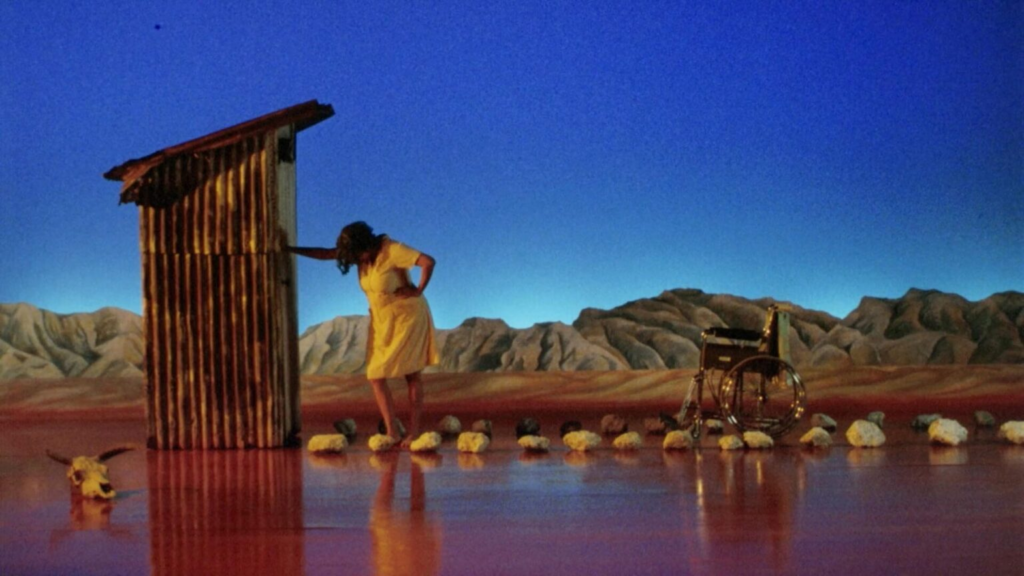
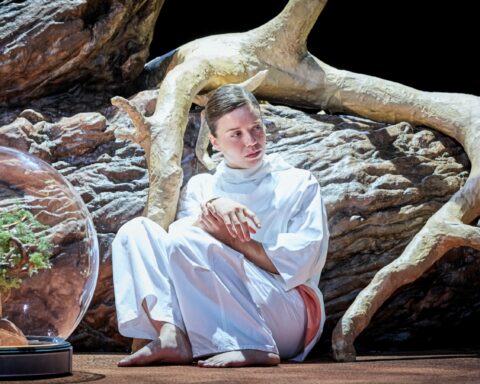
At the heart of the takeover is a live concert-performance on the Main Stage titled “The Shell,” where ecological horror, dream imagery, and post-apocalyptic storytelling merge into a deeply atmospheric work. Through the visual world created by artist Konstantinos Lambridis and animator Irini Vianelli, the performance becomes an immersive theatrical environment inhabited by motionless dancers, haunting vocal interventions, and fragmented narratives arriving from a collapsing world.
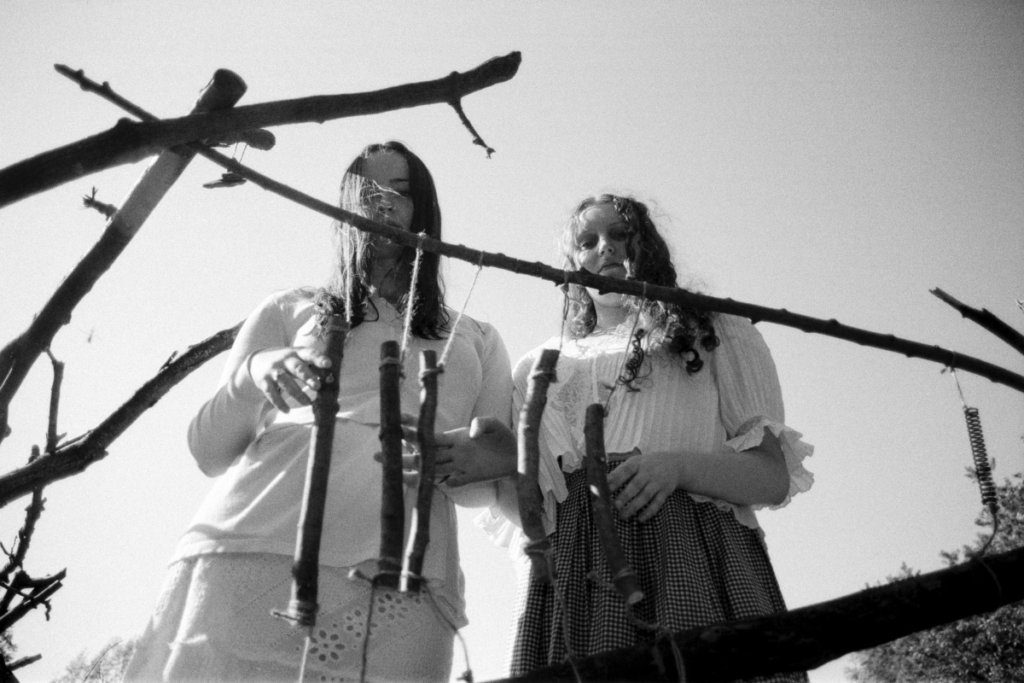
The event also includes the premiere screening of The Boy’s new feature film “Maralinga Manningrida Mandamaru,” presented alongside a photography exhibition by photographer Myrto Tzima titled “Into Temptation Safe In The Wide Open Arms Of Hell.” Installed within a sculptural environment inspired by Peter Weir’s “Picnic at Hanging Rock,” the exhibition creates the feeling of wandering through the remains of a collapsing cinematic memory. Black-and-white photographs, broken frames, hidden screening spaces, and fractured walls evoke a world suspended somewhere between dream and disappearance.
Meanwhile, the Small Stage hosts a rare tribute to Australian New Wave cinema, described as the first retrospective of its kind ever presented in Greece. Across three days, audiences will have the opportunity to experience landmark films by directors including Peter Weir, Tracey Moffatt, Fred Schepisi, Bruce Beresford, Alex Proyas, and others. The selection moves between folk horror, experimental cinema, punk dystopias, coming-of-age stories, and deeply political works that shaped Australian cinema from the 1970s onward.
Born in Athens in 1981, The Boy has developed a singular artistic language across cinema and music. Over the years, he has directed acclaimed feature films including “Winona,” “Gym,” and “Roz,” while also releasing more than twenty-five albums and composing for theater and film. His work often moves between melancholy, surrealism, emotional fragmentation, and underground pop culture references, creating worlds that feel both intimate and strangely apocalyptic.
With “I Never Traveled to Australia,” The Boy does not attempt to represent a real country. Instead, he constructs an emotional and cinematic territory where memory, fantasy, cinema, music, and performance collapse into one another. Australia becomes a mirror, a hallucination, a fictional escape route unfolding inside the Stegi for three days only.
Photography Exhibition, Installation & Film Screening at Level -1
At Level -1 of Onassis Stegi, The Boy presents his new feature film Maralinga Manningrida Mandamaru alongside a photography exhibition by Myrto Tzima. Surrounded by a sculptural landscape of rocks designed by Konstantinos Lambridis – directly referencing Picnic at Hanging Rock – visitors are transported into a parallel universe somewhere on a distant continent thousands of miles away.
Hidden in the background lies a small cinema, while the exhibition walls resemble the ruins of a collapsing gallery space: cracks, holes, fragments, and nature slowly overtaking the architecture. A series of black-and-white photographs by Myrto Tzima titled Into Temptation Safe in the Wide Open Arms of Hell enters into dialogue with the feature film playing continuously on loop. Some frames are broken, some photographs partially destroyed. No one knows exactly what happened here.
The Boy and Myrto Tzima describe the exhibition through a poetic collective statement:
“We no longer carry sleep inside our heads or in our beds. Tonight, though, we hope to sleep. We come from the desert. We kiss in the forest. We are sisters from other times and other places. We grew up drinking milk with cherry liqueur. Today is not our birthday. We want to remember. Children playing with wire, making circles to catch the sun, chasing ants with magnifying glasses. We pray for animals and insects. We photograph one another. We leave behind evidence. Today we ran away from home. Before leaving, we left milk and treats for the dog.”
Screening at Level -1
Maralinga Manningrida Mandamaru– The Boy
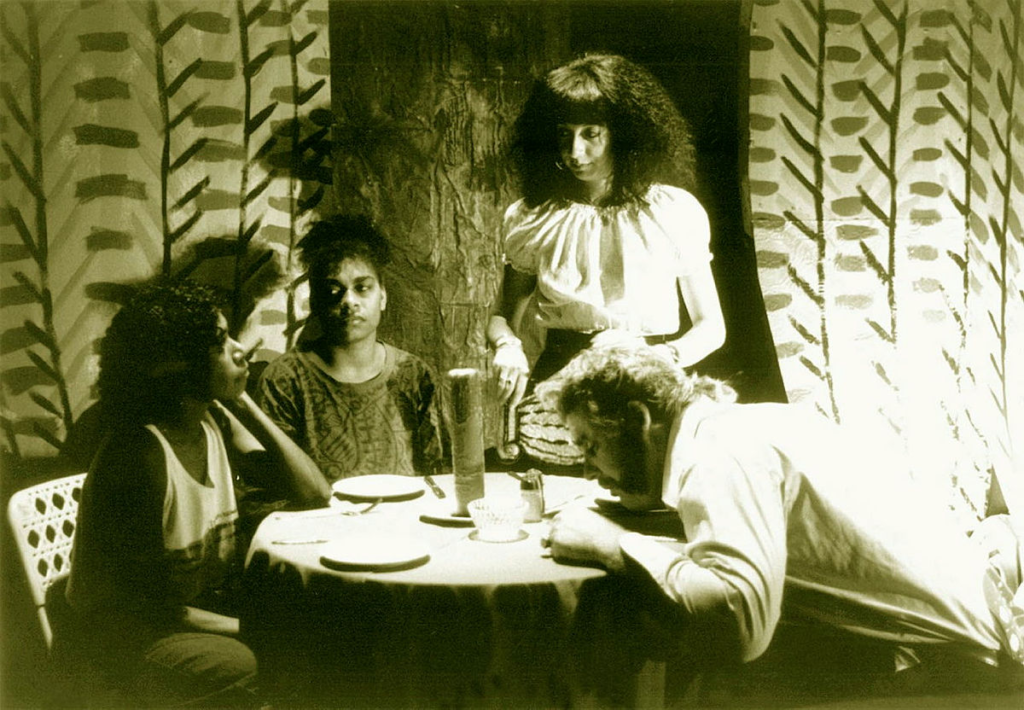
An endless afternoon. A loop of secrets. Miranda, Marion, Sarah, Irma, and Joan remain trapped in time while simultaneously traveling through it. In the house where they grew up, they never showed their tears. Perhaps they are the last living people left on Earth. Testimonies, songs, and traumas emerge from Australia in this haunting new feature by The Boy.
Directed, written, edited, and scored by: The Boy Cast: Flomaria Papadaki, Rozalinda Hotza, Melina Rachioti-Rigopoulou, Mairi Giannoula, Despoinis Trichromi Cinematography: Simos Sarketzis GSC Costumes & Set Design: Despoinis Trichromi
Short Film
Night Fall in the Ti-Tree
The short film Night Fall in the Ti-Tree by The Boy screens at the beginning of every slot in the Small Stage program.
Miranda drives a beige Ford Fairlane 500 through the desert while being pursued by “The Shell.” From the radio plays Jimmy Little’s version of Into Temptation.
Direction, screenplay, editing & sound design: The Boy Starring: Flomaria Papadaki
Detailed Program
“I Never Traveled to Australia” by The Boy
at Onassis Stegi June 5–7, 2026
Friday, June 5
Main Stage
21:30 – Concert & Performance: The Shell Duration: 100 min.
Small Stage
Australian New Wave screenings (“Night Fall in the Ti-Tree” by The Boy screens before every slot)
15:00–16:45 – Storm Boy (Henri Safran, 1976)
17:00–19:00 – Celia (Ann Turner, 1989)
19:15–21:00 – Ten Years After, Ten Years Older (Anna Kannava, 1986)
My Life Without Steve (Gillian Leahy, 1986)
21:30–23:00 – The Second Journey (to Uluru) (Arthur & Corinne Cantrill, 1981)
19:30–23:45 – Picnic at Hanging Rock (Peter Weir, 1975)
The Devil’s Playground (Fred Schepisi, 1976)
00:00–01:45 – Next of Kin (Tony Williams, 1982)
Read more about the film screenings
Australian New Wave at the Small Stage
Friday – Sunday | 15:00–02:00
For three days, the Small Stage at Onassis Stegi is transformed into an indoor drive-in, reviving the legendary Skyline Matraville Dead End Drive-In, which closed in 1984. The program brings together 21 feature films, short films, and documentaries from the Australian New Wave, many screening in Greece for the very first time.
Friday, June 5 | Small Stage
Storm Boy Henri Safran (1976)
Duration: 88 min.
Mike, a lonely boy living with his father in the remote coastal wilderness of Coorong, meets the Aboriginal Fingerbone Bill, and together they develop a special bond while caring for an orphaned pelican they name Mr. Percival. Henri Safran’s debut feature remains one of the most beautiful children’s films of the 1970s and one of the tenderest works of the Australian New Wave. The film stands out for its melancholic portrayal of South Australia and for the performances of young Greg Rowe and the legendary David Gulpilil, in his second screen appearance after Nicolas Roeg’s Walkabout.
Celia– Ann Turner (1989)
Duration: 103 min.
Melbourne suburbs, 1957. Following the death of her grandmother, eight-year-old Celia begins dreaming of the monstrous hand of a Hobyah. Meanwhile, the Tanner family – possibly communists – moves in next door, and Celia asks her father for a rabbit as a birthday gift. Ann Turner’s debut feature, anchored by Rebecca Smart’s extraordinary performance, is one of the most significant and overlooked films of the 1980s. Moving between fantasy and psychological unease, it belongs to the lineage of films such as The Spirit of the Beehive, Cría Cuervos, Vigil, and Pan’s Labyrinth, exploring how children process the adult world through imagination.
Ten Years After, Ten Years Older– Anna Kannava (1986)
Duration: 34 min.
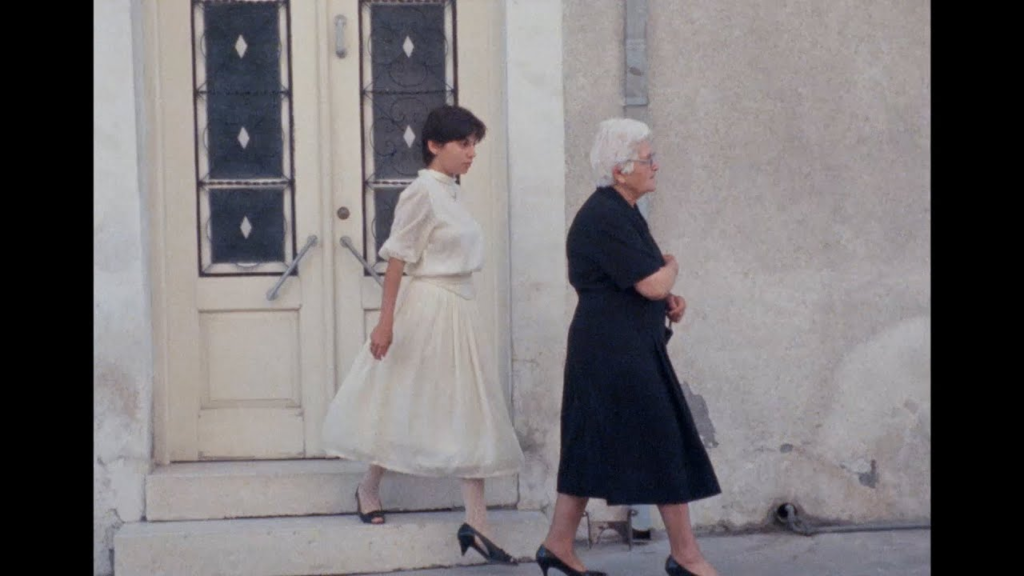
In 1974, following the Turkish invasion of Cyprus, fifteen-year-old Anna Kannava and her family migrate to Melbourne. Ten years later, Anna returns to Limassol to reconnect with her grandmother. Carrying a 16mm camera with her, she creates the documentary Ten Years After, Ten Years Older. Through voice-over narration, remembered faces, and places rediscovered, Kannava constructs deeply personal images shaped by memory, displacement, and belonging. The film stands as a remarkable example of autobiographical cinema by an exceptionally courageous filmmaker.
My Life Without Steve– Gillian Leahy (1986)
Duration: 55 min.
Sydney, 1980s. From a window overlooking Blackwattle Bay, Liz’s monologue transports us into the apartment she once shared with Steve before their separation. She remembers, describes, sings Bob Dylan’s You’re Gonna Make Me Lonesome When You Go, and reconstructs fragments of a life now gone. Gillian Leahy’s debut feature, elevated by Jenny Vuletic’s humorous vocal performance and Erika Addis’ stunning 35mm cinematography, remains one of the most important experimental Australian films of its era.
The Second Journey (to Uluru)– Arthur & Corinne Cantrill (1981)
Duration: 74 min.
Uluru, the sacred red monolith, becomes the focal point of filmmakers Arthur and Corinne Cantrill, pioneers of Australian experimental cinema and founders of Cantrills Filmnotes. In the first issue of the magazine, they declared their manifesto: “To make films that refuse analysis.” That philosophy reaches its purest expression in The Second Journey (to Uluru), documenting their return to the sacred site years after their first film there. What has changed within them? What has changed in Australia? Shot on distressed 16mm film with striking sound design and an unexpectedly emotional conclusion, the work unfolds as a hypnotic ambient-noise cinematic experience.
Nice Coloured Girls– Tracey Moffatt (1987)
Duration: 16 min.
In her first short film, artist and filmmaker Tracey Moffatt explores the exploitation of Aboriginal women by white men throughout Australian history. Juxtaposing past and present, the film follows three Aboriginal women wandering through Sydney’s Kings Cross, where they encounter a drunken white sailor and manipulate the encounter to reclaim power.
Night Cries: A Rural Tragedy– Tracey Moffatt (1990)
Duration: 19 min.
A middle-aged Aboriginal woman cares for her dying white mother in this visually stunning experimental work. Often considered an unofficial sequel to Jedda by Charles Chauvel, the film draws inspiration from the paintings of Albert Namatjira, while Jimmy Little’s Royal Telephone echoes through its haunting imagery. Widely regarded as one of the most powerful films ever made about the legacy of Australia’s Stolen Generations.
BeDevil– Tracey Moffatt (1993)
Duration: 90 min.
Deeply personal and infused with folk horror, BeDevil unfolds through three ghost stories inspired by both sides of Tracey Moffatt’s heritage – her Irish ancestry and her Aboriginal roots. Documentary-like realism alternates with highly stylized studio-shot sequences, creating a dreamlike cinematic world. Featuring a remarkable performance by Jack Charles and striking cinematography by Geoff Burton, the film premiered in Cannes’ Un Certain Regard section and remains Moffatt’s only feature-length directorial work.
Saturday, June 6 | Small Stage
Dot and the Kangaroo– Yoram Gross (1977)
Duration: 75 min.
New South Wales, 1884. Dot, a barefoot red-haired five-year-old girl, becomes lost in the Australian outback, where she encounters a red kangaroo that helps guide her back home. Based on Ethel Pedley’s beloved children’s book, Yoram Gross’s film combines animation with live-action footage shot in the Jenolan Caves and the Blue Mountains. It became one of the most successful Australian children’s films of the 1970s, later inspiring eight additional adventures centered around Dot.
Turnaround– Michael Lee (1983)
Duration: 60 min.
The second chapter in Michael Lee’s Secret Rose trilogy unfolds as another spiritual journey filmed with a handheld camera. Through spiral structures, striking contrasts across an entire continent, and hypnotic time-lapse imagery, the film becomes an experimental documentary searching for meaning while simultaneously reflecting the filmmaker himself. A cinematic ritual by one of Australia’s most philosophically restless directors.
Smoke ’Em If You Got ’Em– Ray Boseley (1988)
Duration: 48 min.
Melbourne has been destroyed by a nuclear attack. Three survivors discover an underground shelter where a group of people has organized a party celebrating the end of the world. Ray Boseley’s only feature film remains an unforgettable cult oddity — a drunken Australian response to Threads and Miracle Mile. Wild, dystopian, and impossible to categorize.
Dogs in Space — Richard Lowenstein (1986)
Duration: 105 min.
Richmond, Melbourne, 1978. A group of young musicians and drifters living on Berry Street immerse themselves in the city’s underground Little Bands scene. Richard Lowenstein recreates the chaos of post-punk Melbourne through overlapping dialogue, raw energy, and a remarkable soundtrack featuring bands such as The Boys Next Door, Whirlywirld, Thrush & the Cunts, and The Primitive Calculators. INXS frontman Michael Hutchence stars in the lead role, inspired by Sam Sejavka of The Ears, while also contributing original music to the film.
Spirits of the Air, Gremlins of the Clouds– Alex Proyas (1987)
Duration: 96 min.
In a post-apocalyptic bushranger film noir drenched in the blinding light of the red desert, siblings Betty and Felix Crabtree spot the fugitive Smith approaching from afar. His arrival unsettles their fragile world. Before directing The Crow and Dark City, Alex Proyas created this visually extraordinary debut on 16mm film with an almost nonexistent budget. The result is a hauntingly beautiful cinematic work elevated by Peter Miller’s pioneering ambient soundtrack.
Dead End Drive-In– Brian Trenchard-Smith (1986)
Duration: 92 min.
Teenagers Jimmy “Crabs” and Carmen become trapped inside a drive-in movie theater that secretly functions as a concentration camp for society’s so-called undesirables. One of the defining works of Australian Ozploitation cinema, Brian Trenchard-Smith’s film delivers an explosively entertaining dystopian punk vision somewhere between Blade Runner and Mad Max 2, complete with striking production design and anarchic energy.
Sunday, June 7 | Small Stage
The Year My Voice Broke– John Duigan (1987)
Duration: 103 min.
The first part of John Duigan’s autobiographical diptych – later completed with Flirting– introduced the talents of Noah Taylor and Ben Mendelsohn. Set in the early 1960s in the highlands of New South Wales, the film follows teenager Danny Embling as he falls in love with the mysterious Freya. Melancholic and emotionally raw, the film blends period drama with coming-of-age storytelling in the spirit of works such as Wish You Were Here and Housekeeping.
Breaker Morant– Bruce Beresford (1980)
Duration: 107 min.
Breaker Morant stands trial for war crimes committed during the Second Boer War. A layered political drama and arguably one of the most mature achievements of the Australian New Wave, the film marked a major breakthrough for director Bruce Beresford. Following earlier works such as Don’s Party, Money Movers, and The Getting of Wisdom, Beresford delivered here his greatest artistic and commercial success. Breaker Morant also became the first Australian production to receive an Academy Award nomination.
Picnic at Hanging Rock– Peter Weir (1975)
Duration: 115 min.
Based on the novel by Joan Lindsay: a mystery without resolution, a story without an ending. On Valentine’s Day in 1900, Miranda, Marion, Irma, and Miss McCraw vanish during a school excursion at Hanging Rock. Through Russell Boyd’s dreamlike cinematography, Peter Weir transforms William Ford’s painting At the Hanging Rock into cinema, meditating on the fragile transition from the nineteenth to the twentieth century. The result remains one of the defining masterpieces of Australian cinema and one of the most influential films of the Australian New Wave.
The Devil’s Playground– Fred Schepisi (1976)
Duration: 107 min.
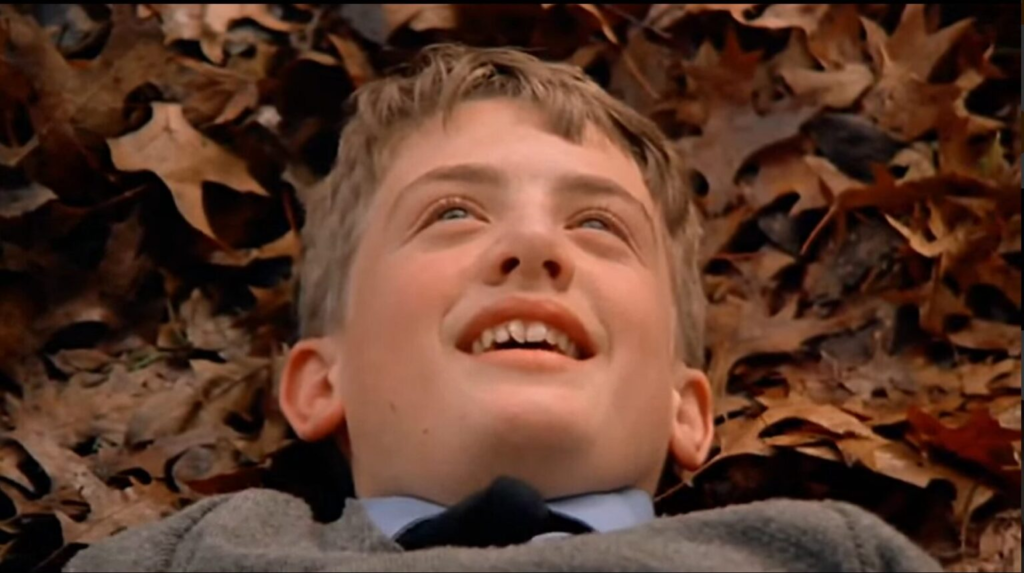
Australia, 1953. Thirteen-year-old Tom Allen attends a strict Catholic school where religious repression collides with sexual awakening, faith, and doubt. Fred Schepisi’s deeply autobiographical debut is widely considered one of the greatest first features in Australian cinema. Alongside his later film The Chant of Jimmie Blacksmith, it became one of the defining works of the 1970s Australian New Wave.
Next of Kin– Tony Williams (1982)
Duration: 89 min.
Following her mother’s death, Linda inherits Montclare, an old countryside nursing home. As she begins reading her mother’s diary, the events described within it slowly start manifesting in her own life. Fueled by the atmospheric score of Klaus Schulze from Tangerine Dream and Jackie Kerin’s unsettling performance, Next of Kin is often regarded as one of the scariest Australian films ever made. Tony Williams’ second and final feature stands alongside films such as The Shining and Suspiria as a haunting labyrinth of memory, paranoia, and architectural horror.
About The Boy
The Boy was born in Athens in 1981 and is a filmmaker and musician whose work moves fluidly between cinema, music, performance, and visual storytelling.
He has directed seven feature films –Klais?, Roz, Higuita, Thread, Winona, Gym, and They Are Coming Out of Margo–which have been screened and awarded at festivals in Greece and internationally.
Alongside his filmmaking career, he has released more than twenty-five music albums, including Please Make Me Dance, Koustoumaki, Heliotherapeia, Ready, Paradoulefta, Antelope, and Audrey, while also composing music for both cinema and theater.
In addition, he has appeared as an actor in film and theater productions, directed music videos, and in recent years has taught filmmaking in acting schools.
Info
I Never Traveled to Australia The Boy
📍 Onassis Stegi 107 Syngrou Avenue, Athens
📅 June 5–7, 2026
Friday–Saturday Concert & Performance 21:30–23:15 | Main Stage
Friday–Saturday Film Screenings 18:30, 19:50, 21:10, 22:30 | Level -1
Friday–Sunday Australian New Wave Screenings 15:00–02:00 | Small Stage
Filming & Photography
All events will be filmed and photographed. By purchasing a ticket, visitors consent to being filmed and photographed. The recorded material will remain in the archive of the Stegi and may be used across its website, channel, and digital platforms for the duration of their operation.
Onassis Stegi
Leof. Andrea Siggrou 107, Athina 117 45, Greece
CREDITS
Direction, Texts, Film Programming & Music:The Boy Set Design: Konstantinos Lambridis Music & Costume Design: Miss Trichromi Lighting Design: Simos Sarketzis Choreography: Flomaria Papadaki Animation: Irini Vianelli Still Photography:Myrto Tzima
Sound Engineering: Giotis Paraskevopoulos Production Supervision: Eleni Berde Production Management: Cassie Cafetzi Production Execution: Elisavet Civil Non-Profit Company
Assistant Director: Antigoni Papapostolou Assistant Set Designer: Eleni Vrettakou Set Design Consultant: Kleio Boboti

 elc team