 elc team
The 18th Psarokokalo International Short Film Festival returns to Folegandros from 10–17 July with films from 42 countries, premieres, talks, masterclasses and screenings in spectacular island locations.
The Psarokokalo International Short Film Festival returns for its 18th edition, taking place from 10 to 17 July, further establishing Folegandros as a vibrant destination on the international film festival map. Bringing together films from 42 countries, alongside open discussions, masterclasses and networking initiatives, this year’s programme offers a rich, multidimensional cultural experience. At the height of the Greek summer, the festival invites audiences to rediscover the world through the cinematic lens, balancing globally acclaimed filmmaking with the authentic spirit of the Aegean.
The International Competition brings together acclaimed filmmakers such as Theodor Ushev and Koji Yamamura alongside an emerging generation of directors from 42 countries. Featuring international and national premieres, as well as award-winning works that have already stood out at major festivals including Cannes 2026, Sundance, Tribeca and SXSW, this year’s programme promises a cinematic journey that moves between political awareness and poetic exploration.
Documentaries Exploring Progress, Memory and Survival
Through a series of thought-provoking documentaries, the festival raises urgent questions about the cost of progress and the challenges of sustainability. The films take audiences from the ancient maritime routes of the Koli people in India and the historical memory preserved within a Portuguese monastery, to the drought-stricken landscapes of Chad and the “white veil” of industrial pollution in Slovenia. The programme concludes with visionary glimpses of possible futures, where nature gradually reclaims abandoned urban landscapes, reminding us that architecture is not merely a physical structure but an ongoing dialogue between humanity and the environment.
Among the highlights is Talk Me by Joecar Hanna, executive produced by Spike Lee. Blending realism with surrealism, the film follows a man living in a Spanish village who must choose between a loveless marriage and the promise of genuine human connection.

Oscar-nominated filmmaker Evgenia Arbugaeva returns to Arctic Siberia with CHUURAA, documenting the journey of an Indigenous palaeontologist descending into the rapidly thawing permafrost, where ancient Sakha legends collide with the realities of the climate crisis.
Audiences are also transported to Brussels in 1989 through Joachim Michaux’s atmospheric neon-noir A Sky So Low, in which a young man wanders through the hypnotic rhythms of the city’s New Beat scene while searching for his lost love during a period of profound political change across Europe.
Finally, The Strength of Silence by Samuel Vela takes viewers to the Tigray region of Ethiopia, portraying with remarkable sensitivity the story of a 17-year-old war survivor who transforms the traditional coffee ceremony into an act of female solidarity and quiet resistance.
Environment & Architecture: Memory, Transformation and Survival
The Environment & Architecture section stands among the festival’s most distinctive pillars, exploring the evolving relationship between the spaces we inhabit and the forces that shape them. This year’s programme revolves around the idea of the “living building”-from the Umbrella House, relocated from Tokyo to Germany in an effort to preserve it, to the walls of a Canadian home transformed into an autobiographical museum.
Ammodo Docs: Where Science Meets Art
The festival’s collaboration with Ammodo Docs further strengthens its research-driven identity, presenting a selection of forward-thinking documentaries within the Online Films & Exhibition programme that operate at the intersection of art and science.
Ammodo is a pioneering platform supporting research and artistic creation across the fields of art, science and architecture. Its collection of short artistic documentaries invites audiences to experience the world through the perspectives of leading contemporary thinkers and creators.
As part of this collaboration, three films investigate the transformative power of ideas and artistic practice:
- The World Behind Words follows classical philologist and philosopher Tazuko van Berkel as she explores ancient Greek concepts, revealing how language can either constrain or liberate contemporary thought.
- Dancing in the Ruins portrays Lebanese-Dutch artist Mounira Al Solh, whose vibrant artistic practice weaves together personal narratives and ancient mythology, offering a powerful response to violence and injustice.
- Dear Home of Scars follows artist Ibrahim Mahama in Ghana as he creates monumental installations from remnants of the colonial past, exposing the “scars” embedded in the landscape while inspiring local communities to imagine a more hopeful future.
Together, these films expand the festival’s dialogue beyond conventional boundaries, demonstrating how art and scientific inquiry can offer meaningful responses to the challenges of our time.
National Competition: Greek Short Cinema on an International Trajectory
The National Competition remains the festival’s flagship platform for showcasing contemporary Greek filmmaking to international audiences. This year’s selection highlights a generation of filmmakers whose artistic maturity is matched by a distinctly outward-looking perspective, confirming that Greek short cinema is experiencing one of its most dynamic creative periods.
The programme opens with Loudias by Akis Polizos-co-director of Netflix’s Maestro and producer of this year’s Cannes Short Film Palme d’Or winner, I’m Glad You’re Dead Now. The film is a deeply personal return to the banks of the Loudias River, where memory and mythology converge.
The section’s international outlook is further reinforced by the participation of César Award-winning Palestinian filmmaker Tawfeek Barhom, as well as Wild by Eleni Vergeti. Produced through the collaboration of Ariane Labed and Makis Papadimitriou, the film traces an inner rebellion and the emergence of female empowerment through a raw journey toward liberation.
The programme also delves into the unresolved wounds of history and collective memory. In The Wolves Return, Stelios Moraitidis crafts an allegory about forgetting and historical revisionism, while Giannis Karpouzis, in Magdalena Hausen: Frozen Time, experiments with the very nature of time. Meanwhile, Alexandros Hantzis explores confinement and shattered aspirations in Fuit, and Markella Kontaratou blurs the boundaries between reality and imagination through the creative use of artificial intelligence.
From Beware of the Southern Stars by Christos Karteris, a tribute to Greece’s maritime heritage, to Icarus by Christos Kardanas, starring Sakis Rouvas, this year’s National Competition transforms local stories into universal cinematic experiences. Supported by internationally recognised producers including Giorgos Tsourgiannis, Iraklis Mavroeidis and Angelos Venetsis, Greek short cinema once again proves itself to be a confident and adventurous voice within the global film conversation.
Focus Argentina
Each year, the festival shines a spotlight on the cinema of a selected country. In 2026, the focus turns to Argentina.
From The Look of Glass by Tomás Murphy, an intimate portrait of survival in the neighbourhoods of Buenos Aires, to Francine, East-West, where social conventions unravel in the face of an unexpected spark of rebellion, this year’s selection captures the existential depth and uncompromising realism that characterise contemporary Argentine cinema.
Through stories of farewell, family trauma and mystical longing, the programme reveals a cinematic language that moves effortlessly between the personal and the collective.
More than a series of screenings, the festival serves as a platform for dialogue-a bridge between cultures and an invitation to reflect collectively through a form of cinema that dares to look beyond the obvious.
Music Video
The festival experience extends into the digital realm through its Music Video programme, an online platform where visual experimentation meets musical expression.
Featuring a carefully curated selection of works, the programme reimagines the music video as a fully realised cinematic form rather than a simple accompaniment to sound. Filmmakers and musicians from around the world push the boundaries of audiovisual storytelling, creating hypnotic compositions that explore contemporary culture, identity and visual poetry.
The programme will be available online throughout the festival.

Screening Venues: Cinema as an Experience
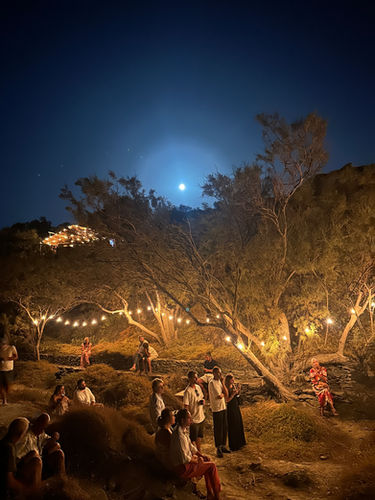
Psarokokalo embraces the unique landscape of Folegandros, transforming some of the island’s most iconic locations into open-air cinematic destinations.
Municipal School (Chora)
The historic school courtyard becomes a vibrant cultural gathering place. Under the summer stars, film screenings take on the atmosphere of a shared ritual, where the island’s history meets contemporary cinema.
Spina (Ambeli Bay)
Where dramatic cliffs meet the tranquil Aegean Sea, the festival presents its Dinner & Dream experience. Surrounded by the scent of thyme and the sound of the meltemi wind, audiences are invited to enjoy cinema in one of the island’s most enchanting natural settings.
Gundari (Southeastern Coast)
Carved into the rugged landscape, Gundari offers an exceptional setting where cinema and nature exist in perfect harmony. The panoramic views of the southeastern coastline transform every screening into an unforgettable experience.
Panagia Pantanassa Square (Kastro, Chora)
Hidden within the fortified heart of the medieval settlement, Pantanassa Square hosts a special one-night presentation of the Psaroloco programme. Designed for the festival’s youngest audiences, the screening offers children the opportunity to experience cinema within one of Folegandros’ oldest and most atmospheric landmarks.
Psaroloco: Inspiring the Cinephiles of Tomorrow
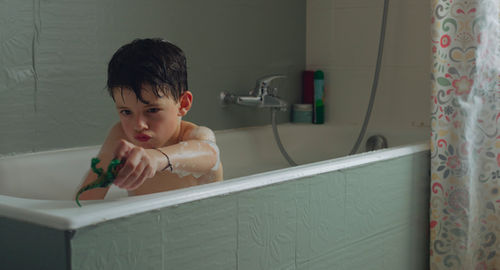
Psarokokalo continues its commitment to younger audiences through its collaboration with the Psaroloco International Children’s and Youth Film Festival.
Designed for children aged 4 to 12, the programme introduces young viewers to high-quality international cinema through carefully selected films and educational activities.
For children aged 4–6, the programme features BAFTA 2025-nominated animated films, dubbed into Greek and selected for both their artistic excellence and educational value.
For children aged 7–12, award-winning films from festivals including Cannes and SXSW explore themes of friendship, scientific curiosity and the complexities of growing up.
Each screening is accompanied by specially designed educational materials and interactive activities, while young audiences also participate in selecting the Audience Award, encouraging critical thinking, empathy and active engagement with cinema.
A Festival Beyond the Screen
Psarokokalo 2026 has evolved far beyond the format of a conventional film festival. Now in its eighteenth edition, it has become a living cultural institution that grows alongside the island and its community, celebrating artistic excellence, social awareness and inclusive dialogue.
Against the striking landscape of Folegandros, the festival becomes a space for reflection, creativity and human connection, building meaningful bridges between tradition and innovation, local identity and international perspectives.
It invites audiences not simply to watch films, but to rediscover both themselves and the world through the transformative power of cinema.
Post-Festival Screenings
Extending the cinematic experience beyond the festival dates, Psarokokalo continues with a series of special post-festival screenings in unique locations.
Among them is a memorable beach screening of a feature film (with Greek subtitles) on Agkali Beach, inviting audiences to enjoy cinema under the stars and by the sea.
Psarokokalo Award Winners in Athens
The festival concludes its journey from the Aegean to the heart of Athens with a special free screening of the 18th edition’s award-winning films.
On 20 July, Cine Epì Kolonò will host a dedicated evening showcasing the works distinguished by the international juries for their artistic innovation and narrative boldness, offering Athenian audiences the opportunity to experience the festival’s highlights in a single programme.