 elc team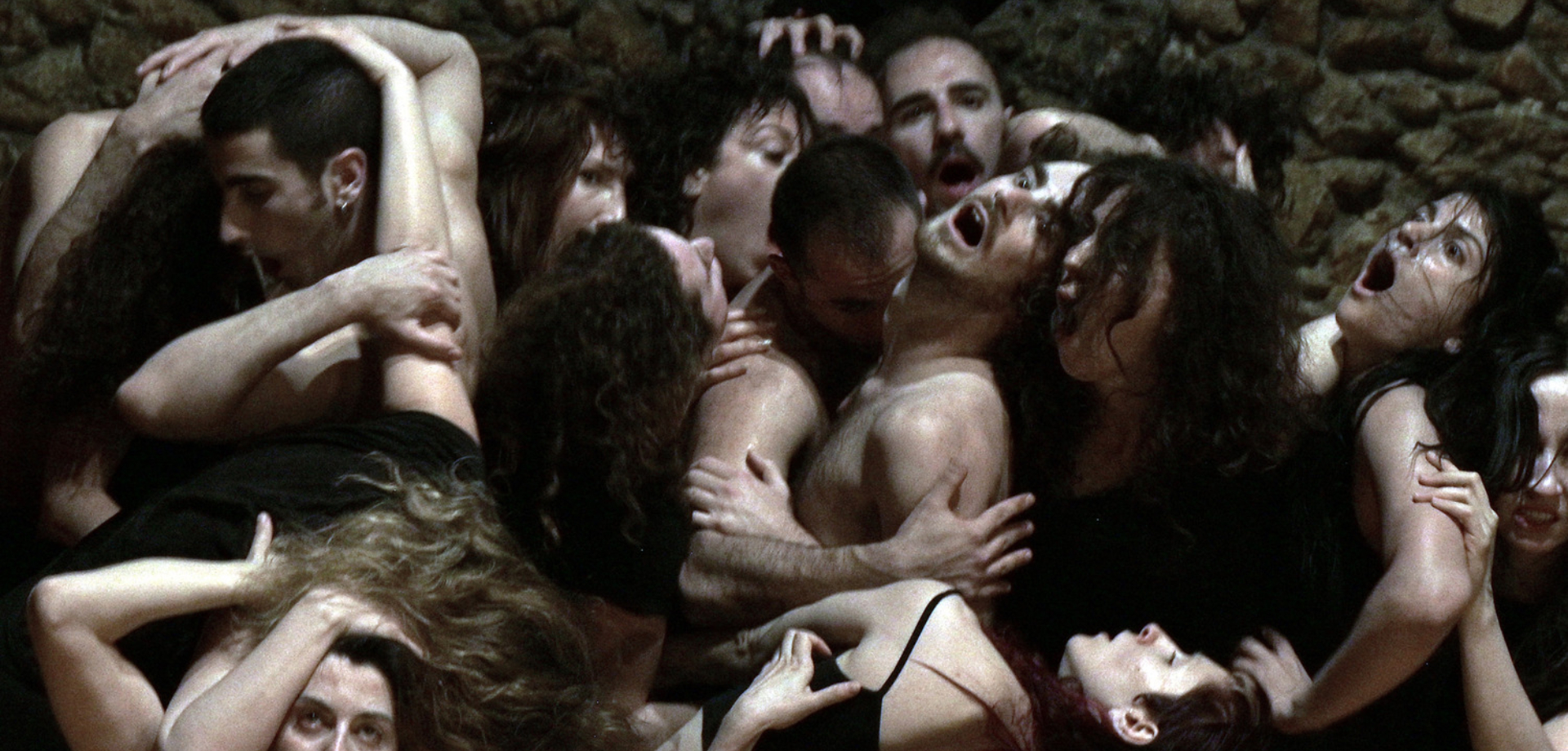
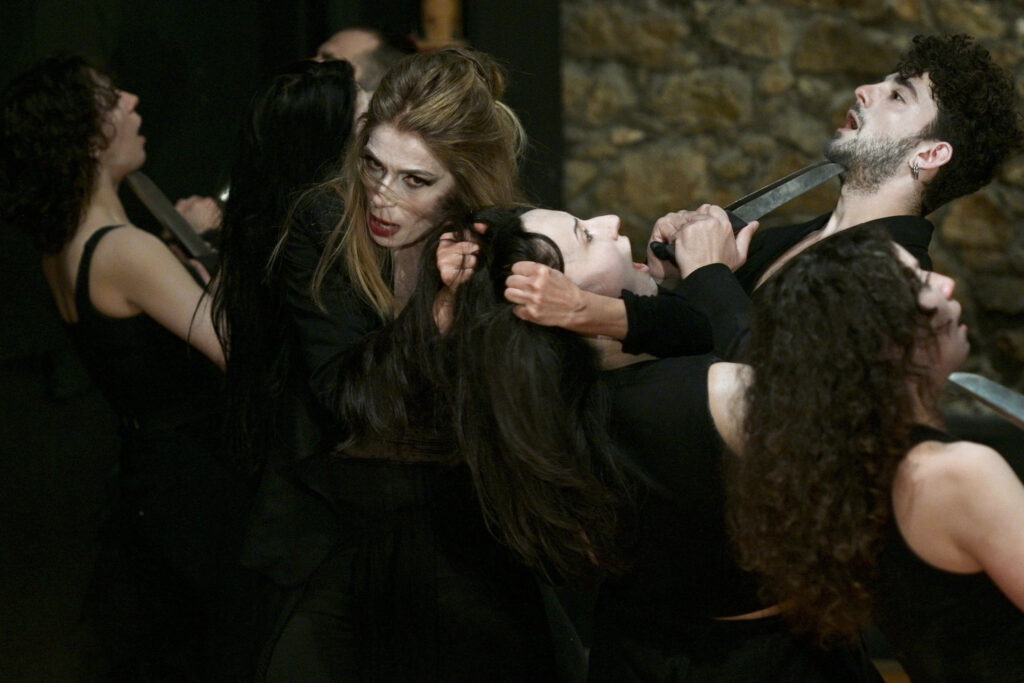
For the first time, the National Theatre of Greece collaborates with the internationally acclaimed Greek director and teacher Theodoros Terzopoulos, who will be directing Aeschylus’ Oresteia, the only surviving trilogy of Ancient Drama and the last surviving work of the author (created only two years prior to his death), in a single performance.
Oresteia was introduced in Athens, at the City Dionysia (En Astei Dionysia) in 458 BC, a year of high tension between the proponents of Oligarchy and those of Democracy, reflecting the political, historical, and social conflicts, and the violent upheavals of the time. Among the reasons for this tension were Ephialtes’ democratic reforms concerning the operation and structure of the Supreme Court (Areios Pagos). And while Athens at home was in a period of transition, it pursued an extremely bold policy towards other cities, allying at the same time with Argos, which had seceded from the Peloponnesian Alliance. The influence of both these historical events on Oresteia is apparent.
The author draws his inspiration from the myth of the Atreidae and the terrible curse cast upon their house. After ten years of war, the Palace of Mycenae is about to welcome its king, Agamemnon, as the triumphant general of all Greeks. Yet his arrival from Troy also means his death by the hand of his wife Clytemnestra, aided by Aegisthus. In Choephori (The Libation Bearers), the return of Orestes brings the longed-for revenge for Electra. The Chorus rejoices at the royal house’s redemption and Orestes sets out, as a suppliant, to seek Apollo’s protection at Delphi, while the Erinyes (Furies) come after him. Eumenides is based on the creative retelling of certain Attic cult myths about Orestes’ flight to Athens and his trial by the gods of Olympus. Aeschylus’ plot is further enriched by the establishment of the Areios Pagos on Athena’s initiative and the court’s involvement in the breaking of the curse. Balance and reconciliation then come to close a cycle of blood and vengeance.
A work of astonishing maturity, integral aesthetics, intellectual depth, and a multitude of philosophical inquiries; a work that expands the boundaries of art and boldly defends a democratic constitution.
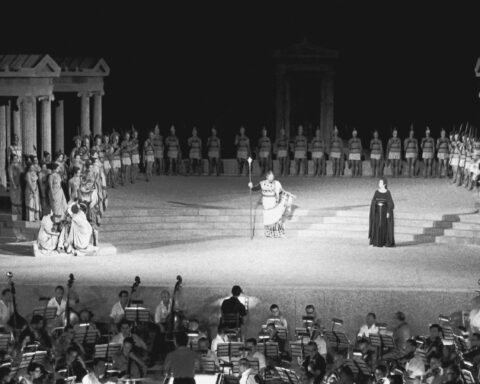
To date, Oresteia has been staged by the National Theatre of Greece at Epidaurus five times: in 1954 and 1959 directed by Dimitris Rontiris, in 1972 directed by Takis Mouzenidis, in 2001 directed by Yannis Kokkos, and in 2019 by three directors, Io Voulgaraki, Lilly Meleme, and Georgia Mavragani, each of whom undertook a tragedy in their first production at Epidaurus.
Artists’ note
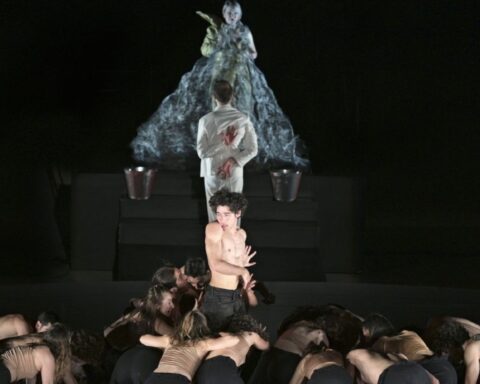
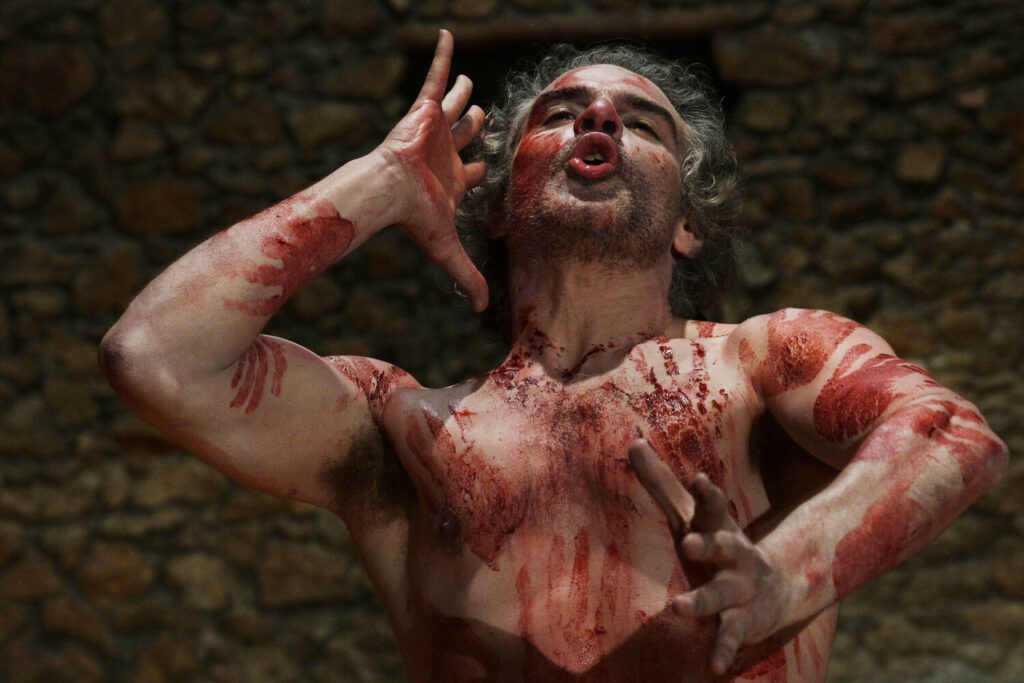
Why does Oresteia continue to hold such tremendous attraction? Perhaps this is because there seems to be an intrinsic need within the human being for a profound relationship with Myth. Oresteia’s myth is dangerous; it belongs to the world of the uncanny and the strange; it brings terror because it reveals the unbowed, violent, and the untameable deepest laws. Clytemnestra invites us to break the mirror together, so that from its fragments a new nightmarish image may be born, but one that nevertheless retains the dark roots of the myth. Our intention is to study the depth of the myth of Oresteia and to search for the unexpected, the unusual, the paradoxical. The characters offer their bodies on the altar of the unbecoming, posing relentless questions and dilemmas.
The aesthetics of the performance derive from the dynamic relationship of the Body with Myth, Time, and Memory. We raise again the fundamental ontological question ‘what is it all about?’, a question that does not accept definitive answers, but constantly mobilises us towards an ever-deeper investigation of the root of sound, of the word, of the multiple aspects of the human enigma and the reconstruction of a new Myth.
Theodoros Terzopoulo
Artists
Translated by Helene Varopoulou
Direction – Dramaturgy Theodoros Terzopoulos
Associate director Savvas Stroumpos
Set design – Costumes – Lighting Theodoros Terzopoulos
Original music composition Panayiotis Velianitis
Dramaturgy advisor Maria Sikitano
Dramaturg for the performance Irini Moudraki
Assistant to the Director Theodora Patiti
Set design associate Sokratis Papadopoulos
Costume design collaborator Panagiota Kokkorou
Lighting design collaborator Konstantinos Bethanis
Artistic collaborator Maria Vogiatzi
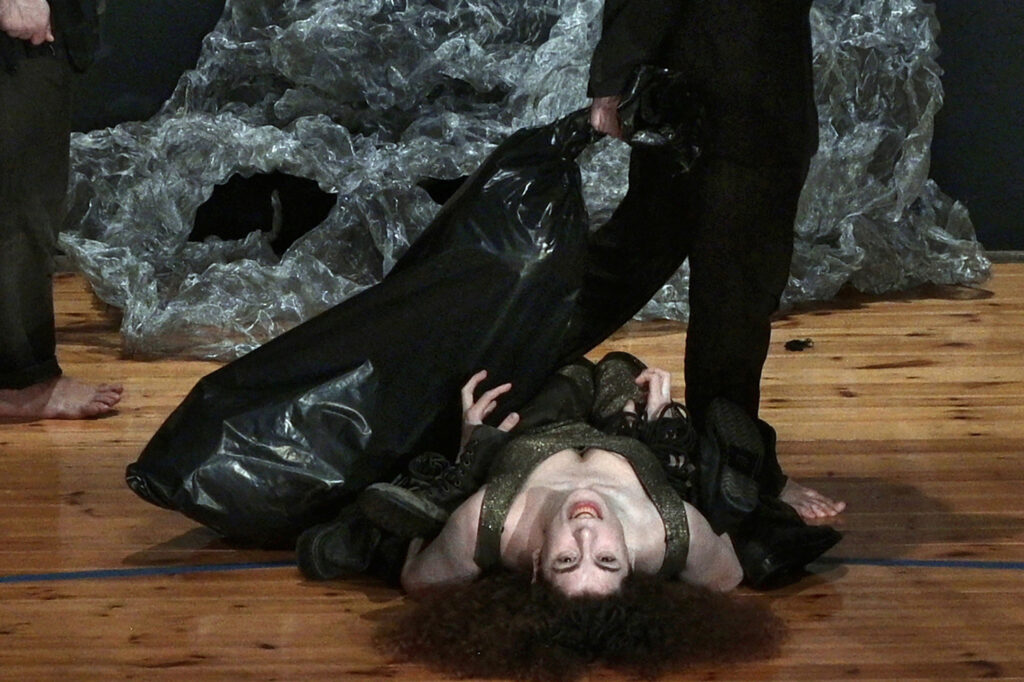
Cast (in alphabetical order) Evelyn Assouad (Cassandra), Niovi Charalambous (Electra), Nikos Dasis (Apollo), Tasos Dimas (Watchman/ Athenian Citizen), Sophia Hill (Clytemnestra/The Ghost of Clytemnestra), Elli Ingliz (Nurse), Kostas Kontogeorgopoulos (Orestes), David Maltese (Aegisthus), Anna Marka Bonisel (Prophetess), Dinos Papageorgiou (Herald), Aglaia Pappa (Athena), Savvas Stroumpos (Agamemnon), Alexandros Tountas (Servant), Konstantinos Zografos (Pylades)
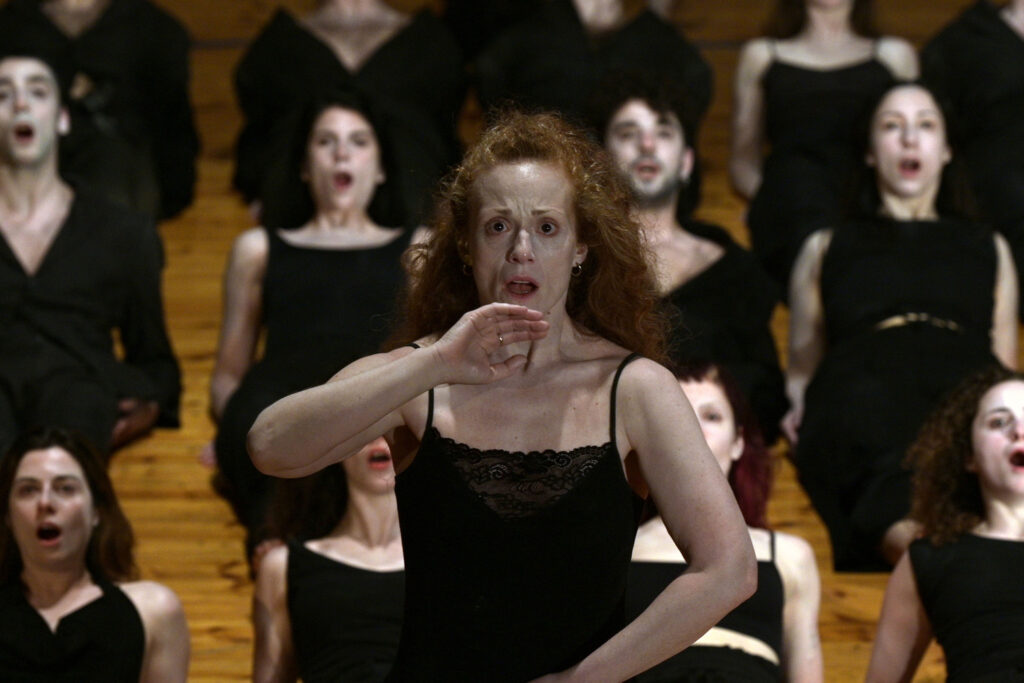
Chorus Babis Alefantis, Aspasia Batatoli, Nikos Dasis, Katerina Dimati, Natalia Georgosopoulou, Katerina Hill, Elli Ingliz, Vasilina Katerini, Thanos Maglaras, Elpiniki Marapidi, Anna Marka Bonisel, Lygeri Mitropoulou, Rosy Monaki, Stavros Papadopoulos, Vangelis Papagiannopoulos, Michalis Psalidas, Myrto Rozaki, Yannis Sanidas, Pyrros Theofanopoulos, Alexandros Tountas, Konstantinos Zografos
Info
Friday 12 July 2024 - Saturday 13 July 2024 9:00 pm
Ancient Theatre of Epidaurus, 210 52
Tikckets: Zone Β 13€ – 30€
Upper Tier (Zone D) 5€ – 20€
Upper Tier (Zone E) 5€ – 15€
Upper Tier (Zone ΣΤ) 10€