 elc team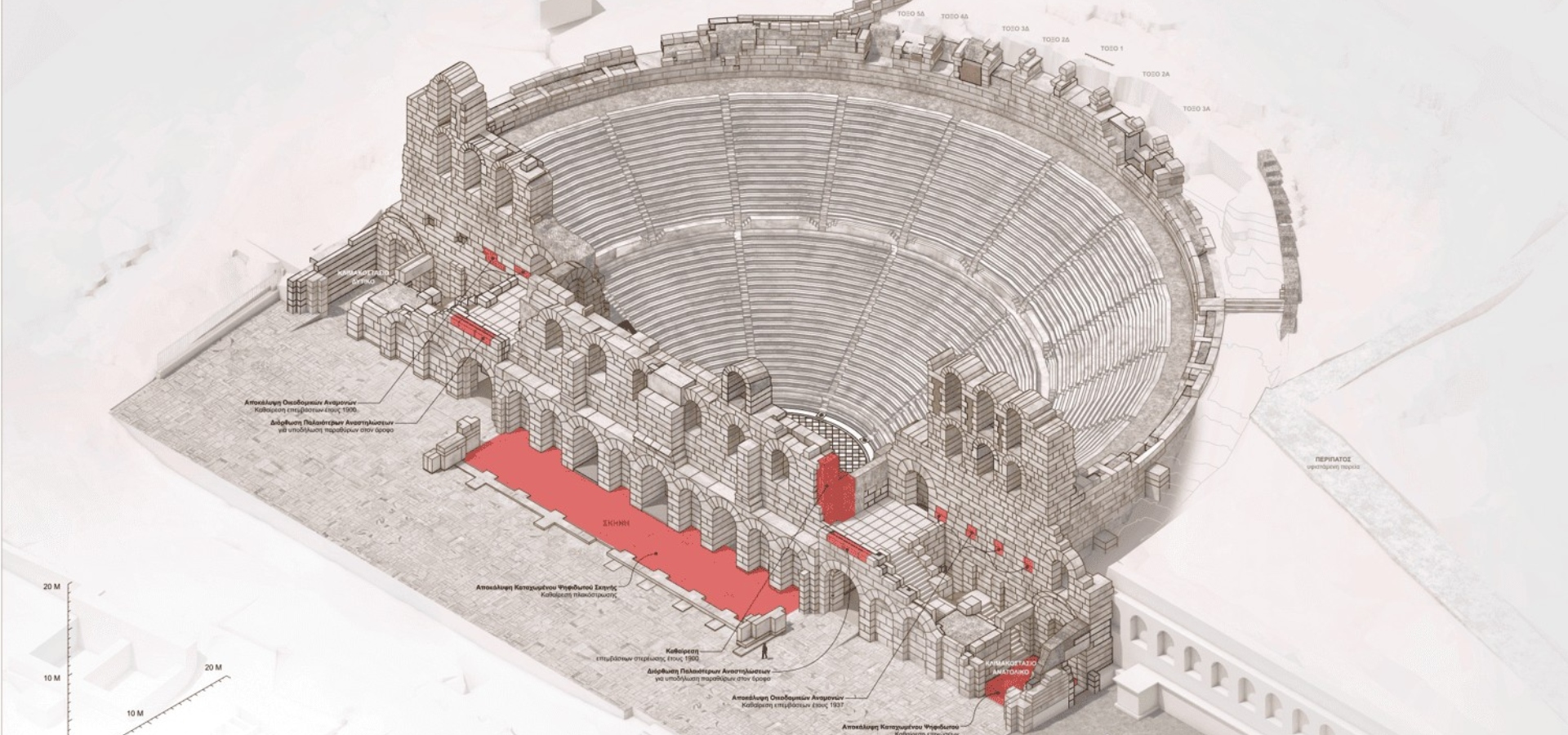
The overarching restoration concept is grounded in the preservation of all existing structural and architectural elements, alongside the implementation of only the absolutely necessary reinforcements, additions, or reconstructions of lost sections.
The preparation of interdisciplinary studies for the protection and enhancement of the Odeon of Herodes Atticus, on the southern slope of the Acropolis, formed the core of a research programme commissioned in July 2025 by the Directorate for the Restoration of Ancient Monuments of the Hellenic Ministry of Culture to the National Technical University of Athens.
The Ministry of Culture aims to carry out a comprehensive restoration of the monumental complex of the Odeon of Herodes Atticus, along with an upgrade of its operational infrastructure, ensuring harmonious integration into the natural landscape and the broader built environment.
Minister of Culture Lina Mendoni stated:
“The Odeon of Herodes Atticus constitutes a major cultural asset for the city of Athens, of great historical significance and of supra-local value. These characteristics shape the framework of the studies and every contemporary intervention undertaken upon it. The proposed interventions align with internationally established principles concerning monument protection, as well as with the contemporary operation of a venue dedicated to performance and music.”
As previously announced, conservation, restoration, and upgrade works at the Herodeion will last at least three years from their commencement, during which time the monument will remain closed.
Today, the Herodeion presents structural issues that must be addressed. It shows deterioration primarily in the upper arcade of the façade, loss of material mass, stone cracking, minor deformations, and localized instability. Biodeterioration is also observed, caused by the growth of microorganisms in areas where cavities form and water stagnates, as well as root systems-mainly within joints-and failures of earlier interventions.
“Our goal,” the Minister added, “is that upon completion of the works, the monument will be sufficiently shielded against natural and human-induced wear, improved in terms of legibility, and fully upgraded to support the functional requirements of contemporary cultural events, foremost among them the Athens Festival.
At the same time as the restoration and archaeological works, a new operational regulation for the monument will be drafted by a team of scientists and artists to be appointed shortly. This regulation will take the form of an institutional text to ensure both the high quality of events and the maximum protection of the monument.”
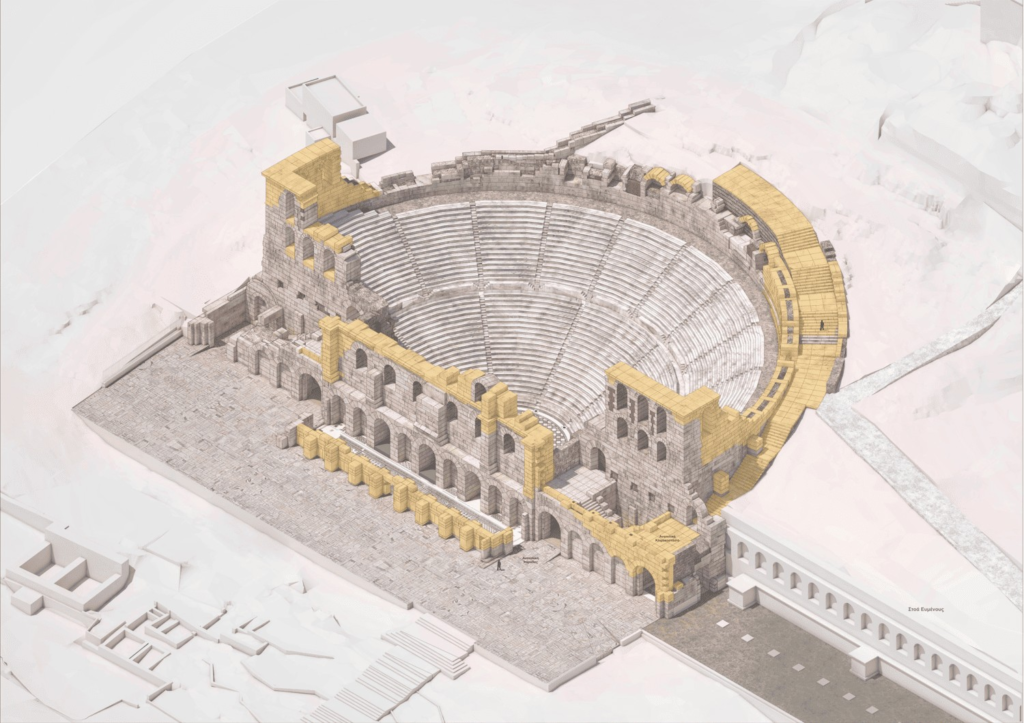
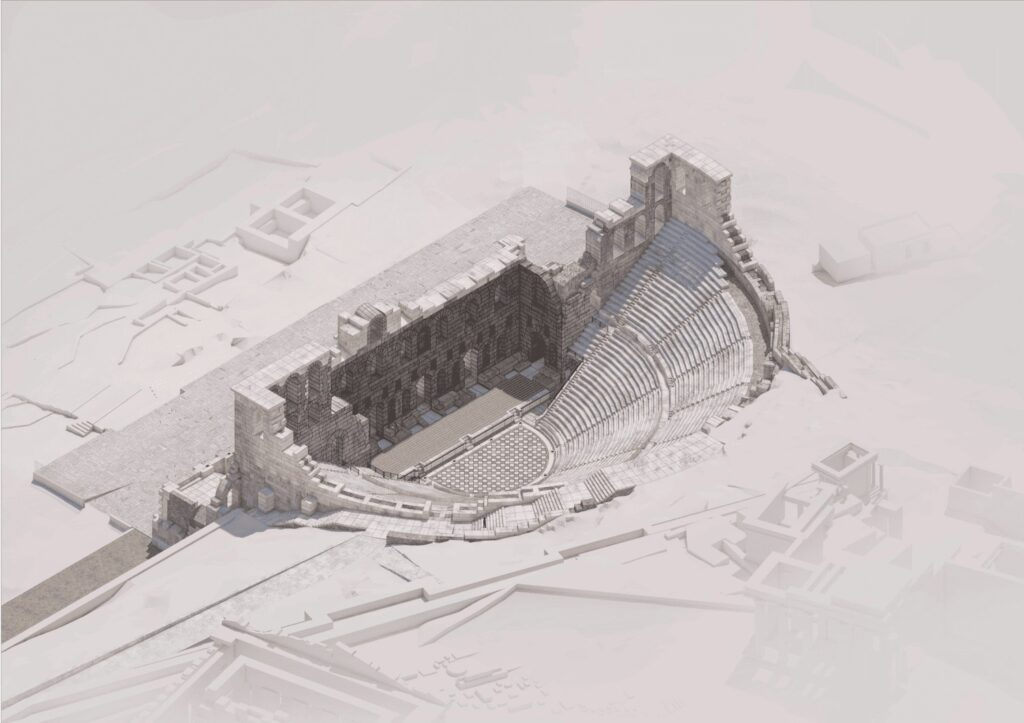
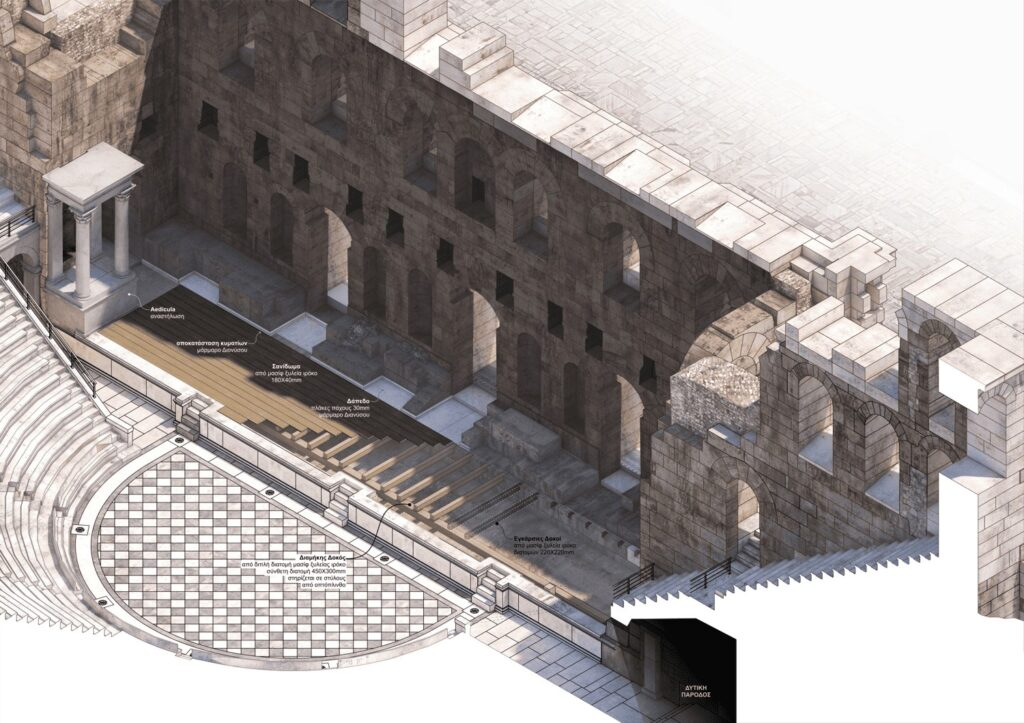
The general restoration concept is based on safeguarding all existing structural and architectural elements, together with the implementation of strictly necessary reinforcements, additions, or reconstructions of lost parts, in order to secure the monument’s long-term protection, stability, structural integrity, functionality, legibility, and educational value.
The studies conducted include:
- Architectural restoration study
- Structural adequacy and structural restoration study
- Architectural study for additional interventions (contemporary interventions in the stage building area, infrastructure for the “Hellenic Festival,” renovations of dressing rooms, sanitary facilities, interventions in the plaza, ticket office, refreshment area, etc.)
- Structural design of architectural interventions
- Mechanical engineering study (external water supply and drainage networks)
- Acoustic study
Structural restoration works include the removal of incompatible later materials, consolidation and bonding of stones, replacement of deteriorated elements, filling of voids, and correction of deformations.
Restoration works also include:
- Reconstruction of walls and structural elements
- Restoration of the vault and staircase
- Conservation of architectural members
- Consolidation and restoration of the southern wall of the stage
- Reconstruction of the logeion (stage platform) and its perimeter wall
The structural adequacy of restored sections from the 1950s interventions and their subsequent repairs will also be examined.
Particular interest lies in the unveiling and highlighting of the stage building and its mosaic floors, which currently remain hidden. At the same time, the monument’s strain from acoustic loads will be studied and assessed.
Across the monument and its surrounding area, stormwater drainage will be addressed, electromechanical networks redesigned, fire protection studied, and the sewage system upgraded.
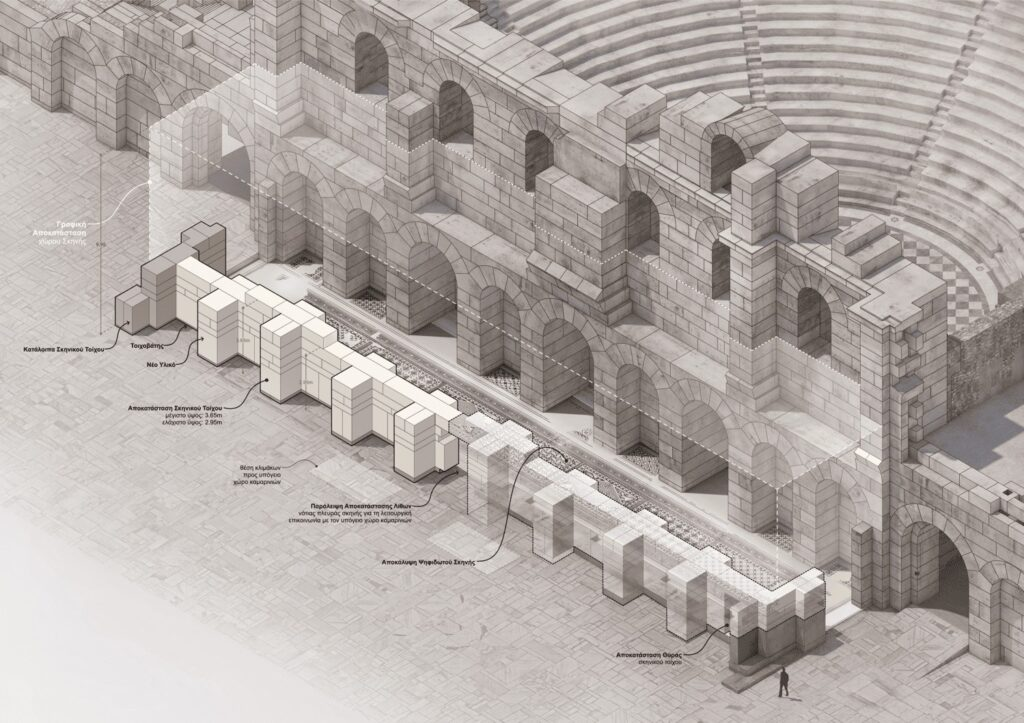
Architectural Interventions
The architectural study concerns the necessary additions to the masonry and the reconstruction of parts of the monument in order to clarify its architectural articulation and restore its functionality.
Interventions concern:
- The Stage Hall, where restoration of its outline is proposed at a height sufficient to reveal its three-dimensional form and accommodate temporary constructions for performances.
- The Proscenium, to render the space safe and accessible, and its form clear and educational.
- The Arches of the Parodoi.
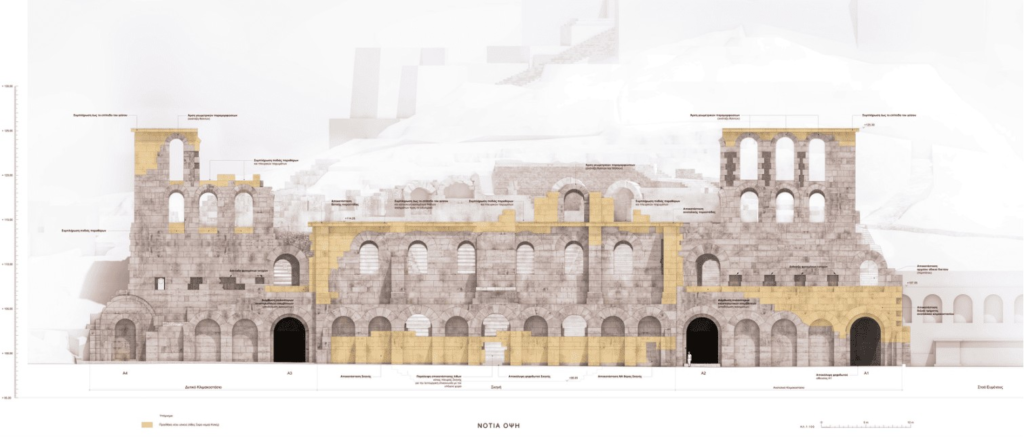
- The Central Façade Wall, with proposed additions to protect and unify fragmentarily preserved elements.
- The Eastern and Western Façade Walls.
- The Eastern Staircase, restoring movement between the Herodeion, the Stoa of Eumenes, and the ascending road toward the Peripatos.
- The Curved Wall, reinstating the original outline and geometry of the monument and reviving circulation along the Peripatos.
- The Cavea (Seating Area), continuing conservation of authentic marble members and seat supplements worn by public use.
- The Peripatos, relieving western archaeological remains near the Asklepieion from damaging visitor circulation.
- Restoration of the eastern staircase and ascending road, re-establishing the monument’s original functional connection with the Stoa of Eumenes.
Forecourt and Grove Area
Architectural interventions in the forecourt and grove aim to free the plaza from auxiliary uses and improve its functionality and aesthetic quality.
These include:
- Extension of the forecourt with an elevated platform and a sheltered space beneath it for refreshment facilities, ticketing, and electromechanical installations
- Reconstruction of sanitary facilities at the western end
- Redesign of the Herodeion’s parodoi
- Creation of new masonry and sheltered support spaces within the grove
The study emphasizes coexistence of functionality, aesthetics, and respect for the monument and its natural setting, through reversible interventions and discreet integration of mechanical systems.

Infrastructure & Acoustic Research
The studies also include installation of a new, independent, semicircular lighting and support structure replacing existing scaffolding, combining aesthetic harmony with rational lighting organization.
Water infrastructure will be fully upgraded and connected to dressing rooms and sanitary facilities, while the external drainage network will be completely reconstructed.
The acoustic study examines whether the southern wall of the Odeon is affected by natural and amplified sound during events. Due to the absence of established methodologies and widely accepted safety limits for the monument’s “acousto-static” behaviour, a novel, customized research methodology was developed and applied for objective and reproducible impact assessment.