 elc team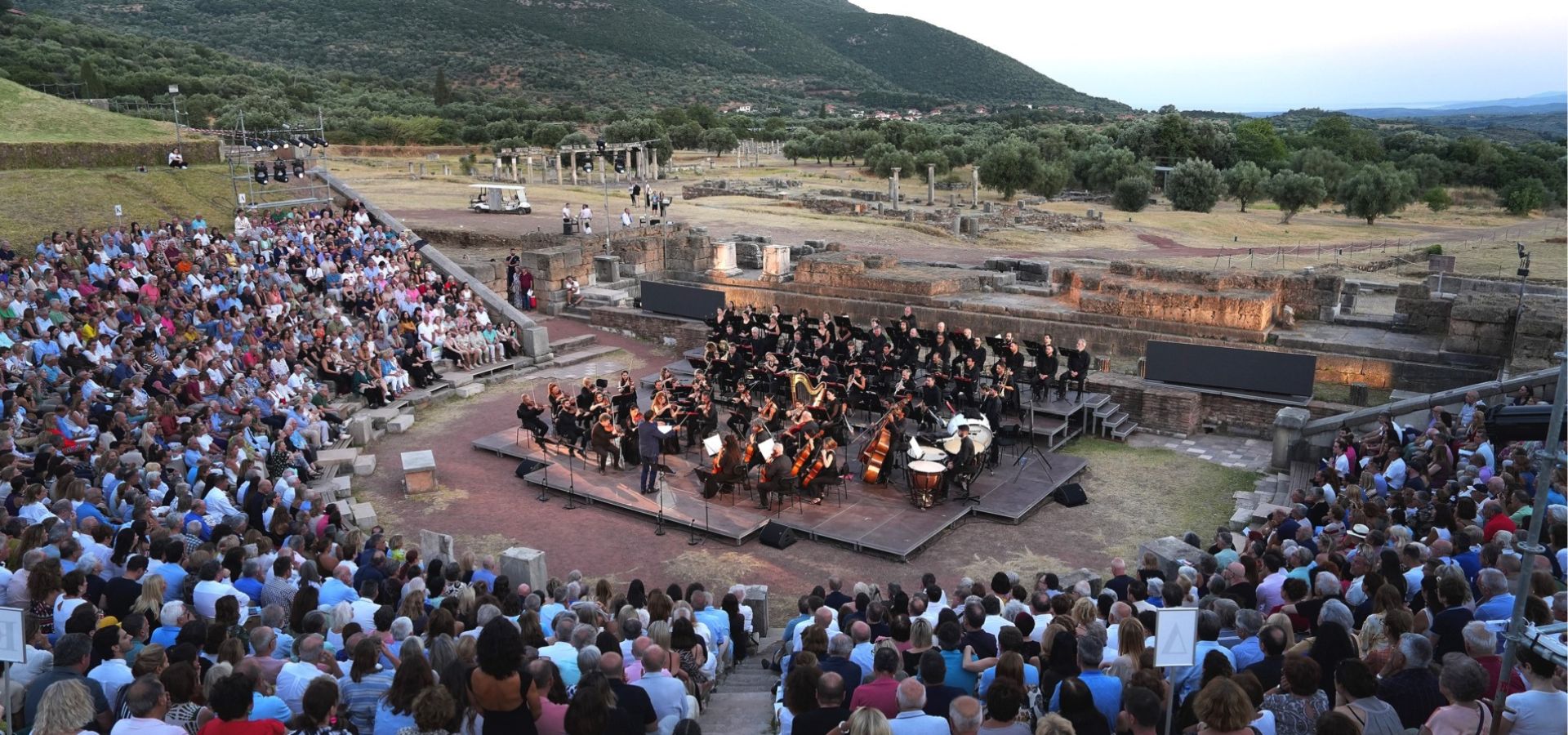
Orpheus mourns the loss of his beloved Eurydice. The god of Love grants him one final chance: to descend into the Underworld and bring her back, on one condition-that he must not turn to look at her until they have reached the world above. The music traces the journey of his soul, from the heart-rending lament “Objet de mon amour” to the terrifying realm of the Furies, the serenity of the Elysian Fields with its celebrated flute solo, and finally the immortal aria “J’ai perdu mon Eurydice.” Orpheus falters, turns to look at Eurydice, and she dies for a second time.
The myth of Orpheus has played a pivotal role in the history of opera. From Jacopo Peri’s Euridice-the earliest surviving opera-to Luigi Rossi’s Orfeo, the first opera ever performed in France, to the monumental L’Orfeo by Claudio Monteverdi, the story continued to inspire composers including Joseph Haydn and Jacques Offenbach, before reaching the twentieth century through the works of Hans Werner Henze and Philip Glass.
Yet it was Christoph Willibald Gluck’s Orfeo ed Euridice that truly transformed the history of opera. Revolutionary in both conception and execution, it reflected the vision of a composer whose artistic ideas were far ahead of his time. The work premiered in Vienna in 1762 and became a landmark in operatic reform.
Hector Berlioz was an ardent admirer of Gluck from an early age. As he himself acknowledged, Gluck was the reason the young Berlioz chose to devote his life to music. It was therefore fitting that, in 1859, the director of the Théâtre-Lyrique in Paris invited Berlioz to prepare a new version of Orphée et Eurydice, with the celebrated contralto Pauline Viardot in the title role.
With profound respect for Gluck’s original, Berlioz combined the two authentic versions of the opera (1762 and 1774) and modernised the orchestration while preserving the spirit and dramatic essence of the work.
It is this acclaimed 1859 Berlioz version that the Camerata – Friends of Music Orchestra will present this year at the Ancient Messene Theatre.
Berlioz’s 1859 French version
With Greek and English surtitles
Sponsor: George and Victoria Karelias Foundation
Info
Date & Time: Saturday, July 11, 2026 | 8:30 pm
Duration: Approximately 105 minutes (including one intermission)
Tickets: €60 | €35 | €20 (concessions)
Organizer: Megaron – The Athens Concert Hall
Cast
- Orphée: Teresa Iervolino
- Eurydice: Maria Kosovitsa
- Amour: Marilena Striftobola
Featuring
Athens Chamber Choir
Choirmaster: Agathangelos Georgakatos
Orchestra
Camerata – Friends of Music Orchestra
Music Director: George Petrou
Assistant Conductor: Nikos Laaris
Musical Preparation: Michalis Angelakis