 ZOE LYMPERIS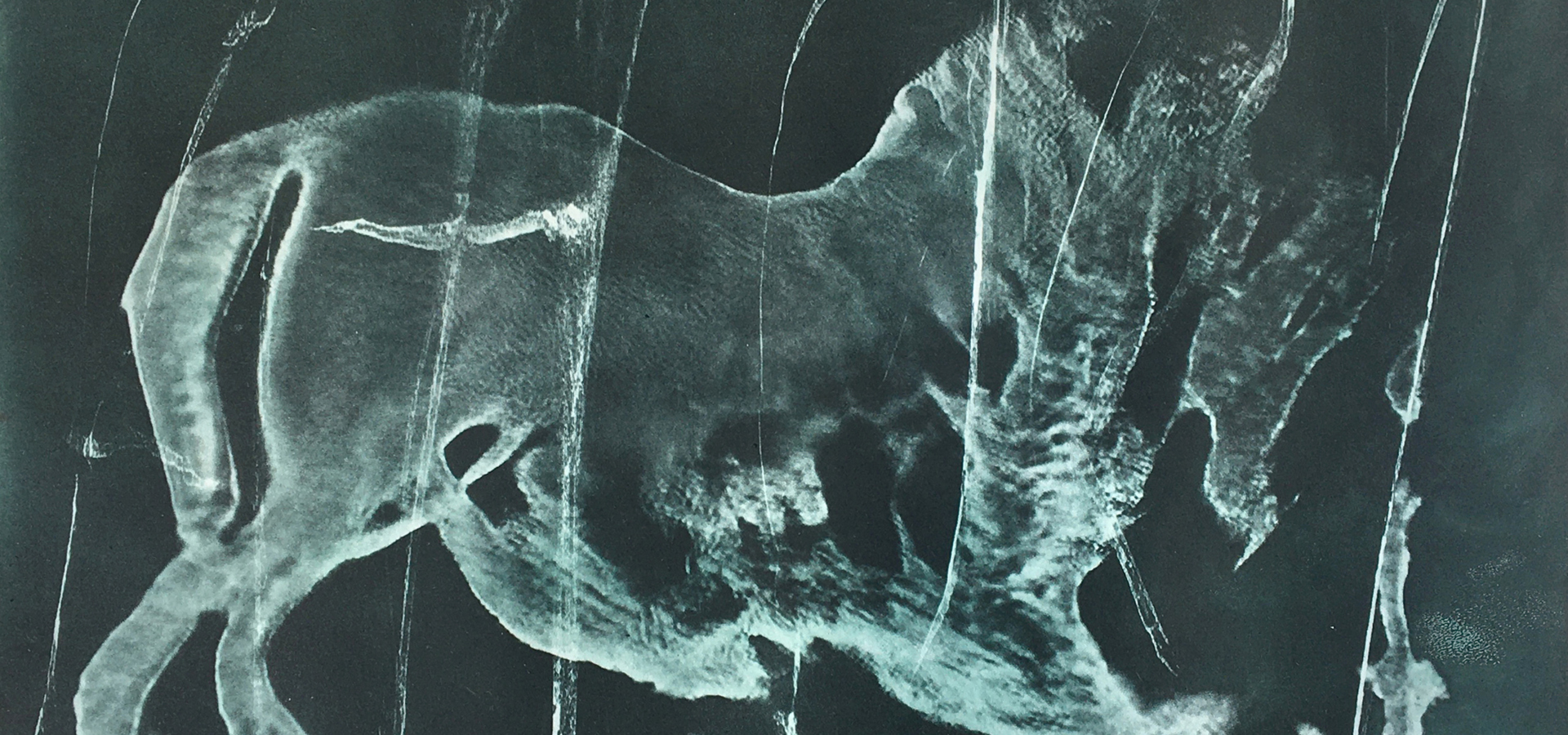
On July 31, the visual art exhibition “YPOGAIA” will be inaugurated at the Chrysanthopoulos Mansion in Pyrgos, Kymi, Evia. The exhibition is organized by the non-profit organization KAIROS POLITISMOU, the Cultural and Educational Society of Kymi, the Cultural Association, and the Pyrgos Community. Curated by art historian Christoforos Marinos, the exhibition showcases more than fifty works centered around fossils and geological imagination.
Thirty-three artists participate, engaging with the mineral world and the concept of discovery. It is noteworthy that the Chrysanthopoulos Mansion is intended to become a Paleontological Museum, as many fossils have been found in the area, including the “Anthracotherium of Kalimerian,” discovered by paleontologist Theodoros Skoufos in 1911 near the village of Kalimeriani. This fossil is now housed in the Paleontology and Geology Museum of the University of Athens.
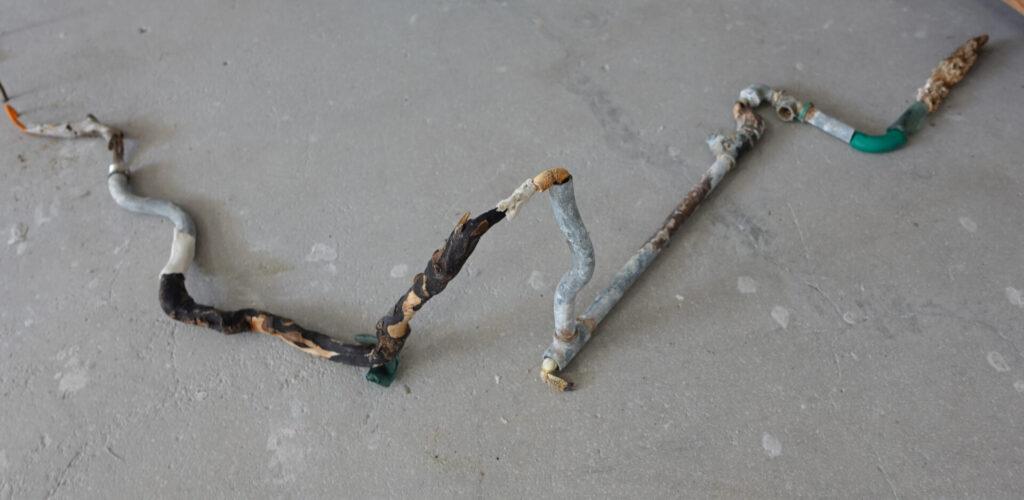
The participating artists are (alphabetically): Nikos Alexiou (1960-2011), Vanessa Anastasopoulou, Vasilis Vasilakakis, Eirini Vgenopoulou-Kerani (1948-2008), Yiouli Garofalaki, Vasilis Gerodimos, Giorgos Gerontidis, Odysseas Glykas, Stathis-Alexandros Zoulas, Valerios Kaloutsis (1927-2014), Aris Katsilakis, Katerina Katsifarakis, KEZ, Zisis Kotionis, Konstantinos Kotsis, Christina Mitrentse, Esmeralda Momferatou, Katerina Botsari, Petros Moris, Fotini Palpana, Giannis Papadopoulos, Rena Papaspirou, Dionysis Pappas, Vaggelis Savas, Christos Tzivelos (1949-1995), Nikos Topalidis, Marianna Trontsiou, Despina Flessa, Efi Chaliory, Pantelis Handris, Cleopatra Chatzigiosi, Giannis Chimonaikis, Christos Chrysoopoulos & Nikoleta Douka Chrysoopoulou.
In recent years, an increasing number of artists have been inspired by prehistory, geology, and paleontology. Climate change, the challenges of the Anthropocene, and the very presence of the Earth as a subject that significantly impacts life (human and otherwise) have turned artists’ attention to issues and themes related to the earth and the underground. Rocks, stones, minerals, fossils, and discoveries have captured their interest.

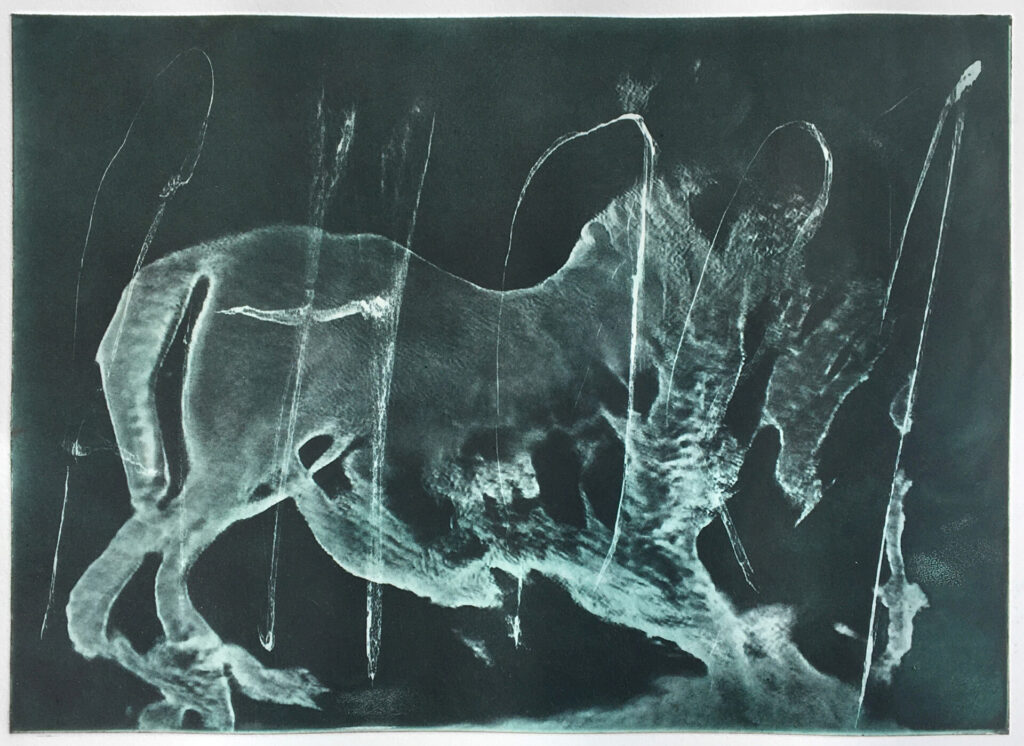
Solar intaglio etching, oil ink on cotton paper | Plate size: 28 x 40 cm, Frame size: 60 x 80 cm | Edition: 1/1 (Variable Edition) | Courtesy of the artist
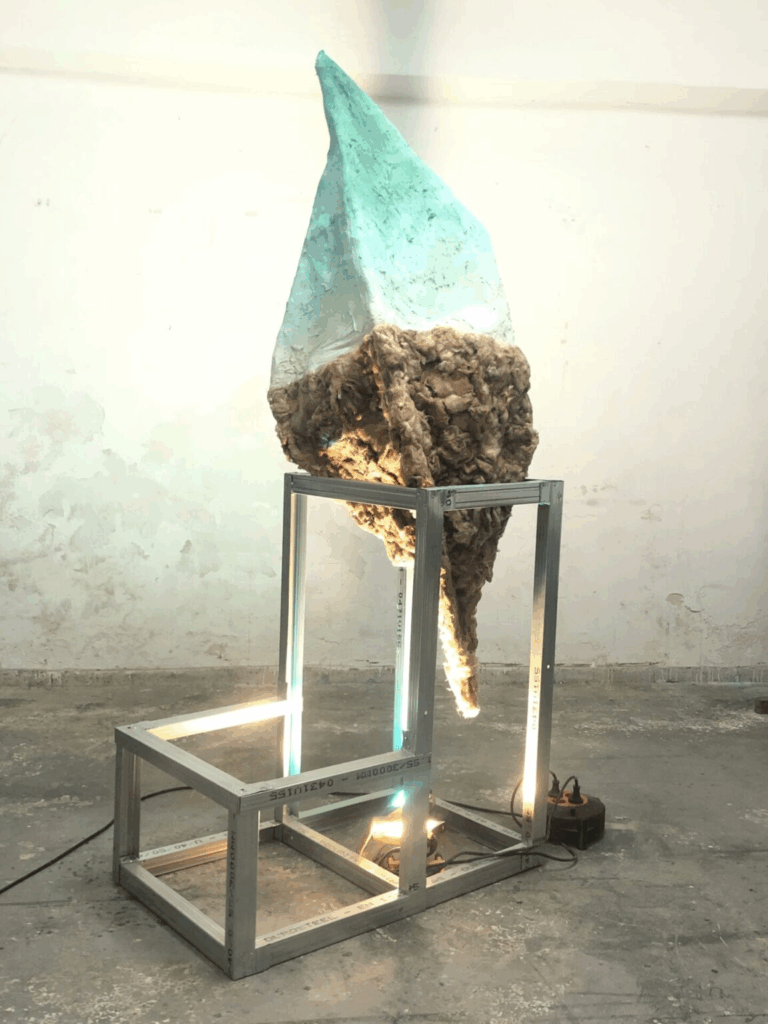
As Marsha Björnerund states in her book “The Autobiography of the Earth” (2005), “Stones and rocks form the archive that the Earth keeps for its past, the diary in which it records geological time.” The stones of the Earth are not mute but have stories to tell us, if we learn their language.
“Words and rocks contain a language that follows a syntax of cracks and ruptures,” wrote American artist Robert Smithson.
Today, artists appear to actively participate in decoding the language of rocks and fossils, presenting us with captivating and mysterious images. More than ever, artists engage in this process of decoding or translating, reading the palimpsest texts of the Earth. They learn to see stones as texts. The exhibition “The Book of Stones” (2019) by Giannis Papadopoulos and the “Lithology” section by Zisis Kotionis (2021) are some examples of Greek artists’ research in geopoetics. From the geological landscapes of Paul Cézanne, Nikos Hadjikiriakos-Gkikas, and Valerios Kaloutsis to the “Earthworks” of the 1960s and 1970s, the Earth has consistently nourished art and the search of visual artists.
In studying the Earth, the artists of the exhibition pose critical and insightful questions about the limits of human knowledge. The term fossil is explored here in its most expanded sense: history as a fossil, culture as a fossil. According to French philosopher Canden Megiasou, the arche-fossil helps us approach the ancestral past through the relational present. The philosopher’s proposal from theoretical realism (“We must make a retrospective projection of the past based on the present”) resonates with the thinking of the artists of “UNDERGROUND.”
“YPOGAIA” is a continuation of the group exhibition “The Inner Side of the Wind,” which took place in the summer of 2024 at the Chrysanthopoulos Mansion and focused on craftsmanship and manual labor.
Info
Opening: Thursday, July 31
Opening hours:
Thursday – Sunday, 17:00 – 21:00
Location: Chrysanthopoulos Mansion,
Pyrgos Kymis, Evia