 elc team
An artistic exploration of memory, identity, and Black presence in Greece.
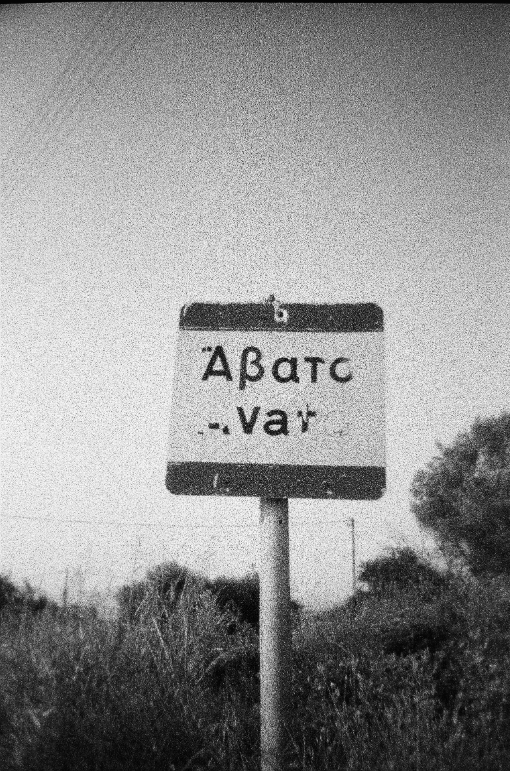
Latent Community—the interdisciplinary artist duo of Sotiris Tsiganos and Ionian Bisai—creates works at the intersection of storytelling, oral history, and filmmaking, with a focus on social, political, and ecological injustices. Their upcoming project centers on Avato (literally meaning “a site that must not be accessed”), a village in northern Greece that is home to a long-standing Black community.
Through the creation of a multimedia platform, including a podcast series and video works, the artists explore the community’s reflections on identity and belonging—narratives often linked to the Ottoman-era slave trade. By weaving these personal stories into broader national frameworks, the project aims to bring visibility to the extensive yet frequently overlooked history of Black presence in Greece. Using the microhistory of Avato as a lens, it engages with pressing questions around identity, whiteness, and inclusion in the country today.
Far from offering fixed narratives, Avato lingers in the in-between: between visibility and silence, between inherited labels and lived realities. Through a thoughtful, collaborative process, the artists explore how questions of identity unfold when both existing and emerging terms feel insufficient—or charged.
Avato also addresses a deeper question that haunts socially engaged art: What does it mean for a community to become the subject of artistic or scholarly attention? And how can art approach ambivalence—not as an obstacle, but as an ethical position?
By focusing on a single village, the exhibition reveals a broader, rarely acknowledged story: that of Black life in Greece—not as a recent phenomenon, but as a presence shaped by movement, memory, and resilience.

Curatorial Note
Avato: “Whatever one says…is wrong.”
by Dimitris Antoniou
Sotiris Tsiganos and Ionian Bisai, the duo behind Latent Community, are gatherers of stories that rarely surface in the public sphere. Their artistic practice centers on communities and narratives that lie in the shadows—unspoken, unarchived, or uninvited into dominant discourse. Their latest project, Avato, supported by the Stavros Niarchos Foundation Public Humanities Initiative (SNFPHI) at Columbia University and MOHA Research Center, turns to a village in the region of Xanthi whose very name—Avato—conjures the notion of the forbidden, the inaccessible, the off-limits.
Known in religious contexts as a space where women or outsiders are not allowed to enter, Avato is also home to a community that outsiders consider Black. At first, Sotiris and Ionian sought to illuminate the little-known story of Black presence in Greece. They were curious: how do the Black residents of Avato perceive their own history and identity? Some claim descent from the Ottoman slave trade under Muhammad Ali or his son Ibrahim; others invoke First World War soldiers from French colonies—though no historical evidence exists to support this theory. Yet, like many artistic projects that set out to “tell a story,” this one was quickly humbled.
The Black residents of Avato—mostly Turkish-speaking agricultural workers—expressed little interest in reflecting on their past or articulating their identity within the frameworks offered by the artists or outsiders. And rightfully so. They owe no one a narrative. They’ve learned to be wary of those who arrive with microphones, cameras, and questions—of the power dynamics embedded in documentation. They understand the risks of being named, categorized, made visible. “Afro-Greek.” “Black.” “Turkish.” “Muslim.” The labels shift, but the vulnerability remains.
As the artists themselves came to admit early in the process: “Whatever one says in Avato is wrong.”
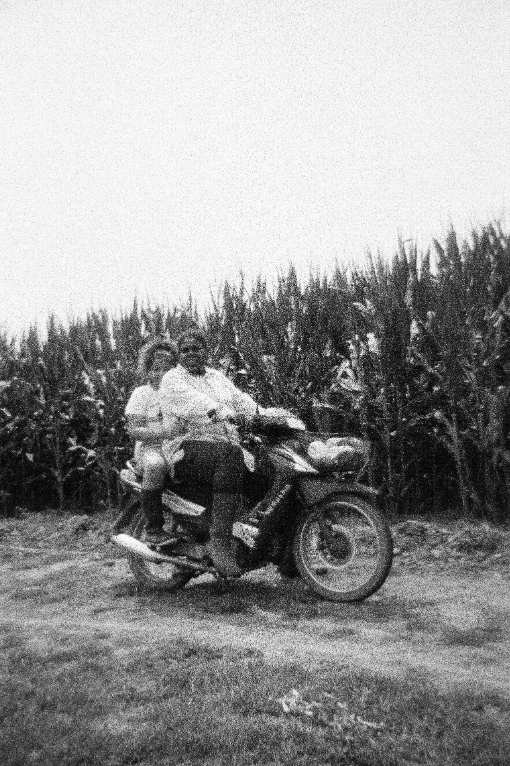
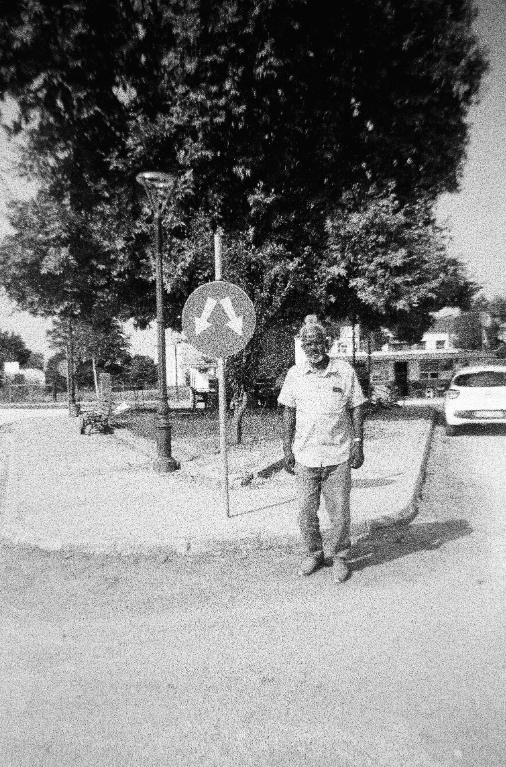
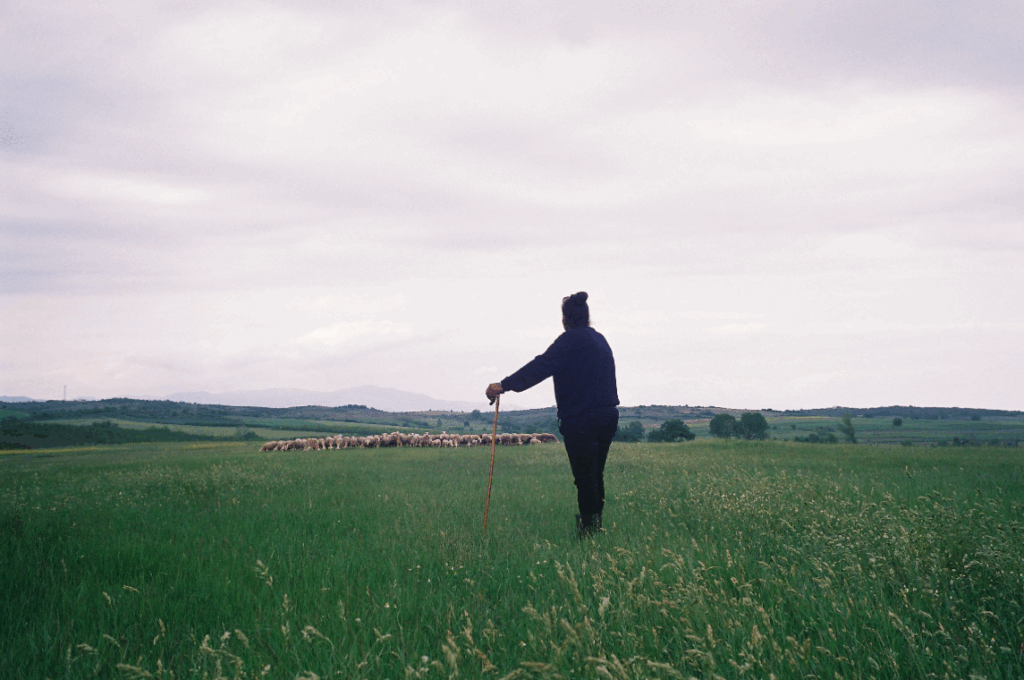
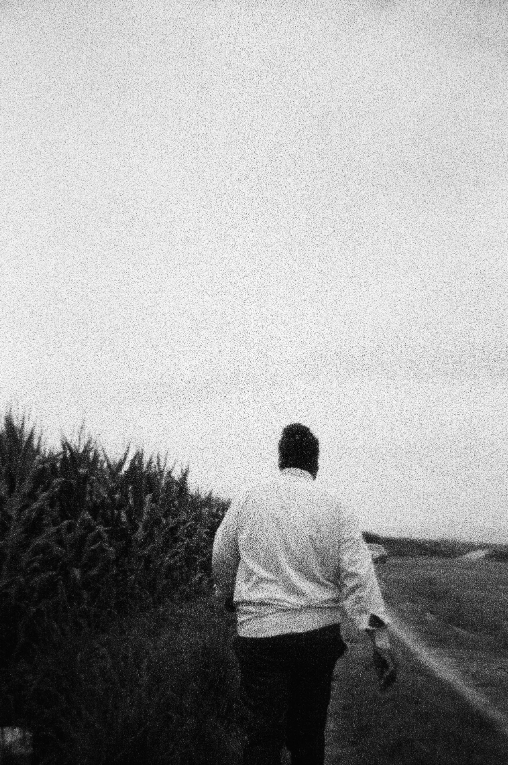
Gradually, the project found its rhythm not in the spoken word, but in shared silences—walking with locals along their daily paths through cornfields and pastures, outside formal infrastructure and narratives. Recording soundscapes. Observing gestures, routines, rituals, and relationships with animals. These subtle forms of engagement—non-intrusive, embodied, and durational—offered access to a different kind of archive: one rooted in presence, not explanation.
There is irony in walking through a place whose name signifies restriction. And that irony is not lost on the artists. The exhibition carries with it a gentle critique of the very assumptions they brought into the project—assumptions that Avato quickly unraveled.
In Avato, history is not presented. It is felt—sometimes withheld, sometimes diffused through motion, sometimes heard in the wind between stalks of corn. The result is not a statement, but a gesture of listening, of being with, of knowing when not to ask.
Info
Avato | An exhibition by Latent Community
June 14 – July 24, 2025
Mohammed Ali Museum
Mehmet Ali Square, 65110 Kavala, Greece