 ZOE LYMPERIS
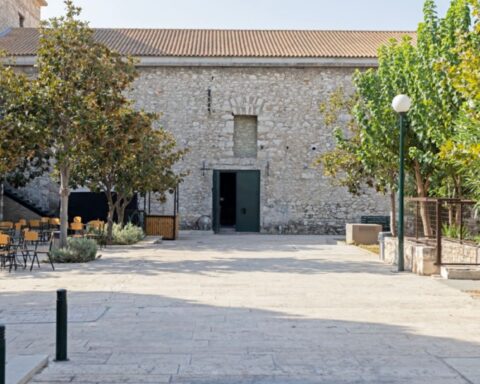
The first contemporary artwork to be permanently exhibited in an archaeological site in Greece is a human-like sculptural installation by British artist Antony Gormley. The work will be placed outdoors at the Archaeological Museum of Delos, marking the completion of the first donation by cultural organization NEON to the Hellenic Ministry of Culture.
This piece is a joint donation by NEON and the artist, following an invitation by the Ministry of Culture, with the shared aim of fostering deeper engagement between contemporary artistic creation and internationally renowned archaeological sites and monuments.
The original sculpture, titled RULE, was created by Gormley as a new commission by NEON for the exhibition SIGHT, which took place on the island of Delos from May to October 2019. RULE II (2019), the version now gifted, will be permanently exhibited at the archaeological site, acting as a symbolic point of dialogue between classical and contemporary culture.
The permanent installation of Antony Gormley’s work on Delos is the first in a series of donations NEON is making to archaeological sites where it has previously organized exhibitions, in collaboration with the local Ephorates of Antiquities. Over the course of its 12-year activity, NEON has worked with the Ministry of Culture to realize 11 exhibitions in archaeological and historic sites, aiming to offer new interpretations through the lens of contemporary art.
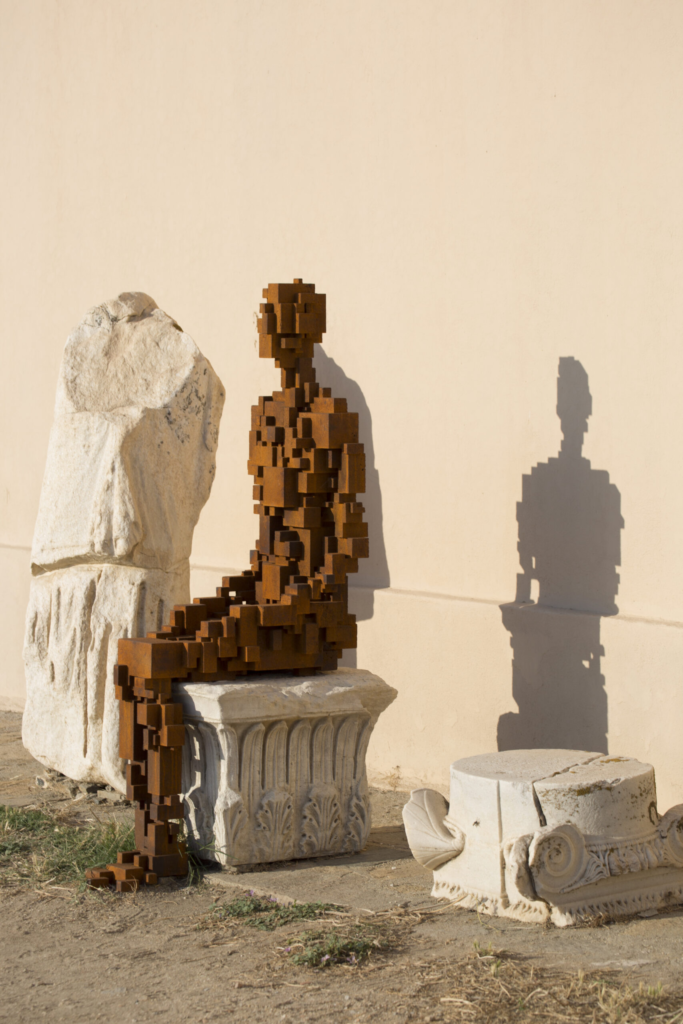
Photo © Natalia Tsoukala | Courtesy of NEON, Ephorate of Antiquities of the Cyclades, and the artist.
As Lina Mendoni, Minister of Culture, states: “The donation of the artwork RULE II by its creator Antony Gormley and the cultural organization NEON to the sacred island of Delos marks a significant milestone. It is the first contemporary artwork to be permanently exhibited in a Greek archaeological site. This anthropomorphic sculptural installation, created in 2019 as a NEON commission for the exhibition SIGHT on Delos, now returns to remain there permanently.”
“The donation carries deep symbolic meaning. It powerfully illustrates the harmonious coexistence of cultural heritage and contemporary creation. It is a testament to the ongoing dialogue between the two—with the latter constantly drawing inspiration from the former. This symbolism is particularly poignant given that the work is inspired by the sculptural masterpieces of Delos. Antony Gormley, an artist with a distinguished academic background in anthropology and art history, recognizes classical heritage as a constant source of artistic inspiration. We thank him for his decision to permanently install RULE II at the archaeological site of Delos.”
“At the same time, this is the first in a series of contemporary art donations from NEON to the Ministry of Culture, intended to become permanent installations at archaeological sites where they had previously been presented as part of temporary exhibitions. In this way, the importance of synergy between public policy and private initiative is underlined—for the promotion of our cultural heritage and its creative coexistence with contemporary art. To NEON’s founder, Dimitris Daskalopoulos, we express our heartfelt gratitude for his generosity and his always sincere intentions.”
Dimitris Athanasoulis, Head of the Ephorate of Antiquities of the Cyclades, adds:
“The iron seated figure atop a capital serves as a synecdoche of Antony Gormley’s SIGHT exhibition, in which the artist’s sculptures were organically integrated into the archaeological site, offering in 2019 a new reading of Delos. This subtle cubist figure, now placed outside the museum, will stand as a lasting visual perspective—connecting the ancient glory of Apollo’s island with the community of the 21st century. This is made possible thanks to the generous contribution of the artist and NEON, affirming the initiative of the Cyclades Ephorate of Antiquities in co-organizing this historic exhibition.”

Dimitris Daskalopoulos, founder of NEON, states: “For many years now, both as a collector and as the founder of NEON, I have supported human creativity and strived to ensure that works of art—especially contemporary art—are accessible to the wider public. I believe that art holds meaning only through its engagement with the world. When contemporary artistic creation enters into a harmonious dialogue with our antiquities, new interpretations emerge—ones that can move, inspire, and awaken our collective consciousness.”
“This is the kind of opportunity that NEON’s collaboration with the Ministry of Culture and the Ephorates of Antiquities has repeatedly offered, through exhibitions of contemporary art in archaeological and historical sites. I would like to warmly thank Antony Gormley for responding to our invitation for this donation. Now, a work of contemporary art stands in permanent dialogue with the culture of the past, inviting new ways of perceiving the values of this land, a place of unique energy.”
“SIGHT”: The First Contemporary Art Exhibition Presented at the Archaeological Site of Delos in 2019
SIGHT was the first contemporary art exhibition ever to be presented at the archaeological site of Delos, in 2019. It was the result of a collaboration between NEON, the Hellenic Ministry of Culture, and the Ephorate of Antiquities of the Cyclades.
Antony Gormley presented 29 cast iron human figures, including five new site-specific commissions created especially for the exhibition. Scattered across the sacred island—from the entrance of the commercial harbor to the summit of Mount Kynthos—within the archaeological site, the Stadium, the Theater, the ancient shops, and the Museum, Gormley’s sculptural forms “restored” a human presence, creating a physical and symbolic path that led back to the mythology and human activity of Delos’s ancient past.
Antony Gormley is internationally acclaimed for his sculptures, installations, and public artworks that explore the relationship between the human body and space. His work has expanded the possibilities of sculpture since the 1960s, engaging in a critical dialogue with his own body as well as those of others—posing fundamental questions about the human condition, our place within nature, and our connection to the cosmos. Gormley continually seeks to define the space of art as a site of becoming, where new behaviours, thoughts, and emotions can emerge.