 Pepi Nikolopoulou
Its beauty can hardly be described and told in a few lines. Its villages, its harsh yet warm aspect, its breezes that push you away from its sandy beaches to its northern points as if they know its secrets, its marble art with its prominent position on the world map but also with the miracles of its Virgin Mary that gather believers and non-believers but curious about the power of this image.
Of all these, however, the element that I would put first on the list of those that will make you love this island is its villages.
From the otherworldly landscape at Volax to the Pyrgos of Giannoulis Halepas and Nikiforos Lytras, the true heart of Tinos, the Sacred Virgin’s isle, beats in its mountains.
Well hidden in the shadow of the Virgin, the villages of Tinos remained undiscovered and protected from greedy eyes for the longest time. However, a gastronomic renaissance that began unexpectedly on the island a decade or so ago came to lure travellers hungry—literally and metaphorically—for something new to different and sometimes even inaccessible destinations. Many an eye was opened to the boundless charm of the often wild landscape.
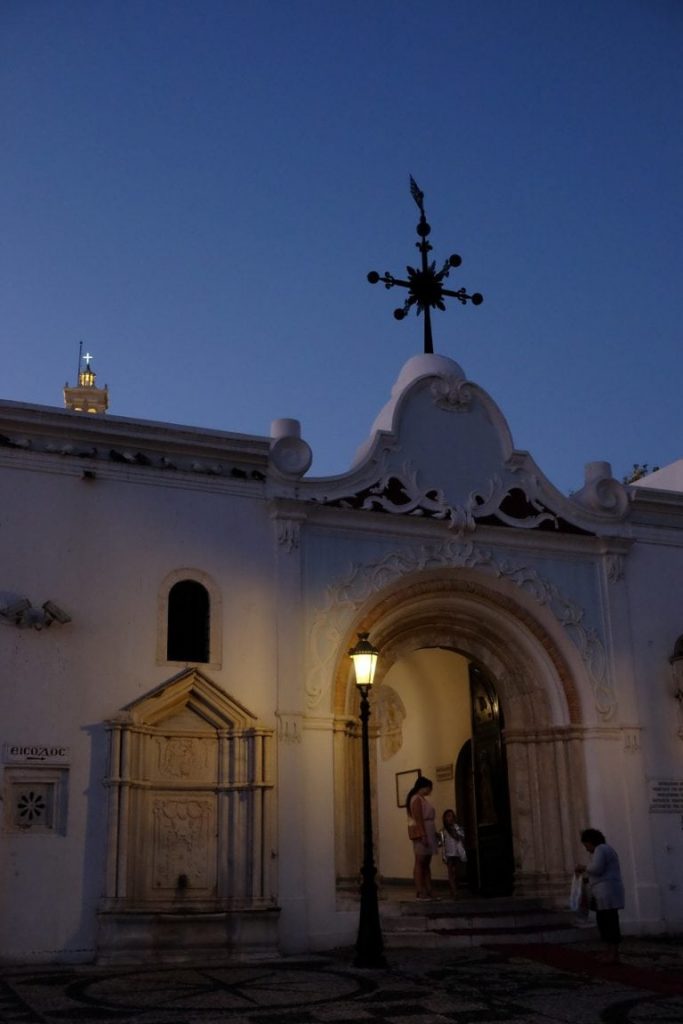
This rebirth didn’t only pull back the curtain on Tinos’ natural beauty, it also gradually revealed the particular characteristics of the individual villages and their special relationship with marble carving, basket weaving, architecture, the arts and letters. And so, since the heart of Tinos beats in its enchanting villages, we shall give you an idea of the unique “personality” of each.
Pyrgos

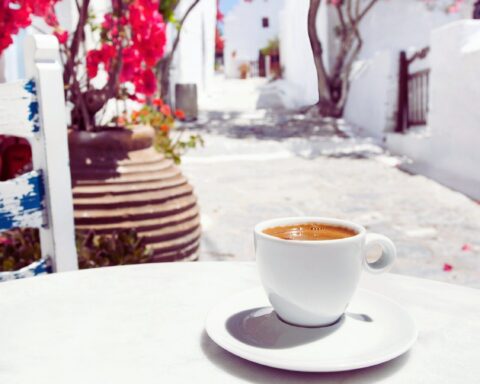
After enjoying a coffee under the imposing plane tree in the square and boosting your energy levels with a piece of the most celebrated galaktoboureko in the Cyclades, it’s time for a wander through the narrow streets of Tinos’ largest village. This traditional settlement, with its characteristic Cycladic architecture and outstanding marble work (elaborate fonts, marble fountains, lintels and terraces, etc.), also has a museum dedicated to marble. Also worth a visit are the Museum of Tinian Artists and the home of Giannoulis Halepas, the tragic and famous sculptor, which is now a listed building.
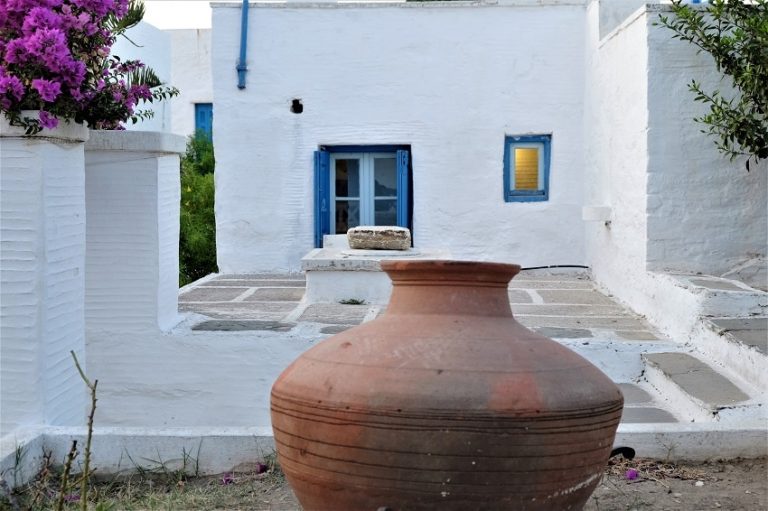
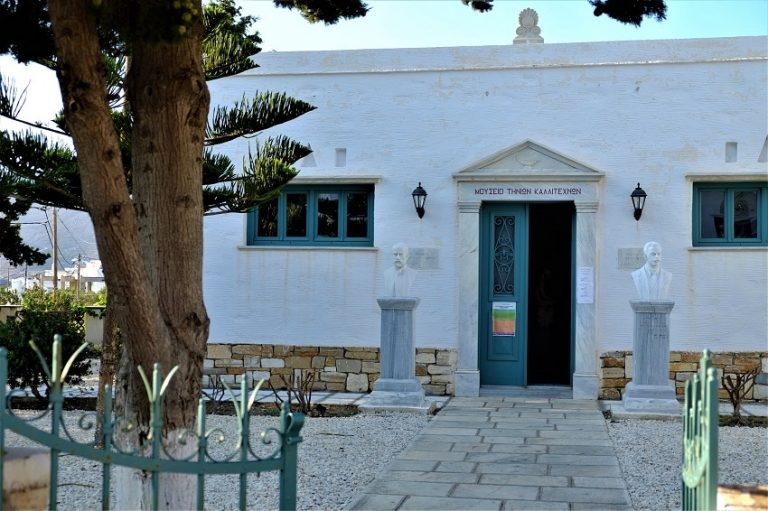

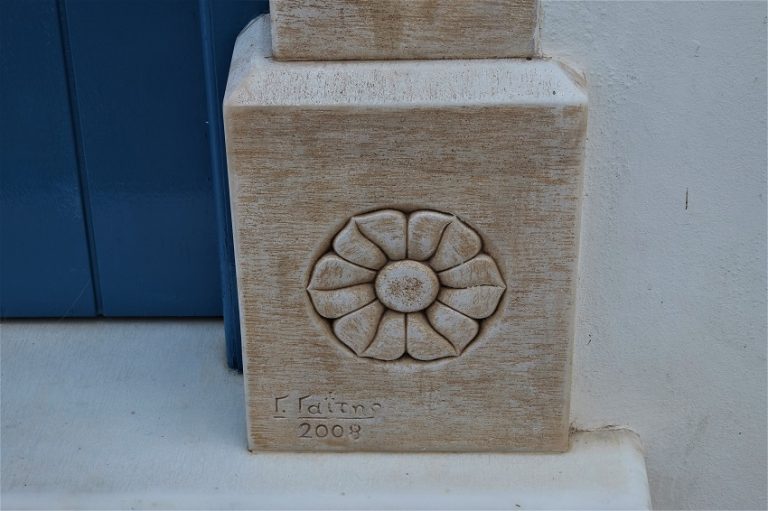
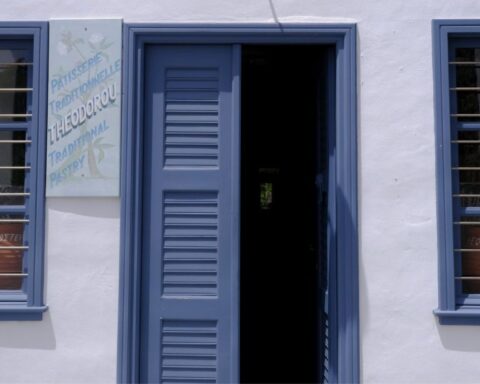
The afternoons are bustling with life and if you are lucky enough to catch some live music, grab a chair there in the square because in a while it won’t be free. Here you can find the Duke’s Bakery which has been baking hot and delicious bread since 1894.
Volax

Perhaps the most Instagrammable village not only on Tinos, but in the entire Cyclades, the village’s most remarkable feature, and the origin of its name, are the enormous boulders that surround it. These granite rocks, which rose up from deep within the Earth, can make the visitor feel they have left their home planet behind. They are not remnants of a stone war between ancient gods and giants, but volcanic magma that was gradually pushed from the bowels of the earth to its surface. Over time, erosion and weathering have given them their characteristic round shape. The stones are extremely large in size and are spread evenly over a large area surrounding the settlement.
But as one moves towards the centre of Volax, one discovers a charming, traditional settlement whose abandoned houses have something quite unique: the verses written on their doors and window shutters. This was also the basket-weaving centre of the island, and the craft survives in Volax to this day. In the nineteenth and twentieth century Volax was the centre of basketry in Tinos, sending its products even to the wealthy neighbouring island of Syros. The basket makers took on, for example, large orders for the strawberry harvest in Attica.
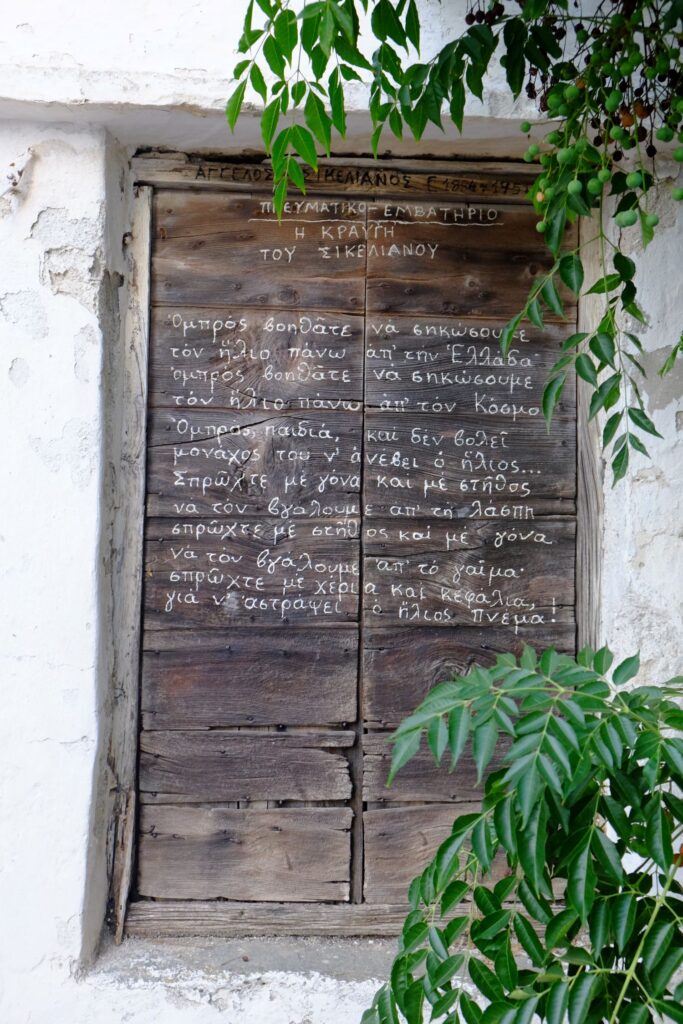
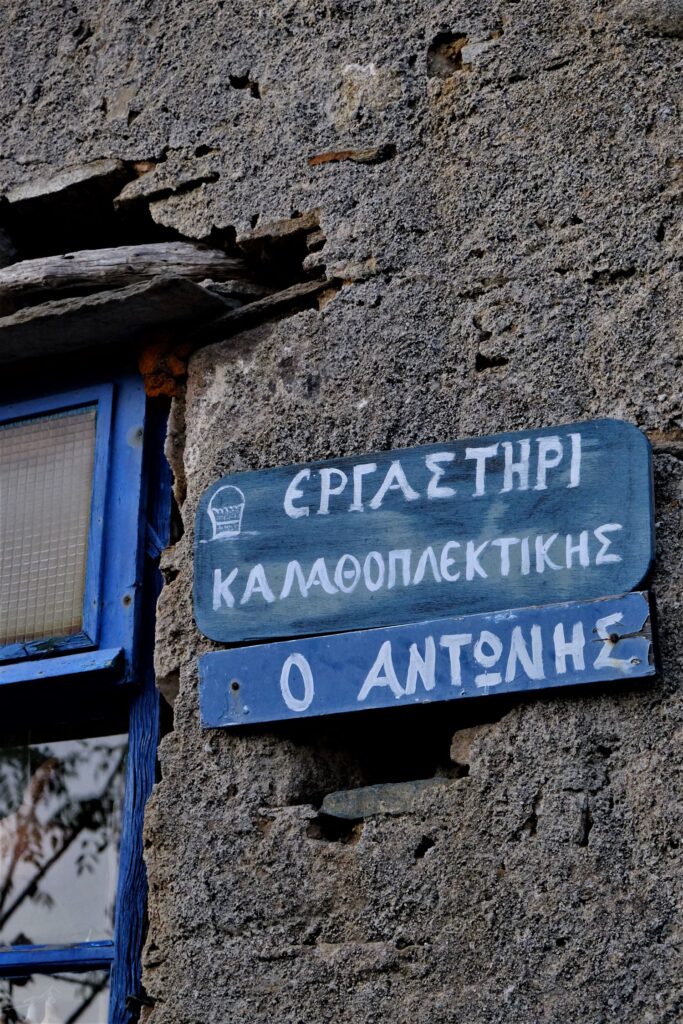
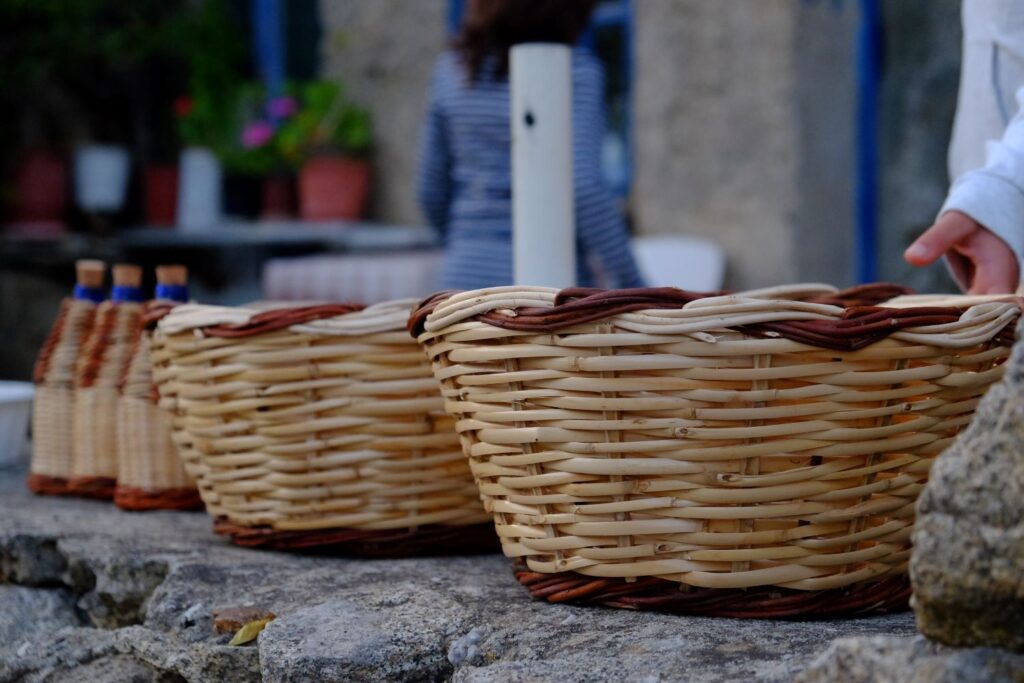
Even today, baskets are still produced in Volax. Basket weaving, poetry and a unique landscape – a phenomenon unique in the world: round rocks are scattered among barren ground. An unprecedented and highly impressive picture that you arrive at after having wandered among the verses of Kavadias, Cavafy, Sikelianos, Seferis. An extremely wonderful and captivating setting.
Dyo Choria [Two villages]
If you want to be enchanted by a magnificent view, then you should head to Dyo Choria, which used to be two separate villages—hence the name—on the slopes of Kechrovouni. Leave the view behind you and walk inwards, towards the centre, and you will find yourself in the square with its plane trees, fountains, paved paths and mediaeval arches.

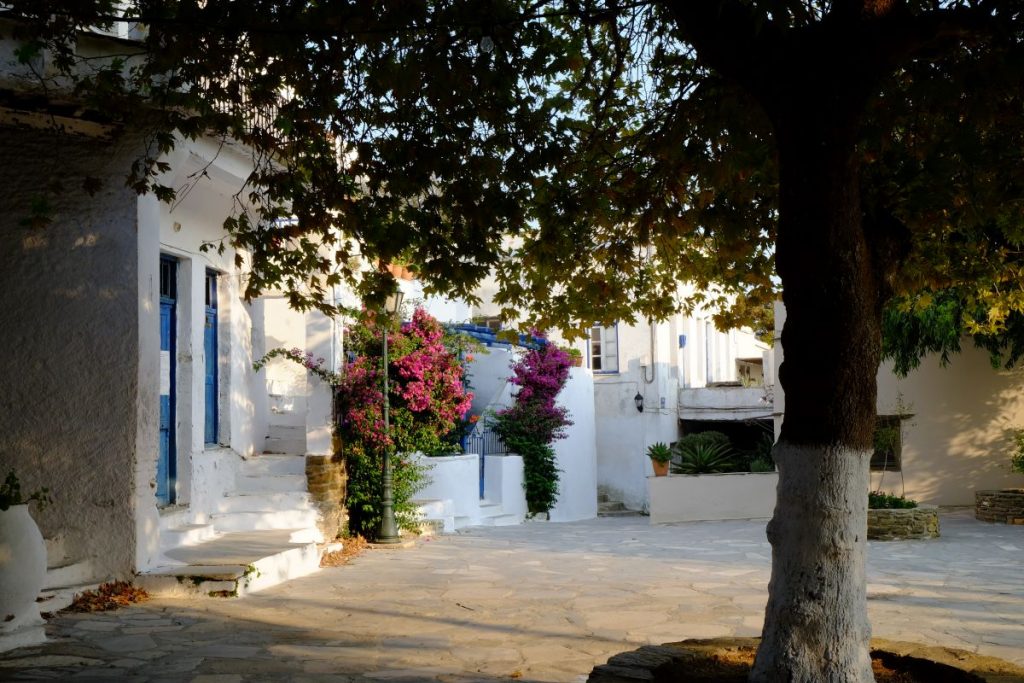

Built on the slope of Kechrovouni, at an altitude of 380m, although two separate villages, today they are united and proud. They have one of the most beautiful squares of the island, in the shade of the plane trees, while it is worth strolling along the paths with the picturesque medieval arches.
You’ll hang out for a coffee and why not a quick game of backgammon at Kapaki while the kids play around the square. The village you want to visit every afternoon – for its tranquility, its hidden corners and the unique way it surrenders to you.
Kambos
Art lovers simply have to take a stroll from Kampos to a museum dedicated to one of the most highly-acclaimed living Greek artists. Visitors can take a tour around the inner world of Costas Tsoclis, as it unfolds in what was once the village’s primary school.
Kardiani
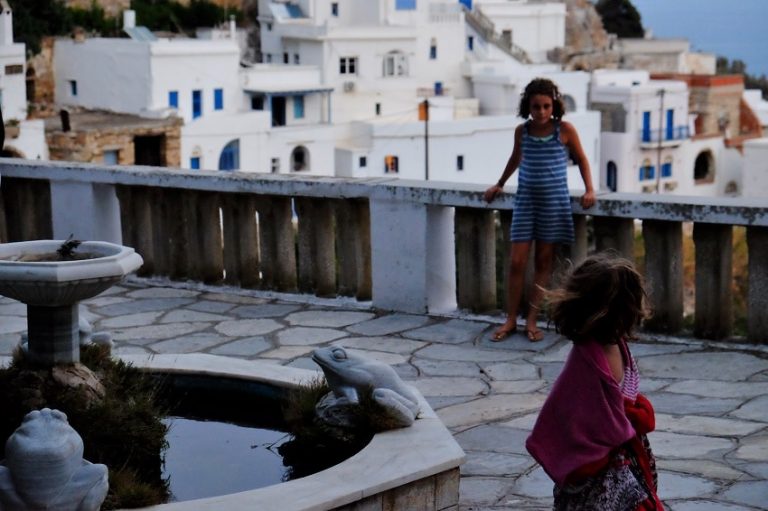
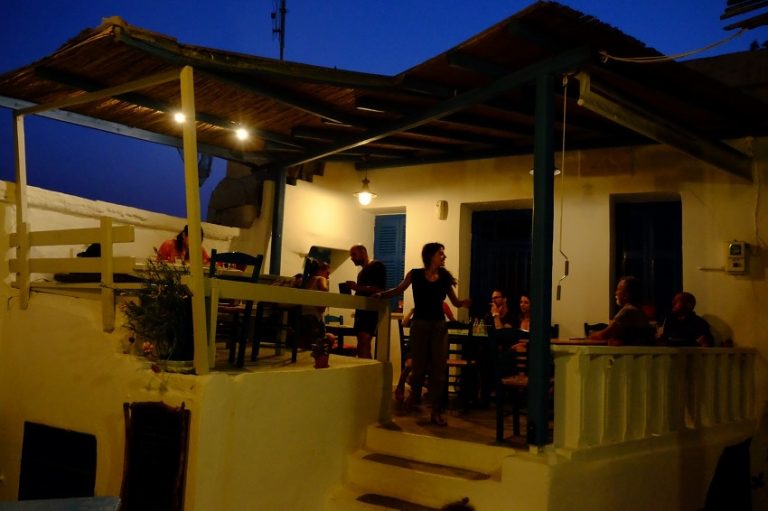
Favorite balcony of the Aegean Sea. Passing by and intending to stay for a while, the Heartland drags you into a dance of its own. It is 16 km from Chora and is the first village of Exo Meria, perched on the slope of the mountain “Pateles”.
3 large churches stand out: Agia Triada at the edge of the village, the Assumption of Theotokos in the centre, and at the other end, Kioura, from whose foundations a cool spring gushes forth.
Among them, hidden in the small alleys, the tavern Dimitra, which with its rakomela, delicious stews and smiles gave us sweetness and Greek hospitality – the hearts meet and rejoice.
Falatados
Having admired the emblematic church of the Holy Trinity with its characteristic blue dome, stop off at “Sketch House”, the only museum in South-eastern Europe dedicated to cartoons.
Ysternia
For those dedicated to the quest for the most beautiful sunset, Ysternia’s panoramic view over the Aegean Sea and the surrounding islands are second to none. It is also home to the ruins of the island’s famous windmills.
Kalloni
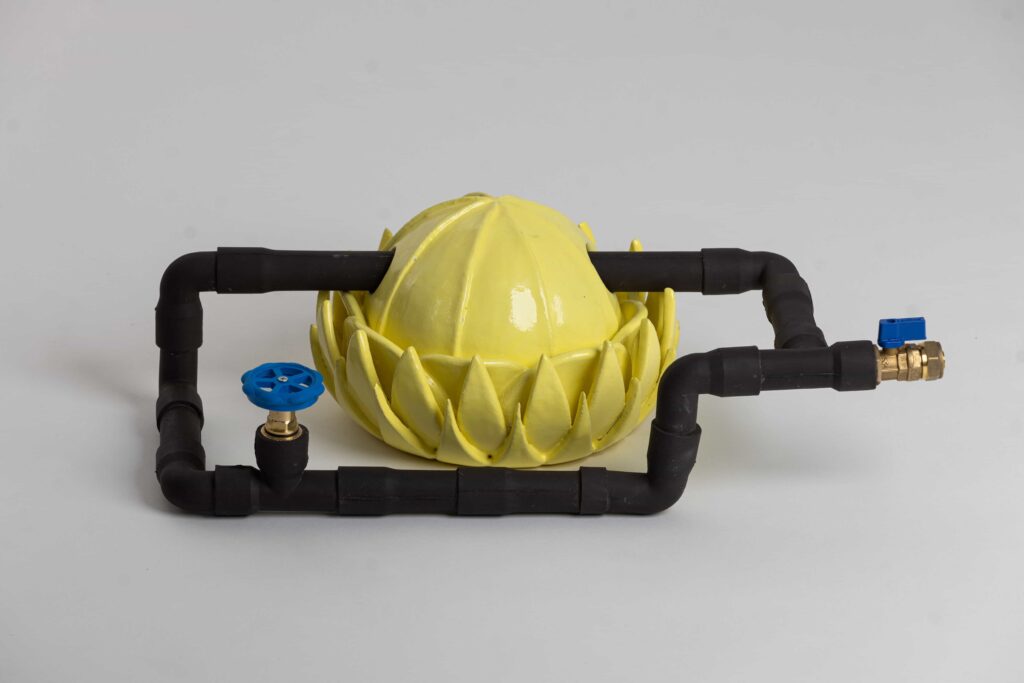
Seek out the famous Tinian artichoke, one of the island’s most exquisite gastronomic products, and you certainly won’t regret it. It is the main ingredient in the anginaropita, a traditional artichoke pie that’s pretty much exclusive to Tinos.