
 ZOE LYMPERIS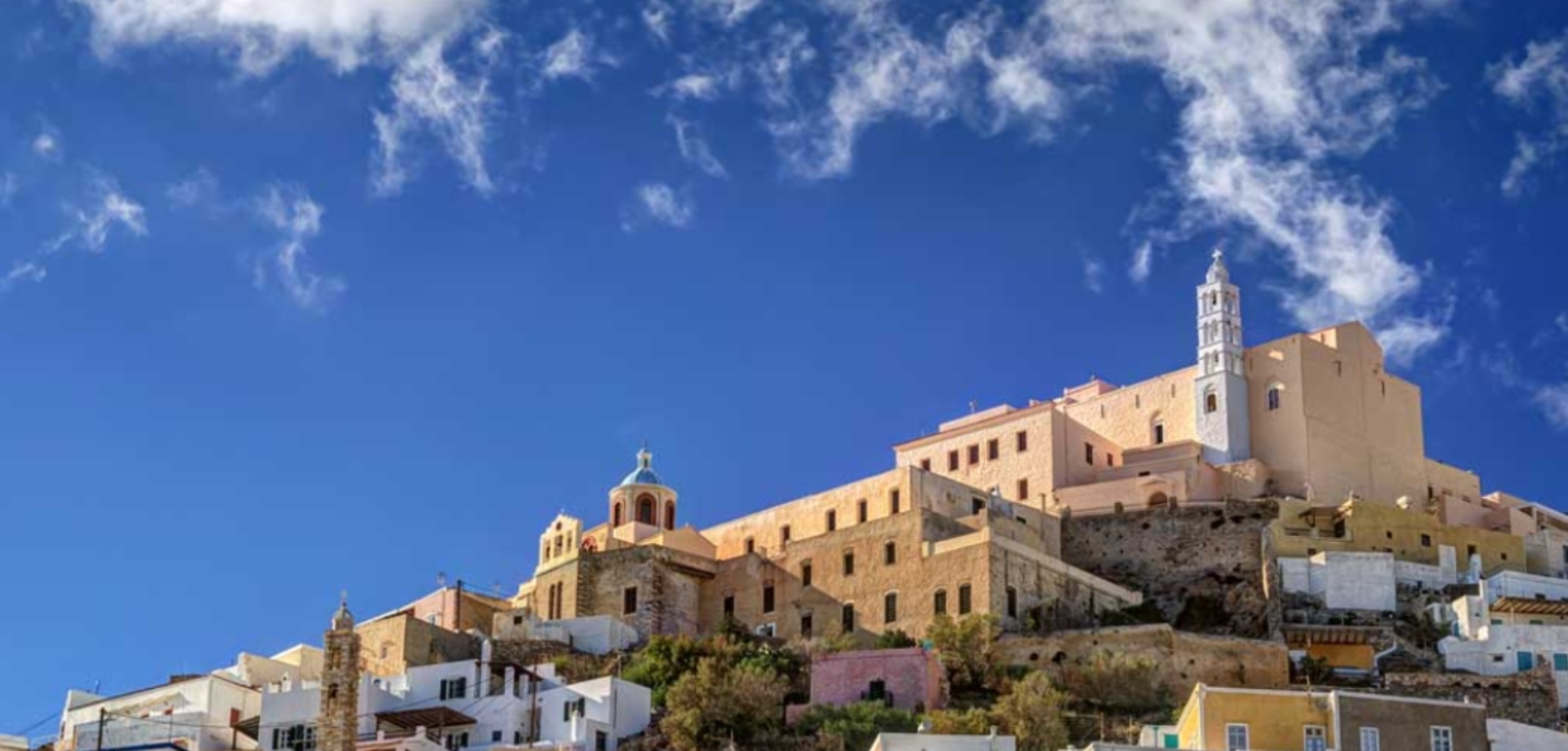
Anyone who visits Syros’ alleys never forgets them. The island’s wild beauty, Cycladic charm, unparalleled architecture, and the grandeur of Ermoupoli are just some of the things that set it apart, as a unique place where visitors feel they could live permanently. That’s why you’ll meet people who have chosen Syros as their permanent residence, despite not being originally from there. These were tourists, who came to visit, but fell in love with the island and decided to make it their home, where they would create memories and amass experiences.
Thus, Syros, the capital of the Cyclades, has tourists, locals, and students from the School of Engineering – although students here are often more excited about the island than about their studies. Beyond the obvious summer season, Syros is also an ideal all-season destination, the best choice for Easter holidays, thanks to the coexistence of the Orthodox and Catholic traditions, which reflect the cosmopolitan and open spirit of the island across the Cyclades.
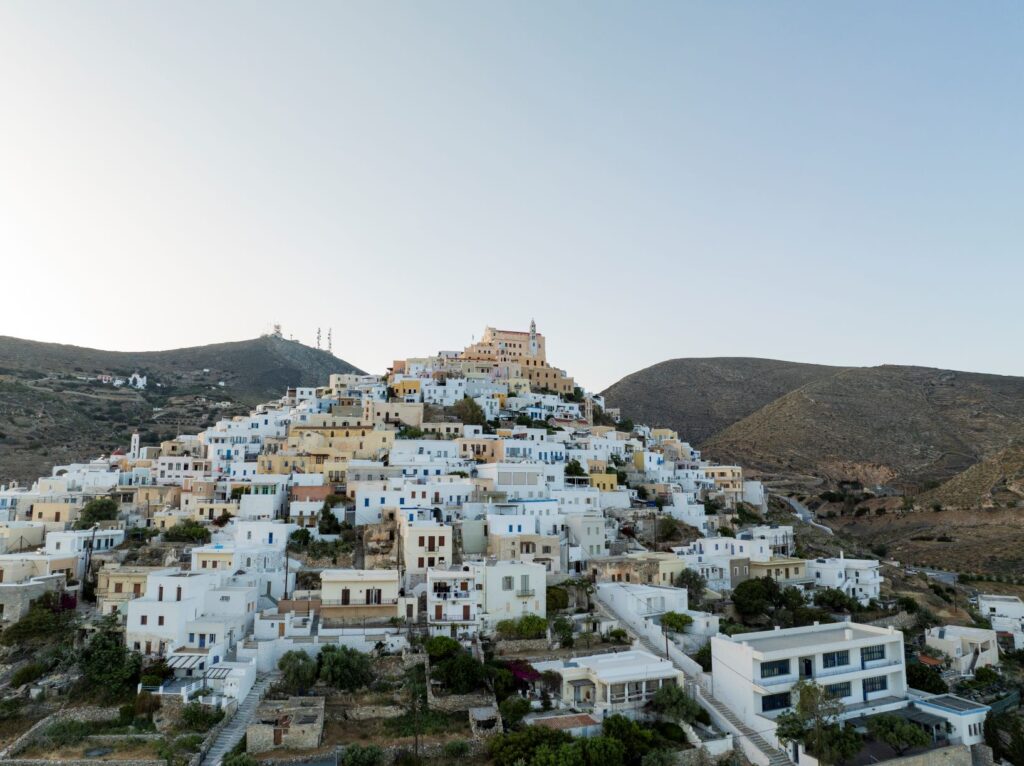
The island of contrasts: From Ano Syros to its seaside villages
Walk up to Ano Syros to:
– Reach the Catholic Cathedral of St. George and enjoy the view extending all the way to the islands of Tinos, Delos, Paros and Naxos.
– Get lost in the alleys, where you’ll witness postcard-like scenes with climbing bougainvillea vines and white-washed steps.
– Stop at the Piazza (officially Don Stefanou Ioanni Street) for coffee and a meal.
– Visit the Markos Vamvakaris Museum to learn about the life and work of the “Patriarch of Rebetiko” through his personal belongings and photographs.
– Explore the Traditional Professions Exhibition, showcasing tools and equipment once used in daily life, like carpentry tools, agricultural equipment, and a beekeeper’s smoker.

Villages and Sights You Shouldn’t Miss
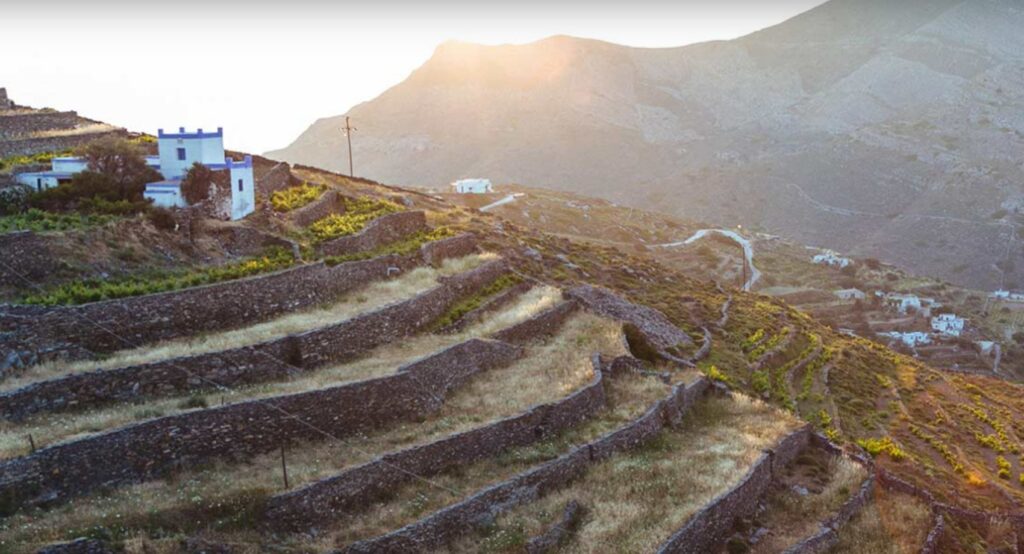
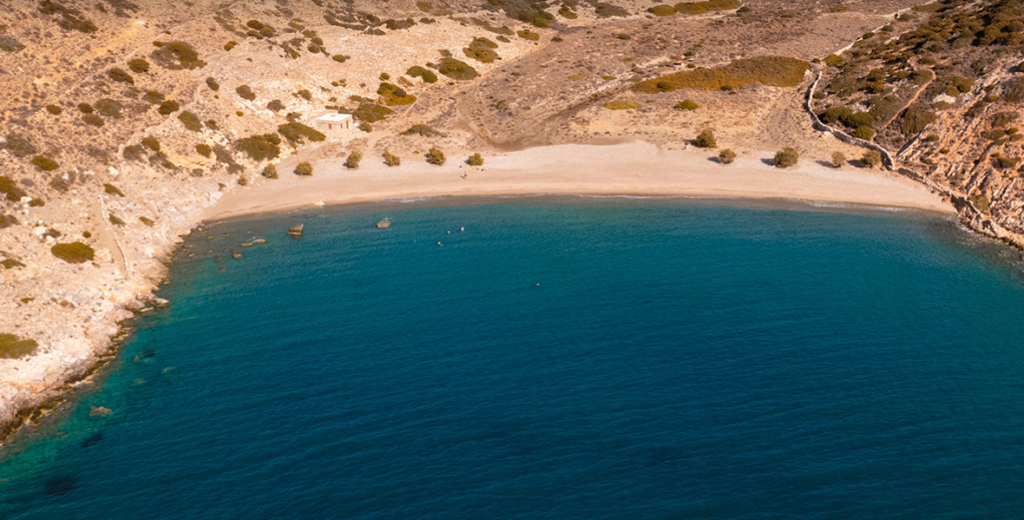
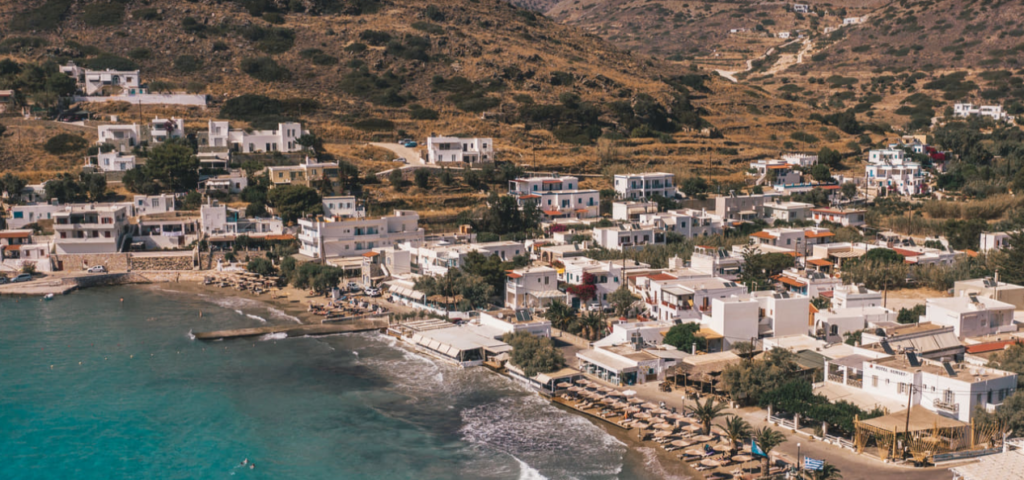
The villages of Mytakas, Papouri, Richopo, Platy Vouni, Chartiana, and San Michalis seem frozen in time. Meanwhile, the beaches of Apano Meria, like Varvarousa, Aetos, Marmari, and Gria Spilia, will undoubtedly enchant every visitor.
Poseidonia – a journey to the glory of another era
Previously known as Della Grazia, from the Catholic Church Madonna de la Grazia, it eventually became known by the name of the ancient Poseidonia dedicated to the god Poseidon, and is Syros’ aristocratic resort.
The area still boasts summer villas with turrets and gardens that transport visitors to a glorious bygone era. The Orthodox Church of St. John, the Catholic Church of St. Peter, the Agkathopes beach with its sea lilies, beaches like Fetouri, Voulgari, and Komito, as well as the tennis court and Poseidonia Club, attract numerous vacationers, especially during the summer months.
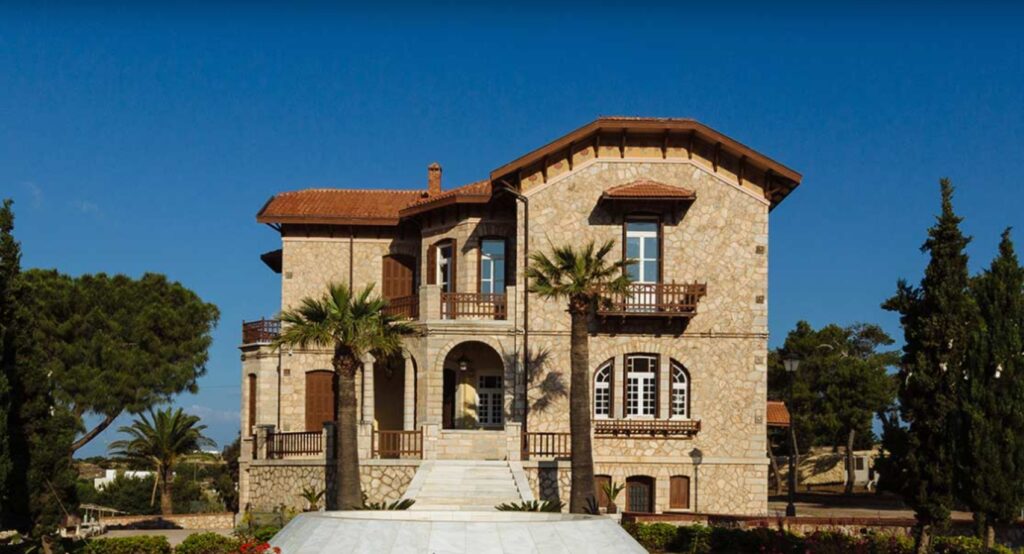
Azolimnos with a view to Tinos, Mykonos, and the islet of Aspro
Be sure not to miss the Catholic Churches of the Ascension and St. Francis, while Cape Fokiotripa, just a 15-minute walk from the beach to the south of the village, offers opportunities to observe the thriving marine life, including seals, cormorants, gulls, and Eleonora’s falcons.
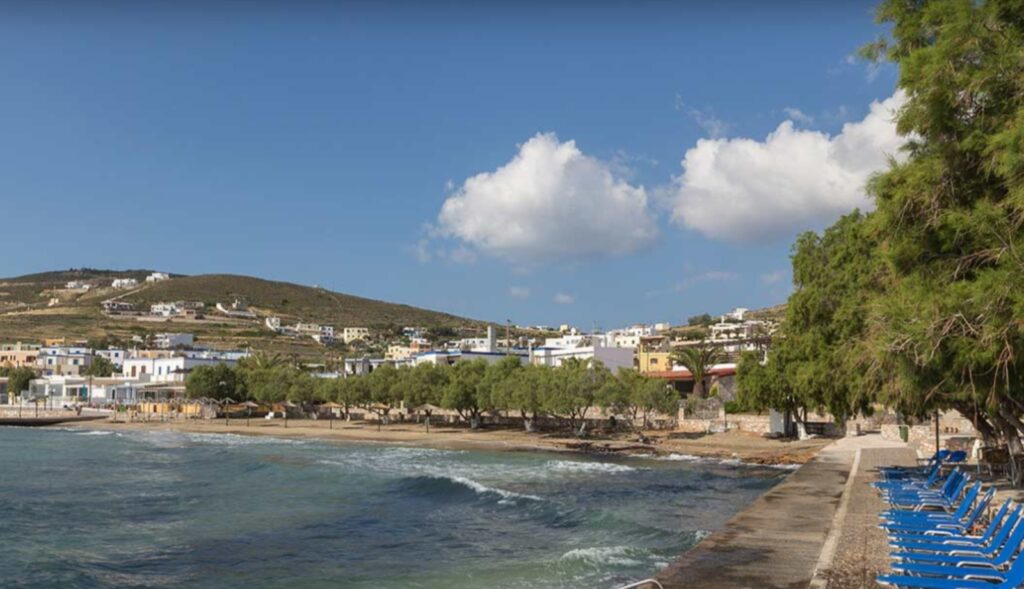
Ermoupoli, naturally – a vast open-air museum of the grandeur of Syros
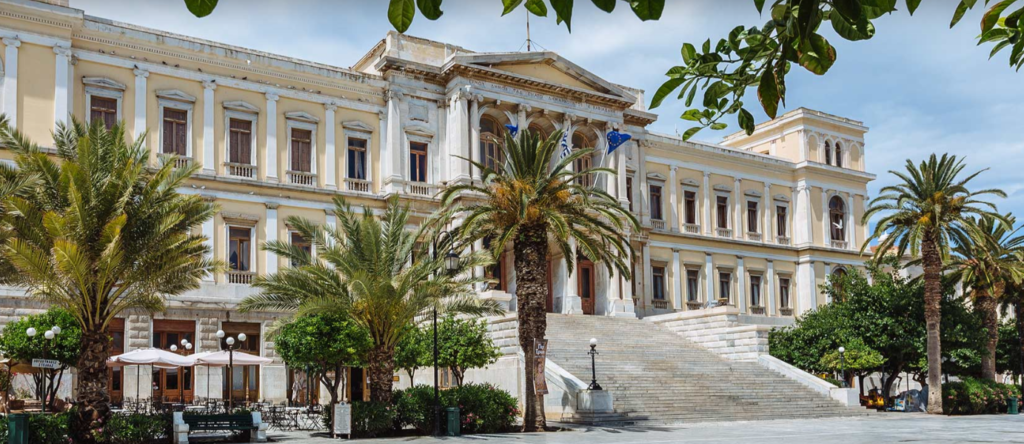
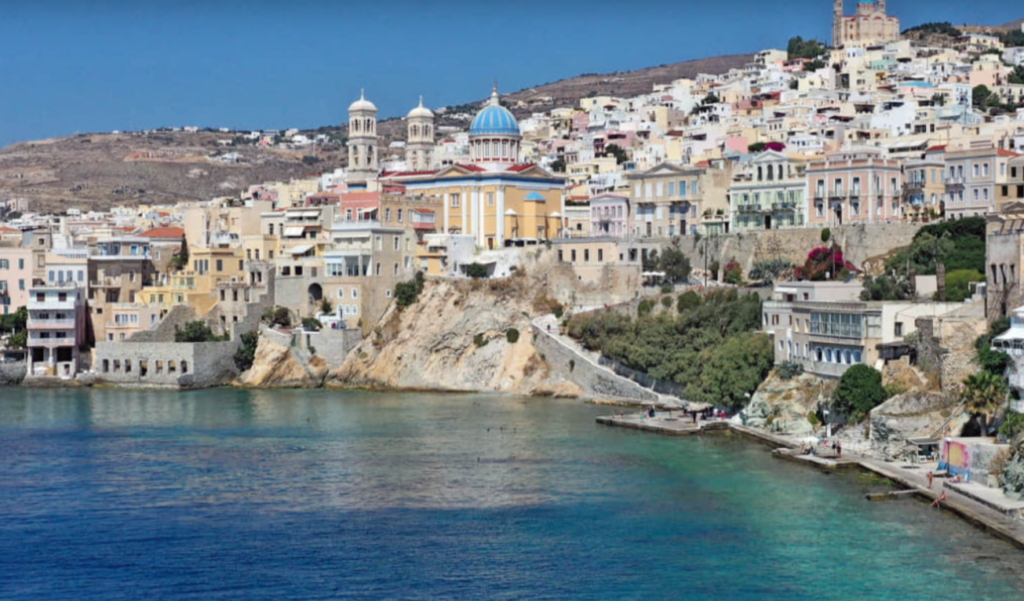
Ermoupoli, Syros’ main port, is an open-air museum that deserves to be explored from end to end, with its majestic Town Hall in Miaoulis Square, the Apollo Theater, the aristocratic mansions and the Church of St. Nicholas of the Rich in the Vaporia district.
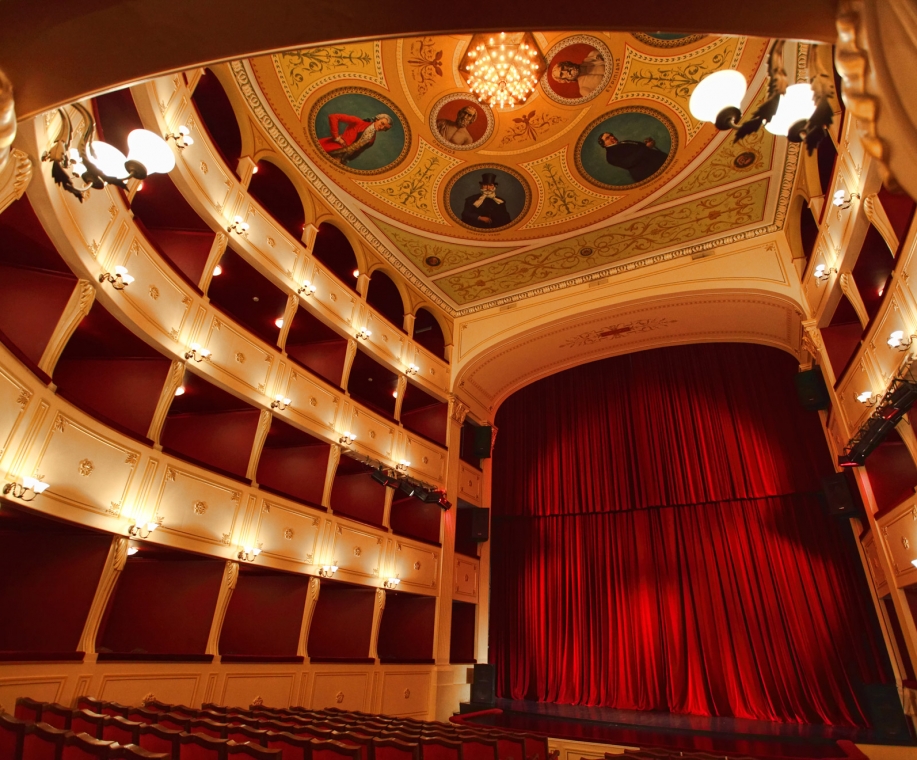
The Apollo Theater, often called “La Piccola Scala di Milan”, is a proud testament to Ermoupoli’s rich cultural heritage. One of the most important sites of Syros, it was designed and built in 1864 by Italian architect Pietro Sampo. It was inspired by four magnificent Italian buildings, including La Scala di Milan, and it has adorned the heart of Ermoupoli ever since.
Chroussa for peace and exploration
Chroussa is a picturesque village with quaint chapels, majestic mansions and traditional houses, Orthodox and Catholic churches, alleyways and trails, emerging through a magical pine forest, worth of exploring. Just 8.5 km from Ermoupoli, Chroussa is a perfect oasis of peace and serenity, hosting numerous cultural events throughout the year.
The picturesque fishing village of Kini with the aquarium
Kini is a tourist seaside village where visitors can enjoy authentic Syrian flavors in the tavernas along its small harbor. From its golden beach, one can see fishermen docking their caïque fishing boats or take a boat to one of the magical small beaches in northern Syros, and to the beaches of Delfini and Lotos.
The aquarium in Kini is a favorite attraction for both young and old, offering visitors a glimpse into the Aegean’s marine life.Other notable sites in the area include the Catholic Church of the Assumption of the
Virgin Mary, the Monastery of St. Barbara, the monument of “Panagia Gorgona” (Our Lady the Mermaid) at the harbor, and the Museum of Fishing Boats, Marine Life, and Shells. If you’re lucky enough to be on the island on June 29, don’t miss the custom of Fotarides in Kini, a unique celebration in honor of St. Peter.
Vaporia, the aristocratic district of Syros with its “Asteria”
Vaporia is a stunning, picturesque area known not only for its architectural beauty but also for the beach called Asteria, ideal for swimming. Visitors in the area should also stop by the Church of St. Nicholas the Rich, which stands majestically with its towering bell towers.
The Syrian flavours you won’t forget
The Loukoumi sweet, with its roots in Asia Minor, was first introduced in Syros in 1832, brought by refugees from the island of Chios. In 2019, the Syros’ loukoumi was included in Greece’s National Inventory of Intangible Cultural Heritage. Available in flavors like rose, mastic, bergamot, rose sugar, tangerine, almond, pistachio, walnut and coconut, it’s a popular accompaniment to Greek coffee and the island’s most famous traditional product.

Chalvadopita (nougat pie) is another sweet brought by refugees from Chios and Psara after the Greek Revolution and is the second most popular traditional product of Syros. It resembles a pie with a sticky, stringy filling made from ingredients like egg whites, honey, sugar, glucose, vanilla extract and whole almonds.

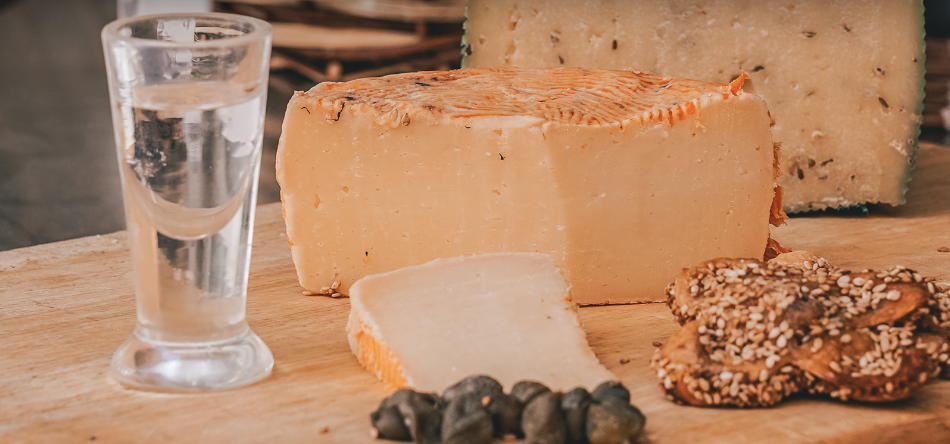
The San Michalis cheese, from the village of the same name in northern Syros, has been a Protected Designation of Origin (PDO) product since 1996. It’s a hard, yellow cheese made from pasteurized cow’s milk, reminiscent of Italian parmesan with light aromas of hazelnuts and other nuts. San Michalis cheese is made from milk of cows fed with herbs in the mostly arid area of Apano Meria of Syros and is matured for 4 to 8 months. It’s typically served as a table cheese or grated over pasta.
Other traditional products of Syros include unique herbs and aromatics, like capers, which grow wild on steep cliffs and barren lands in the Apano Meria region. Syros’ capers have a distinct flavor and texture, thanks to the island’s sunlight, lack of rainfall and sea breezes.
Petrota are soft cheeses made from pasteurised sheep’s or goat’s milk sold in small cheese wheels. Its name comes from the stones (petres) used by the locals for milking the goats. It is known for its low fat content and distinctive taste.
The most distinctive “experiences” in Syros
Diving in the Underwater Seascape
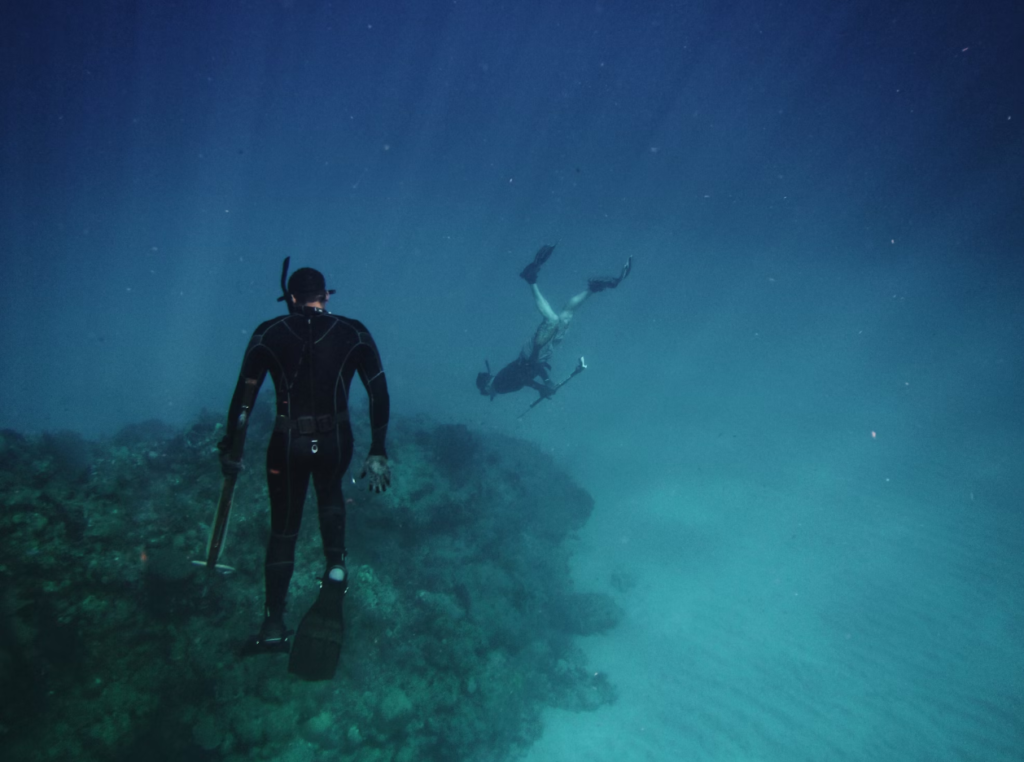
The seascape of Syros is teeming with underwater life, shipwrecks, reefs and caves, certain to impress any sea lover. The island offers three diving schools for both beginners and advanced divers, along with sailing equipment, giving everyone the chance to explore the enchanting world of the deep blue sea.
Wine Tasting and Vineyard Tours
You can visit one of Syros’ wineries individually or as part of an organized tour. Whichever you choose, you’ll meet local producers and hear fascinating stories about the history of winemaking and viticulture in the area.
During a wine tasting in Syros, you’ll sample wines from local varieties or others common across the Cycladic islands, always accompanied by local cheeses and other delicacies.
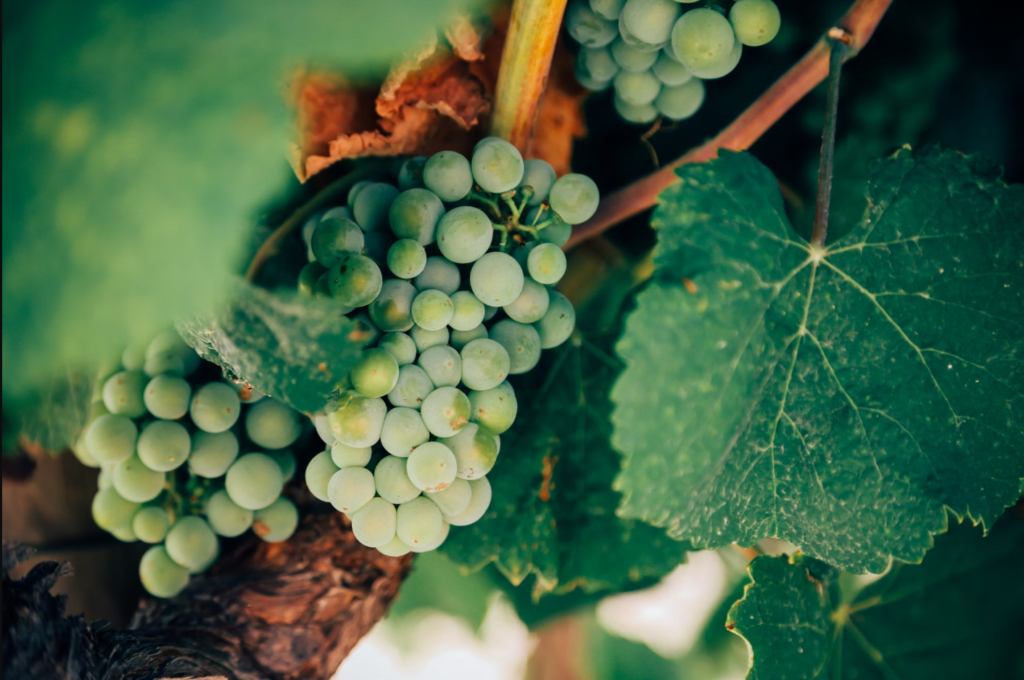
Despite its relatively mountainous terrain, with an average elevation of less than 400 meters, Syros may not seem like a typical winemaking destination. However, its vineyards produce excellent quality grapes, especially in the dry, rugged northern part known as Apano Meria, which is one of Europe’s oldest wine-growing regions. Vineyards here have been cultivated for centuries on the seemingly barren land of Apano Meria (often on Cycladic-style terraces), while it is the area where local have been producing many of the island’s homemade wines.
Apart from discovering the wine culture of Apano Meria, you can also visit wineries in southern Syros, in areas like Chroussa, Parakopi and Pagos.
Exploring Syros’ Quarantine Station
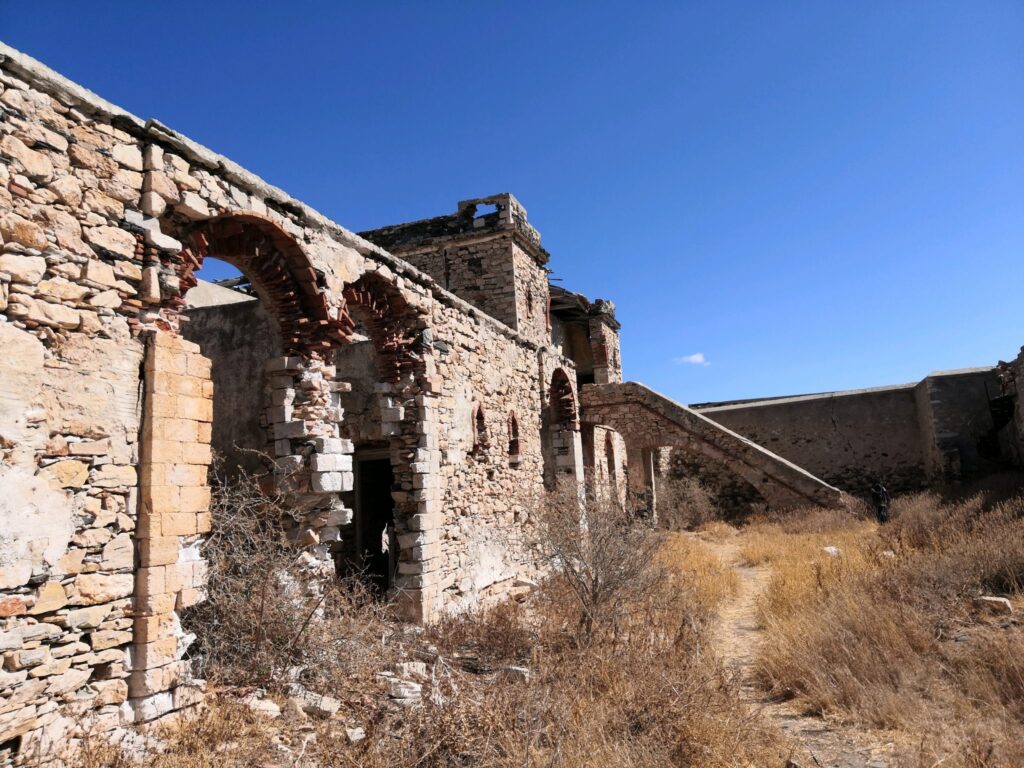
The Quarantine Station of Syros is a historical landmark, serving as a refuge and quarantine station over the years. It was built in 1839 under the supervision of Weiler, originally functioning as a quarantine facility for travelers who were required to stay there for at least 7 days to prevent the possible spread of infectious diseases. During the Cretan Revolution of 1866, it was used as a shelter for refugees from Crete. Throughout the 19th century and until the post-war years, it also served as a prison for inmates. In 1908, it was converted into an asylum for the mentally ill, and after the Greek Civil War, it was used for political prisoners.
Today, the Quarantine Station is an abandoned stone building complex located at the southern edge of the harbor, with several buildings known as “Lazaretta,” which bear witness to the habits and hardships of a bygone era.
Walking through the Shipyard/Tarsanas
The Syros shipyard offers a glimpse into the island’s maritime history, linked to the traditional art of wooden shipbuilding, which continues to thrive today, preserving a rare craft in Greece.
Associated with the island’s naval tradition, the Tarsanas (shipyard) first appeared in the mid-19th century, just south of the large Neorion shipyard, benefiting from the smooth gradient of the land that allowed for the hoisting and launching of initially small boats, as well as larger vessels as time went by. To this day, both the Tarsanas of Mavrikos and the shipyard of Tzortzis, as they were known in the past, continue the long shipbuilding tradition with new modernized equipment.