 KATERINA PARRI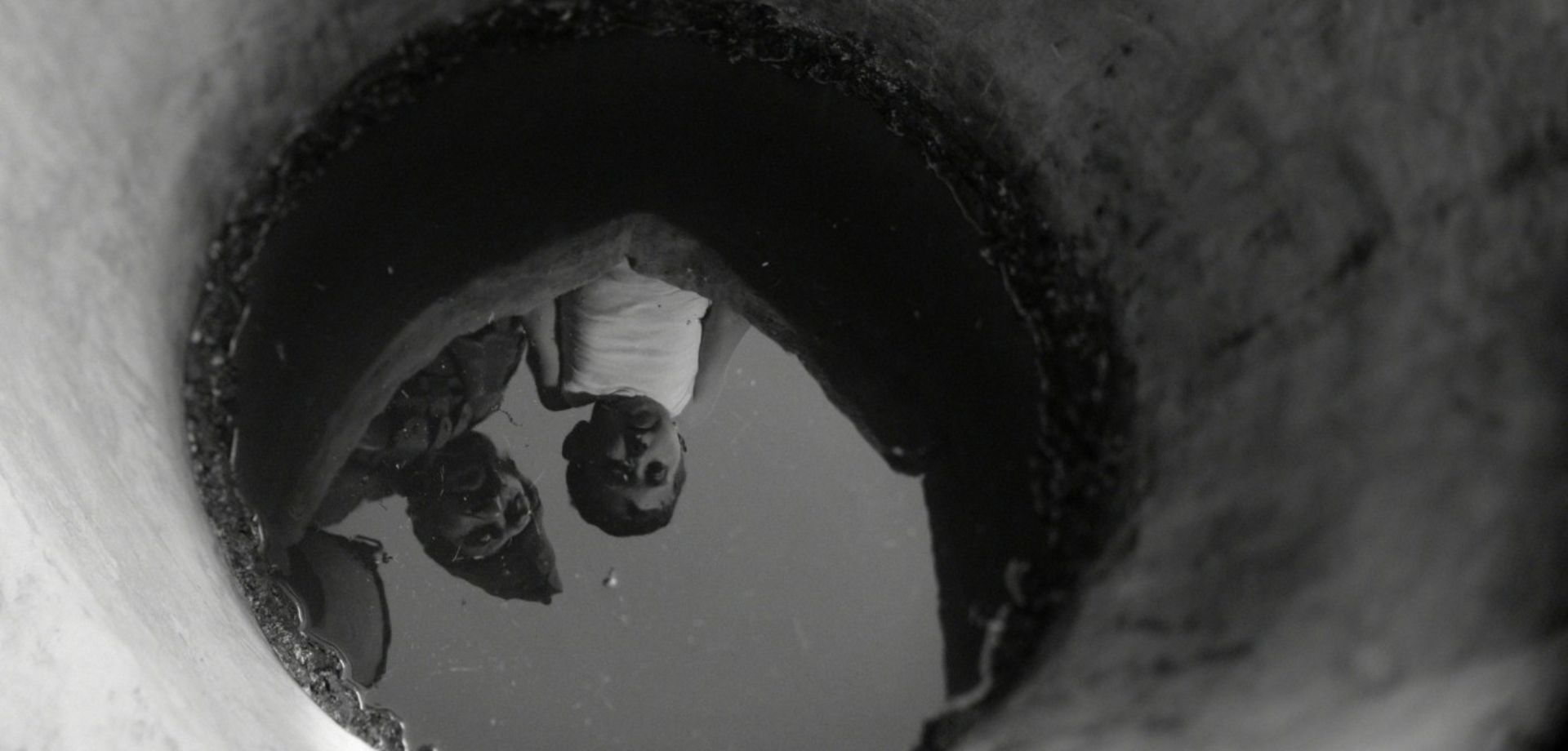
The true story of the writer Yannis Atzakas – Release date the 20th of February
Eleni Alexandraki’s new film, Tholos Vythos (Dark Bottom), will be released on 20th February.
The script was co-written by the director and Panagiotis Evaggelidis, while the diverse cast includes Katia Goulioni, Evi Saoulidou, Aeneas Tsamatis, Manolis Mavromatakis, Simos Kakallas, Akyllas Karazisis, Aglaia Pappa, Themis Panou, Yannis Kokkiasmenos, Maria Kallimani, Andreas Marianos and Stelios Minas.
The film had its world premiere at the 65th Thessaloniki Film Festival, while it was screened with great success at the Panorama of European Cinema and the WIFT.GR Festival. It continues its international journey with its first stop at the Sofia Film Festival in March.
The film will be shown with English subtitles.
John, imprisoned for years
in the Queen’s Children’s Cities,
loses his identity to
the Cold War propaganda
to which he is subjected on a daily basis…
Brief Summary
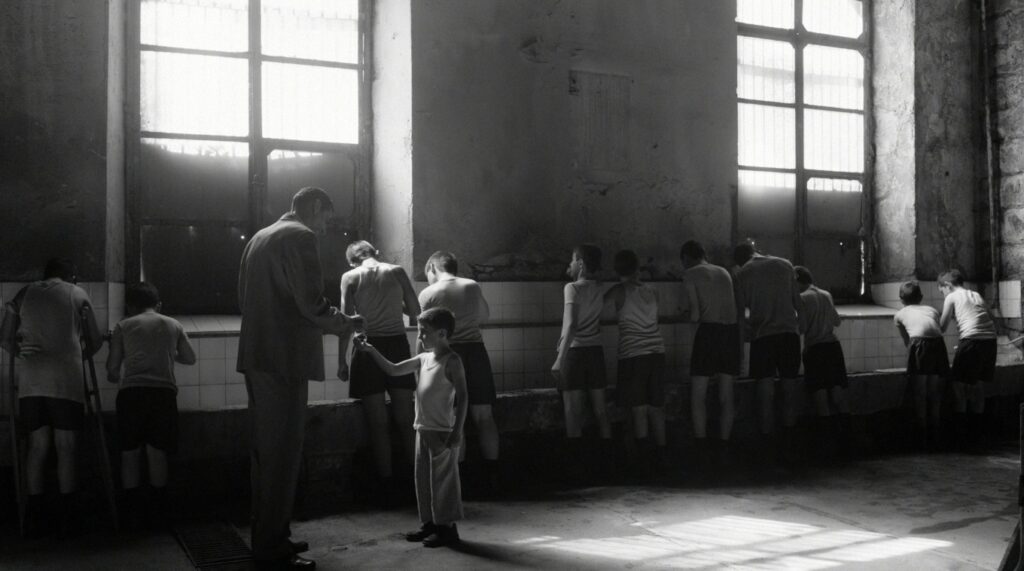
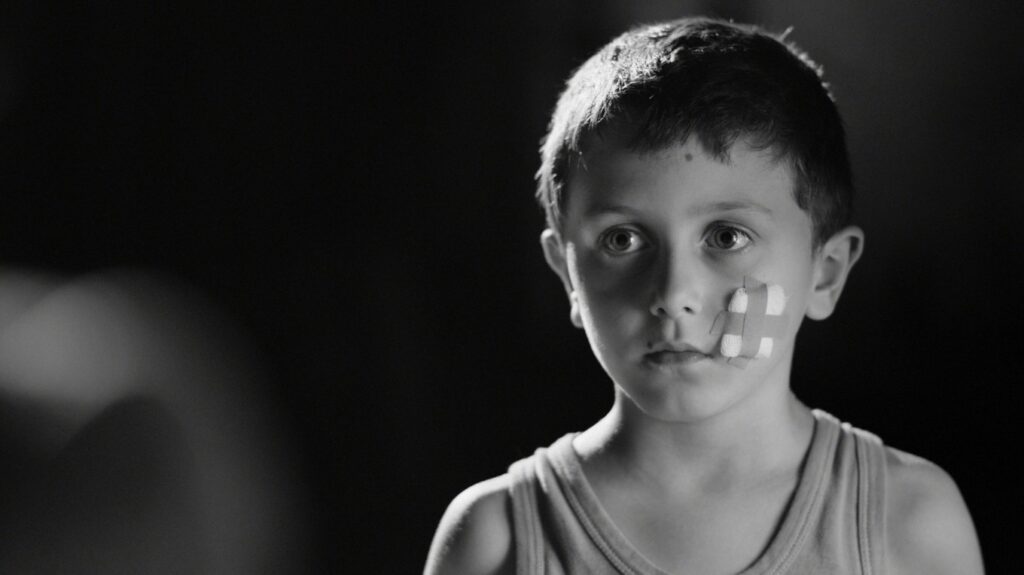
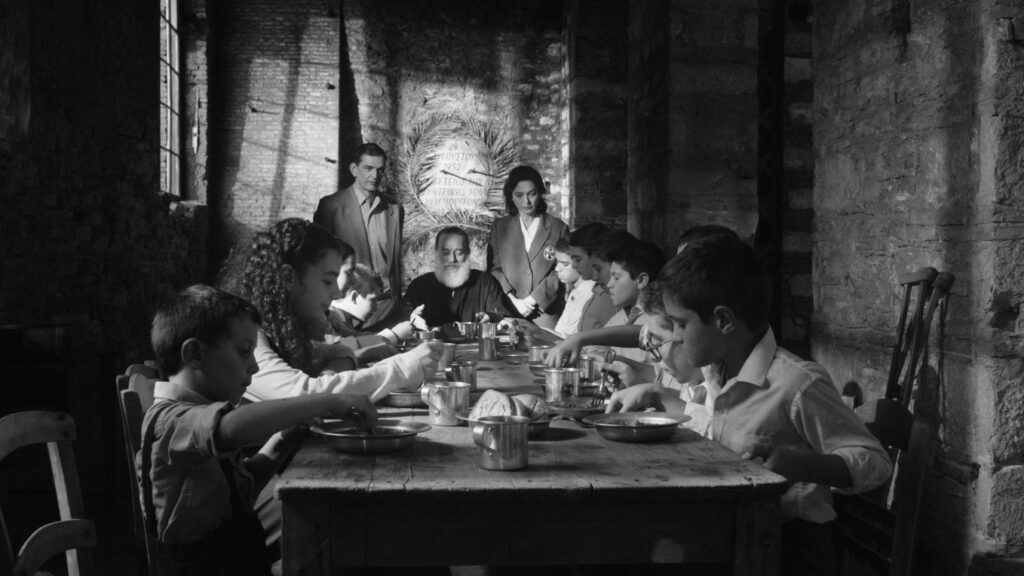
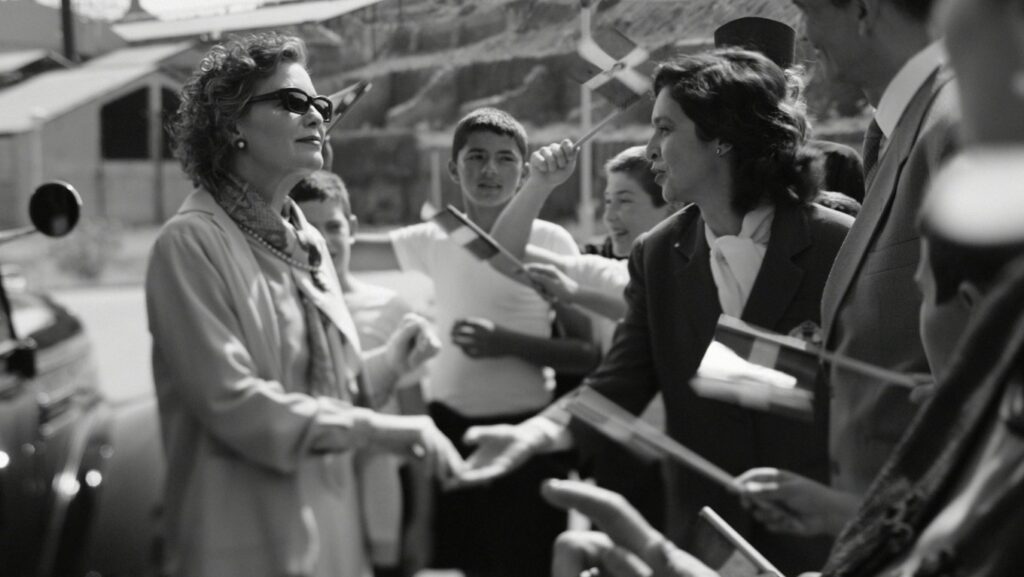
In 1949, Yannis, the son of a partisan, is uprooted from the warmth of his village home because his grandmother is persuaded to hand him over to Queen Frederick’s Children’s Home in the hope that her grandson will learn to read and write. In these institutions, where ideas and desires are manipulated, the child spends six of the most tender years of his life. Nightmares and dark feelings for his father haunted his heart… The true story of the writer Yannis Atzakas.
Brief Historical Information
During the Greek Civil War (1946-1949), the two opposing armies rounded up children and took them from their homes. The government forces took them to the Children’s Cities set up by the ‘Welfare Fund of the Northern Provinces of Greece under the high protection of the Queen Frederica’.
The Republican Army transported children outside the borders of the country to similar institutions in the Eastern countries. The children who were transferred were in fact both ‘rescued’ and ‘kidnapped’.
They were rescued because they were protected from bombing, they were fed better than those left in their villages, and many of them were educated. But they were kidnapped in the sense that both camps wanted to educate them according to their own beliefs, to imprison them in their own world.
To propagate their policies. The protection they provided was such that the ‘good’ of the protected was the same as the ‘good’ of the protector. It is certain that many parents gave up their children voluntarily, and it is equally certain that many parents did not want to part with them and were forced to give them up.
Director’s Notes
“My film Tholos Vythos (Murky Depths)is a free adaptation of the books Folded Wings & Tholos Bythos by Yannis Attzakas. It focuses on Yiannis’ life, his thoughts, his soul and his journey from the day he is uprooted from his natural environment and forced into an imposed world, until the moment he manages to confess what he has experienced to the man who has haunted him with his absence for years.
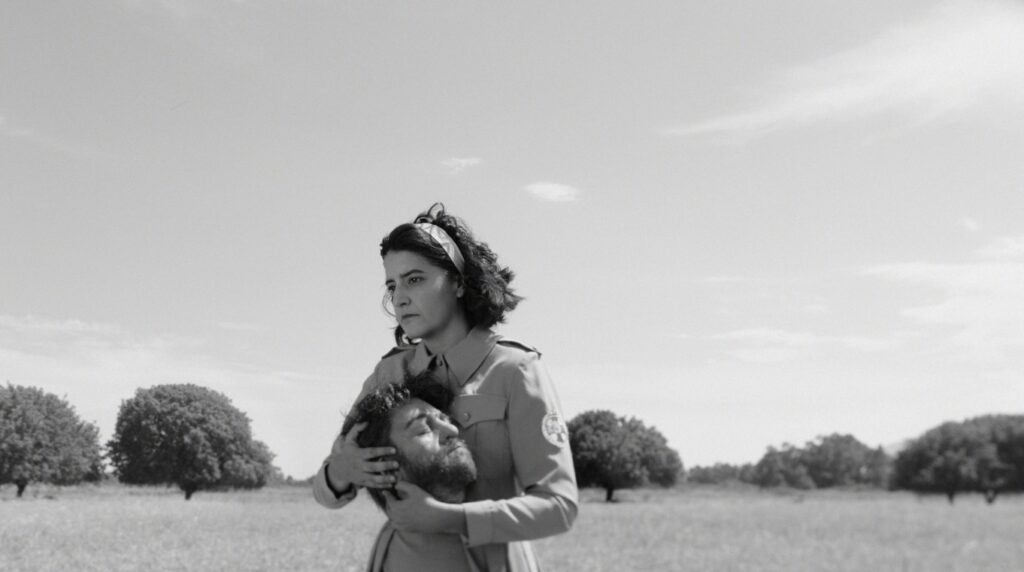
Although the story is set in a bygone era, the film’s imagery does not strive for an exact historical representation. The indeterminate space, the shooting angles, the stillness of the camera and the lenses used attempt to create the universe of the hero’s mind. Reality, dreams, nightmares and fantasies emerge from the bottomless well of his memory…
I first encountered the book Tholos Vythos in June 2009, when my writer friend Claire Mitsotaki invited me to a presentation. I knew nothing about the author or the book, and little about the theme of children’s cities.
The excellent presentation by Mitsotaki, the historian Riki van Boeschoten and the late philologist Panagiotis Moulla gave those of us who were present an absolutely global picture of the historical context of the story and the character described in the book.
Then the author, Yannis Atzakas, who is the real protagonist of his autobiographical story, spoke. It was impressive to hear this man talk about his life and work. He was genuinely uncomfortable and you could see the traces of a hermetically sealed memory and some repressed traumas that he struggles to release and heal through writing.
Although I grew up in a completely different social environment and in a later era, I felt a strange affinity with Yannis Atzakas. Perhaps because I happened to go to school during the seven years of the junta, and the obscurantism and historical lies we were taught then were almost identical to the propaganda that went on in the pedopolies after the civil war.
The excellent presentation by Mitsotaki, the historian Riki van Boeschoten and the late philologist Panagiotis Moulla gave those of us who were present an absolutely global picture of the historical context of the story and the character described in the book.
Then the author, Yannis Atzakas, who is the real protagonist of his autobiographical story, spoke. It was impressive to hear this man talk about his life and work. He was genuinely uncomfortable and you could see the traces of a hermetically sealed memory and some repressed traumas that he struggles to release and heal through writing.
Although I grew up in a completely different social environment and in a later era, I felt a strange affinity with Yannis Atzakas. Perhaps because I happened to go to school during the seven years of the junta, and the obscurantism and historical lies we were taught then were almost identical to the propaganda that went on in the pedopolies after the civil war.
The idea of making a film based on the books by Yannis Attzakas immediately appealed to me because, apart from the appealing way in which the author recounts his experiences and the naivety of his childhood thinking at the time, I realised how often the protection of children is linked to the exploitation of their innocence and how this is an issue that is unfortunately still topical in a thousand different ways. In fact, I was really shocked when, while researching the script, I discovered many similar stories of people from all over the world and at different times. That’s why, before I made ‘The Dark Bottom‘, I also made a documentary called ‘Uprooted’, which is about John’s story and other stories of uprooted children from different parts of the world who have suffered because of the ruthless politics of their places.
In the role of John: Philip Milikas (6) | Marios Konstantinos Galetzas (9) | Konstantinos Athanasakis (13) Aeneas Tsamatis (adult)
In order of appearance:
Agni Strumboulis, Eugenia Apostolou, Yannis Kritharas, Mina Chimonas, Manolis Mavromatakis, Simos Kakallas, Kostis Seiradakis, Evi Saoulidou, George Tsiapogas, Akyllas Karazisis, Katerina Alexandraki, Aglaia Pappa, Prometheus Nerattini, Vasiliki Skordali, Katia Leclerc O’Wallis, Katia Goulioni, Themis Panou, Yannis Kokkiasmeinos, Eudoxia Androulidaki, Kostas Filippoglou, Maria Kallimani, Andreas Marianos, Rafika Chawishe, Cleopatra Markou, Stelios Minas.
And the children:
Christina Vassiou, Panos Thomopoulos, Hermes Filippoglou, Marco Gonzales Soto, Maria Karsioti, Nikoletta Stathopoulou, Georgia Argyrou, Stella Trizoni, John Tavoularis, George Nakos, Vassilis Tavoularis, Alexandros Milikas, Elias Apostologlou, Dimitrios Konaxis, Anna Maria Zonara, Paul Figle, Ares Georgiopoulos, Yannis Kriaras, Alexandros Scutrti, Dimitrios Bogdanidis, Loukas Alkan, Nikolas Faloutsos, Konstantinos Sakelios, Konstantinos Cassios, Orpheus Cassios, Konstantinos Pettas, Lefteris Pettas, George Zukayem, Thomas Vassios, George Theodoropoulos, Alexandros Nerantzis, Plato Samprakos, Emilie Tsorteki, Dimitra Gouvedari, Nikoletta Roussopoulou, Anastasia Massiala, Angeliki Georgakopoulou, Stavros Georgoulis.
Director: Eleni Alexandraki
Set Decoration: Eleni Alexandraki, Panagiotis Evangelidis
Director of photography: Dionysis Efthimiopoulos GSC
Scenery: George Georgiou
Costume: Despina Himimaa
Sound: Nikos Papadimitriou
Montage: Christos Giannakopoulos
Music: Nikos Xydakis
Produciton Director: Gina Petropoulou