 Pepi Nikolopoulou
On Lykourgou Street, Zigoala brings together food, music, memory and companionship. A quiet, deeply personal new place in the heart of Athens.
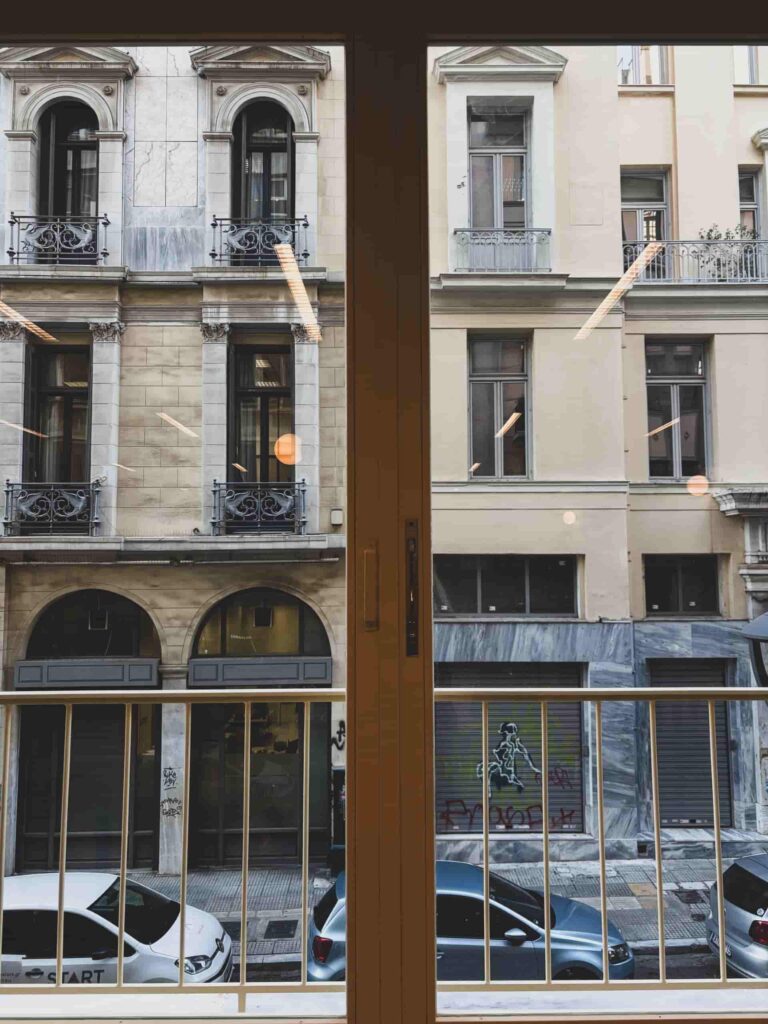
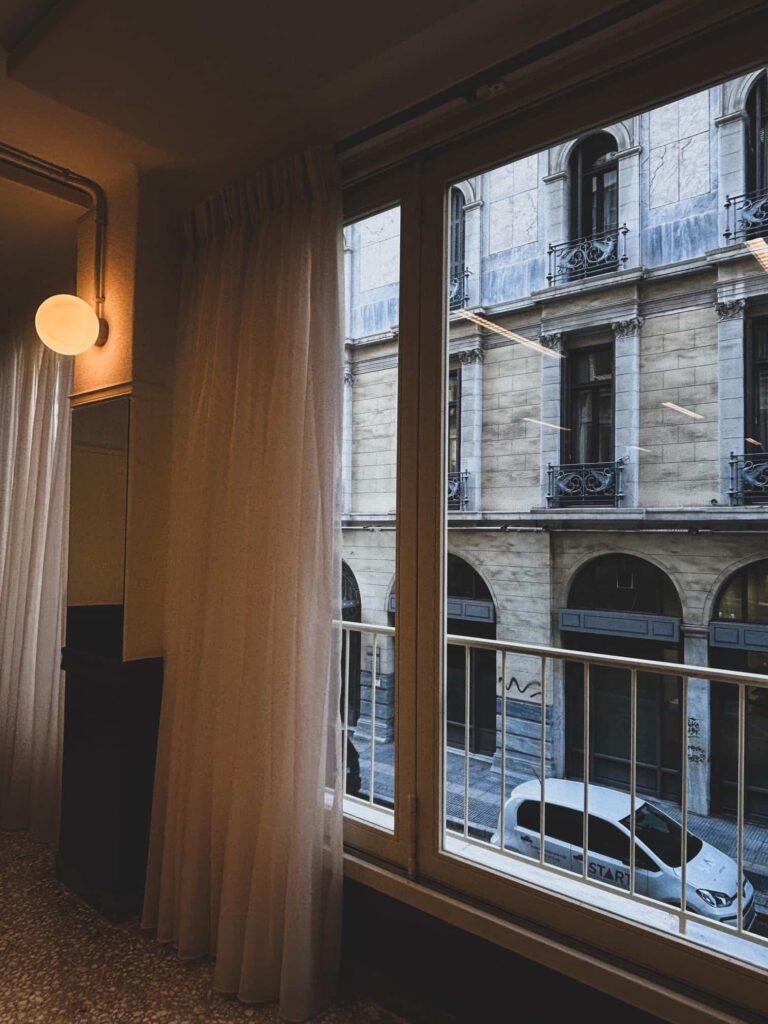
In one of Athens’ most captivating and contradictory neighbourhoods, just a few steps from Omonia Square and the Varvakios Market, the pulse of the city beats red-hot all day long. Here, Athens lives at full speed: voices, market stalls, trucks, parallel routes, people from every corner of the world.
But at night, the same area shifts its rhythm. It quiets down. It gathers itself. It begins to dream.
Somewhere there, on Lykourgou Street, you’ll find Zigoala (*). A new space that arrived discreetly, with the intention of reviving something from the past through a contemporary lens. A new gastronomic, and not only gastronomic addition, to Athens’ cultural map, born from the collaboration of two seemingly unrelated people: Konstantinos Dagritzikos and Vasilis Hamam.
I met them on the morning of one of the restaurant’s first days. The space was closed. We sat comfortably, unhurried, taking the time to talk about everything.
Konstantinos Dagritzikos doesn’t particularly enjoy formulaic conversations. He knows, and wants, how to create atmosphere. If you let him, chances are you’ll still be there by nightfall, carried along by stories and anecdotes, always under the sound of his music.
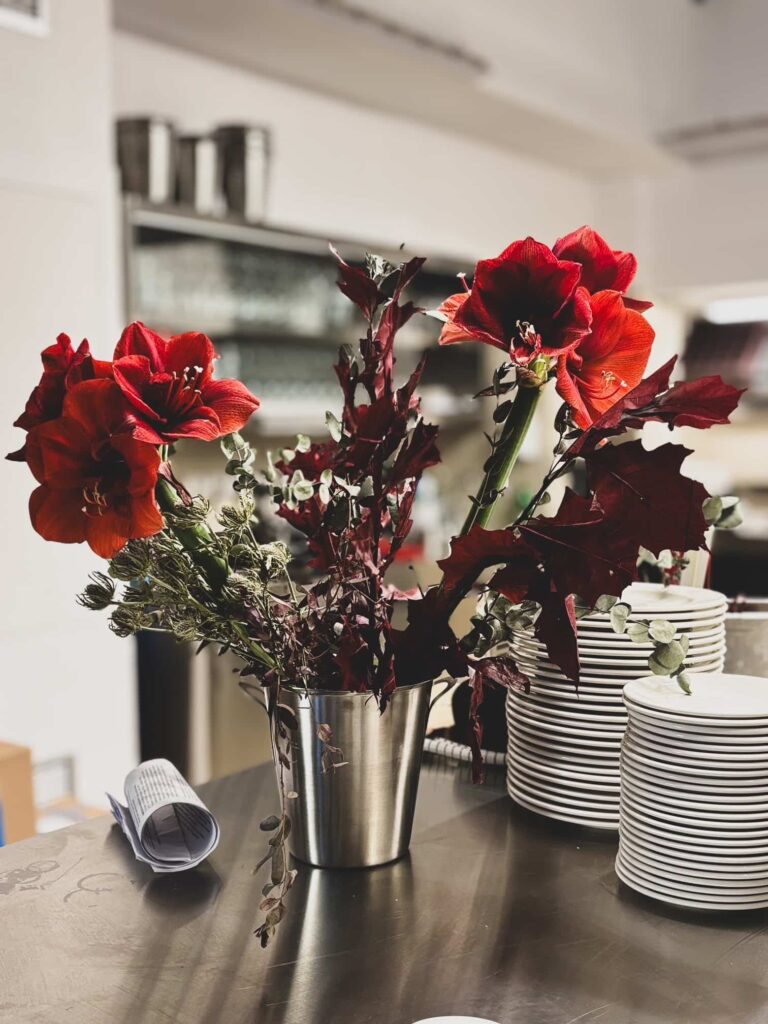


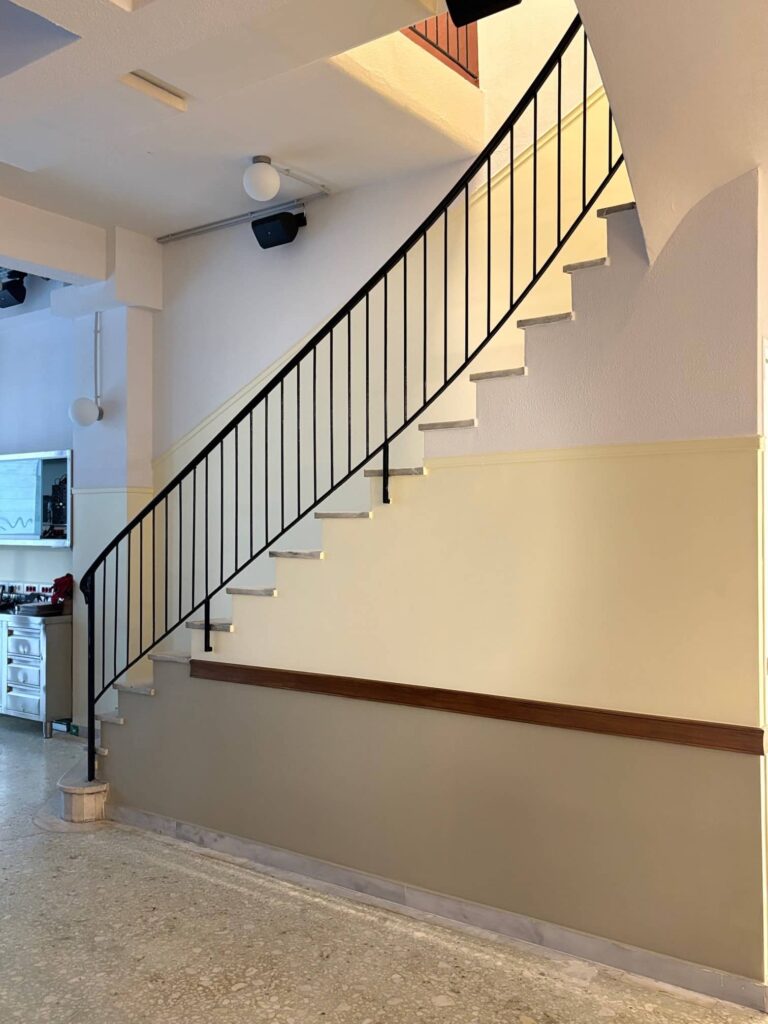
Over the past years, his trajectory has left a deep imprint on Athens’ nightlife. From Six d.o.g.s., which since 2009 has shaped not only the city’s nights but also our musical listening habits, to the renewed Aigli, which he undertook in order to give it, successfully, the contemporary language it deserved. Zigoala arrived almost dramatically: as a more inward return. Quieter. More personal. More deeply rooted.
The idea for the space had lived inside him for years, always in a romantic way. He never truly believed he would realise it. He envisioned a place for food, wine and music, in a location like this, with a specific energy but not as a business plan. “An idea should never be led by a business plan,” he says. “The idea leads the business plan.”
He isn’t a venue owner who reproduces concepts. What he created here came from instinct, driven by the heart. Konstantinos speaks about the neighbourhood as if it were part of his life. And it is. He grew up here, wandered these streets as a child. Every night, when he leaves the restaurant to go home, he passes beneath the old Commercial Bank building where his father once worked. He remembers himself as a child, entering the office, playing with the photocopier, leaving smudges on paper. Simple, everyday memories deeply rooted.
And yet, he is not a nostalgic person. What concerns him is the present: what we do today, why we do it, for whom, and what remains. He didn’t create Zigoala to recreate something old. Still, unintentionally, the space carries the essence of another era.
Zigoala stands on three clear pillars: food, wine, music. The lighting is warm. It changes throughout the evening. The space shifts with time. There is no stage set, no display. There are details, many of them that you don’t notice at first glance. He knows every single one.
Close your eyes and it feels like stepping into an old Greek film. One of those cafés where time lingers, gestures matter, and the night moves slowly. In the central hall, a large photographic mural dominates the space: a snow-covered mountain. Irrelevant at first glance and yet, it works, almost magically. Round, white, warm lamps. An open kitchen. Everything visible, like a film playing just for you. And those burgundy leather chairs you remember sticking to your legs in summer when you were a child brand new now, of course, yet heavy with memory.
The name brings everything together. Zigkoala. He liked that it sounds exotic. Just like the place itself. At night, Lykourgou Street is almost empty. And yet, you pass by, you notice the light, something moves, you step inside and suddenly you’re elsewhere. He wanted the original name, unchanged. And above all, a feminine one. It reminds him of fishing boats, often given women’s names. Something living. Something you take care of.
The drinks follow the same philosophy. Greek wines, new producers, carefully chosen spirits. Beers from microbreweries, soft drinks from Crete, ginger beer from Crete and Corfu. Choices made with care, from across Greece.
And then there is the music. From interwar-era pieces to the 1970s, with passages through the ’80s and ’90s, mostly Greek. Rebetiko, Asia Minor songs, folk, jazz-funk. Not everything — and never randomly. Music here doesn’t simply “play” from a playlist. It is built. With an archive, with themes, with time. A musical universe carefully curated by Mister Z, Zois Chalkiopoulos.
Vasilis Hamam had already taken his position in the kitchen. The air was fragrant. Dishes influenced by all the places that have left their mark on his palate, Palestine, Jordan, Lebanon, Thessaloniki, blend beautifully into proposals that are simple, approachable, and deeply delicious.
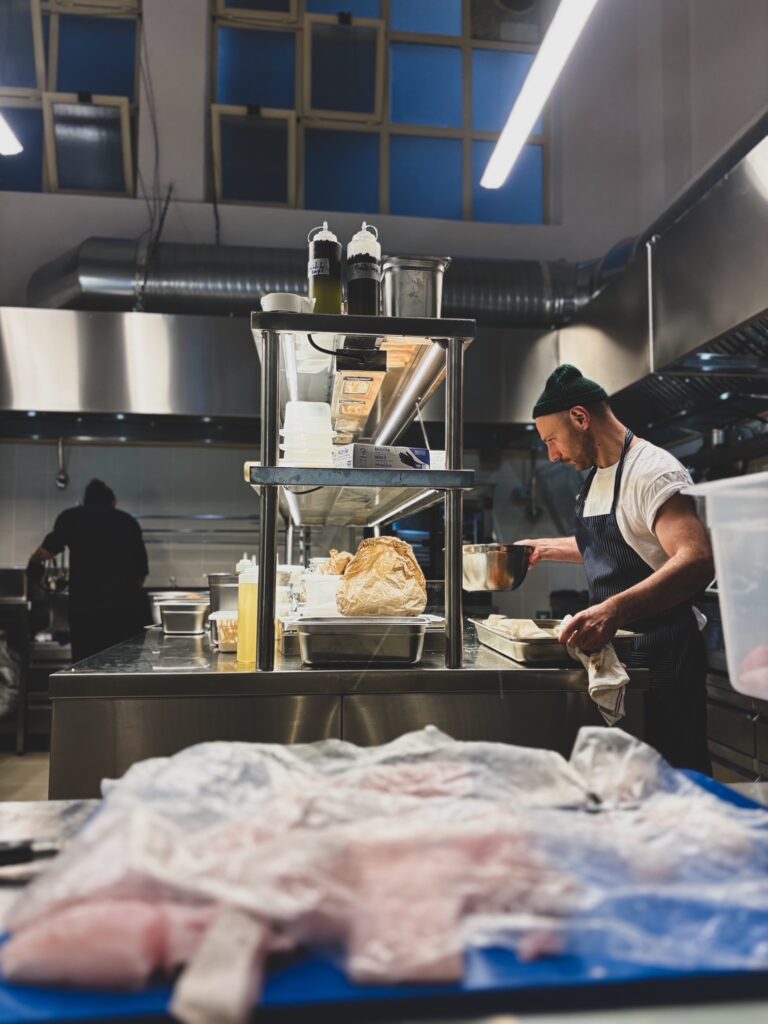
He speaks about his cooking the way others speak about music. With references, borrowings, repetitions. Even his dishes, as he says, “sound foreign”: mutton, sole, Russian-style bean soup with taramasalata. And yet, nothing is exactly what it seems. “We do things slightly differently,” he says. “Mainly in the spices and the handling. Not heavy. In a lighter way.”
His food is grounded in the Eastern Mediterranean as a natural condition. The same ingredients, the same recipes, subtly altered by history from place to place. Trade, population movements, war, all left their traces on the plate. Some things were lost. Some returned transformed.
“There are recipes that started here, were forgotten, travelled elsewhere, changed slightly, and then came back. A double borrowing. Just like in music.”
He doesn’t like to call what he does “cuisine.” His food is lived. He grew up with these flavours. With a father who cooked by tweaking recipes, reading them, adapting them. Dolmadakia that feel Greek, but with a little more lemon. A different herb. A shifted balance.
At Zigoala, you won’t find foams or flashy techniques. They don’t interest him. What matters is care. Precision. Substance. “We don’t throw anything away. One thing becomes another.”
Broths made from pork trotters, like in old tripe shops. Hilopites simmered in stock. Cracklings returning to the plate as a final touch. Circular cooking – Greek, rooted in memory. But what truly matters isn’t only what he cooks, it’s for whom. Vasilis thinks of food as communication. Like a joke that changes depending on the audience.
“It’s different telling a joke to your friends than to your mother’s friends. The same applies to a menu.”
There is humour, but it’s understated. Inside jokes. References some will catch and others won’t. It may start from street food, from “dirty” eats, from childhood flavours and end somewhere else entirely.
If one dish stands out, it’s a Palestinian chicken. He remembers it from summers in Jordan, from his aunts’ kitchens, from steam and aromas. “It’s a bit like a lemon chicken. Juicy, with onions, but it has cardamom. And cardamom reminds me of my father’s morning coffee.” A dish that follows him wherever he goes.
Vasilis Hamam’s food is generous yet refined. Imaginative, but never heavy. Spices used with precision. And above all, warmth. “When I was a child and someone gave me food, I wanted to hug them. That’s what I want now. For people to feel joy.”
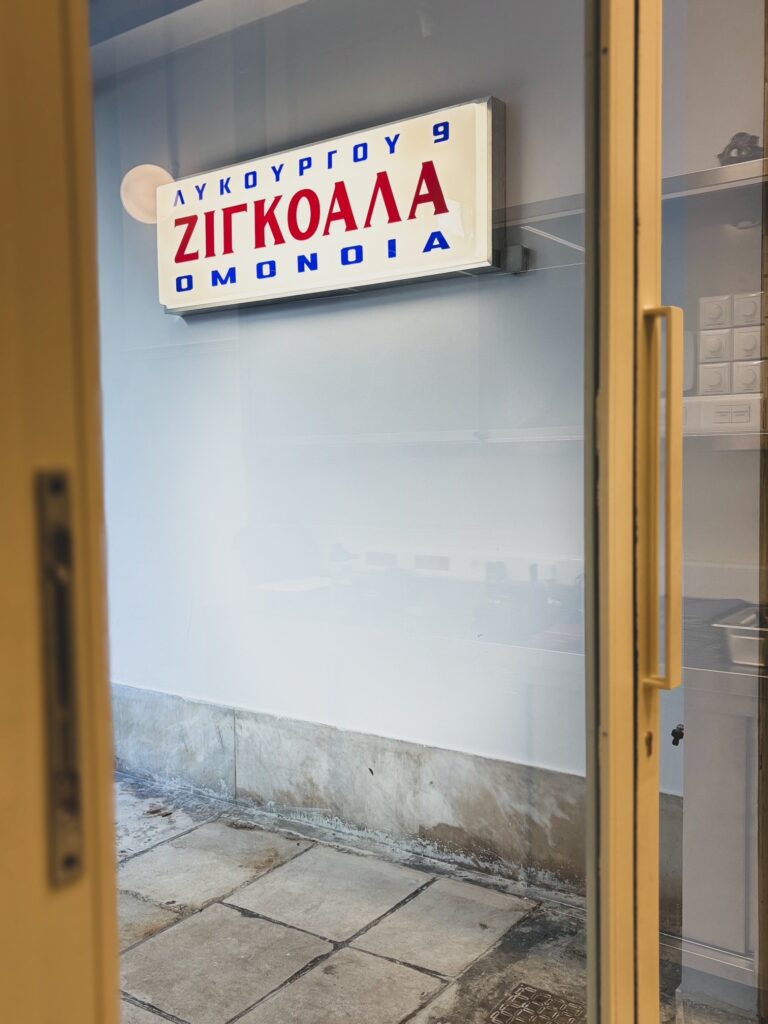
Here at Zigoala, food doesn’t aim to impress. It only tries to love and to be loved. To remind. To open space for company, for conversation, for those moments when the table becomes an excuse to stay a little longer.
And when you leave, the city carries on but something from all that remains with you.
(*) Zigouala (with an additional u) takes its name from a Greek song of the late 1950s, part of a moment when Greek popular music looked outward, inspired by distant places and unfamiliar sounds.
All photos by the editor
Info
Zigkoala
Lykourgou 9, Omonia, Athens
Opening Hours
Mon: Closed
Tue–Thu: 19:00–00:00
Fri: 19:00–01:00
Sat: 13:00–01:00
Sun: 13:00–18:00