 elc team
The Municipal Gallery of Aegina, continuing its artistic program and following the planned tributes to significant representatives of the visual arts who lived and worked on the island, will host on Friday, August 1st at 20:00, the distinguished and unforgettable painter, Pavlos Samiou. He is one of the most important figures of his generation and one of the great continuators of the island’s spiritual tradition. Samiou was among the artists who chose Aegina, with its unique light and timeless ochres, as a place to live and work.
His residence, nestled in the shadow of the Aphaia Temple, in Mesagros, for many years served as a hub for the search of beauty, a place for exemplary and joyful hospitality, as well as a haven for valuable spiritual meetings. Two important works by Pavlos Samiou from his wife Maria Xanthakou’s collection were exhibited in the inaugural exhibition of the Gallery, titled “Due to Light“, and since then, there has been a promise of showcasing a complete body of works from this collection.
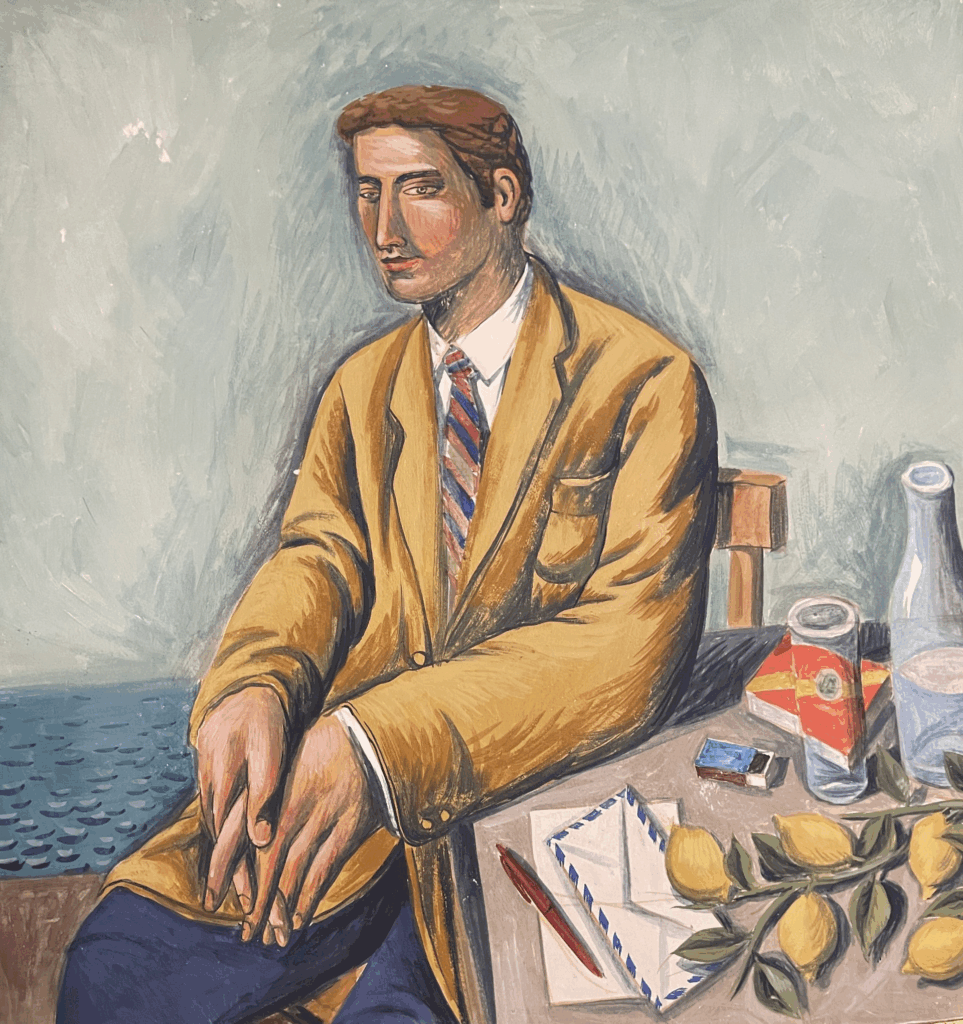
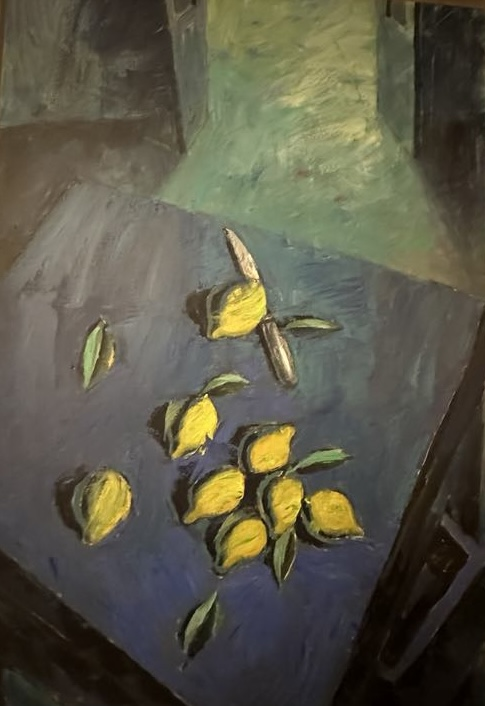
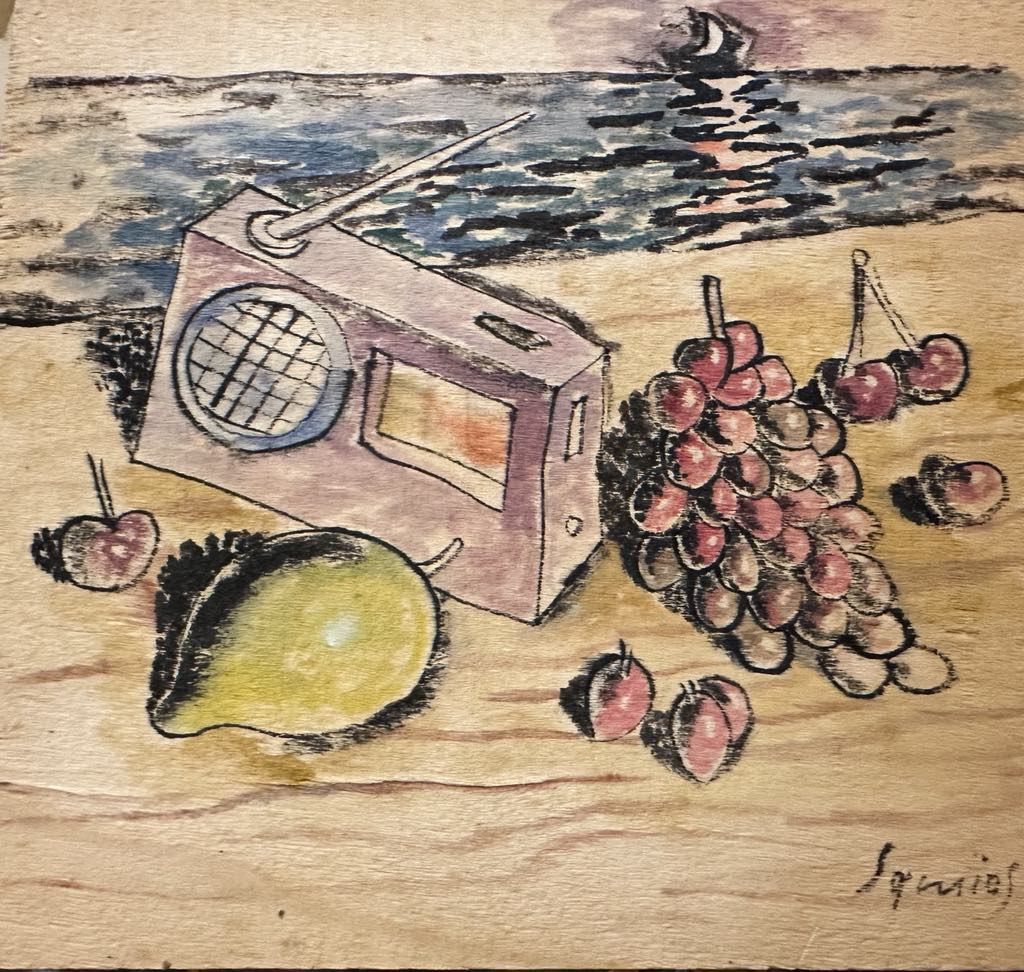
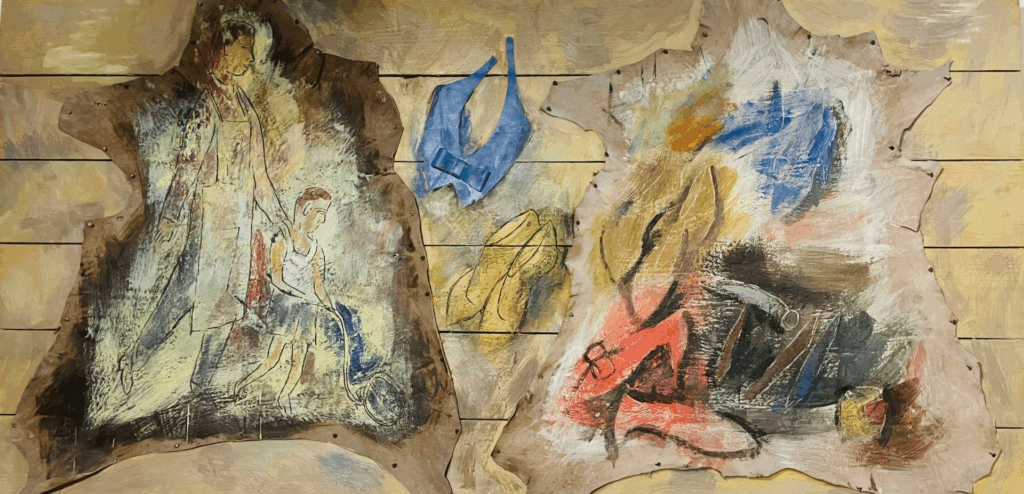
More than 40 works, including oils, watercolors, sculptures, and drawings, most of which come from Maria Xanthakou’s collection—whose generous collaboration and trust have made this exhibition possible, will be exhibited along with valuable archival material shedding light on the artist’s works and restless spirit, as well as his deep love for the island. The exhibition’s title subtly encapsulates all that Pavlos Samiou loved about the island, as well as everything the lovers of the island adored in his paintings: the ochres of Aegina, the ancient fragments, his favorite cafés in the market with their intense greens, the red high heels—a timeless tribute to women and his shoemaker father, the tables carelessly set with letters, shells, and summer fruits, or the love-struck couples under the moonlight, along with many more precious artistic strokes, this is the personal, recognizable, and enchanting mythology of the painter that will unfold magnificently at the Municipal Gallery of Aegina.
The works of this great painter, where memory and the basic principles of Greek tradition are never absent, but neither is the French modernist period, are thematically centered on everyday life, always with a poetic disposition and surreal sensitivity. His painting is figurative, often human-centered, and often includes self-referential elements. Faces, places, fields, and simple tabletop objects transform into ethereal or even erotic symbols, participating in dreamlike and mythical compositions. A valuable addition and complementary contrast to his paintings is his iconography, as he has frescoed several churches and created icons imbued with his personal insight.
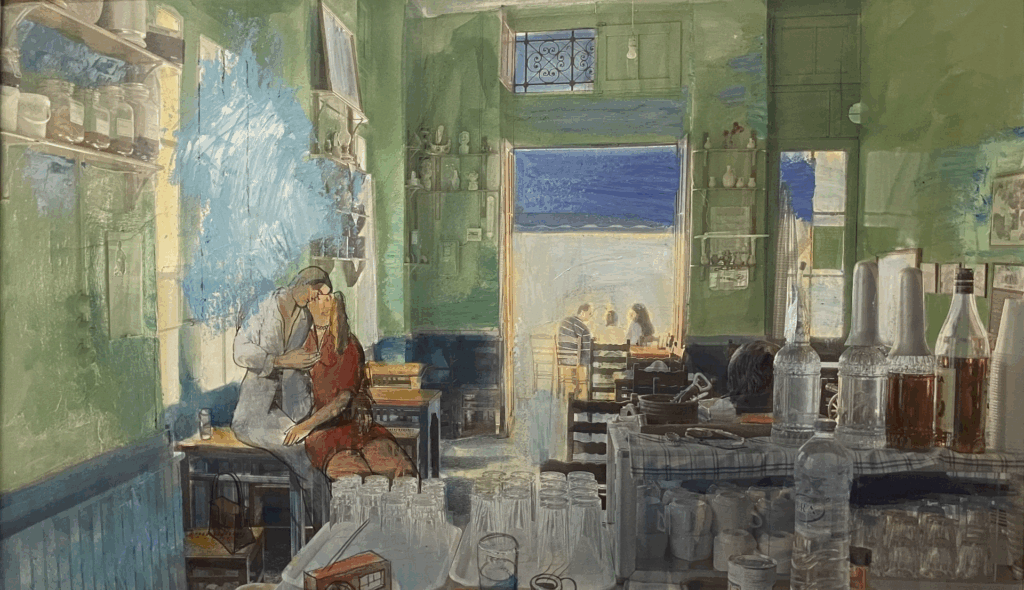
Regarding Pavlos Samiou, his embodied way of painting, and the on-site memory of Aegina, the exhibition curator, Iris Kritikou, notes:
“Conversations with Pavlos Samiou, both in Athens and in Aegina, gave me an unexpectedly clear understanding of his personal and family experiences, his pictorial alphabet, and the beginnings of his desire to become a painter without ever leaving behind what shaped him: high heel-shoes, bags, coffee, cigarette packs, sun, woman, sea, fruit, shell, fish, everything rested on the common table of creation with an arbitrary and cyclical meaning. And this was an embodied way for him to follow his origin and his goals. His love for the palimpsestic sensual memory of materials and places, which he converses inventively with contemporary form and the intangible, with the human touch, the foundation, and the measure.”
“The thread of memory brings forth some afternoons in his unique Mesagros. Easter Monday, among daisies and bleeding poppies, in a handmade house with every corner embroidered. Pomegranates and pebbles, wreaths of amaranth and Aegina’s clay and pumice sculptures, harmoniously met in his abundant world, where nothing remained unpainted, from the floor to the deepest nook. Pavlos Samiou, standing or sitting, painting, carving, sharing anecdotes, or offering wine with Maria by his side, in a house-embrace, built in the island’s secret inland, in the shared shade of the Doric Aphaia and the ruined Palaiochora. Between these two worlds, the ancient and the Byzantine, which, I believe, defined the essence of his searches, although he remained, to the end, an equal lover of the modern and the small, everyday life.”
And surely this persistent memory also makes a stop at the bright green café in the market, under Aegina’s old Town Hall, which Samiou painted so many times in a dazzling way, gradually transforming into his own wandering post-neoclassical self-referential geography with intense colors. Gradually, it tenderly blended with his beloved Parisian cafés and symbolically became part of the Athens—or metaphysical—“Café Paradise”, as a sign and part of his personal Mythology forever,” adds the exhibition curator.
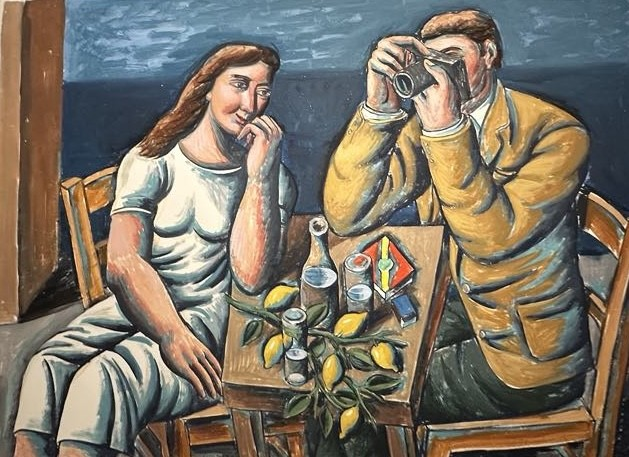
On the occasion of the exhibition at the Municipal Gallery of Aegina, Maria Xanthakou notes:
“With the Aegina exhibition as a conclusion, after five years since Pavlos Samiou’s departure from his beloved island, a small collection of works is being presented as a mini retrospective exhibition, under the touching title ‘A Slice of Watermelon, a Peel of Moon’ at the Municipal Gallery of Aegina. This exhibition is the culmination after a long period of exhibitions held in his memory in various parts of Greece. The most important one was the ‘Donum Amicorum’ exhibition at the Christian and Byzantine Museum, where the book ‘Liber Amicorum’ was published, featuring all the works from the artist’s donation to museums and state institutions. With the curation, organization, and support of this exhibition by his beloved friend and art historian Iris Kritikou, Pavlos Samiou’s wish to bid farewell to his beloved Aegina, all his friends and loved ones on the island, and to once again declare his presence in the place where he lived for many years, created with passion, and evolved into one of the best painters, becomes a reality.”
“I thank the Municipality of Aegina, Iris Kritikou, the Board of the Municipal Gallery, and everyone who helped make this exhibition a reality.”
The exhibition at the Municipal Gallery of Aegina will be accompanied by a series of parallel events, guided tours, and workshops for children, which will be announced during the exhibition’s operation.
Some words about Pavlos Samiou
Pavlos Samiou was born on October 28, 1948, in Athens, where he passed away prematurely on February 4, 2021. He was a painter and university professor (Professor at the Athens School of Fine Arts), considered one of the most important contemporary Greek visual artists. From a young age, he engaged with traditional painting and iconography. He attended preparatory drawing classes at the workshop of Panos Sarafianos, and from 1969 to 1972, he studied Painting at the Athens School of Fine Arts, under teachers Nikos Nikolaou and Giannis Moralis. His first solo exhibition took place in 1978 at the Zouboulaki Gallery. From the same year until 1992, he lived and worked in Paris, interacting with Greek artist Giannis Tsarouchis, who had a significant influence on his work. Since 2000, Pavlos Samiou taught at the Athens School of Fine Arts, leading the Department of Fresco and the Technique of Portable Icons.
His work was presented in numerous solo exhibitions in Greece and abroad, including Paris, London, New York (retrospective), Hanoi, and others. He also participated in significant international exhibitions in Greece, Europe, America, Asia, and Australia.

Pavlos Samiou, marking his vision and personal way of existing in the universe, also left behind a remarkable legacy by donating his works while still alive to significant museums and institutions in the country. Among them are the National Gallery, the Byzantine Museum, the Vassilis and Eliza Goulandris Museum, the Acropolis Museum, the Archaeological Museum of Olympia, the Archaeological Museum of Delphi, the Municipal Gallery of Chania, the Benaki Museum, the Olympic Museum of Athens, the Athens Concert Hall, and the Numismatic Museum. In their recent exhibition at the Christian and Byzantine Museum in Athens, we shared the emotion of this donation, and another section of his donation to the Athens Concert Hall is on display until autumn in its exhibition space. “I would like to be remembered through my works. I want those who see them to feel something of what I felt when I painted,” he wrote himself.