 PEPI NIKOLOPOULOU
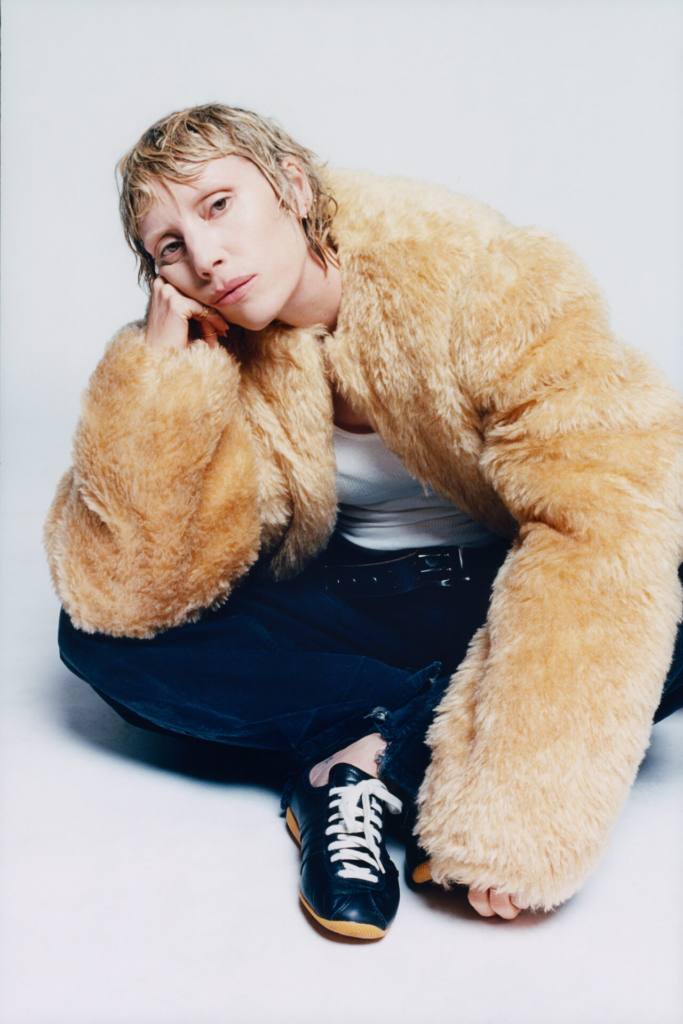
“I need answers, guides, voices, heroines to look up to,” Lykke Li once said in one of her most unexpected confessions. From “I Follow Rivers” to her most recent work, the Swedish singer-songwriter has sung more about absence than about love itself. About what is lost, what changes, and what we can never hold on to forever. Over the course of nearly two decades, she has become a point of reference for an entire generation of listeners who recognized in her music something deeply human: a constant sense of searching.
Her music seems to emerge from an in-between place. Neither entirely luminous nor entirely dark, it balances between pop and the alternative scene. Her songs express desire as much as loss, vulnerability as much as strength.
Lykke Li herself grew up in constant motion. Born in 1986 in Ystad, Sweden, into a family of artists, she spent her early years moving between different countries, cultures, and landscapes. Her father was a musician and her mother a photographer, making travel and creativity part of everyday life. Her childhood was divided between Sweden, Portugal, Morocco, India, and Nepal. From an early age, she learned that the world was larger than any single place and that a sense of belonging is never guaranteed.
The protagonists of her songs are perpetually in transition. They search, wander, remember, yet rarely arrive somewhere permanent. This feeling of belonging everywhere and nowhere runs throughout her music and has become one of its most recognizable traits.
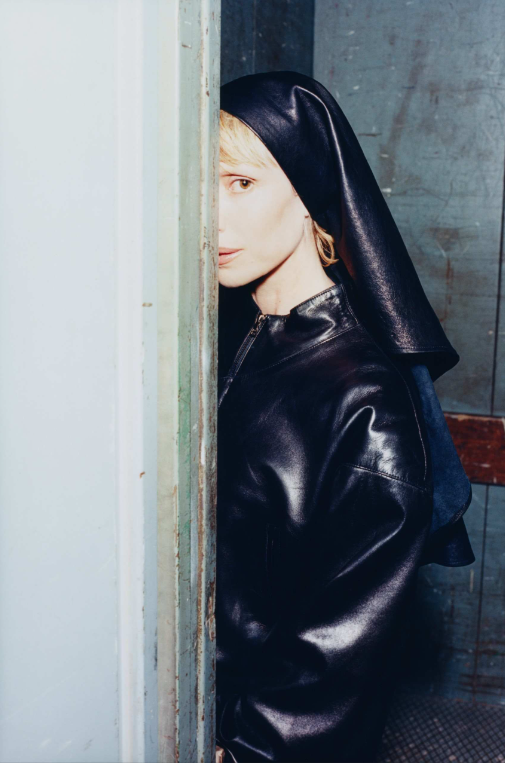
She has often spoken about how her mother encouraged her to travel, embrace change, and avoid feeling tied to a single place. Perhaps that is why her music avoids certainties. Although Sweden remains an important point of reference in her life, she seems to belong more to those who are perpetually on the move than to any specific geography.
Her discography resembles a gradual coming of age. Youth Novels (2008) captured the anxieties and longings of a young artist discovering her voice. Wounded Rhymes (2011), featuring songs such as “I Follow Rivers,” introduced her to a wider audience, transforming romantic loss into something almost cinematic. The darker and more introspective I Never Learn (2014) followed, while so sad so sexy (2018) and EYEYE (2022) revealed an artist constantly experimenting with sound and identity without ever losing the emotional core of her songwriting.
She was also among the artists who helped shape a different female voice in pop and indie music. Alongside musicians such as Fiona Apple, Feist, and later Lana Del Rey, she turned her creative attention toward doubt, introspection, and the contradictions of female experience. At a time when pop music often sought certainty, they embraced questions instead. Rather than presenting untouchable heroines, they portrayed women marked by wounds, losses, and contradictions.
Now in her forties, Lykke Li appears to be looking at that journey from a new perspective. Artistic life, touring, constant exposure, and the passage of time have become integral parts of her narrative. Motherhood opened a new chapter in this story of wandering. If her early records searched for love, her more recent work seems to seek a balance between the different identities that coexist within her: the artist, the woman, the mother. A mother of two, she has spoken openly about the difficulty of reconciling creativity with family life, often looking for answers in the lives of other women artists who faced similar dilemmas.
Today, Lykke Li seems to be continuing her journey from a new starting point. Far removed from the stage persona and the myths that once surrounded her, she is increasingly drawn toward introspection and self-knowledge.
On June 22, Lykke Li will take the stage of the Odeon of Herodes Atticus for the first time, bringing with her a journey that spans nearly two decades. The child who grew up between countries, the young woman who transformed sadness into song, and the mature artist who continues to seek new ways of existing beyond the expectations of the industry all coexist within the same woman.
Perhaps that is why her music continues to resonate. Because she grows authentically. She grows with grace, without losing her inner curiosity. She continues to carry the same questions about life, time, and identity, simply allowing them to mature alongside her.