 PEPI NIKOLOPOULOU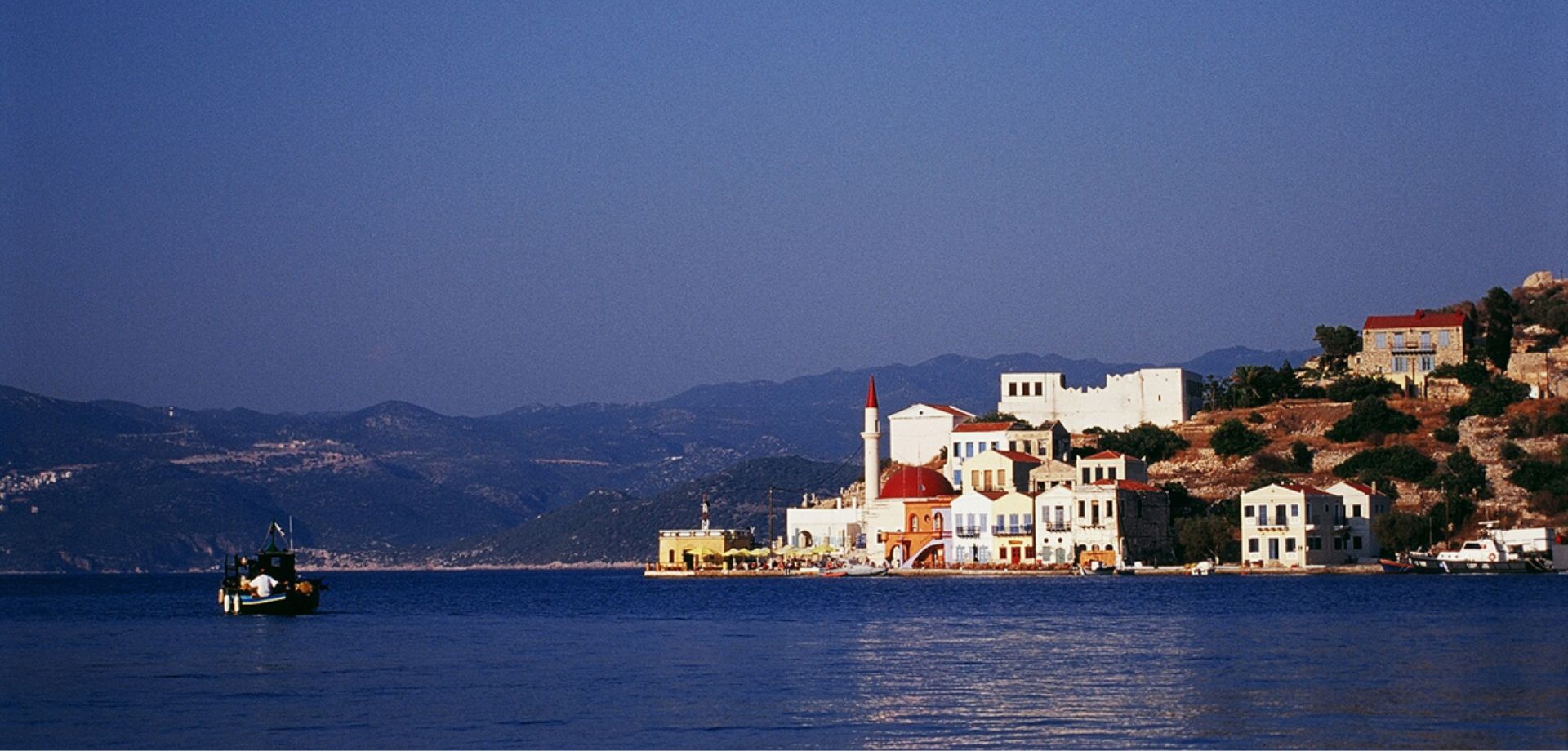
Every summer, there’s always a moment during my holidays when I find myself drifting back to those special journeys, the ones that take you a little farther, to tiny dots on the map, yet always somewhere in Greece. Places that, thankfully, remain untouched and unspoiled, holding on to their authentic charm and quiet magic.
Kastellorizo is one of those rare corners of Greece, a place where time slows down, and beauty feels both fragile and eternal.
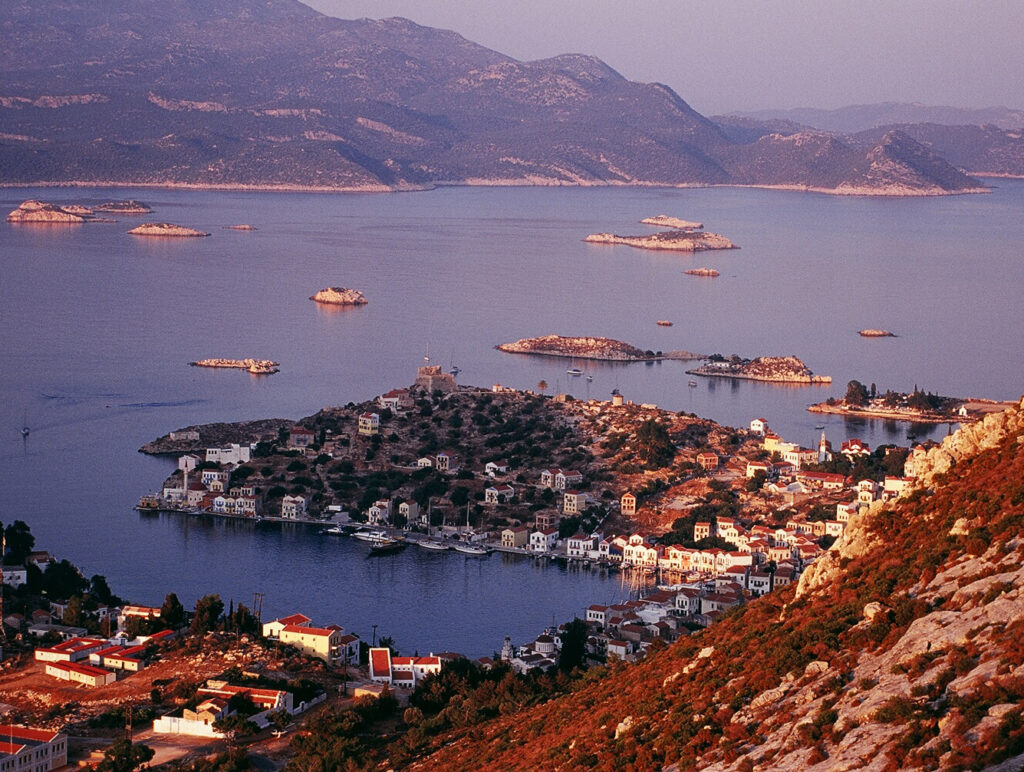
Tucked away in the southeasternmost corner of Greece, Kastellorizo – or Megisti as the locals call it – feels almost mythical. Surrounded by an endless blue and a colorful amphitheater of neoclassical mansions, the island invites you to leave your schedule behind and let the rhythms of another era guide you. Kastellorizo asks for your time, your gaze, your curiosity.
Strolling the harbor – A living postcard
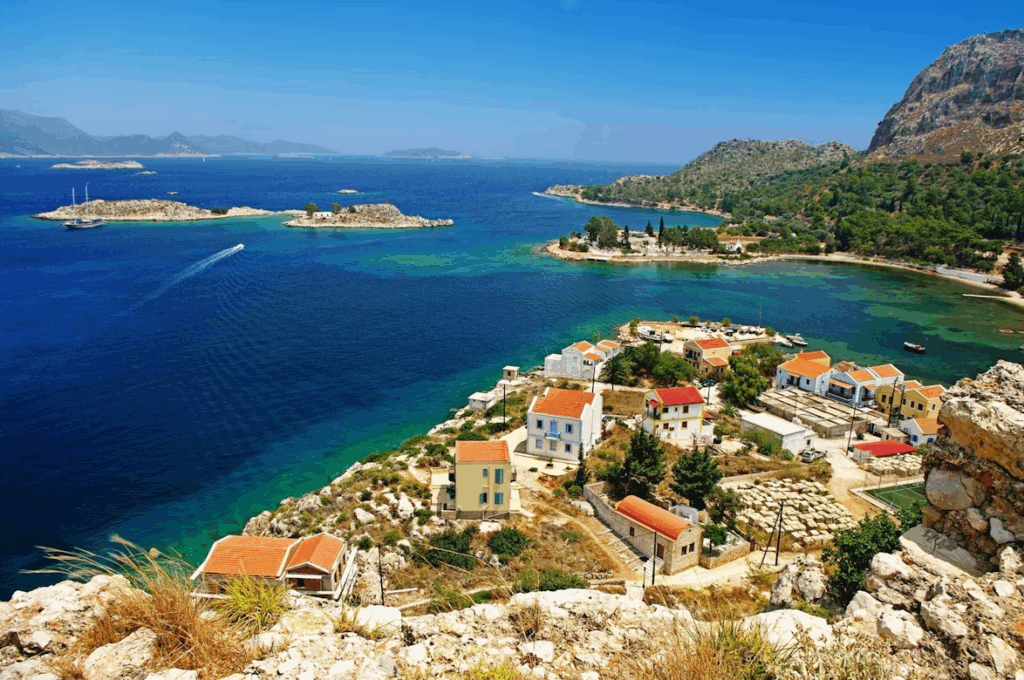
The heart of Kastellorizo is its harbor, a natural amphitheater framed by pastel-colored neoclassical houses, wooden shutters, and stone steps dipping straight into the water. Mornings here are quiet and dreamy; evenings transform into a golden glow as the sun sets behind the hills.


A walk through history
Perched high above the town on the western side of Kastellorizo, along the road to the island’s airport, Palaio Kastro stands on the ruins of the ancient Doric acropolis of the 4th century BC. Over the centuries, it has been home to many: the Knights of St. John settled here in the 14th century, and during World War II the Italians fortified the site with batteries and observation posts.
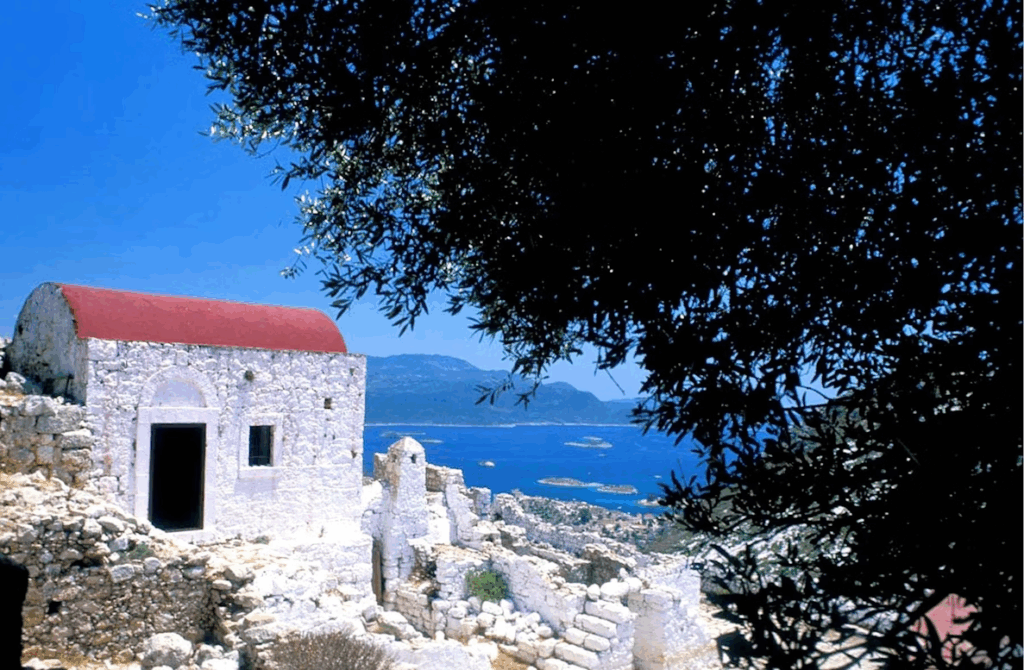
Even today, the past is vividly present: remnants of ancient and medieval fortifications, rock-carved cisterns, fragments of old buildings, and charming 19th-century chapels are still scattered across the hill.
The climb to Palaio Kastro rewards visitors not only with a journey through layers of history but also with spectacular panoramic views over almost the entire island and the deep blue sea beyond. You can reach it easily by car or choose the scenic hiking route for a more immersive experience.
Climb up to the Castle of the Knights, perched on a rocky hill above the town, for panoramic views of the Aegean and the Turkish coast. The hike is short but steep, so bring water and go late in the afternoon to avoid the midday sun. Its present form dates back to the 15th century, as the castle was destroyed and rebuilt several times over the centuries. The imposing Cyclopean walls suggest that the site was first fortified by the Pelasgians, while later it was inhabited by the Dorians, who are believed to have given the island its ancient name, Megisti.
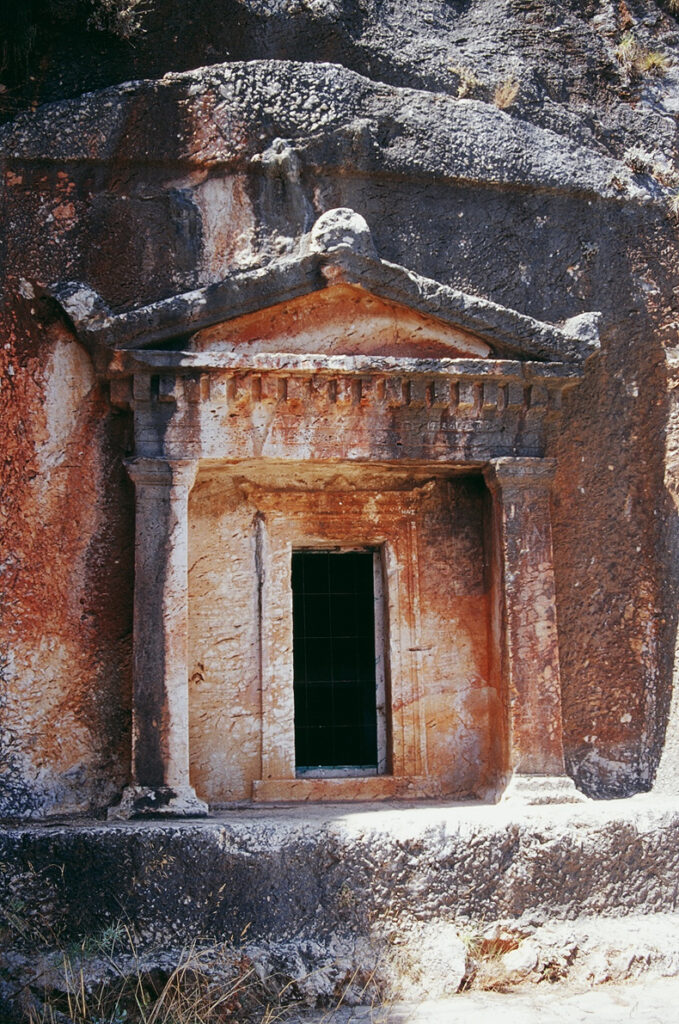
Nestled just beneath the Knights’ Castle lies the Lycian Tomb, dating to the 4th century BC. Hewn directly into the rock, the tomb boasts an impressive carved façade that reflects the refined craftsmanship of the era. Inside, the funerary beds, arranged on two distinct levels, remain clearly visible, offering a rare and evocative glimpse into the island’s ancient burial practices.
Nearby, the Kastellorizo Museum, housed in an old mosque, tells the layered story of the island – from ancient trade routes to modern struggles – in a space that feels intimate yet powerful.
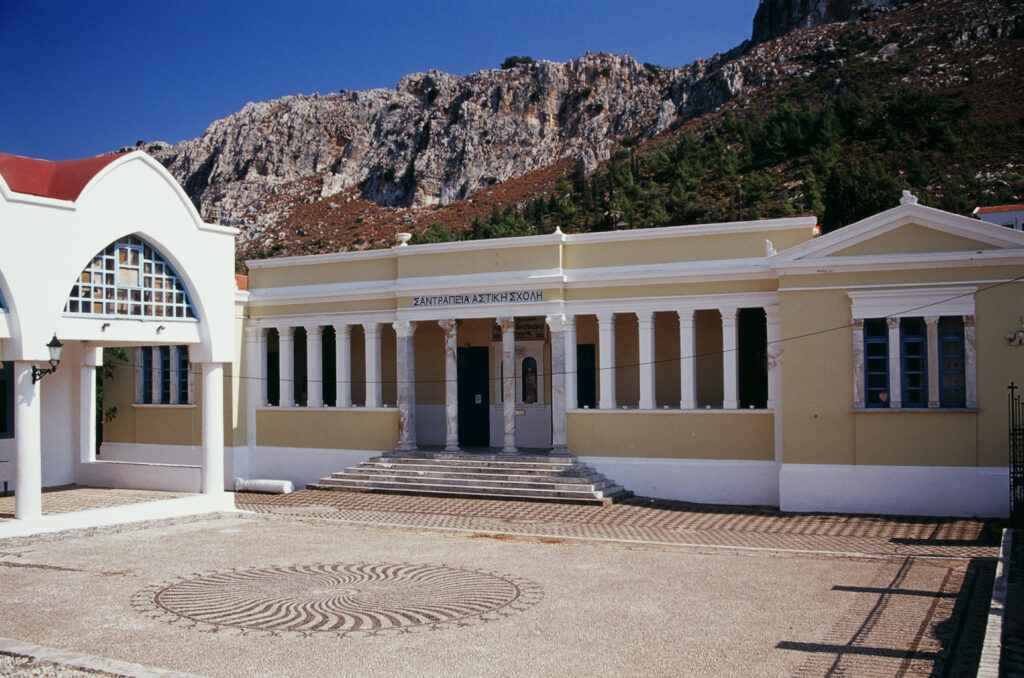
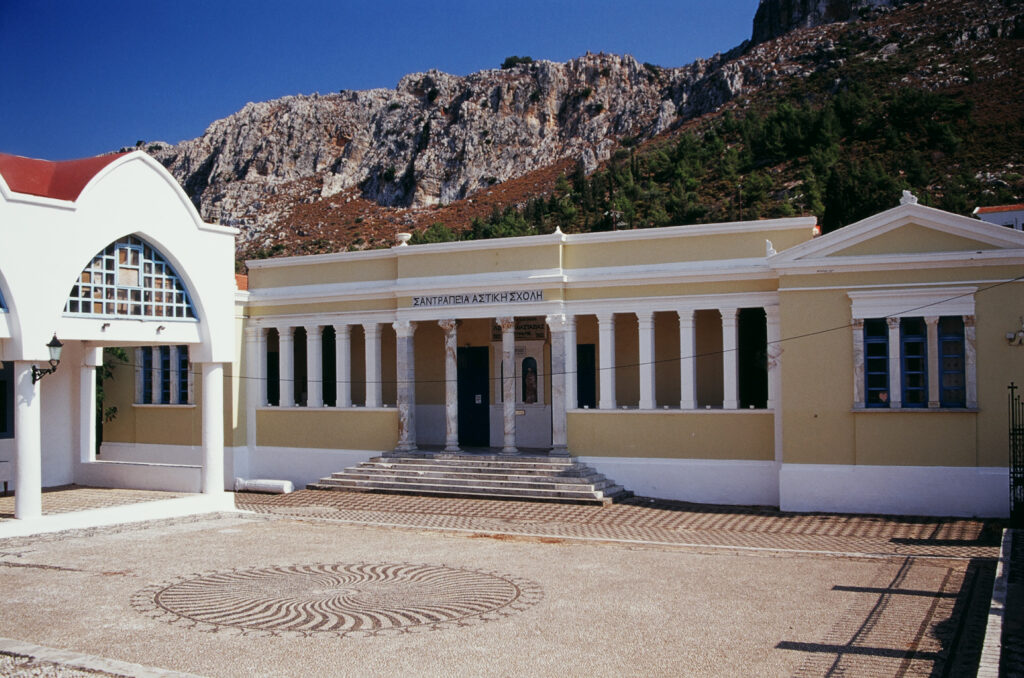
Santrapeia Urban School: This is the island’s most remarkable building, its architecture inspired by the University of Athens, with a façade that is an exact replica of it. It was inaugurated on June 7, 1903, thanks to the generosity of the island’s benefactor, Loukas Santrapé. Created with the ambition of offering a high-level education, the Santrapeia Urban School was founded on the principles of the mutual teaching method, with teachers coming not only from Kastellorizo but also from Athens, Rhodes, Smyrna, and Constantinople.
It remains the most important educational institution on the island and stands right next to the Metropolitan Church of Saints Constantine and Helen, connected to it by a unique black-and-white pebble courtyard of exceptional artistry. Today, the Santrapeia Urban School houses Kastellorizo’s Primary, Middle, and High School.
Dive straight into the Blue
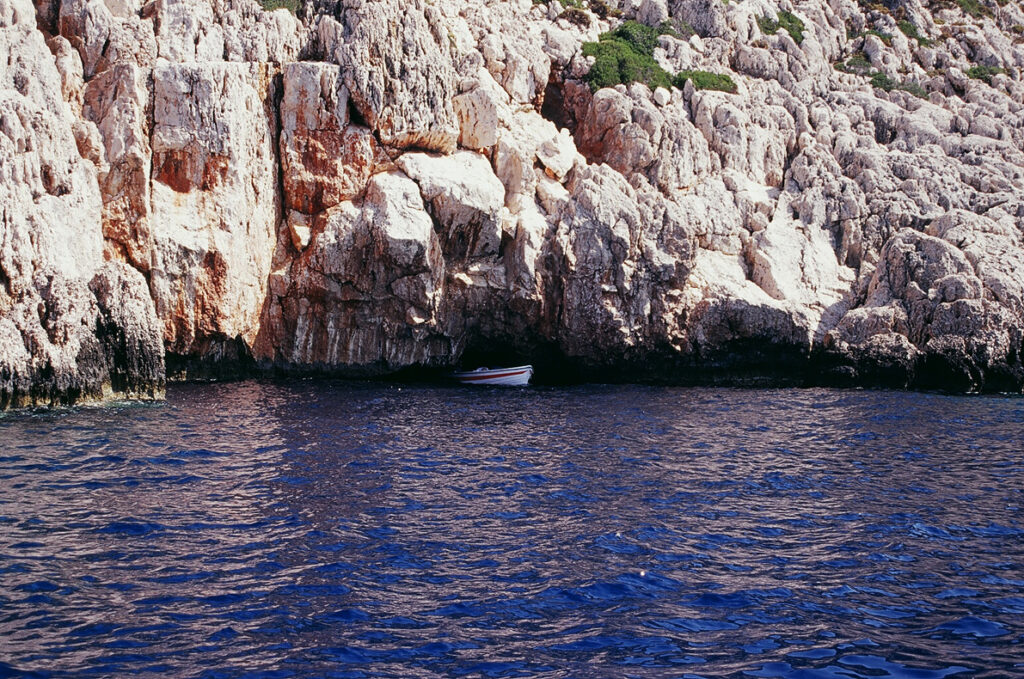
A short boat ride away lies one of Kastellorizo’s most mesmerizing wonders: the Blue Cave. Inside, sunlight filters through the entrance and reflects on the turquoise seabed, flooding the cavern with an ethereal electric-blue glow.
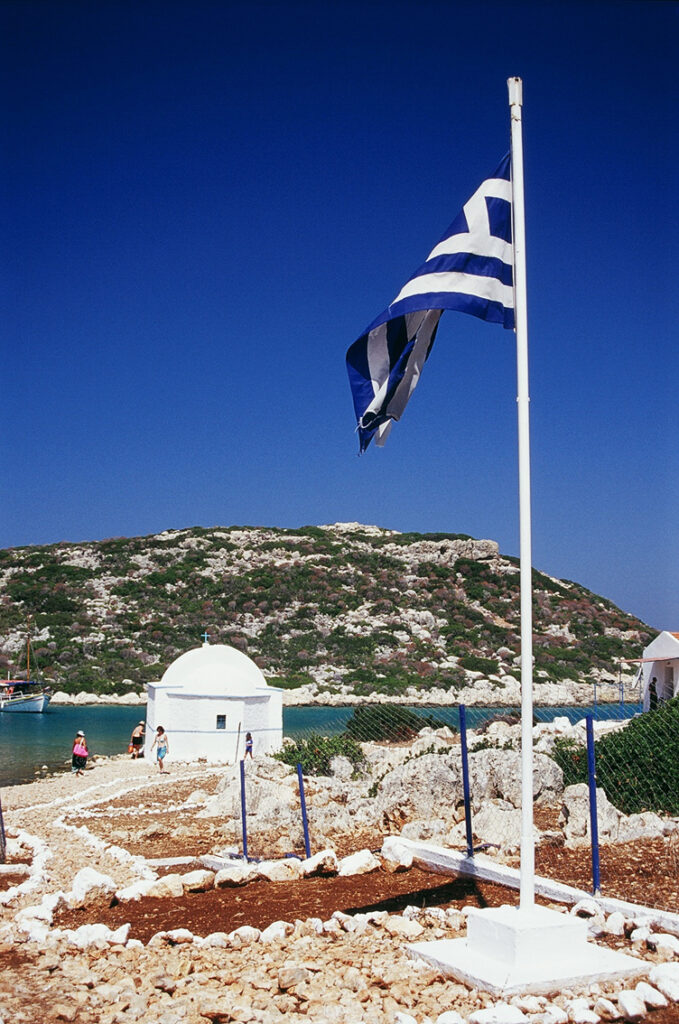
Kastellorizo doesn’t have endless sandy beaches, but it offers something better: dramatic rock platforms and crystal-clear waters. Plaka: Perfect for cliff dives into deep blue. Mandraki: The only sandy beach on the island. Agios Georgios islet: A tiny paradise just a short boat ride away.
Sacred paths, island Views & hidden gems
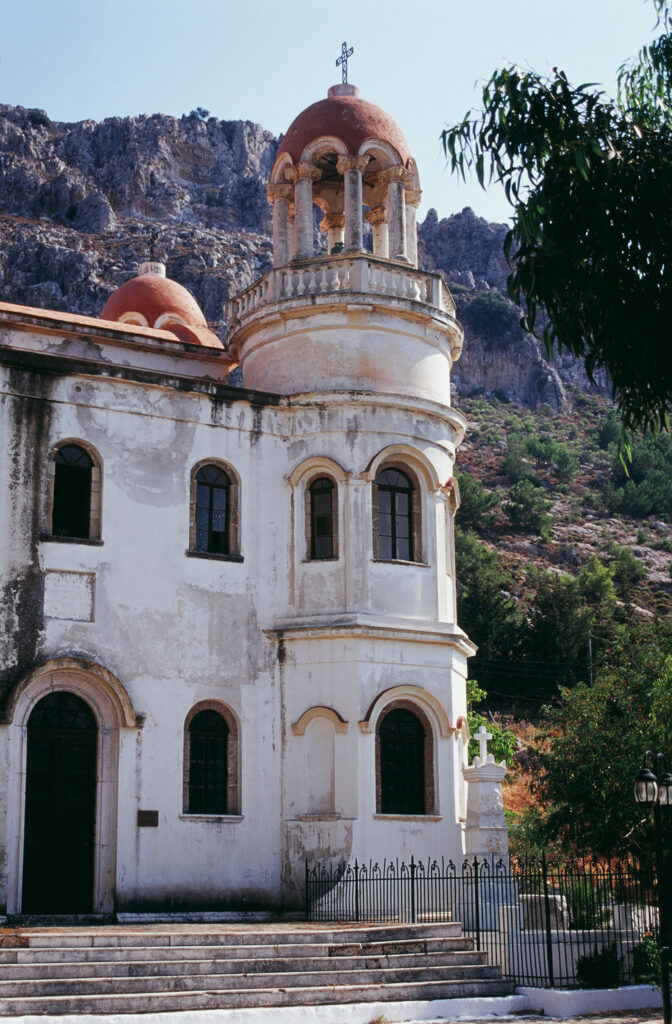
For one of the most rewarding hikes, head to the Monastery of Agios Georgios tou Vounou. The trail winds up the hillside, and at the top, the island unfolds beneath you in every direction – endless sea, scattered islets, and the feeling of being on the edge of the world.
Evenings are best spent at small tavernas in the harbor, where tables practically touch the water, and the air is filled with the sound of laughter, clinking glasses, and cicadas.
Take a boat trip to Ro, the tiny neighboring islet, and visit the house of the legendary “Lady of Ro.” Wander beyond the main town to quiet chapels and olive groves – the silence here is almost sacred. If you visit in late August, don’t miss the Beyond Borders International Documentary Festival. The island comes alive with filmmakers, artists, and stories from across the world.
When to Go
The island is at its most serene in May–June and September–October, when the weather is warm but the crowds are fewer.
August is vibrant and festive – especially during the festival season – but expect a livelier, more energetic atmosphere.
Info
Getting There
Reaching Kastellorizo is part of the adventure.
-
By air: A quick 25-minute flight from Rhodes connects you directly to the island.
-
By ferry: A slower but scenic option via Rhodes or directly from Piraeus for those who enjoy the journey as much as the destination.
-
From Kaş, Turkey: Short daily crossings make it possible to combine two worlds in one trip.